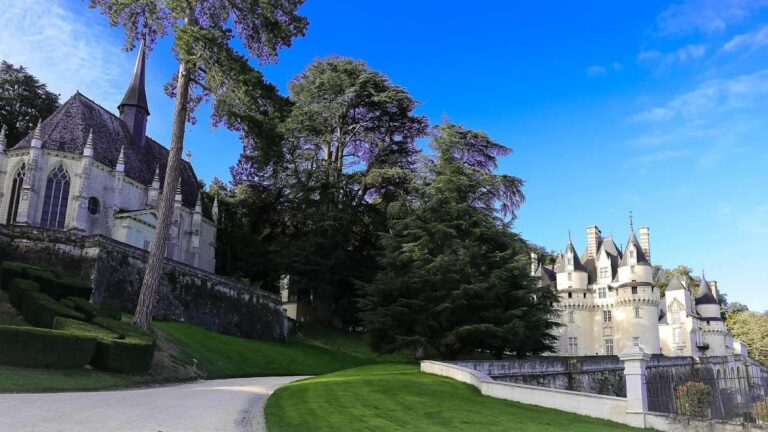
Castle of Gizeux: A Medieval Château in France


Site at a Glance
- Rating
- 4.5
- Popularity
- Low
- Country
- France
- Primary era
- Medieval
- External website
- Open
- Eras represented
- Medieval, Early Modern
- Civilizations
- French
- Site type
- Domestic
- Remains
- Castle
On this page10 sections
History
Castle of Gizeux is a medieval château in Gizeux, France, standing on the site of a fourteenth-century fortified castle and substantially altered during the Renaissance and the eighteenth-century Age of Enlightenment. It belonged to the lordship of Montsoreau and formed part of the former province of Anjou, in the historic area known as Touraine angevine.
The lordship of Gizeux
By the second half of the twelfth century, Gizeux belonged to the Doué family, represented by André II de Doué, possibly through his wife. Around 1200, Mathieu II de La Jaille, lord of Montreuil and Chahaignes, became lord of Gizeux through his childless marriage to Agnès de Doué, André II’s daughter.
The lordship continued through the Doué succession during the thirteenth and fourteenth centuries. Agnès’s brother André III de Doué was followed by his son Guillaume, then by Guillaume’s son André IV. André IV’s son, Hugues de Doué, had a daughter named Aliénor, who transferred Gizeux to her husband Hugues VI du Bellay after their marriage in 1328.
The du Bellay and later owners
The senior branch of the du Bellay family, lords of Bellay and barons of Thouarcé, possessed Gizeux from 1315 to 1660. The family was associated with Joachim du Bellay, a major sixteenth-century French poet. Around 1450, the lordship was united with Avrillé, and from 1589 this branch also held the title of princes of Yvetot.
When Martin III du Bellay d’Yvetot died without surviving issue in 1637, the succession passed to his grand-nephew Antoine-Saladin d’Anglure d’Etoges. Antoine-Saladin later ceded Gizeux and Avrillé to Henri-Emmanuel Hurault, Marquis de Vibraye.
Gizeux subsequently passed to Anne de Frézeau de La Frézelière, widow of René de Rouxellé de Saché, and then to her son Henri-Anne-René de Rouxellé de Saché. He sold the château to René de Grandhomme in 1723, and René-Simon de Grandhomme succeeded his father in 1758.
René-Simon’s daughter, Marie-Anne-Renée de Grandhomme, married Louis-Paul de Brancas in 1747. She later bequeathed Gizeux to her goddaughter Julie Constantin de La Lorie when Julie married Louis-Gabriel de Contades in 1786. The château then belonged to several marquises of Gizeux from the Contades family.
Revolution and modern protection
During the French Revolution of 1789, Louis-Gabriel de Contades opposed the revolutionaries and fled France. He found refuge in Saint-Domingue in 1794 and returned to Gizeux in 1801. In 1790, the eastern part of Anjou, extending from Bourgueil to Château-la-Vallière and including Gizeux, became part of the newly formed department of Indre-et-Loire.
The château remained with the Contades-Gizeux family after the Revolution and passed by marriage to the Laffon family in the twentieth century. The Laffon family is its current owner. Gizeux is one of the Loire châteaux and lies within the Loire-Anjou-Touraine Regional Nature Park, a protected rural area of the Loire Valley and surrounding landscapes. It has held France’s historic-monument designation, a legal form of heritage protection for historically or architecturally important sites, since 24 May 1945.
Remains
Layout and surviving fabric
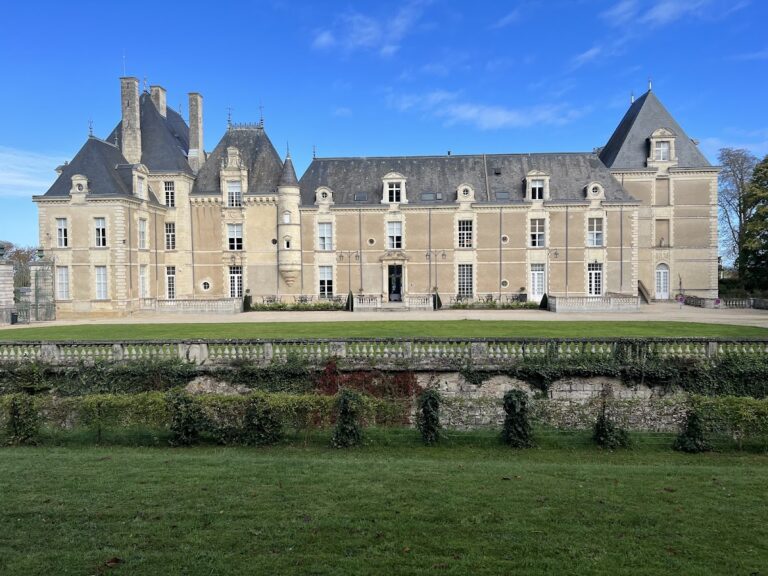
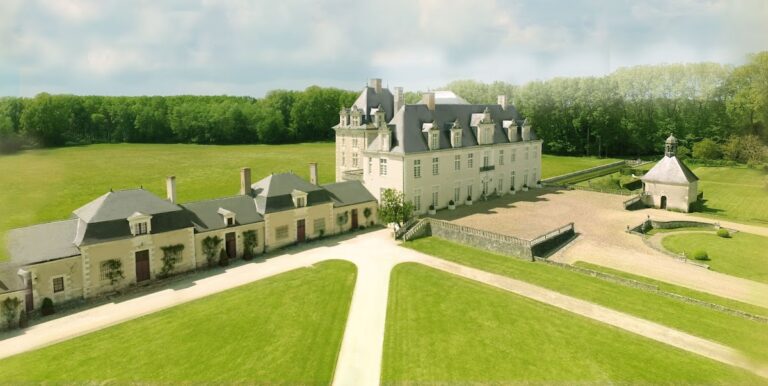
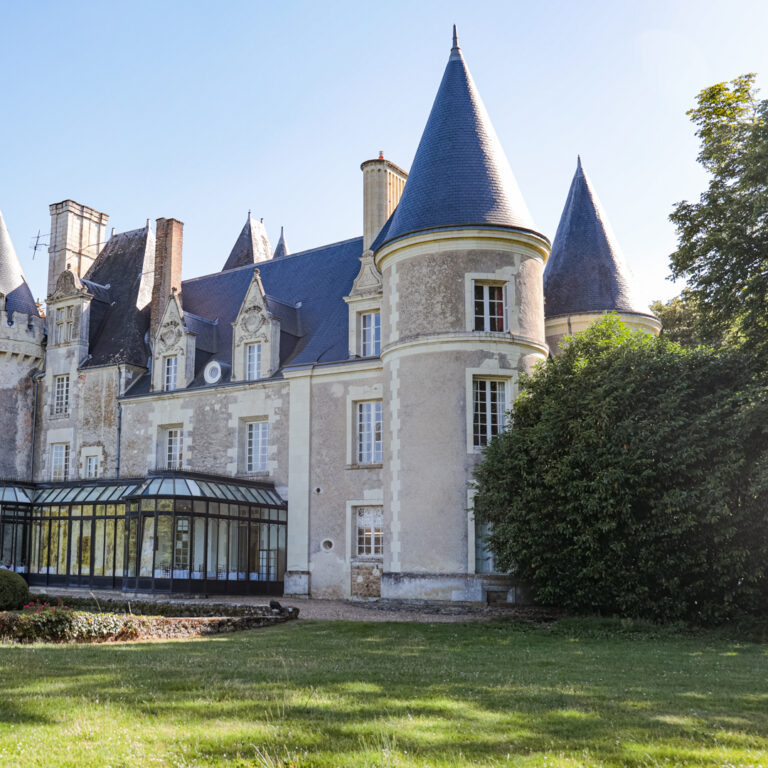
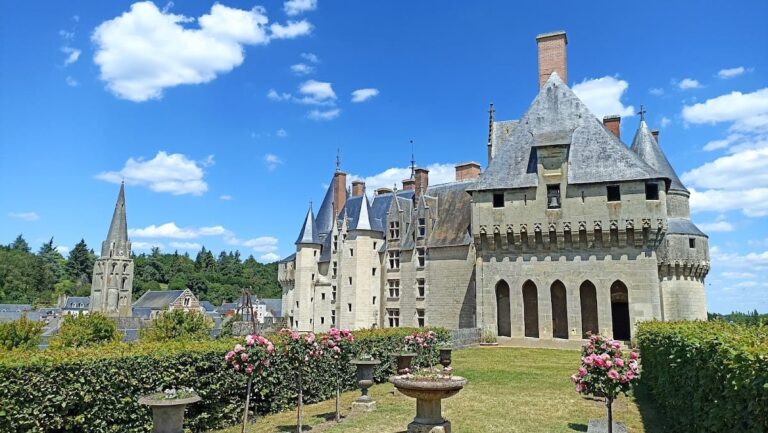
The château preserves buildings from several periods, combining medieval architecture with Renaissance elements and later alterations. Its façades extend for approximately 250 metres, giving the complex its particularly long linear appearance within Touraine angevine. The park was laid out in 1829 and forms part of the surviving estate. Near the château, a church contains the tombs of members of the du Bellay family.
Painted galleries
Galerie François I
The Galerie François I was decorated by Italian painters at the beginning of the seventeenth century. Named for François I, the French king who reigned from 1515 to 1547, it preserves the château’s connection with the artistic culture of the early modern period.
Grande Galerie des Châteaux
The Grande Galerie des Châteaux received murals from a French school of painters at the end of the seventeenth century. Its painted panels show the royal castles of Chambord, Vincennes, Fontainebleau, and Versailles, alongside rural scenes, across more than 400 square metres.
Church and funerary sculpture
The nearby church contains the tombs of the du Bellay family and a group of exceptionally rare seventeenth-century marble orants. These funerary sculptures show deceased people praying, typically in a kneeling or standing pose with raised or joined hands. Nicolas Guillain of Cambrai, director of the Académie royale de sculpture in Paris, made the orants.