Château de la Chaussière: A 19th-Century Neo-Gothic and Neo-Renaissance Château in Vieure, France
Visitor Information
Google Rating: 3.8
Popularity: Very Low
Official Website: chateaudelachaussiere.com
Country: France
Civilization: Modern
Site type: Domestic
Remains: Elite Residence
History
The Château de la Chaussière is situated in the commune of Vieure in modern-day France. It was built in the late 19th century by members of the French bourgeoisie, reflecting the era’s interest in blending historical styles with modern innovations.
Between 1876 and 1878, the château was commissioned by Théodore Riant, born into a wealthy Parisian family known for their involvement in ironworking and real estate development. Riant selected a hilltop site overlooking the road to Ygrande for its commanding views, partly as a contrast to the older Château de la Salle, a 15th-century fortress already owned by his family since the 1830s. This new construction was intended as a “modern house,” expressing both status and comfort with the latest building techniques of the time.
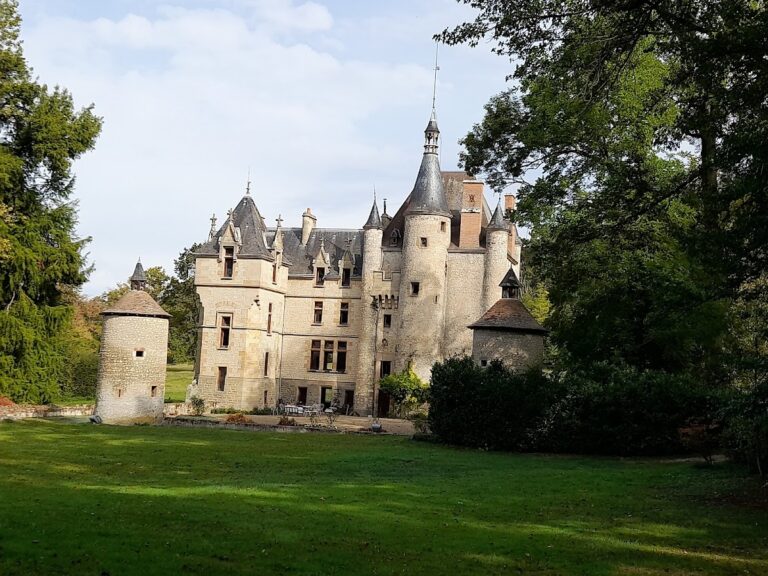
Designed by Alfred Coulomb, a pupil of the prominent architect Viollet-le-Duc, the château combined romantic architectural motifs inspired by the neo-Gothic and neo-Renaissance movements, popular in the Bourbonnais region. It incorporated advanced structural elements, such as iron beams and concrete floors, reflecting the industrial experience of its patron’s family. The laying of the foundation stone was marked by a formal ceremony conducted by Monseigneur de Dreux-Brézé, the bishop of Moulins, highlighting the building’s social and religious significance.
The Château de la Chaussière remained privately owned and preserved its historic character through the centuries. In recognition of its architectural and cultural value, it was officially listed as a historic monument by a governmental decree issued on May 21, 2007.
Remains
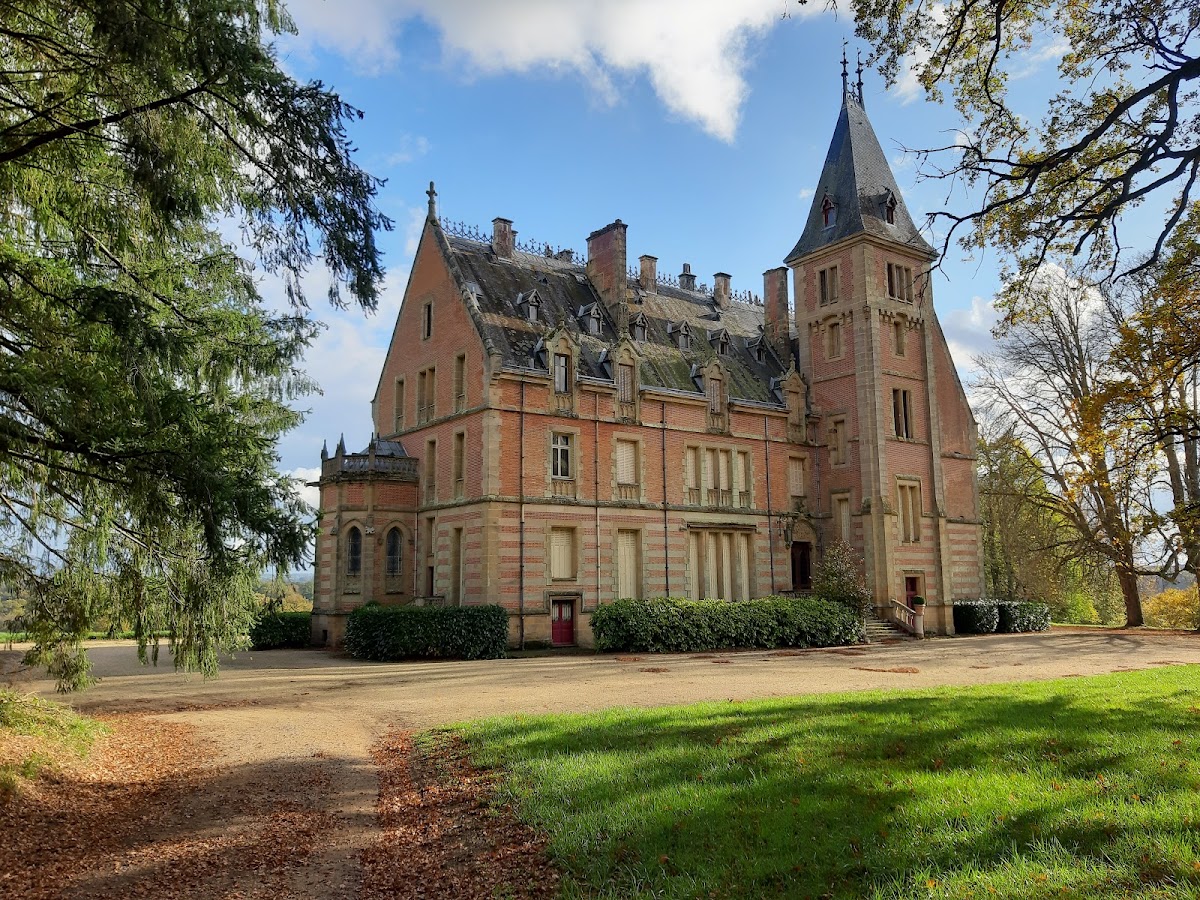
The château presents as an elongated building featuring a distinctive slightly widened section on its southwest side and a pentagonal apse that forms a chapel on the left side of the lateral façade. Its design merges elements of neo-Gothic and neo-Renaissance architecture, which is evident in the romantic style typical of Bourbonnais château architecture.
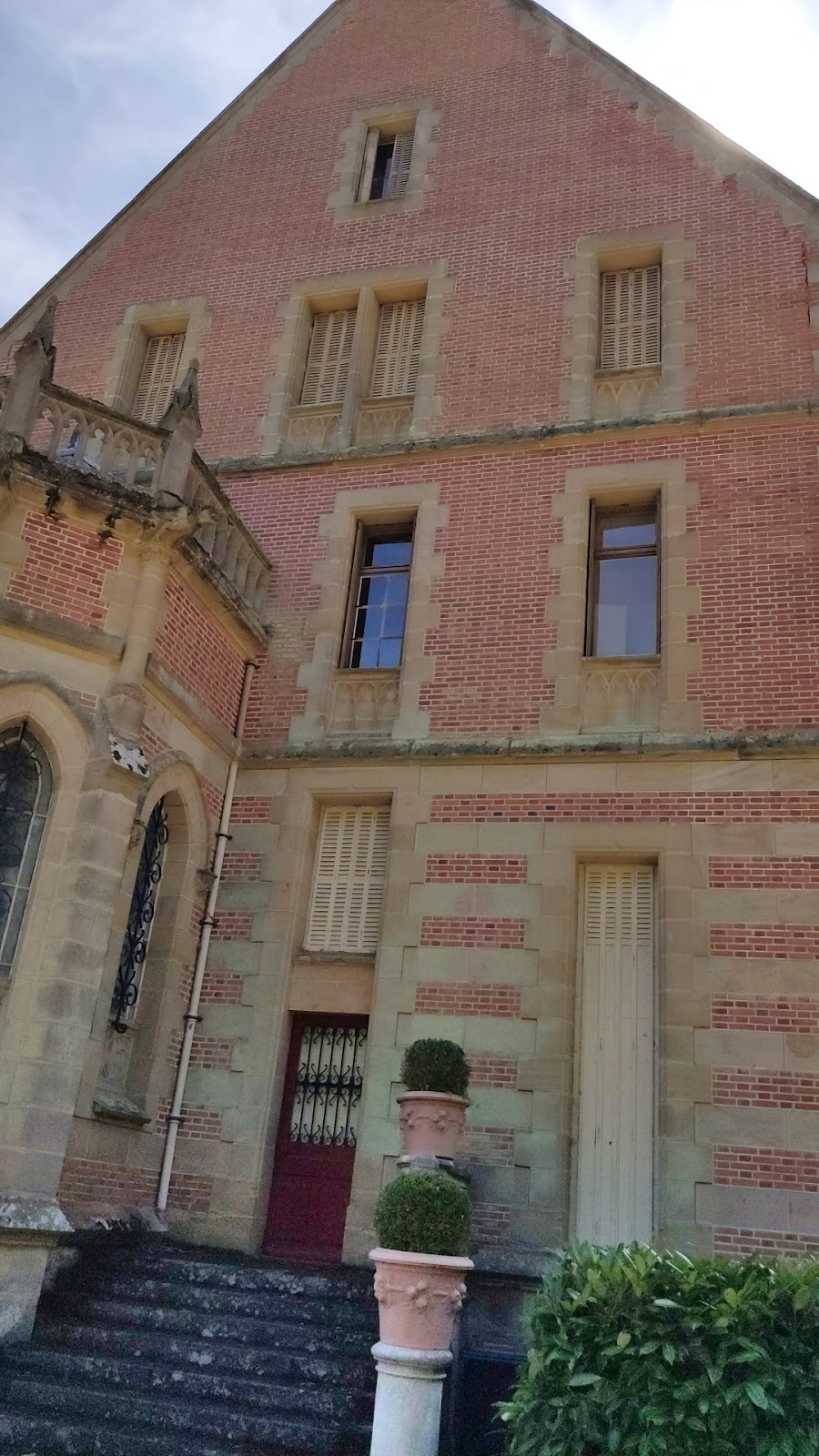
The exterior façades are artfully composed using a mix of brick, stone, and slate, arranged to create a varied color palette reminiscent of châteaux from the Louis XIII period. The roofs are sharply pitched and covered with slate tiles, topped with decorative friezes along the ridges. Notably, at the corner where the main and lateral façades meet, a turret known as an échauguette stands out. This turret rises over the first and second floors, capped with a conical “pepperpot” roof and is supported from below by stone corbels.
Focusing on the southeast-facing main façade, the chapel occupies the ground level, distinguished by three pointed (ogival) windows. These windows feature archivolts, a type of ornamental molding, which rest upon capitals detailed with foliage motifs. The chapel’s pentagonal apse is further enriched by a balustrade segmented by Gothic arches, adding to its medieval-inspired charm.
The entrance on the northwest side displays a grand doorway framed by a rounded Gothic arch. Above this entrance, a tympanum (the semi-circular space often decorated above doors) is topped by a pinnacle and flanked by capitals adorned with stylized leaf-shaped decorations known as crochets. The Latin phrase “Salve hospes,” meaning “Greetings, guest,” is inscribed above the door, welcoming visitors.
Inside, the château continues its historicist theme. There is a gallery featuring a French-style ceiling supported by iron rods, illustrating the blend of modern materials with traditional design. The fireplace in the main hall draws inspiration from medieval forms, characterized by a tall, imposing mantelpiece. Access to the upper floors is provided via a spiral staircase enclosed within a framework of round arches and massive pillars, once more taking cues from medieval architecture. The staircase’s balustrade is carefully crafted, with separated balusters split by ogee arches — arches with a double curve shaped like an S.
Overall, the Château de la Chaussière is a carefully composed architectural pastiche, intentionally combining 19th-century neo-Gothic elements with stylistic details harking back to the Louis XIII era, and grounded in both historic charm and the advances of its industrial age construction.
Nearby sites