Château de Courtalain: A French Aristocratic Residence
Site at a Glance
- Rating
- 4.4
- Popularity
- Low
- Country
- France
- Primary era
- Medieval
- External website
- Open
- Eras represented
- Medieval, Early Modern, Modern
- Civilizations
- French
- Site type
- Domestic
- Remains
- Castle
On this page9 sections
History
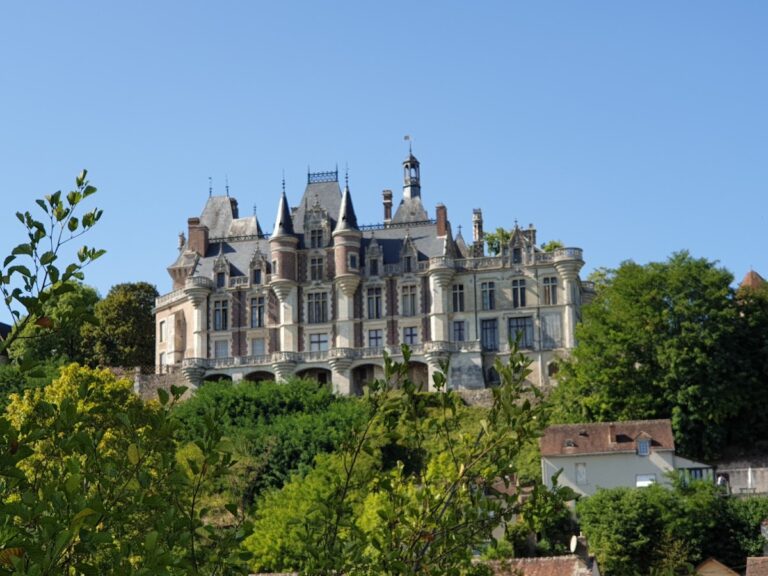
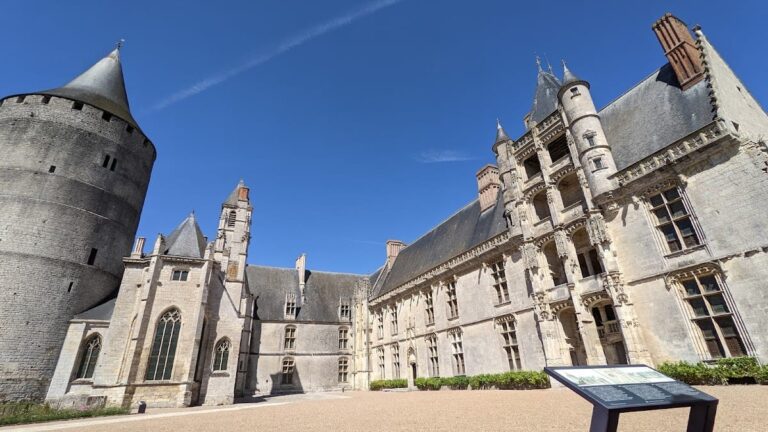
Château de Courtalain is a fifteenth-century French aristocratic residence in France, built in 1483 by Guillaume d’Avaugour. Historically situated between Perche and Dunois, it developed through successive aristocratic ownership and later architectural changes, becoming a living château where Renaissance, eighteenth-century, and English Neo-Gothic phases overlap.
Foundation and the Montmorency succession
Guillaume d’Avaugour constructed the château in 1483. He was married to Perette de Baif, an aunt of the poet Jean-Antoine de Baïf, who was associated with Pierre de Ronsard and the Pléiade, a sixteenth-century French literary group linked to the renewal of French poetry.
In 1553, the marriage of Jacqueline d’Avaugour to Pierre I de Montmorency-Fosseux transferred Courtalain to the House of Montmorency. This major French noble family held prominent military and political positions over several centuries. Nine generations of Montmorency family members succeeded one another at Courtalain.
Revolutionary disruption and a new family
During the French Revolution, management of the château was entrusted to a farrier and a butcher, who occupied the property. The owners returned during the French Restoration, the period after Napoleon’s fall when the Bourbon monarchy was restored, chiefly from 1814 to 1830, and expelled the two occupants.
Courtalain passed to the House of Gontaut-Biron in 1862 through the marriage of Felicie de Bauffremont-Courtenay, niece of Anne Louis Raoul Victor de Montmorency, the last Montmorency duke, to Louis de Gontaut-Biron. Direct descendants of the Gontaut-Biron family continue to inhabit the château, including the Marquise de Gontaut-Biron and her son Anne Charles de Gontaut-Biron, who directs the estate.
Wartime refuge and protection
During the Second World War, Courtalain became an important depot for works evacuated from the Louvre, France’s principal national museum. Between 31 August and 6 September 1939, numerous trucks brought transportable Egyptian antiquities from the Louvre, tapestries from the Saint-Germain-en-Laye museum, and the Napoleonic collections of Malmaison, the residence associated with Napoleon Bonaparte and Joséphine Bonaparte.
In early June 1940, German forces were approaching and Courtalain was considered insufficiently secure. The Marquis de Gontaut-Biron therefore proposed transferring the works to his other property, Château de Saint-Blancard. The château and its outbuildings are registered as historic monuments, with twentieth-century protections recorded in 1926, 1991, and 1997.
Remains
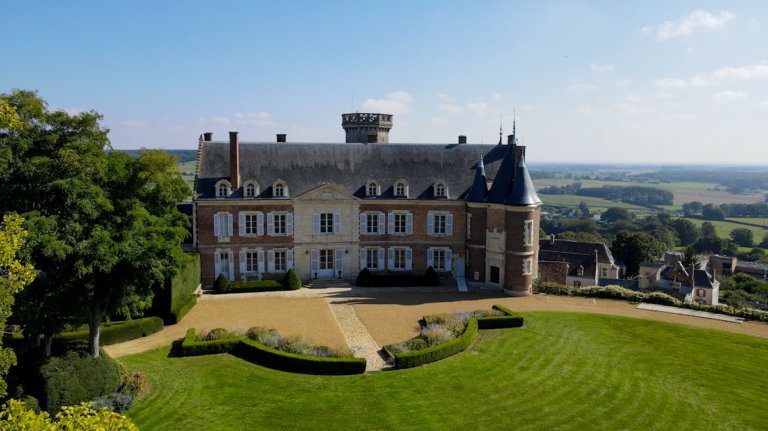
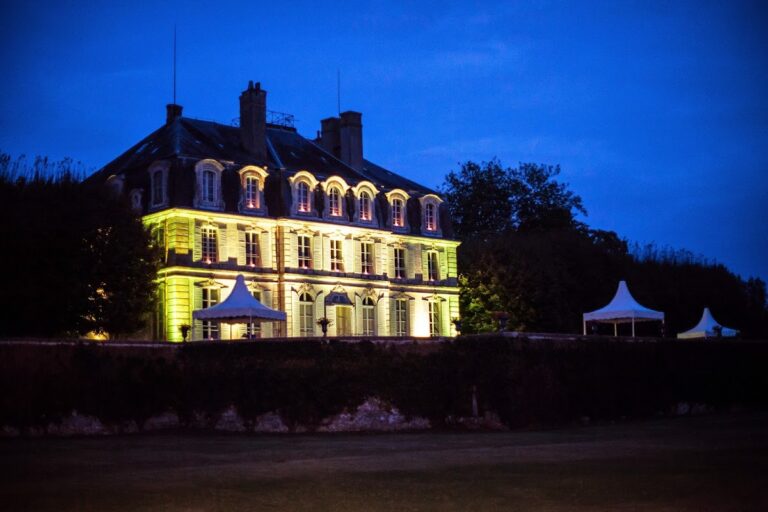
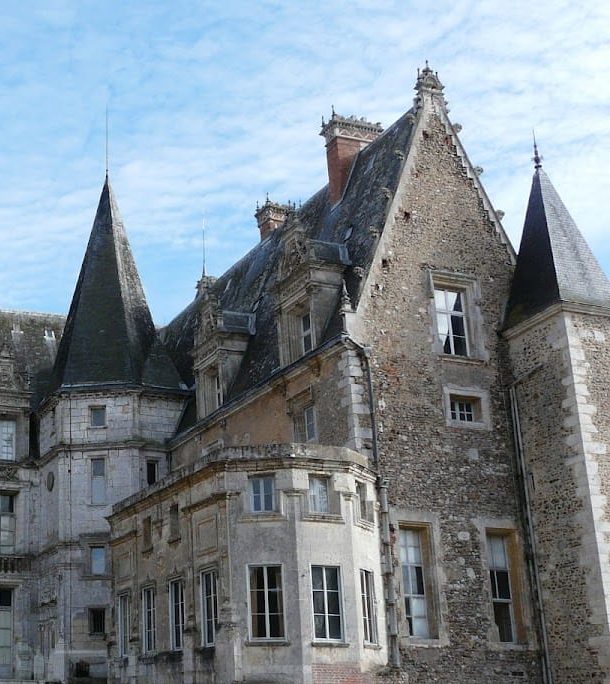
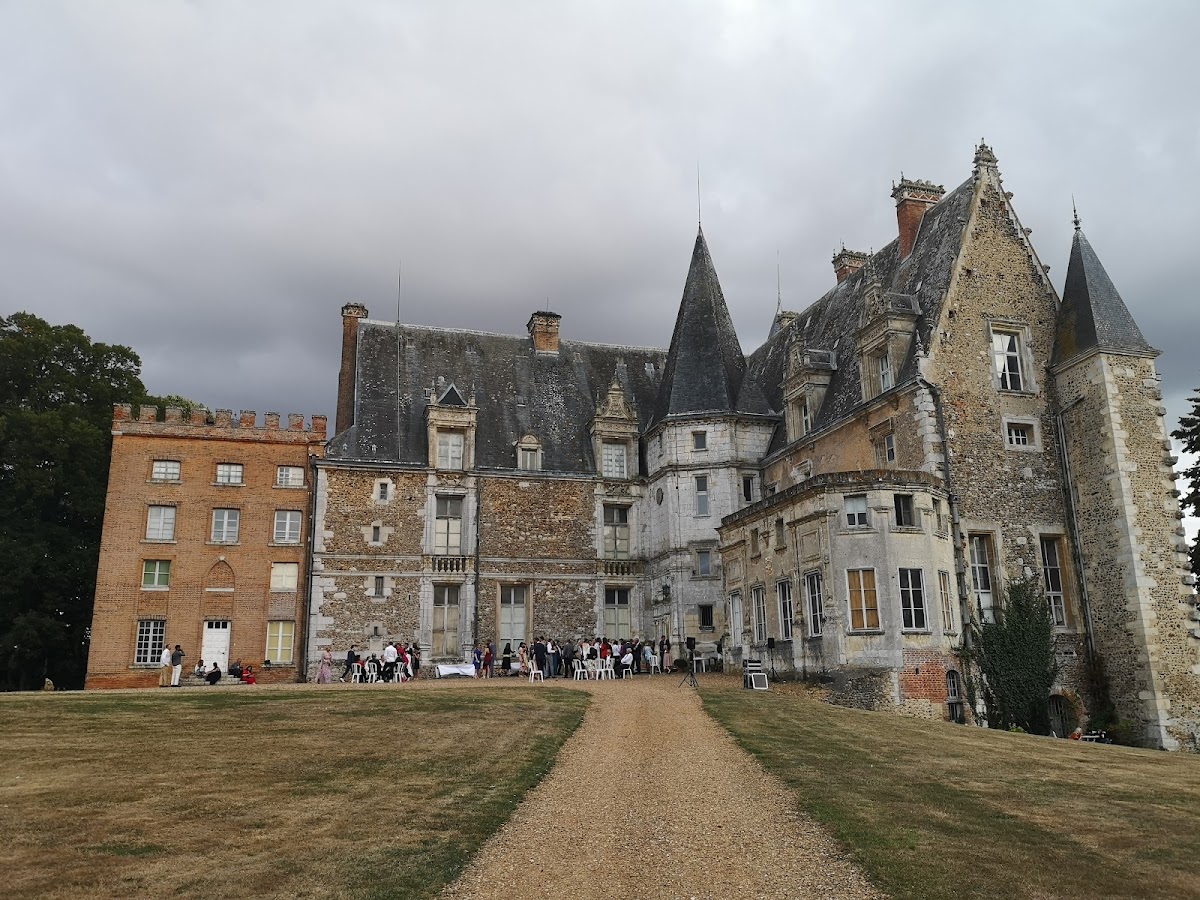
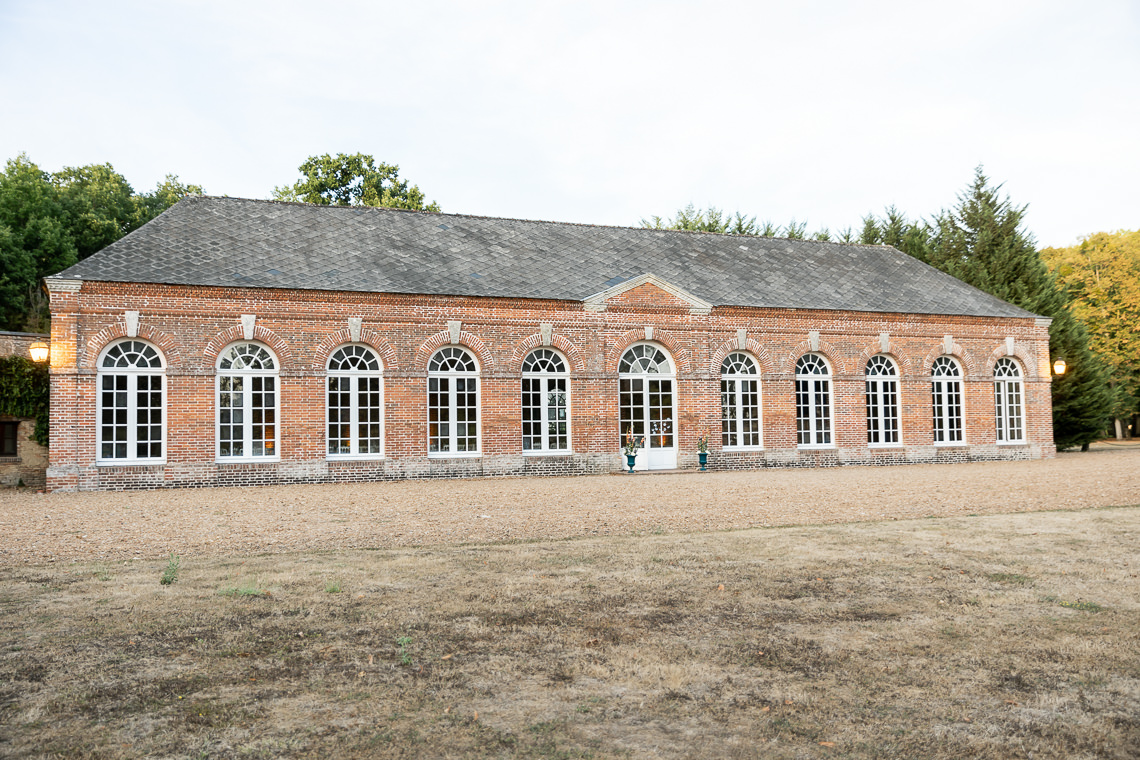
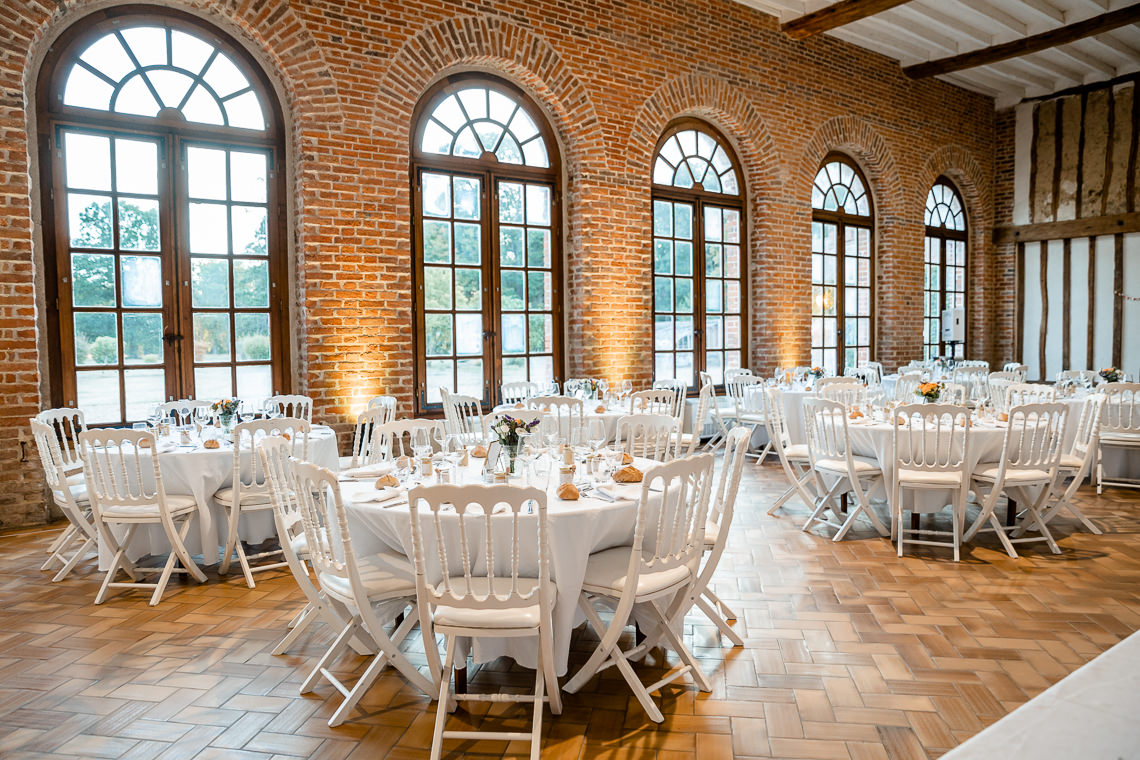
Château de Courtalain survives as a château accompanied by outbuildings and set within an English-style garden and park. Its buildings bring together Renaissance, eighteenth-century, and English Neo-Gothic architectural elements, reflecting changes made or introduced across different periods.
Buildings and architectural phases
Château and outbuildings
The château and its associated outbuildings form a single historic complex. Renaissance elements are combined with eighteenth-century work and English Neo-Gothic influences, an architectural revival of medieval Gothic forms associated especially with nineteenth-century England. The resulting buildings retain the character of a lived-in aristocratic residence rather than representing a single construction phase.
Garden and park
English-style grounds
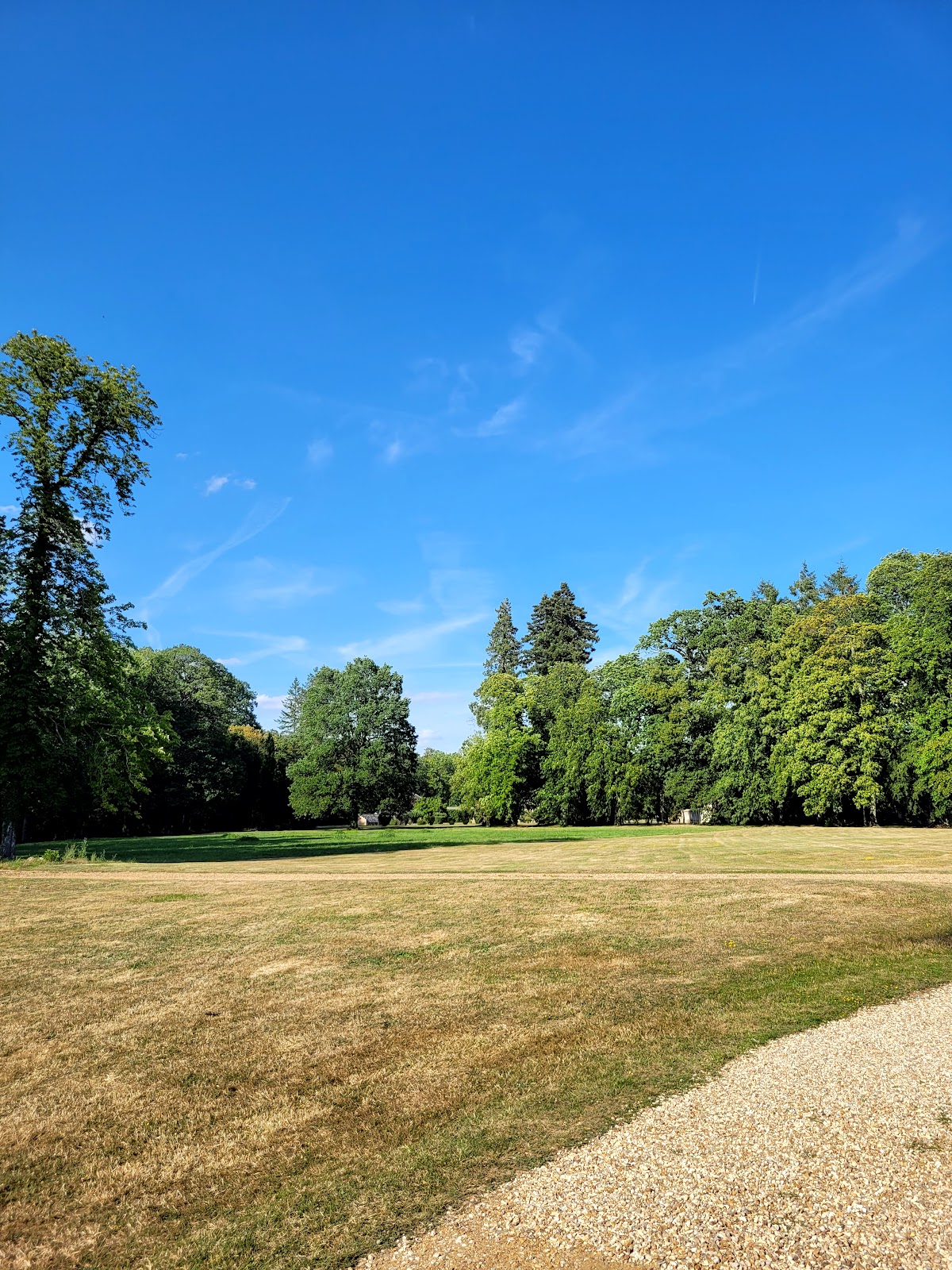
The surrounding English-style garden and park provide the setting for the buildings. The park contains mature trees, including cedars imported directly from Lebanon, and gives the complex a naturally secluded environment.