Château de Chambert: A Historic Wine Estate in France


Site at a Glance
- Rating
- 4.6
- Popularity
- Low
- Country
- France
- Primary era
- Modern
- External website
- Open
- Eras represented
- Early Modern, Modern
- Civilizations
- French
- Site type
- Domestic
- Remains
- Castle
On this page13 sections
History
Château de Chambert is a wine-producing estate in France, at Floressas in the Lot, whose present château was built in 1873 in a nineteenth-century medievalizing style inspired by the architect Eugène-Emmanuel Viollet-le-Duc. The estate developed from a medieval fortified farm and became known for wine production, export, and the successive rebuilding of its château and vineyard.
Medieval estate and early residents
The oldest surviving departmental-archive texts mention vineyards at Chambert in 1100. During the thirteenth century, the estate and its vineyard were administered from a repaire, a fortified rural residence or estate center found in medieval southwestern France. This fortified farm occupied the site of the present château.
A census of Floressas from 1670 lists three residents at Chambert: Mathurin Baureilhes, Armande Delfourd, wife of Guillaume Fabre, and Raymond Durand, a laborer. Fabre de La Valette lived at Chambert in 1690. From 1810, the ennobled bourgeois Lathèse family established itself there and operated a large wine estate whose production was sold in France and exported to England and Russia under the name Kagor.
The Bataille rebuilding
Improvements to navigation on the Lot, including canal reaches, locks, towpaths, and loading places, further strengthened the reputation of the château and vineyard. The Bataille family succeeded the Lathèses in 1870. Louis Bataille, a notary from Marminiac who married Mélanie Lathèse of Floressas, commissioned the present château in 1873 on the foundations of a small fortified château dating from the sixteenth century.
Louis Bataille also replanted the entire vineyard and sold its wine personally in Bordeaux. In 1886, a fire destroyed approximately three-quarters of the building. Reconstruction took place around the central section that had survived, creating the basis of the château seen today.
War, vineyard decline, and revival
Louis Bataille’s son, Marie Désiré Pierre Bataille, inherited the estate late in the nineteenth century but soon stopped managing it. As a general commanding the 41st Infantry Division, he was killed at the Col du Bonhomme on 8 September 1914 while conducting reconnaissance to adjust artillery fire against German forces. He was the first French general to die at the front during the First World War. After his death, the army required generals to remain 50 kilometers behind the front.
Phylloxera, a vine pest that devastated European vineyards from the late nineteenth century onward, began affecting the Chambert vineyard in 1877. Together with the death of General Bataille in 1914, it contributed to the gradual destruction of an estate vineyard that had covered more than 300 hectares.
Revival began in 1973, when Marc Delgoulet, a wine merchant from Corrèze, took over the estate, began restoring the château, and replanted the vineyard. The first vintage of this renewed operation, produced in 1978, received a gold medal at national competitions in Mâcon and Bourg-en-Blayais. In 1994, Marc’s son Joël assumed control and expanded the production facilities with an emphasis on environmental considerations. Philippe Lejeune purchased Château de Chambert in 2007.
Twenty-first-century viticulture
During the twenty-first century, Philippe Lejeune, assisted by the consultant Stéphane Derenoncourt, carried out extensive viticultural and winemaking changes. All tannat plots were removed and replaced with malbec grown through massal selection, a method that chooses cuttings from selected parent vines to preserve or improve desirable characteristics. Existing malbec plots were renewed, and chardonnay was planted on favorable north-facing Kimmeridgian plots, a geological formation associated with Late Jurassic soils. The winemaking unit was reorganized, while vineyard work was intensified according to biodynamic methods. An ECOCERT organic-certification program began in 2009, with a planned three-year period before validation.
Remains
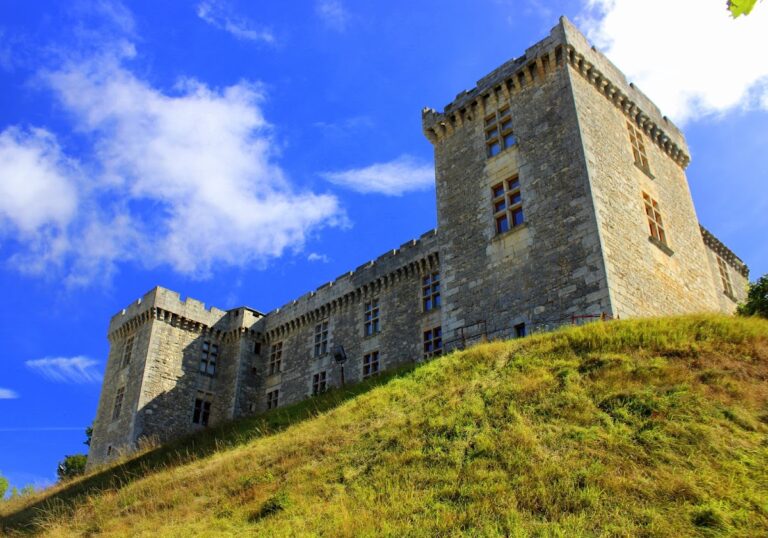
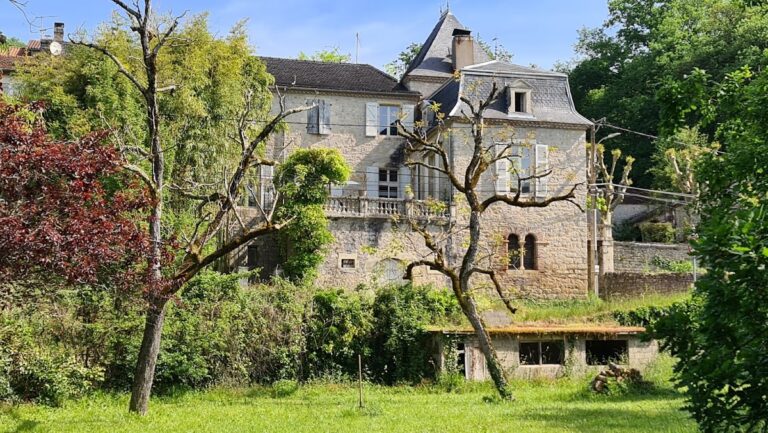
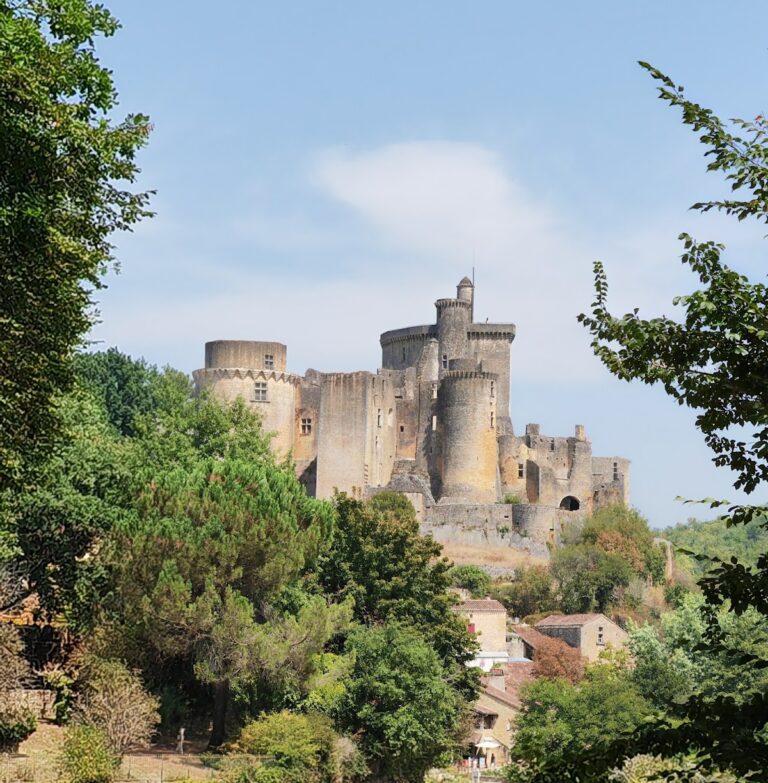
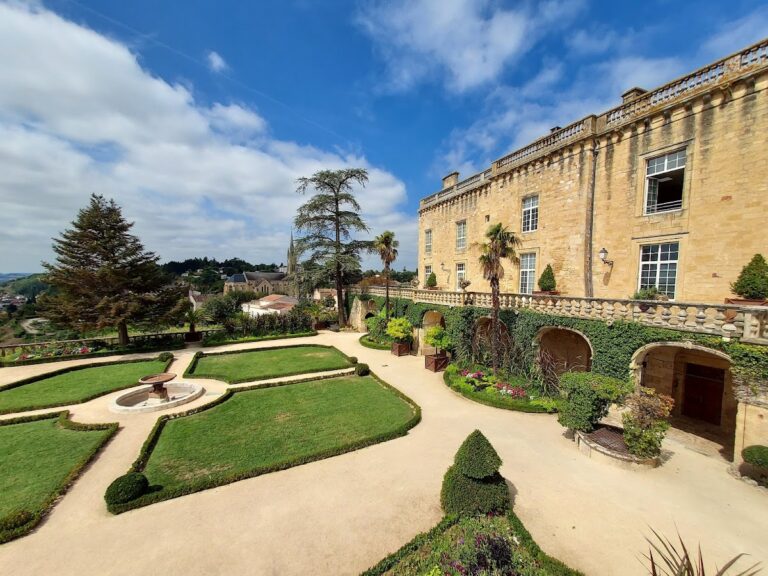
Château de Chambert occupies the site of a former thirteenth-century fortified farm and incorporates the foundations of a small sixteenth-century fortified château. The present nineteenth-century building, its surrounding wall, defensive glacis, park, garden, later towers, and wine-production facilities form a complex shaped by medieval origins, nineteenth-century rebuilding, and modern restoration.
The château and defensive grounds
The rebuilt château
Built in 1873, the main château was designed in a Viollet-le-Duc style, meaning that its nineteenth-century architecture used a medievalizing treatment rather than representing an original medieval construction. The 1886 fire destroyed about three-quarters of the building, but reconstruction preserved the central section that had survived. The present structure therefore combines the 1873 design with the physical continuity of this retained core.
Wall, glacis, park, and garden
A surrounding wall was constructed in connection with the nineteenth-century château. The park and garden were laid out within the château’s defensive glacis, the sloping ground traditionally associated with a fortified perimeter. These elements preserve the relationship between the later residence and the defensive setting inherited from the site’s earlier fortified use.
Restored round towers
Two round towers in a sixteenth-century château style were added in 1985 during the restoration undertaken by Marc Delgoulet. They form part of the estate’s later architectural reconstruction and reinforce the fortified character associated with the earlier château on the site.
Vineyard and production facilities
Reconfigured vineyard
The vineyard has been replanted in selected parcels and exposures. Its later arrangement includes malbec renewed through massal selection, which uses chosen cuttings to retain favorable vine characteristics, and north-facing chardonnay plots established on Kimmeridgian terrain. These plantings reflect the modern reconfiguration of the estate’s agricultural landscape.
Winemaking unit
The expanded production facilities use walls faced with cut stone and natural insulation manufactured in Switzerland. Their layout was reorganized during the twenty-first-century changes to the estate, when the winemaking operation was adapted alongside the replanting of selected vineyard parcels.
Nearby sites