Château de Pestillac: A Medieval Fortified Complex in France
Site at a Glance
- Rating
- 2.5
- Popularity
- Very Low
- Country
- France
- Primary era
- Medieval
- Eras represented
- Medieval
- Civilizations
- County of Toulouse
- Site type
- Military
- Remains
- Castle
On this page8 sections
History
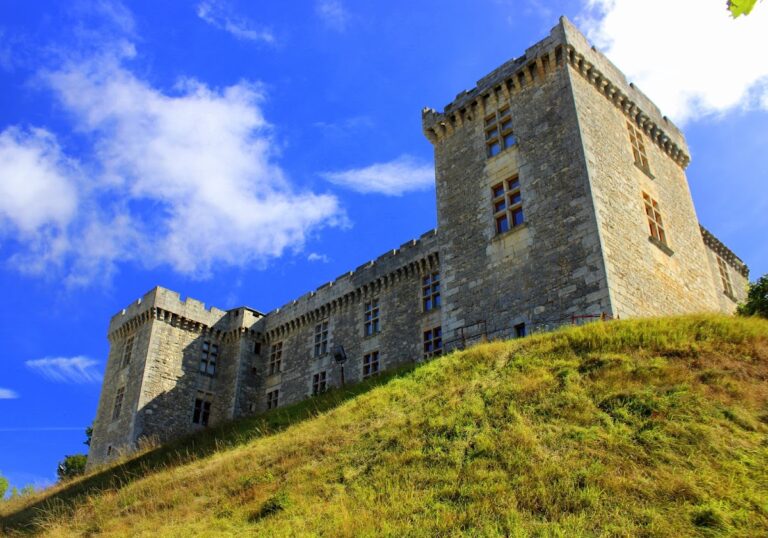
Château de Pestillac, also known as Pestilhac, is a medieval fortified complex at Montcabrier in France. Built between the eleventh and twelfth centuries, it began as a castrum, a fortified settlement and lordly stronghold, overlooking the Thèze valley opposite the bastide of Montcabrier. It became the residence of the barons of Châtaigneraie and the center of a substantial medieval seigneurial domain.
The Pestilhac domain
The lordship of Pestilhac extended across Montcabrier, Cassagnes, Saint-Martin-le-Redon, Duravel, and Soturac, as well as parts of Saint-Caprais, Frayssinet-le-Gélat, and Puy-l’Évêque. The later planned settlements, or bastides, of Montcabrier and Villefranche-du-Périgord were founded within this territory. A bastide was a medieval settlement established under a foundation charter with defined customs and privileges.
The Pestilhac family appears in records from 1030, when it witnessed a charter donating the church of Pescadoires to Moissac Abbey. In 1055, Gausbert and Seguin de Pestilhac gave the church of Saint-Hilarion at Duravel to the same abbey with the approval of their overlords, Gausbert and Aymeric de Gourdon. Arnaud and Gausbert de Pestilhac later witnessed Géraud de Gourdon’s testament in 1108.
Confiscation and divided lordship
Some members of the family followed Cathar beliefs. The Cathars belonged to a Christian dualist movement that the medieval Catholic Church condemned as heretical. During the Albigensian Crusade, the thirteenth-century campaign against Cathar communities and their supporters in southern France, the family remained loyal to the Count of Toulouse.
Around 1214, Simon de Montfort confiscated much of the family’s property, including the castrum of Pestillac and the land of Bonafous, and transferred it to the Bishop of Cahors. The family recovered the castrum in 1229. During the thirteenth century, members of the family also used names linked with their castle or lands, including Bonafos, Guerre, and possibly Cazals.
The rights attached to the castle and its settlement became increasingly divided. In 1259, Gasc de Pestilhac held the entire castle of Pestilhac, while possessing only one-third and one-eighth of the associated vila, a medieval settlement or village whose rights could be held separately from those of the castle. In 1261, Villefranche-du-Périgord was founded on the land of Viel-Scieurac, which belonged to Bertrand de Pestilhac.
By 1287, Amalvin de Pestilhac held only one thirty-second share of the castrum. The king then imposed a paréage, a medieval co-lordship agreement sharing territorial rights between parties, over the whole seigneurial domain. Guy de Cabrier, the seneschal of Quercy, a royal administrative and judicial officer, founded Montcabrier within the honor of Pestilhac and granted it customs on 7 February 1298.
Conflict and destruction
Relations between the inhabitants of Pestilhac and Montcabrier, and between the lords of Pestilhac and the French crown, soon deteriorated. In 1302, Amalvin de Pestillac complained of serious incidents and alleged that inhabitants of Montcabrier had helped royal officers seize Pestilhac.
Amalvin later joined the English royal party and was declared a rebel against the king of France in 1342. In 1346, he traveled to Bordeaux to welcome the Earl of Derby, an English military leader, and spent the following twenty years pillaging the surrounding region. After returning from the siege of Domme, his group was intercepted at Budge de Guerre in Pomarède by forces from Montcabrier or Marminiac. Amalvin was recognized and killed, after which the victors captured and destroyed the castrum of Pestilhac.
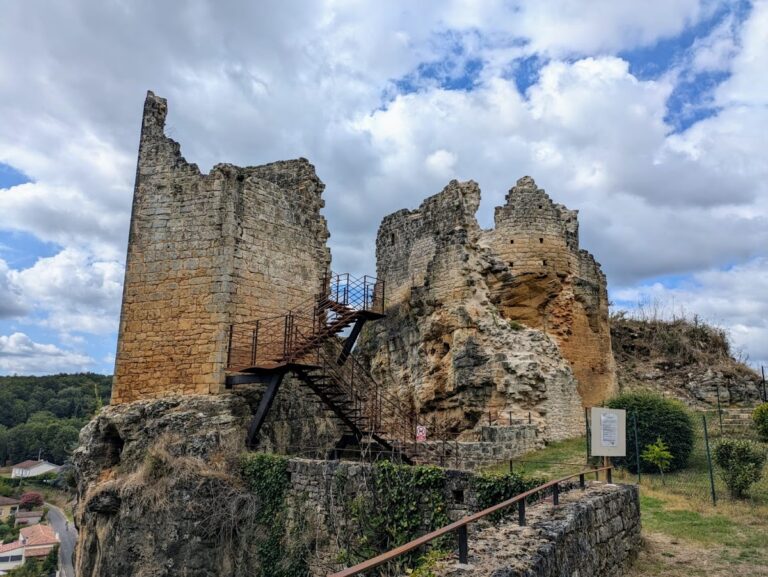
A new agreement in 1356 annulled part of the settlement imposed in 1287 and restored the Pestilhac family as the sole lords of the castrum. The castle and church later remained as ruins. The ruins of the church and castle were entered on the French register of historic monuments on 16 February 1926. The site is privately owned.
Remains
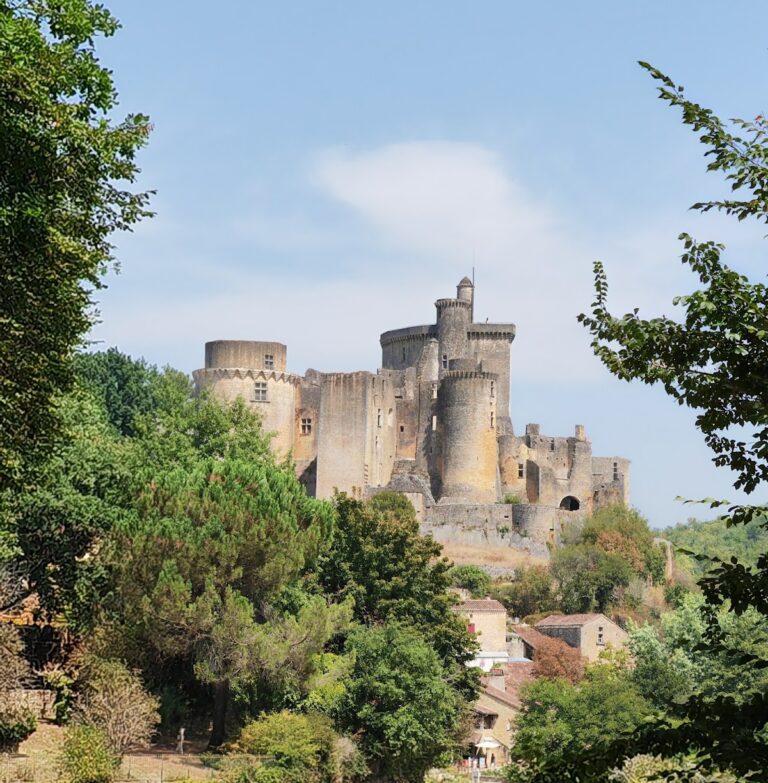
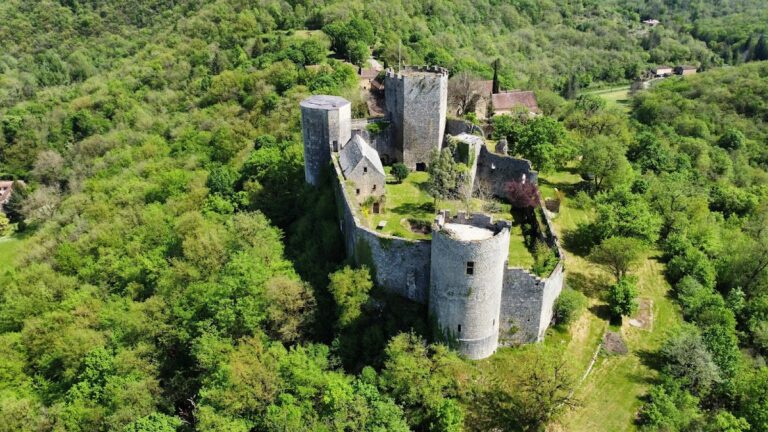
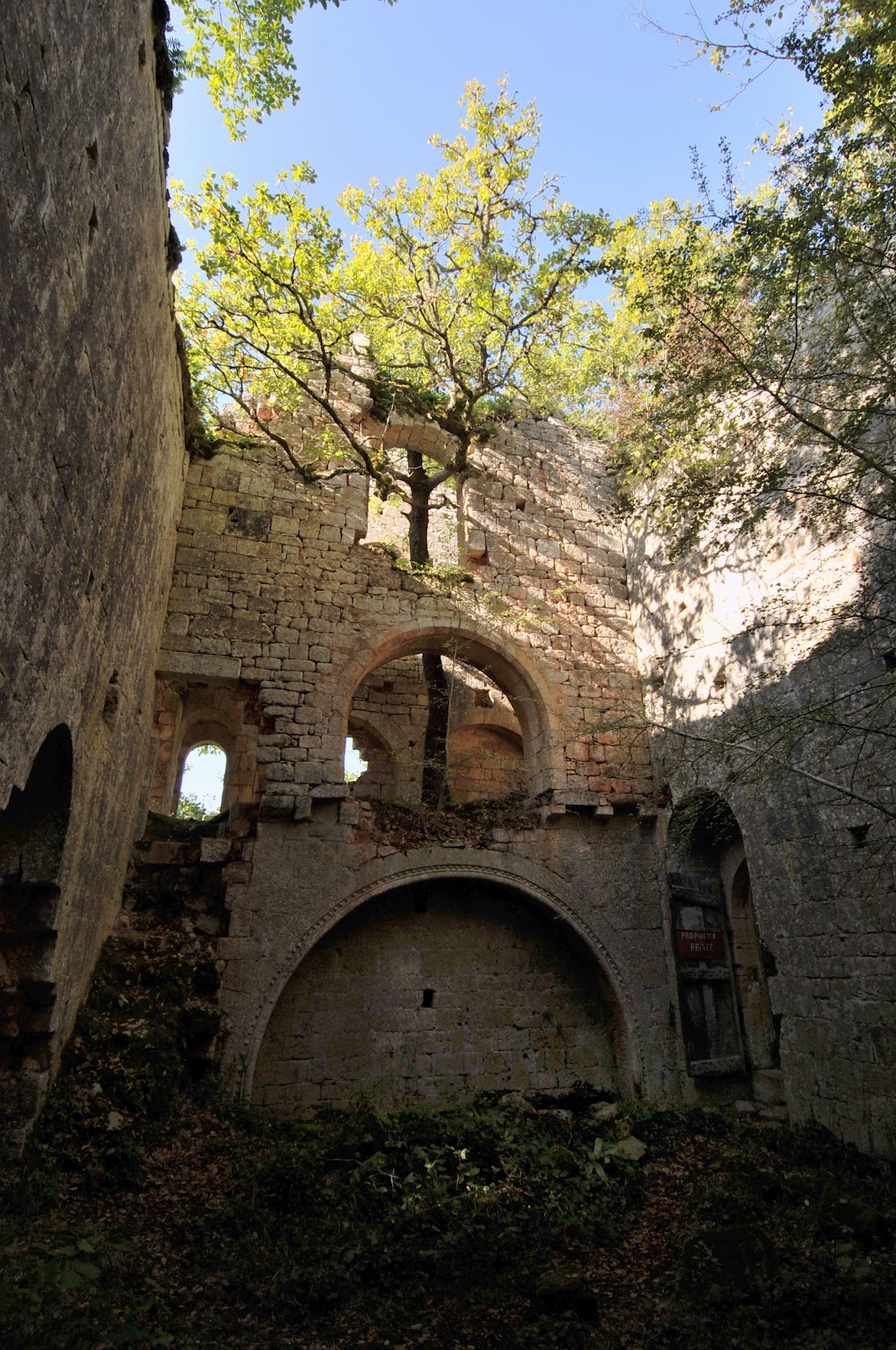
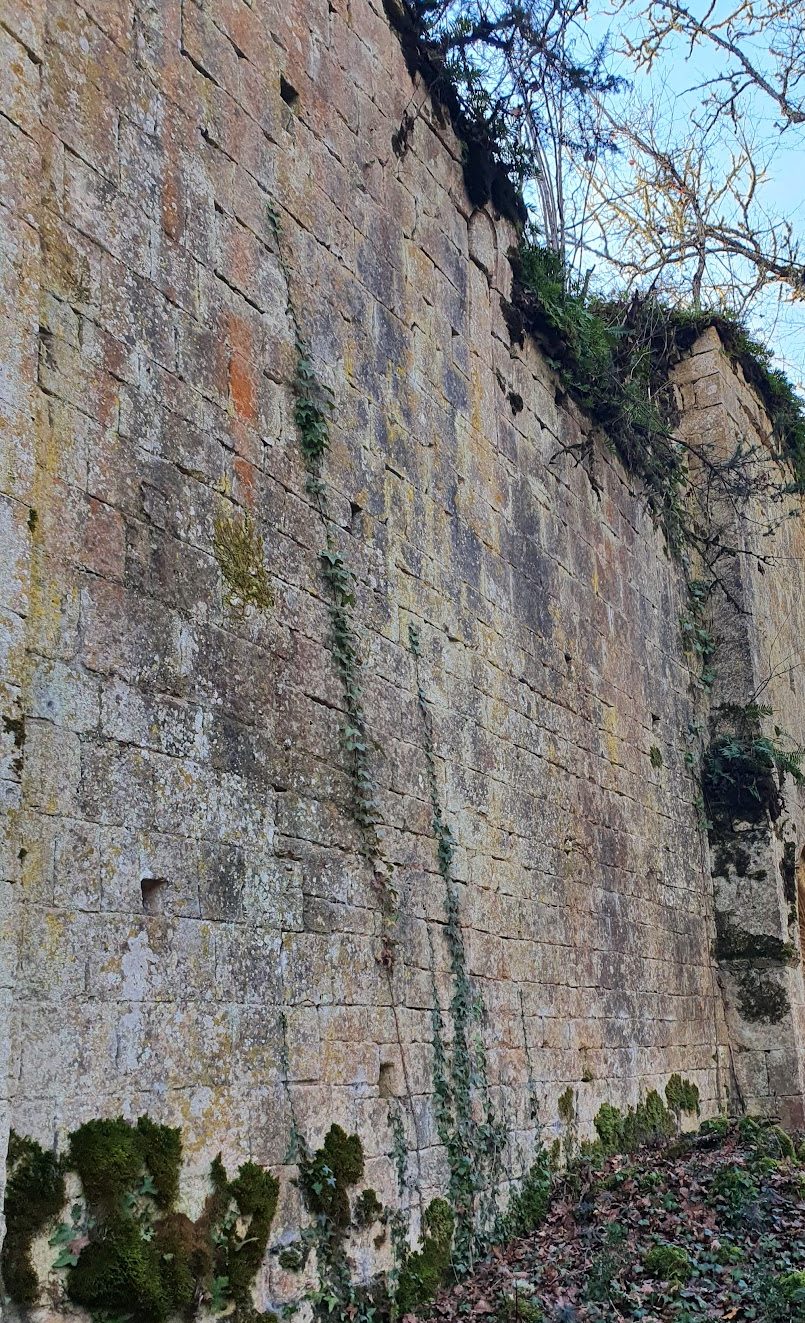
The surviving site is arranged around a fortified castral plateau. Its physical remains include the ruined castle, several tower houses, and the ruins of two adjoining churches or chapels. The construction sequence began in the eleventh century and continued into the twelfth, while the castle is generally characterized as a ruined twelfth-century structure.
Buildings around the castral plateau
Tower houses
Several tower houses stand around the castral plateau. They are probably the former residences of knights and form part of the fortified settlement associated with the castle. Their surviving position around the plateau helps convey the broader arrangement of the former castrum, which combined a lordly stronghold with associated residences.
Castle and churches
The castle and the church ruins make up the principal physical remains of Pestilhac. The castle belongs to the medieval construction sequence that began in the eleventh century and extended through the twelfth. Two adjoining churches or chapels also survive in ruined form, although the precise relationship between the two structures remains uncertain.