Ladhuie Castle: A Medieval River-Toll Stronghold and Residence
Site at a Glance
- Popularity
- Very Low
- Country
- France
- Primary era
- Medieval
- Eras represented
- Medieval, Early Modern
- Civilizations
- French
- Site type
- Domestic
- Remains
- Elite Residence
On this page5 sections
History
River navigation and tolls
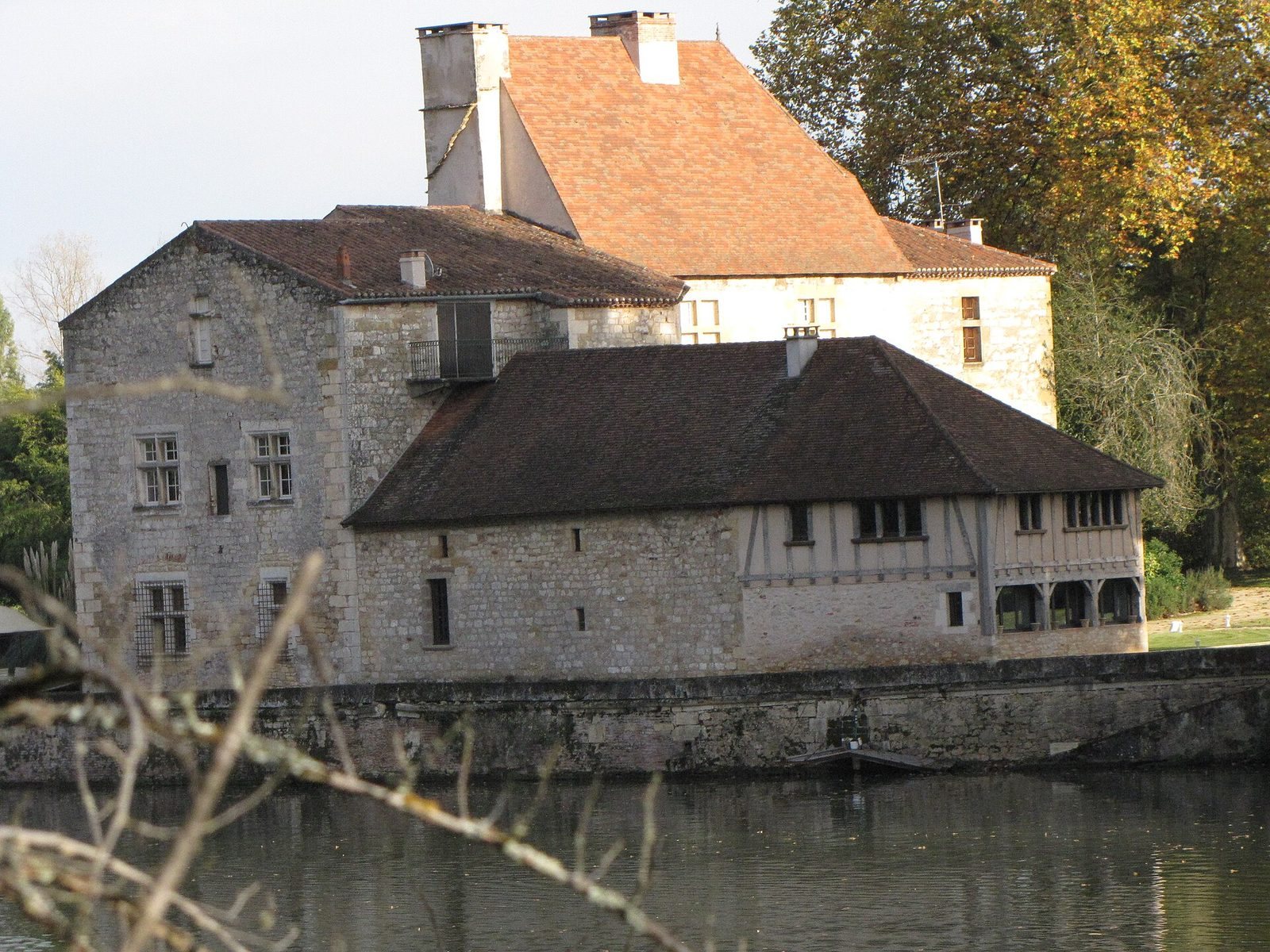
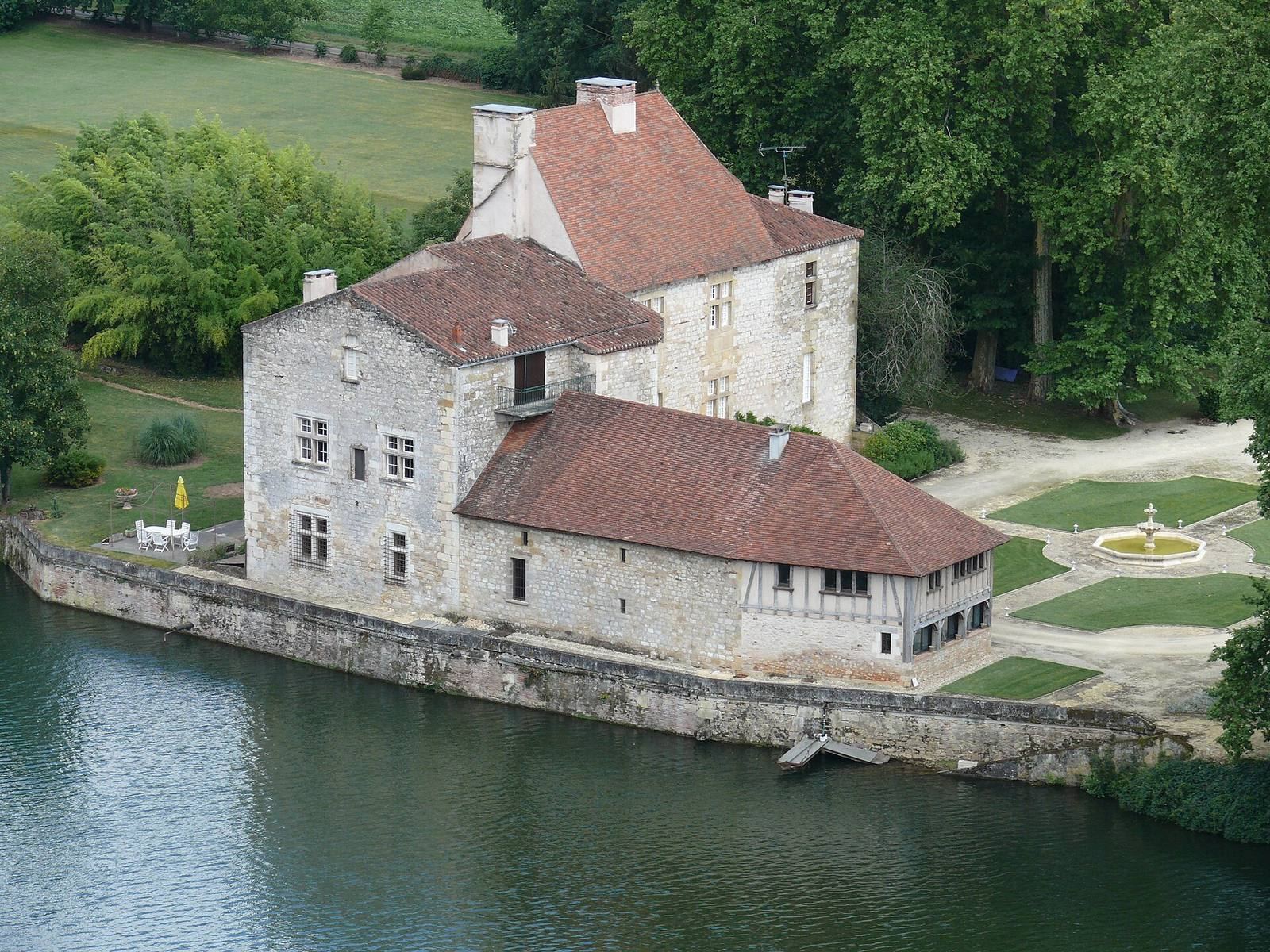
Ladhuie Castle is a historic residence in Ladhuie, within Montayral, France, on the banks of the Lot. Its medieval role was connected to efforts to make the river navigable and to collect tolls at a dam. The Tower of Orgueil, also known as the Tower of Ladhuie or Laduguie, was associated with one of the dams, and a nearby castle was built to control it and charge for passage.
After regaining the Agenais, a historical region in southwestern France, in 1279, Edward I of England pursued plans around 1289 to open the Lot to navigation. The project aimed to ease the movement of goods from Quercy, another historical region, toward Bordeaux. Eleven dams were built along a 22-kilometre stretch in the bailiwick of Penne, an administrative and judicial district. Work began in 1291, with members of the Lustrac family among the contractors. It halted in 1294 when Philip IV of France seized the Agenais; the territory was returned to the English king in 1303.
In 1311, at the English king’s request, Guillaume Cazes, a judge from Agen, investigated the dams. Local lords had built fortified structures nearby to secure toll rights. The Tower of Orgueil was linked to one of these installations.
Wartime and residential transformation
During the Hundred Years’ War, a series of conflicts between the English and French crowns, Lancelot de la Barthe captured the Tower of Orgueil in 1424 while fighting for the English side. Naudonnet de Lustrac, who fought for the French king, recaptured it.
In the late 15th century, the site shifted from a fortified role to residential use, possibly through work for Armand de Laduguie, who appears in records from 1502 to 1506. He was married to Jeanne de Lustrac, daughter of Antoine I de Lustrac. Residential expansion continued around the turn of the 16th and 17th centuries, probably for the Lagoutte family, and the residence was enlarged during the first half of the 17th century. Notarial records from 1695 place Jacques de La Goutte, lord of Buscon, at the Château de La Duguie. He was the brother of François de La Goutte, lord of Lapoujade at Saint-Vite.
Revolution and protection
During the French Revolution, a period of political upheaval that began in 1789, the château was seized as property of Brous Cézerac, an émigré who had left France during the Revolution. It was then sold to Jean Maydieu. The château was listed as a French historic monument on 20 June 1950.
Remains
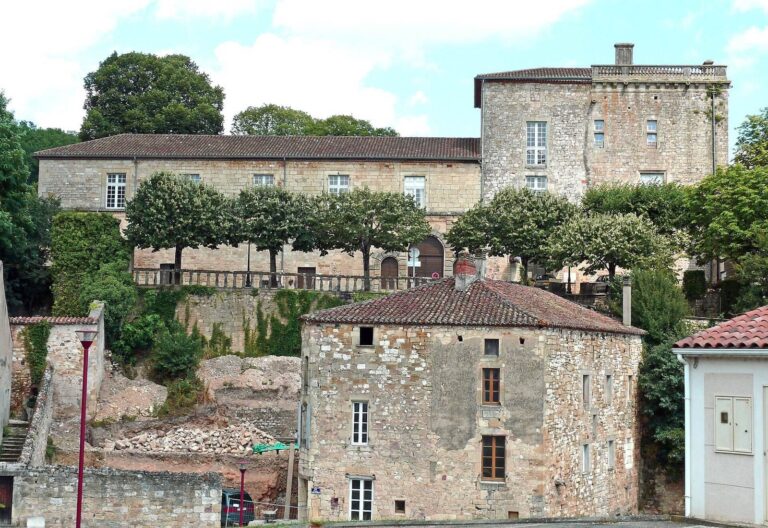
The château stands beside the Lot, and its physical arrangement reflects successive changes from a riverside fortified site to a residence. The Tower of Orgueil stood on one of the river’s dams before a manor replaced it. A second residential building was set against the earlier structure, and the residence was later enlarged.