Château du Mesnil-Geoffroy: A Historic Residence and Estate in Normandy


Site at a Glance
- Rating
- 4.4
- Popularity
- Low
- Country
- France
- Primary era
- Early Modern
- External website
- Open
- Eras represented
- Early Modern
- Civilizations
- French
- Site type
- Domestic
- Remains
- Castle
On this page7 sections
History
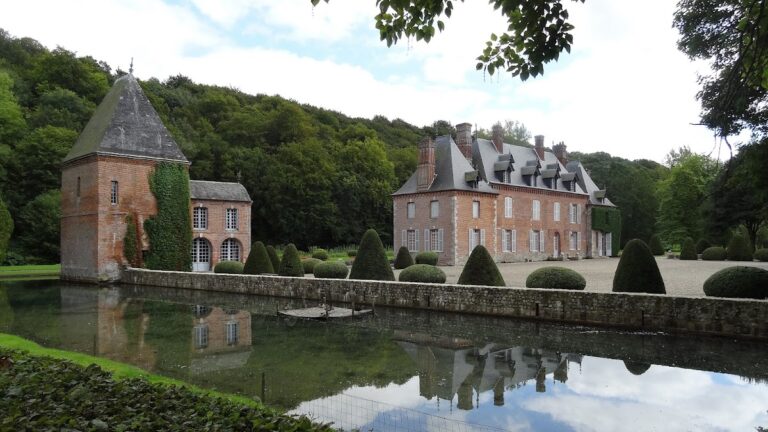
Château du Mesnil-Geoffroy is a historic residence and estate in Ermenouville, France, whose present buildings date from the seventeenth and eighteenth centuries. The current château was built in the early seventeenth century by Guillaume Le Seigneur, Sieur de la Heuze, on the site of an earlier building. That predecessor has been attributed either to the Pinneville family in the fourteenth century or to the Bréauté family in the sixteenth century.
The seventeenth-century château
The early seventeenth-century construction established the residence that later became the centre of a larger aristocratic estate. Its history therefore combines an uncertain medieval or sixteenth-century predecessor with a clearly identified rebuilding under Guillaume Le Seigneur, Sieur de la Heuze.
The Lannoy de Bellegarde transformation
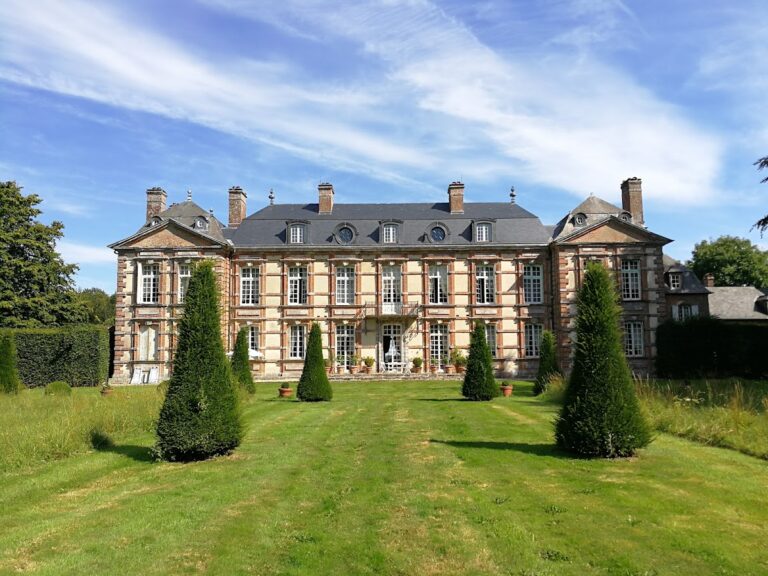
Around 1740, the property passed by marriage to the Lannoy de Bellegarde family. They entirely transformed the former small château, arranging formal French parterres, which are geometrically designed ornamental planting beds, and avenues of regularly pruned hornbeam trees and hedges.
In 1781, Jacques de Lannoy de Bellegarde, a councillor of the Parliament of Rouen, left the property to the Marquis of Cany. The Parliament of Rouen was the senior judicial institution of historic Normandy. The château later belonged to the princes of Montmorency-Luxembourg, a family related to the French royal family.
Later owners and protection
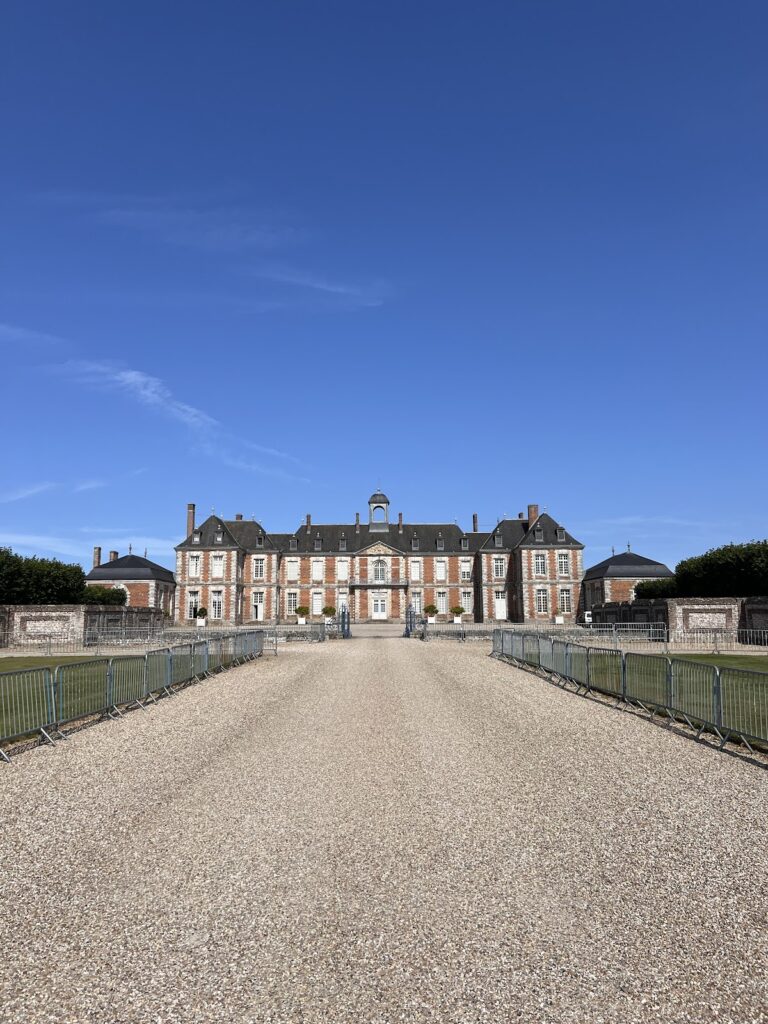
Since the eighteenth century, the residence has undergone no alteration either internally or externally. Its preserved woodwork, façades, dining-room decoration, and bedrooms retain evidence of the life of eighteenth-century Norman nobility. The property subsequently belonged to the diplomat Louis de Robien and was owned by Daniel Paterne in 1987. It is now owned and inhabited throughout the year by Prince and Princess Hany Kayali, who originate from Syria and are cousins of the Aga Khans. The Aga Khan is a hereditary title held by the spiritual leader of the Nizari Ismaili branch of Shia Islam.
The façades, roofs, and wood-panelled ground-floor rooms were classified as historic monuments in 1945. In France, classification is generally the stronger level of historic-monument protection. The park received designation as a classified natural site in 1946. In 2015, the Mesnil-Geoffroy estate was listed as a historic monument, covering buildings other than the portions already classified, as well as the enclosure, park, gardens, monumental statuary, and the land on which the statuary stands.
Remains
The château and interior rooms
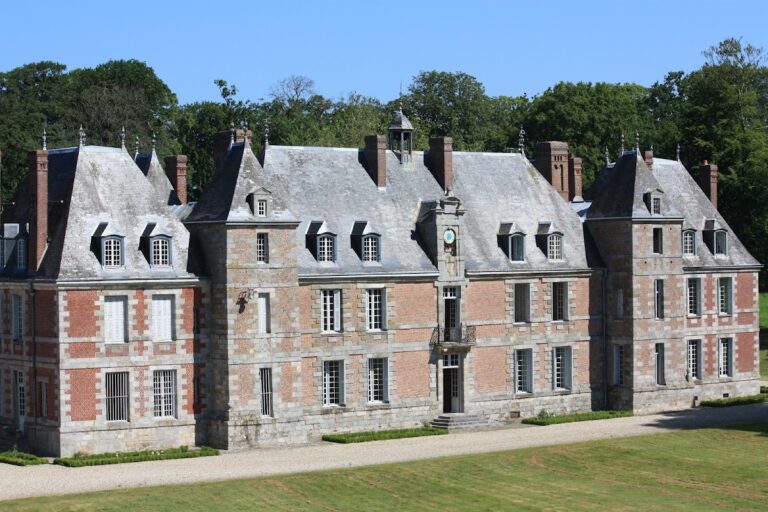
Château du Mesnil-Geoffroy is a seventeenth- and eighteenth-century residence situated in Ermenouville, approximately ten kilometres from the coast and the cliffs near Saint-Valery-en-Caux, Fécamp, and Étretat. The building retains its exterior façades and roofs, together with ground-floor rooms lined with wood panelling. The dining room and bedrooms preserve interiors associated with eighteenth-century Norman aristocratic life.
Inside, the reception rooms contain woodwork, period furniture, and period objects. These surviving elements form a continuous interior record of the residence’s eighteenth-century appearance and use, while the unchanged exterior preserves the relationship between the house and its historic grounds.
Formal gardens and park
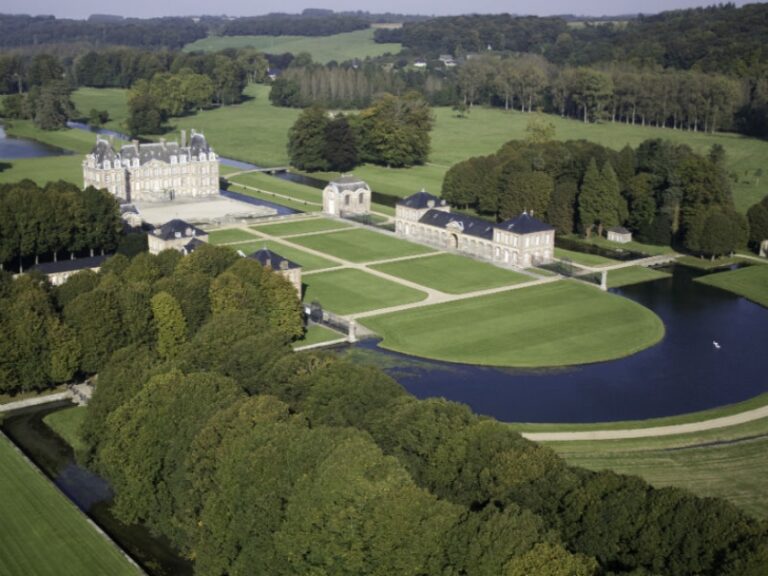
The eighteenth-century transformation gave the grounds their formal French parterres and hornbeam avenues. The garden covers 10 hectares, and its layout has remained unchanged since that period. A romantic kitchen garden containing heritage vegetables forms another part of the park.
The grounds also include a large rose garden described as the largest private rose garden in Normandy. It contains more than 2,500 rose bushes, with old and modern varieties including Abraham Darby, Adelaide d’Orleans, Cardinal de Richelieu, Henri Foucquier, Honorine de Brabant, Jules Barigny, Lady Waterlow, Madame Alfred Carriere, Madame Ernest Calvat, Paul Noel, and Victor Parmentier.
The park covers 23.19 hectares and includes the estate enclosure, gardens, and monumental statuary. Together, these elements preserve the landscape arrangement created during the eighteenth-century reorganisation of the property.
Nearby sites