Rožmitál pod Třemšínem Castle: A Historic Fortress in the Czech Republic
Visitor Information
Google Rating: 3.7
Popularity: Low
Official Website: www.rozmitalskyzamek.cz
Country: Czechia
Civilization: Early Modern, Medieval European
Site type: Military
Remains: Castle
History
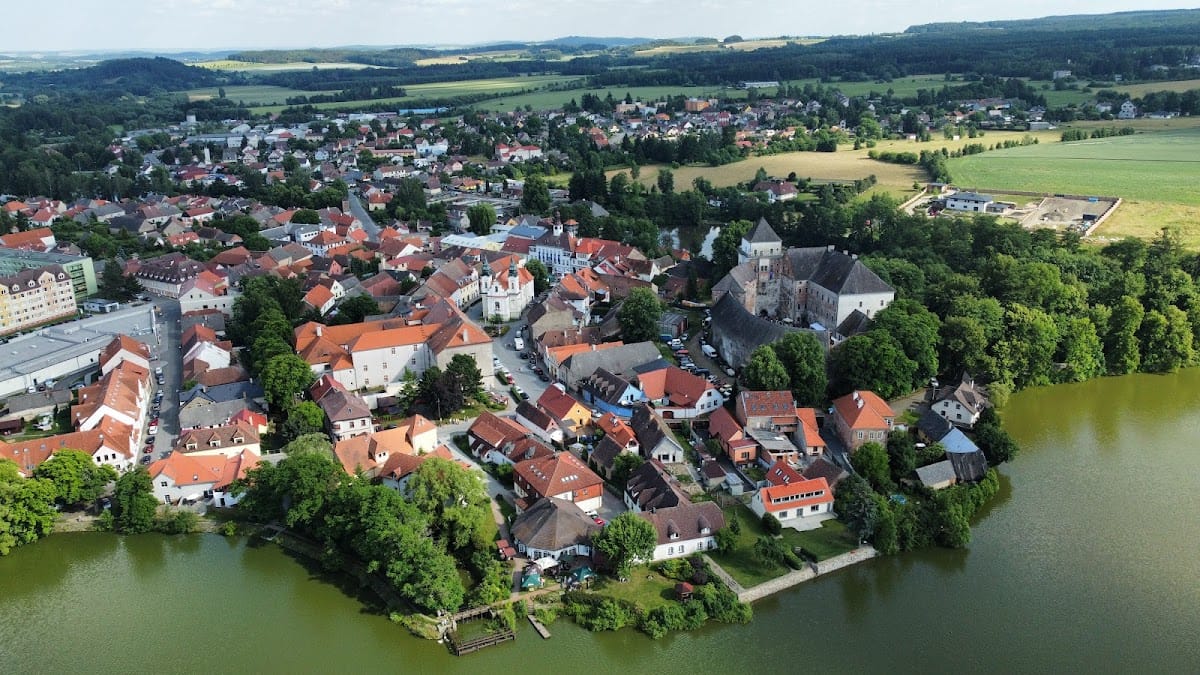
Castle Rožmitál pod Třemšínem is located in the town of Rožmitál pod Třemšínem in the Czech Republic. It was founded during the first half of the 13th century by Oldřich of the Buzic family, who established the Lords of Rožmitál, a noble lineage that held the castle as a strategic fortress and administrative center. Over time, the castle served as a seat of lordship, witnessing changes in ownership and architectural transformation.
In 1347, Sezima of Rožmitál donated half of the castle and its estates to the Archbishopric of Prague. This division led to disputes with his brother Zdeněk and the archbishop Arnošt of Pardubice, marking a period of contested ownership. Despite the conflicts, the archbishops maintained possession of their share until the Hussite Wars in the early 15th century. Ultimately, the property was reunited under the Lords of Rožmitál and remained in their hands until the mid-16th century.
The Rožmitál family produced notable figures, including Joanna of Rožmitál, queen consort of King George of Poděbrady, and Jaroslav Lev of Rožmitál, known for his diplomatic service and cultural patronage. However, financial difficulties led Zdeněk Lev of Rožmitál to cede the estate to creditors, prompting his sons to relocate to Moravia.
Between 1550 and 1555, Florián Gryspek, a nobleman from Bavaria and Austria and a royal official, acquired the castle and its lands from creditors. He undertook a substantial reconstruction of the fortress between 1559 and 1564, adapting it to Renaissance styles and adding the Great Palace. He also expanded the estate’s infrastructure, including facilities for brewing, baking, grain storage, and water supply, transforming the castle into a multifunctional complex.
The Gryspek family retained ownership until 1622 when Emperor Ferdinand II confiscated their property due to their part in the Estates Revolt, an uprising of Bohemian nobles. The following year, the castle was granted to Archbishop Ernst Adalbert of Harrach, who used it as a summer residence. During archiepiscopal ownership, the castle endured four major fires—in 1660, 1724, 1813, and 1940—each causing significant damage but often followed by slow or incomplete repairs, which contributed to gradual decline.
After the Second World War, the castle was nationalized in 1948 and used by the Czechoslovak State Forests as apartments and offices until the 1970s. Ownership transferred to the town of Rožmitál in 1974, which planned to convert the castle into a regional history museum, though these projects were interrupted by the political changes of the Velvet Revolution in 1989 and never finished. In the 1990s, the castle was returned to the Archbishopric of Prague, who then passed it to a private investor in 1998. Renovation efforts resumed briefly but halted by 2006 due to financial difficulties.
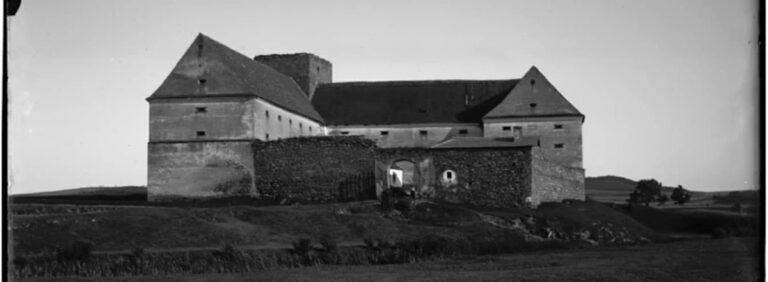
In 2014, part of the roof of the oldest section, a former brewery, collapsed following years of neglect and vandalism. Starting in 2017, a civic initiative supported by the Czech National Trust led to the formation of the Rožmitálský zámek association in 2019. This group took responsibility for conservation and reopening the castle to the public by late 2018. Since then, the site has hosted cultural events managed by volunteers. Notably, the castle served as a filming location for the 2024 film Nosferatu.
Remains
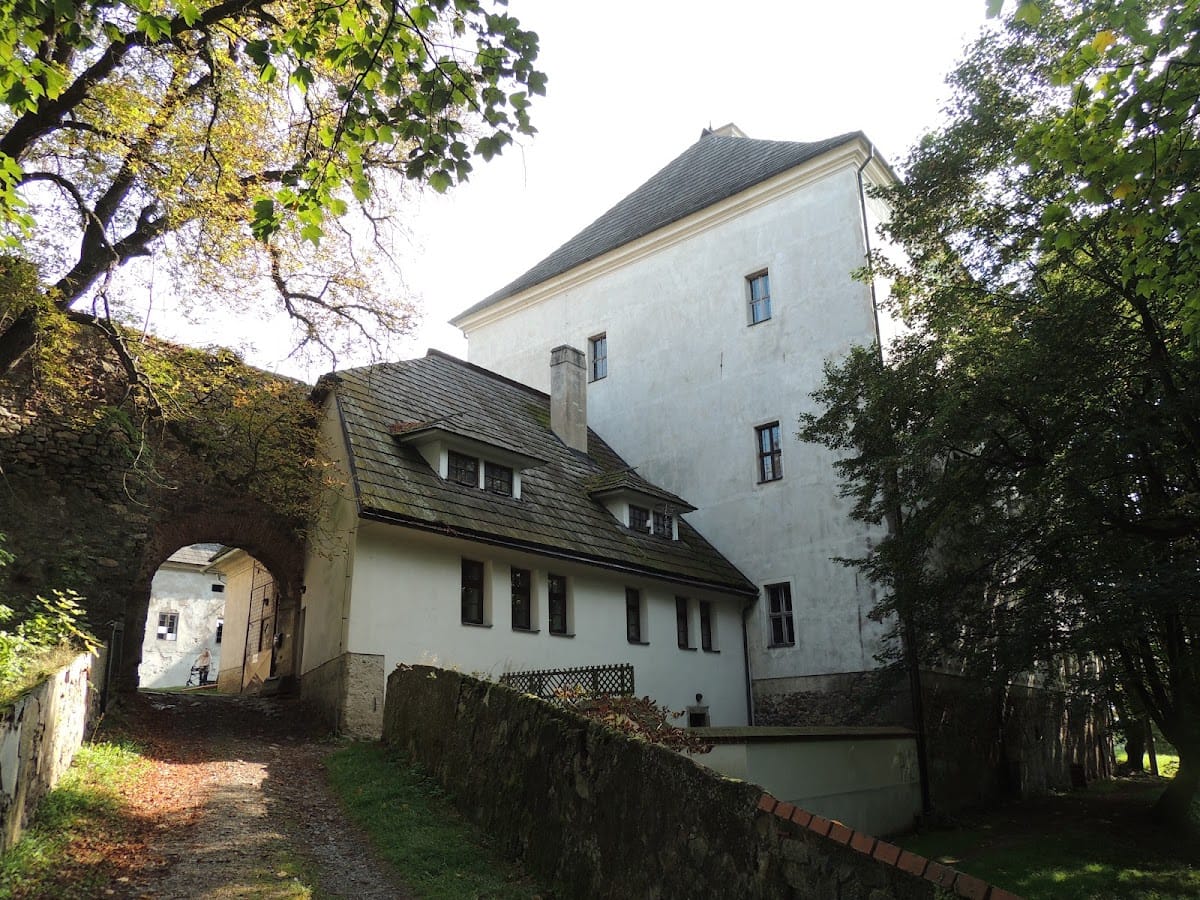
The castle’s original layout reflects its medieval origins, constructed on muddy terrain where water featured prominently in its defenses. A northern pond supplied water to the castle’s moat, which was crossed via drawbridges, providing a natural barrier against attackers. The earliest surviving stonework includes an oval-shaped perimeter wall, distinctive for having only one corner on the southwest side, hinting at the possible presence of a now unknown structure in that area. Masonry in the eastern wing also dates back to the 13th century, representing remnants of the initial fortification phase.
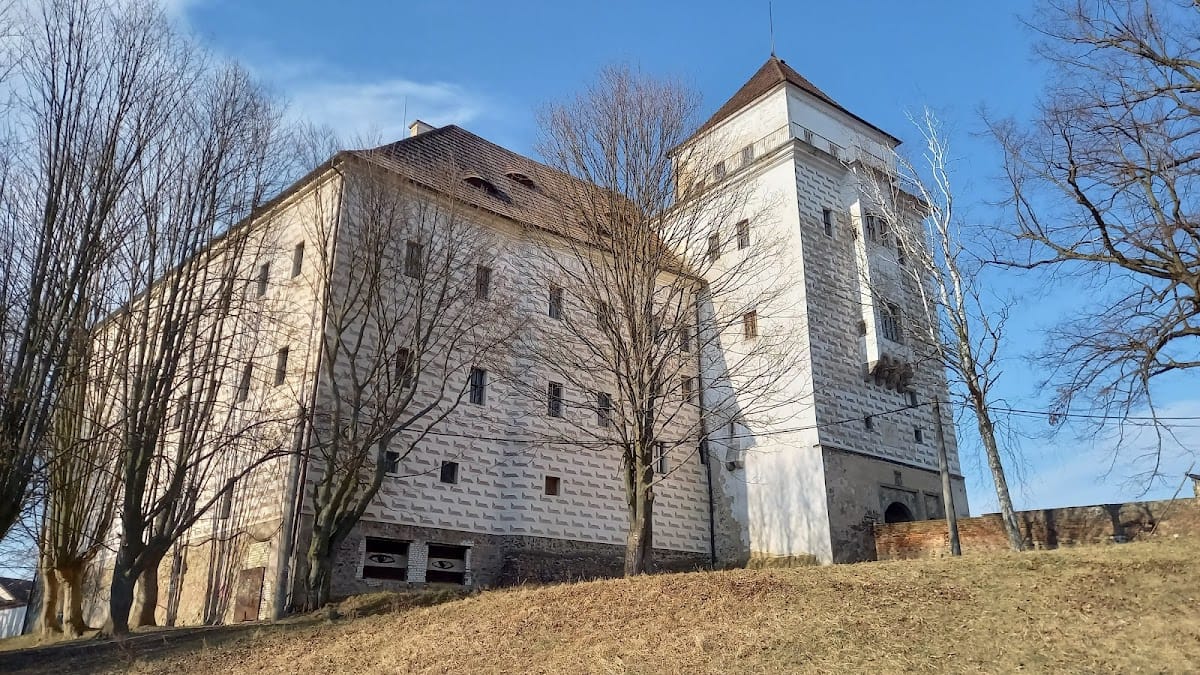
During the late Gothic period, the castle underwent significant modifications. A large tower with bay windows was added, along with a four-room palace that required partial demolition of the original outer wall to make space. Fortifications were strengthened by ramparts and an enclosing wall featuring round bastions or towers, enhancing defensive capacity in response to changing military needs.
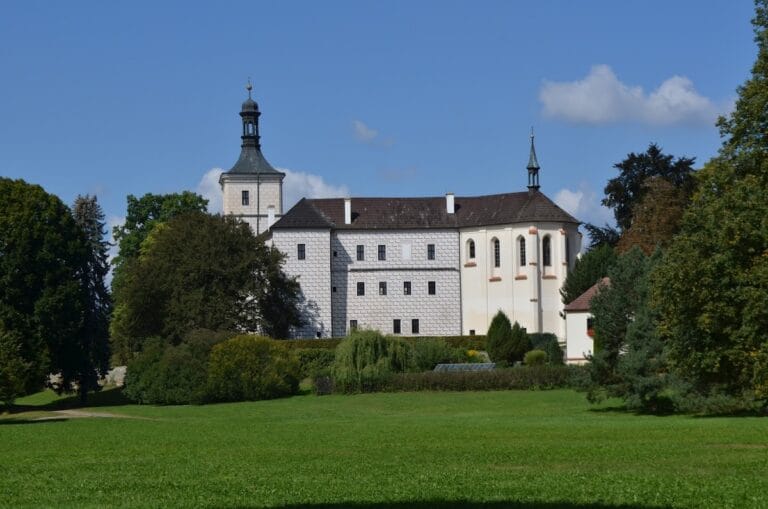
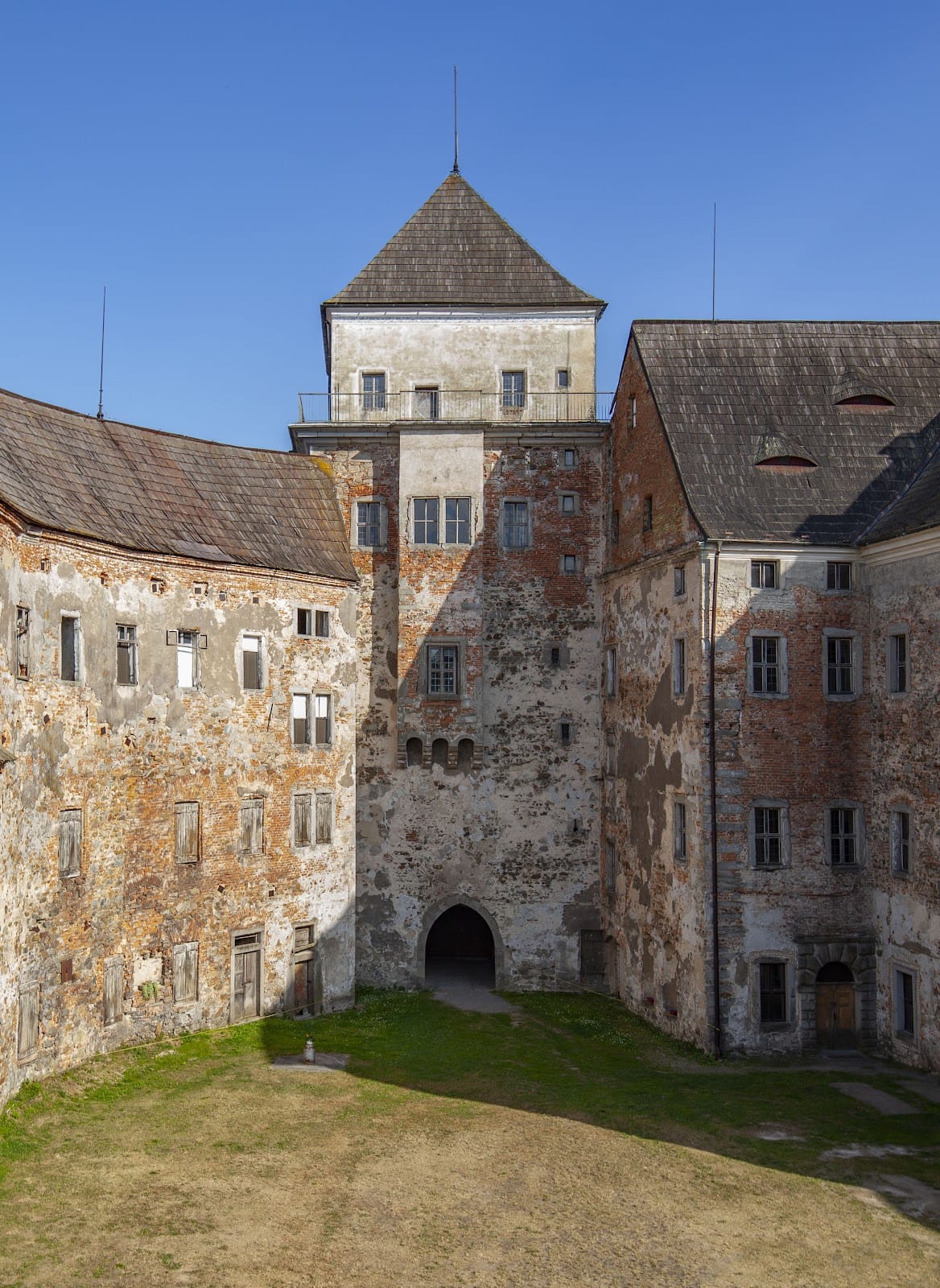
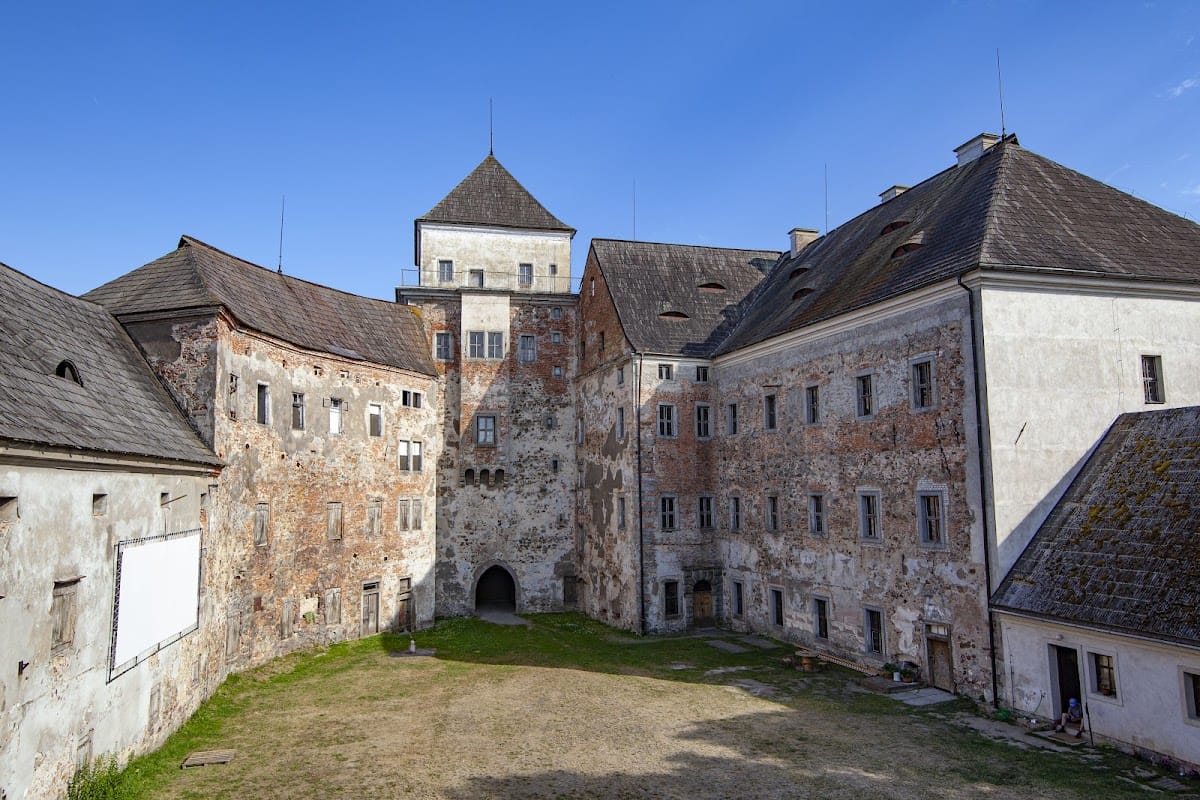
The Renaissance transformation under Florián Gryspek from 1559 to 1564 introduced a two-story building arranged in three wings around an unevenly shaped courtyard. The Great Palace, also known as the Gryspekovský Palace, projects beyond the original oval walls, reflecting the style and function of Renaissance noble residences. The gate tower was raised by two additional floors during this reconstruction and is adorned with decorative details such as sgraffito (a technique involving layered plaster creating patterns) and rosette window frames dating to the 1570s. Facades still bear traces of rustic plaster from this period.
Gryspek also developed extensive ancillary buildings near the castle, including a brewery, bakery, granaries, malt house (used for germinating barley), silos, apiaries, hop gardens, and a tavern. The brewery complex became a notable feature, functioning from the 17th century until 1941, and included malt houses, fermentation and storage cellars, and a residence for the brewmaster. The malt house was demolished in 1979, while the brewery saw continuous production of thousands of hectoliters of beer annually throughout the 19th century. Late 19th-century additions included a cooling box to preserve the beer.
The castle grounds also featured a large garden transformed from a swampy area into an English-style park in the late 18th century. This garden was publicly accessible until the mid-19th century, providing a recreational space connected to the noble residence.
Repeated fires affected the Great Palace significantly, damaging the structure and leading to alterations such as the reduction of the tower’s height by one floor after the 1724 fire. Throughout the 20th century, repairs focused on roofs, facades, water supply installations, and restoration of the tower’s gallery and gateway.
Recent conservation efforts by community volunteers and local authorities have cleared invasive vegetation, removed debris, and carried out minor repairs. New main gate doors were installed, and shingle roofing on the Old and Small Palaces has been partially replaced between 2023 and 2024. The castle today is partially accessible, with guided tours reaching the tower, and remains a prominent historical monument shaped by centuries of architectural evolution and shifting ownership.
Nearby sites