Castle of Sant’Eusanio Forconese: A Medieval Fortification in Italy
Visitor Information
Google Rating: 4.8
Popularity: Very Low
Country: Italy
Civilization: Early Modern, Medieval European
Site type: Military
Remains: Castle
History
The Castle of Sant’Eusanio Forconese is located in the municipality of Sant’Eusanio Forconese in Italy. It was constructed during the 12th or 13th century by the local medieval population as a fortified refuge designed to protect residents in times of danger.
During the Middle Ages, the castle served primarily as a shelter where the community could retreat during attacks or unrest. Its strategic position in the valley allowed it to act as part of a wider defensive system, joining forces with nearby fortifications such as the Castello di Ocre, Castello di San Pio delle Camere, and Castello di Barisciano. Together, these castles helped safeguard the city of L’Aquila by providing a network of fortified points across the landscape.
Unlike other enclosures in the region, the presence of a cistern with potable water within the castle suggests it was prepared to accommodate inhabitants for prolonged periods, highlighting its role as a secure refuge rather than just a temporary stronghold. This feature emphasizes the foresight in planning for extended safety during sieges or lasting threats.
By the 17th or 18th century, the castle’s military importance had diminished, and its fortifications were no longer maintained for defense. At this time, the religious structure known as the Madonna del Castello church was constructed within the castle walls. This church became a focal point for local devotion and continues to host an annual patronal festival on the first Sunday of August, marking a shift from martial to spiritual functions within the enclosure.
Remains
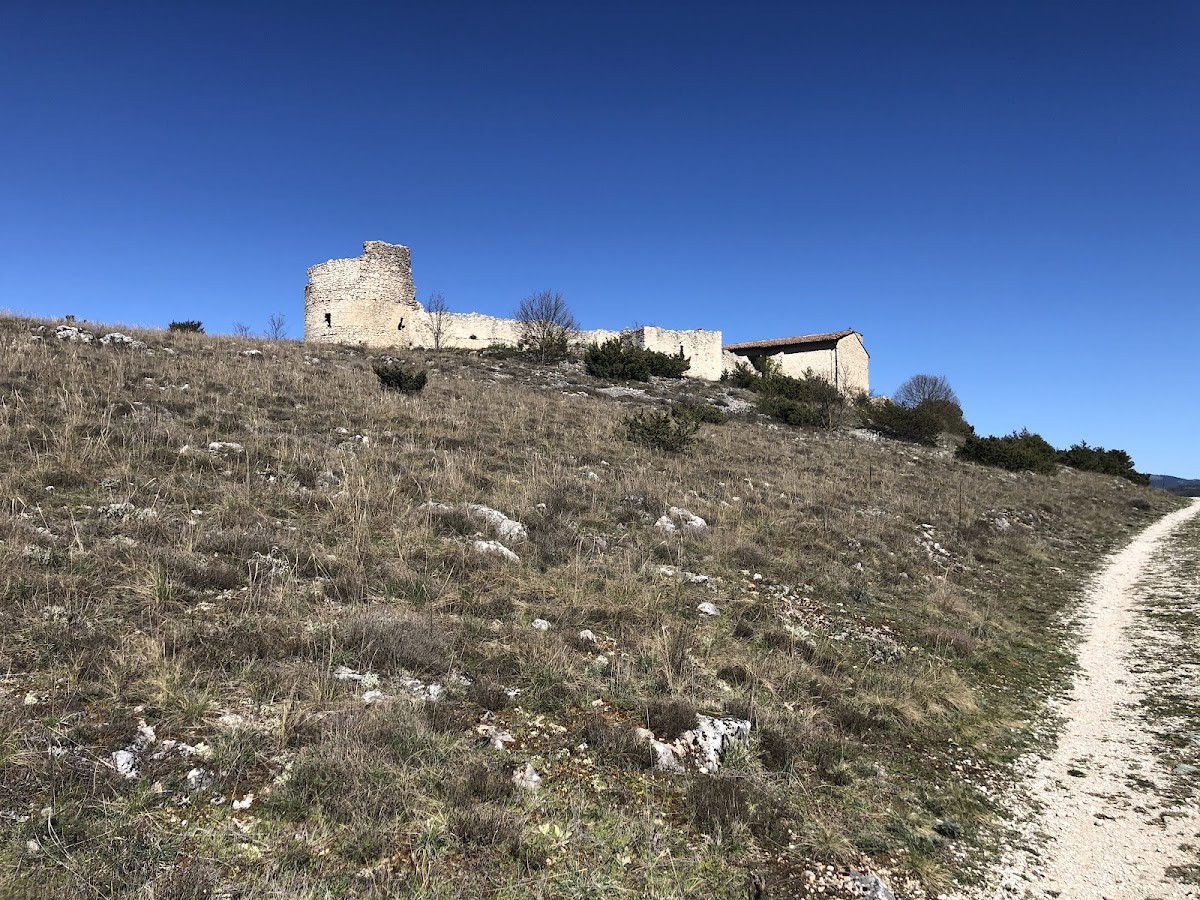
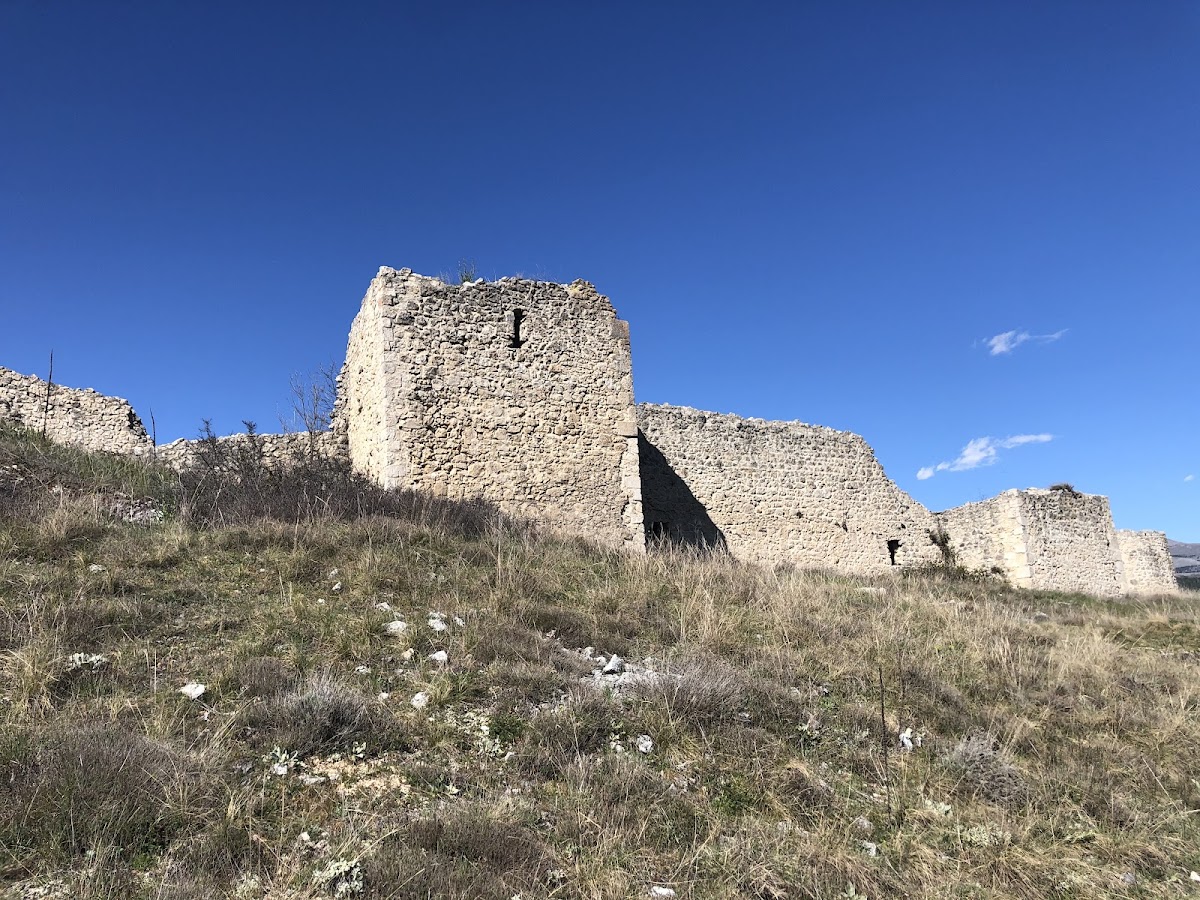
The remains of the Castle of Sant’Eusanio Forconese present a quadrangular enclosure formed by walls that connect a series of towers built for defense and protection. The main enclosure is roughly rectangular and is formed by thick walls, approximately one meter wide, standing between five and seven meters tall.
The defensive system includes five semicircular towers, each with an internal diameter ranging from three to five meters. These rounded towers likely provided a wide field of vision and better deflection of projectiles, enhancing the castle’s ability to repel attackers. In addition to these, four square towers are positioned along the walls to act as defensive breaks, strengthening vulnerable points of the enclosure.
On the western side, where the natural terrain offered fewer protective advantages, the castle was further defended by a moat filled with water, adding an artificial obstacle to any potential assault. This combination of natural and constructed defenses illustrates a careful consideration of landscape and military engineering.
The main entrance to the castle is marked by a gate featuring a pointed arch—a characteristic medieval design element—and is integrated directly into one of the square towers. Upon entering this gateway, visitors would reach the central area inside the walls, where the church of Madonna del Castello was later established. This church now occupies a prominent place within the enclosure, serving as a reminder of the castle’s later religious significance.
The site is located on Monte Cerro, which overlooks the surrounding valley, providing both strategic surveillance and protection. The archaeological evidence confirms the castle’s construction using sturdy masonry techniques suitable for its defensive purpose. Today, much of the enclosure and its towers remain visible, allowing the layout and defensive strategies of the fortification to be understood from the surviving structures.
Nearby sites