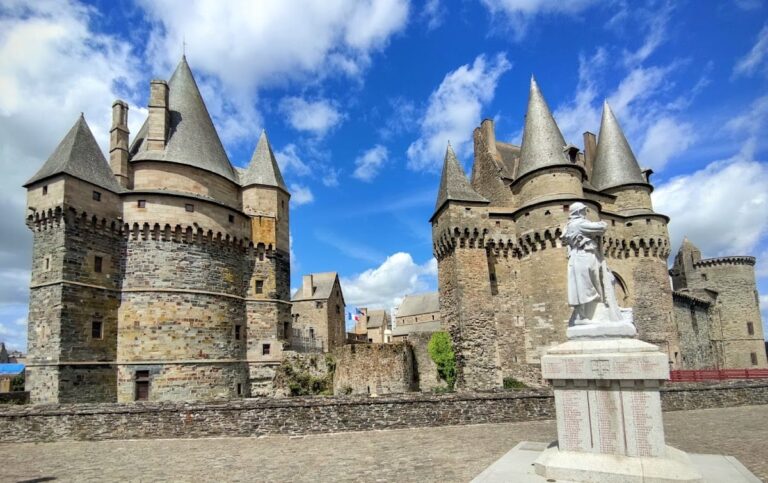
Castle of Pouancé: A Medieval Fortress in France
Visitor Information
Google Rating: 4.1
Popularity: Low
Official Website: www.tourisme-anjoubleu.com
Country: France
Civilization: Early Modern, Medieval European
Site type: Military
Remains: Castle
History
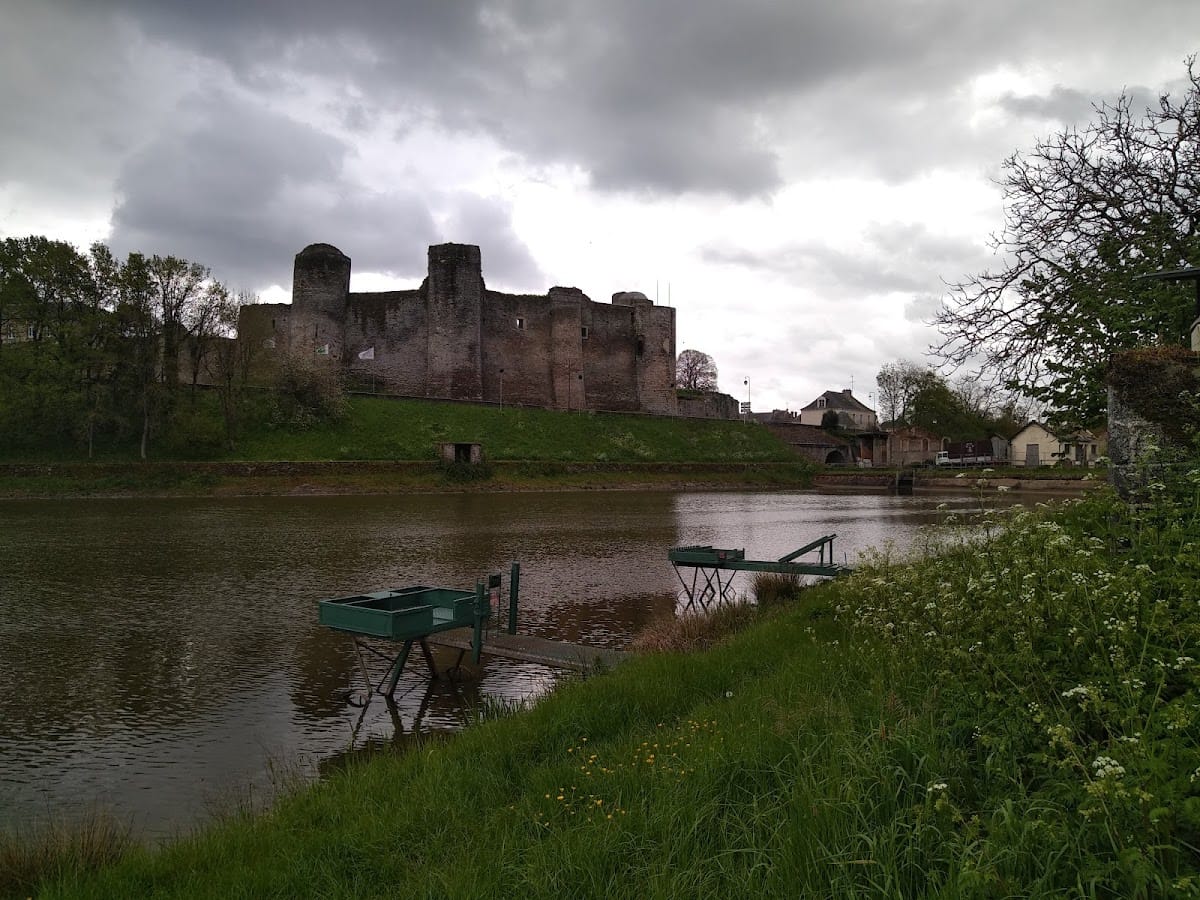
The Castle of Pouancé is a medieval fortress situated in the town of Pouancé, France. It was constructed by the medieval lords of Anjou to secure the western border of their domain and to defend against incursions from neighboring Brittany. The site’s strategic location made it a key stronghold in the contested Breton March.
Fortifications existed on the site as early as the 11th century, evidenced by records from 1049 to 1060 mentioning troops and a local official stationed there under the count of Anjou. The area had been inhabited earlier, with fragments of Merovingian-era sarcophagi embedded in the nearby church walls, indicating a history of settlement predating the castle’s construction.
Ownership of the castle passed through several noble families. Hervé de Martigné, a vassal to the count of Rennes, held part of the site before the 12th century. Following intermarriage, the La Guerche family came to control the seigneury. During the late 12th century, the lords of Pouancé rebelled against Plantagenet authority. These uprisings led to military setbacks and partial destruction of the fortress, yet the family retained influence in the region during the 13th century. During this period, the castle served as a political center, overseeing nearby lordships including Martigné, La Guerche, and Segré. Early 13th-century improvements included the construction of defensive towers and ramparts. To reinforce protection on the castle’s vulnerable western flank, Guillaume III engineered a raised embankment on the Verzée river, creating a defensive lake.
By the later 13th century, the prominence of the Pouancé family declined, and through marriage, the seigneury was transferred first to the Beaumont family and later to the Valois and Alençon houses. Louis de Beaumont, one notable lord, died in battle in 1364.
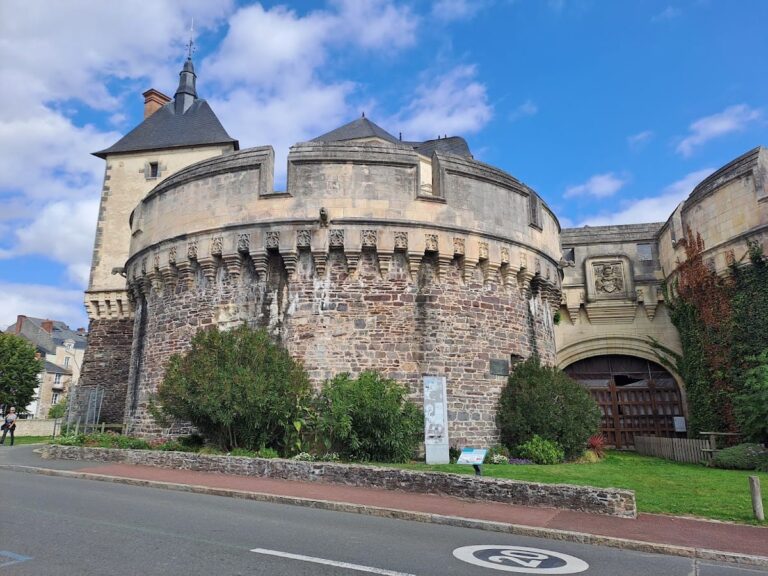
The Hundred Years’ War brought renewed military activity to the castle. It endured multiple sieges, including an assault in 1379 by Breton forces who may have seized it through betrayal. At this time, Pierre II of Valois undertook major enhancements, notably constructing the main tower and installing machicolations—stone projections with openings allowing defenders to attack enemies below. Control of the fortress alternated between lords aligned with Brittany or France, including prominent figures such as Olivier du Guesclin and the Alençon lineage.
In 1432, a prolonged siege involving over 6,000 Breton and English troops was laid against the castle after Jean II of Alençon imprisoned the Bishop of Nantes there. Despite heavy artillery bombardment, the siege concluded by negotiation after five weeks. Ten years later, an English siege inflicted damage on the town’s outskirts but was lifted within weeks.
The castle suffered in 1467 when Breton forces captured and burned it amid Franco-Breton hostilities. French troops recaptured it in 1468, turning Pouancé into a strategic French base against Brittany. Monarchs Louis XI and Louis de la Trémoille treated the fortress as a military assembly point during campaigns in the 1470s and 1480s. This period saw significant strengthening of defenses, including the addition of a heptagonal tower, bastion, covered passages, bulwarks known as moineaux, and a tower with a projecting pointed section called a tower à bec.
In the 16th century, during the Wars of Religion, the castle came under the Cossé-Brissac family. It was occupied by Catholic League forces and later by troops loyal to the Duke of Mercœur until the cessation of hostilities in 1598.
From the 17th century onward, the castle gradually ceased to function as a noble residence. Although sporadic occupancy persisted until the late 18th century, its defensive structures were partially dismantled starting in the 16th century. The gatehouse was destroyed and moats filled during the 18th century. Subsequently, domestic buildings and workshops were erected within the castle grounds, accelerating its decay.
In the 20th century, the castle was recognized for its historical importance. Significant losses occurred due to collapses and modern construction, prompting archaeological investigations and safety measures. Restoration efforts initiated in the 1960s uncovered architectural features and artifacts dating from the medieval period, such as artillery balls and a rare 15th-century silver coin. Since 1978, the fortress has been under the stewardship of the Pouancé municipality, with ongoing archaeological and conservation work advancing into the late 1990s. The site remains a prominent heritage landmark, second in importance in Anjou only to the castle at Angers.
Remains
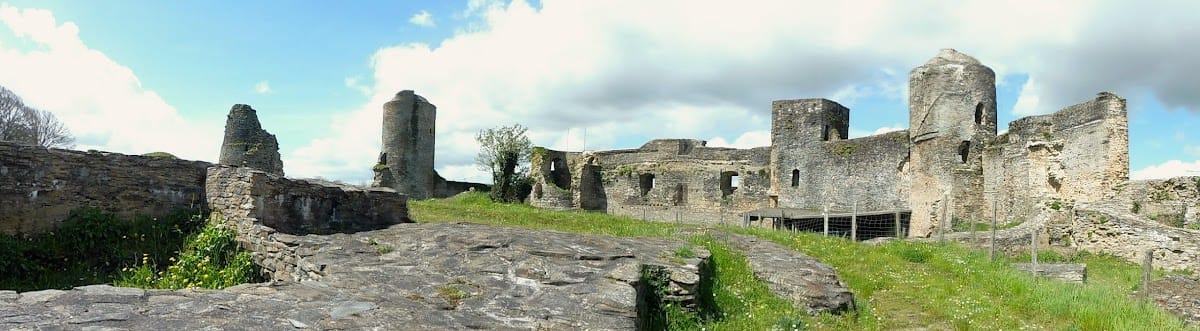
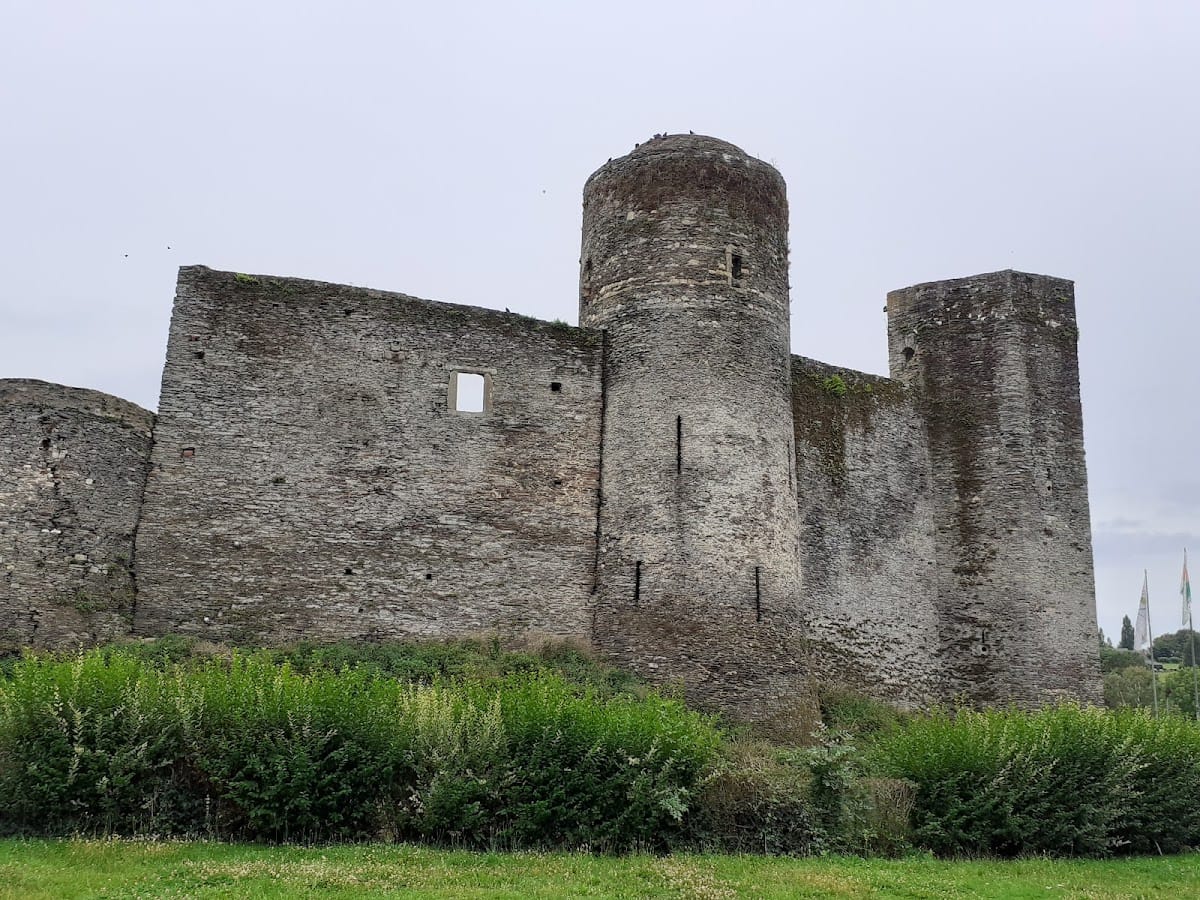
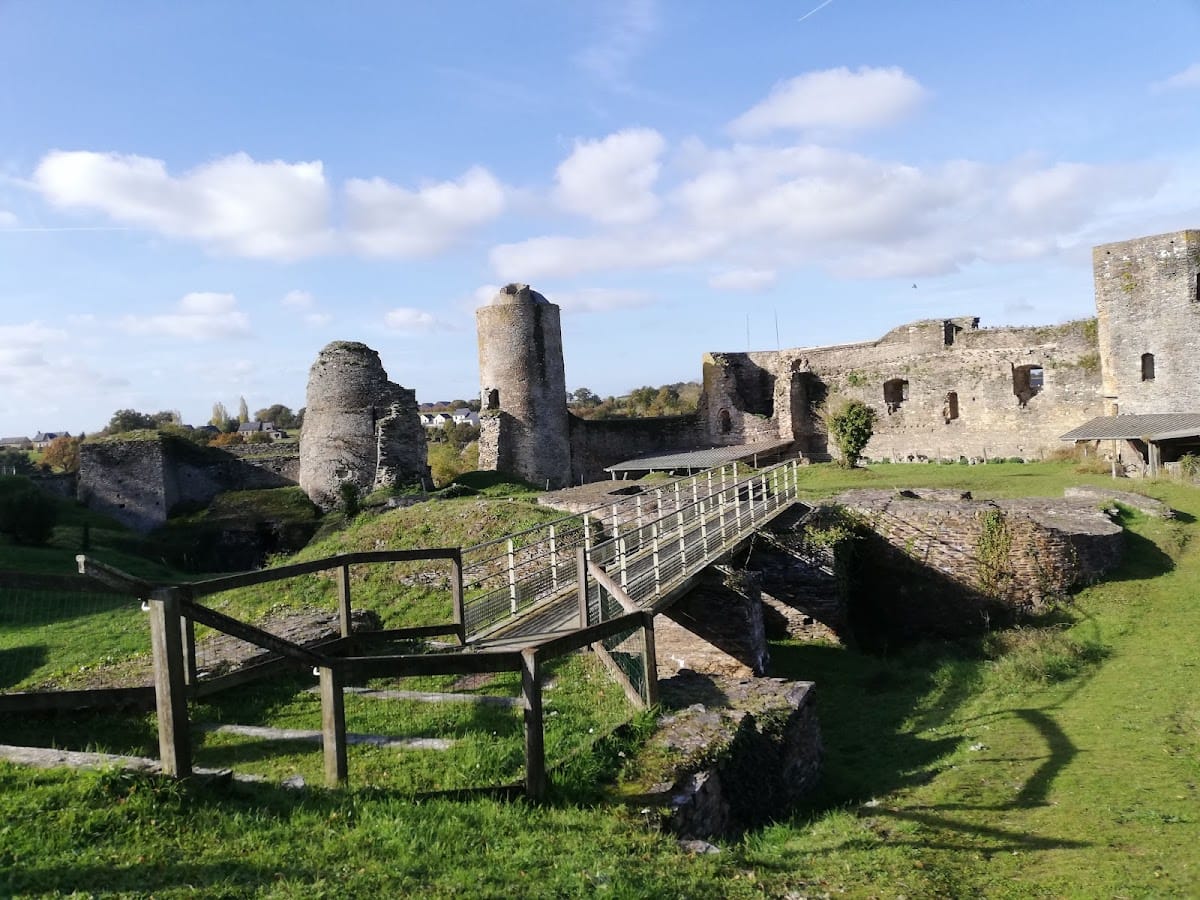
The Castle of Pouancé occupies approximately three hectares on a natural schist rock outcrop overlooking the Saint-Aubin pond and the Verzée river. Its layout is an oval-shaped enclosure defined by a sturdy curtain wall punctuated by six cylindrical towers and three main entrances. This wall surrounds two separate sections known as the lower and upper baileys, arranged on different levels and divided by dry moats. The fortification primarily used local schist stone rubble bonded with mortar, augmented in places by granite elements, reflecting typical medieval construction techniques adapted to available materials.
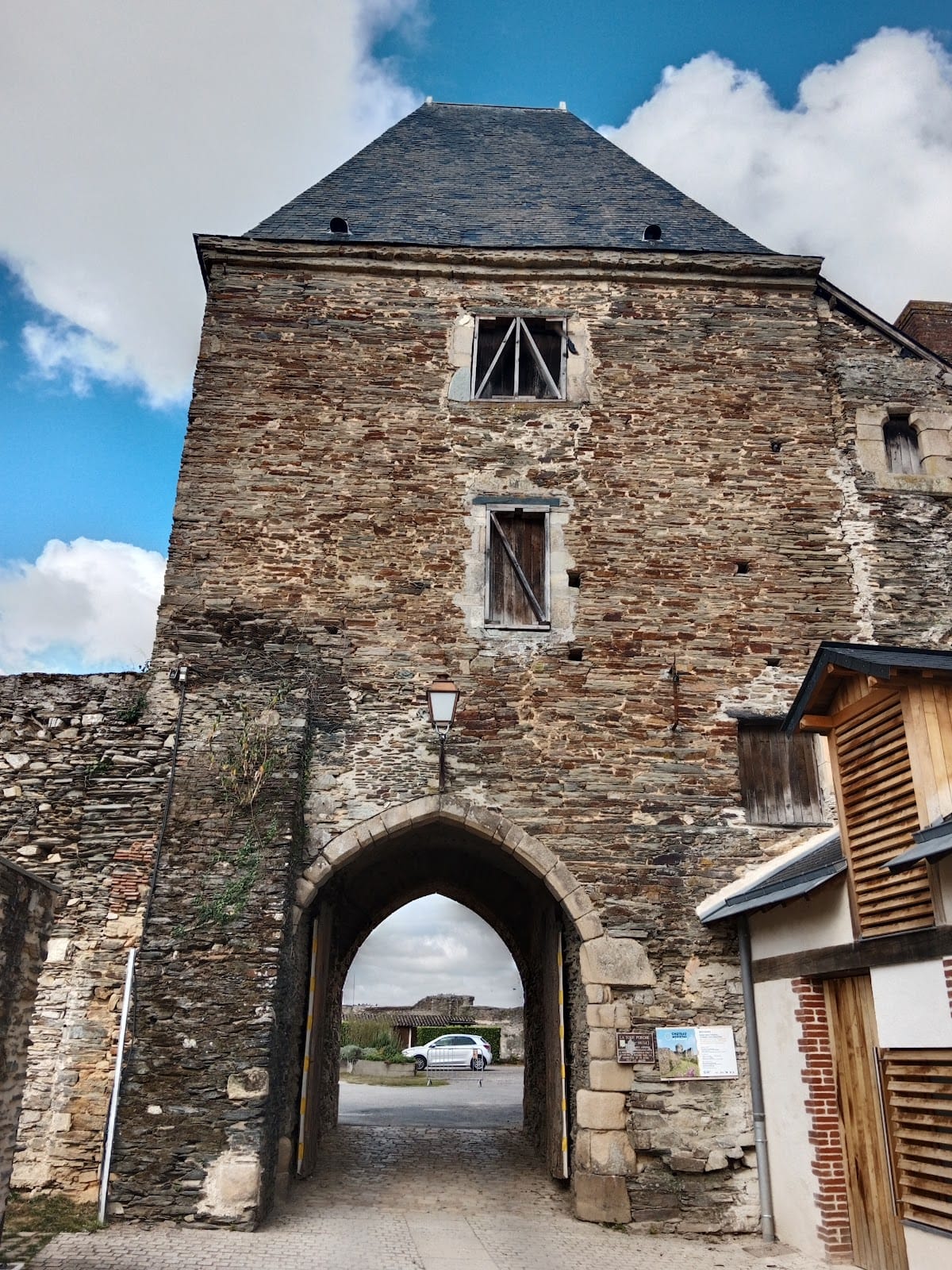
Access to the lower bailey occurs through the principal gate tower known as the Tour Porche, a 15th-century structure featuring two vaulted doorways—one for carriages and a smaller pedestrian gate which was later blocked. In the 17th century, this tower was expanded and adapted for residential purposes, with new windows compromising its original defensive design. Although portcullis grooves and mechanisms for a drawbridge once existed here, these are no longer visible today.
Entering the upper bailey was formerly controlled by a fortified gatehouse (châtelet) set on a bridge supported by three piers, possibly originally equipped with a drawbridge. This gatehouse comprises two narrow, U-shaped towers approximately 3.5 meters wide, each attached to smaller circular turrets that likely contained spiral staircases. The dry moats separating the two baileys were hewn into a natural rock fault, serving as formidable obstacles before being filled during the 19th and early 20th centuries, when they also functioned as communal refuse pits.
Two smaller posterns, or minor gates, remain at the north and south ends of the moat system. The southern postern is better preserved, notable for its granite arch, chamber for a portcullis, and defensive doors retaining original iron fittings. The northern postern, blocked on the interior side in the 15th century by a defensive bulwark called a moineau, linked to the castle’s layered defensive system.
Another significant small gate, named the Dame Blanche postern and dating to the 14th century, is situated between the large Grosse Tour and the Dame Blanche tower. This postern still exhibits grooves for a portcullis and defensive stone machicolations, which allowed stones or boiling substances to be dropped on attackers.
The castle’s towers are arranged from north to south along the walls, each reflecting varying dates and roles. The Tour du Moulin (Mill Tower) originates likely from the 13th century but suffered partial collapse in 1915. The adjacent Tour Saint-Antoine, also 13th-century in origin with alterations in the 14th century, features three floors, a vaulted dome roof, and staggered arrow slits for defense, accessed by a spiral staircase added during modifications.
From the 15th century, the Tour Heptagonale stands out with its distinctive seven-sided shape. Built perhaps atop an earlier tower’s foundation, its vaulted ground floor called the Salle des Couleuvrines contains three artillery openings designed to mount small cannons. Above, four more levels are reached by a spiral staircase carved from schist and tuff stone, with firing apertures allowing defense in multiple directions.
The Grosse Tour or Main Tower dates from the 14th century and is truncated at its summit. It consists of two upper floors and a circular ground floor, with architectural remnants such as a fireplace and latrine within. The top two floors form a heptagonal shape.
The Tour de la Dame Blanche, probably constructed in the late 12th or 13th century, is a solid tower without firing openings, featuring mainly a spiral staircase and retaining its original vaulted dome roof, carefully preserved with cement work in the late 20th century. Nearby, the Tour Criminelle of similar date collapsed in 1936 but once included a vaulted stone upper floor with a central opening.
Within the castle, the grand seigneurial residence, known as the Grand Logis, was excavated in 1991. This large, rectangular building measures approximately 24 by 8 meters and consists of one main floor with a central fireplace and multiple granite-framed windows featuring built-in seats. The tiled floor is covered in glazed terracotta tiles arranged in a herringbone pattern. A spiral staircase inside connects the main hall to the battlements above.
Beneath the Grand Logis lies an extensive vaulted chamber serving as an ice-house, or glacière, about 20 meters long and 4 meters wide. It is accessed via a long vaulted corridor nearly 13 meters in length. The floor is carved directly from schist, surrounded by a drainage channel to collect water seeping through the walls. Impressions of wooden formwork remain visible in the mortar, revealing construction techniques used during its creation.
Defensive upgrades from the 15th century include a substantial bastion in the lower bailey, built with walls 2.3 meters thick. This bastion contains a vaulted blind room, a ground floor equipped with three firing openings, and a now-ruined upper floor all accessible by a spiral staircase.
Flanking the castle’s moats are two moineaux—specialized bulwarks designed to enhance defense. The northern moineau, fully excavated in 1994, connects to the northern postern and includes two light artillery openings and a smoke vent facilitating ventilation during combat. The southern moineau is more complex, featuring three levels: a vaulted lower chamber with one firing slit, an upper room with two firing openings and a smoke ventilation slot, and a corridor containing two additional shooting openings, totaling five defensive apertures. Much of this southern bulwark remains buried under infill from later periods.
A covered defensive passage known as the caponnière adjoins the Grosse Tour. Its structure includes at least three levels, although the top one has been truncated. The lower room contains two firing slits, the middle level has a double cannon opening alongside a narrow loophole, and a fifth opening is located along the stairway leading to the upper floors. The caponnière serves as a protected access corridor to the Dame Blanche postern, featuring a chicane design to slow attackers. Remarkably, its door frame incorporates reused medieval elements, such as fragments of 15th-century red granite quatrefoil window openings.
Restoration work over the past decades has revealed numerous decorative architectural elements, including intricately carved red granite ogee-arched lintels for doors and windows, as well as spiral staircases characteristic of medieval military architecture.
Archaeological excavations and surveys have uncovered a variety of artifacts. Among these are over twenty artillery balls made of dense schist or granite, some weighing as much as 70 kilograms, highlighting the castle’s role in artillery warfare. A silver coin from Aquitaine dated between 1468 and 1474 was also recovered, offering a glimpse into the castle’s historical connections during the late medieval period.
Today, the castle’s remains stand as a major monument within the town of Pouancé. Careful preservation has ensured the survival of many of its distinctive medieval military features, providing insight into the fortress’s complex history and architectural evolution.
Nearby sites