Castle of Nogales: A 15th-Century Medieval Fortress in Spain
Visitor Information
Google Rating: 4.6
Popularity: Low
Country: Spain
Civilization: Medieval European
Site type: Military
Remains: Castle
History
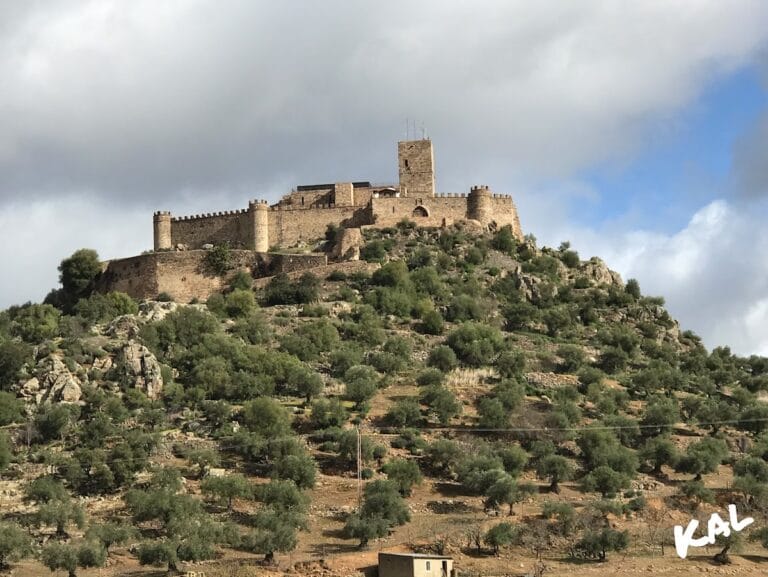
The Castle of Nogales stands in the municipality of Nogales in Spain and was constructed by the medieval Christian civilization during the 15th century. Its origins are closely tied to the political and territorial developments of the period, particularly the establishment of local lordships after the Reconquista.
In 1395, the town of Nogales became part of the lordship of Feria when Gómez I Suárez de Figueroa purchased the territory. This acquisition marked a turning point, as from the mid-15th century onward, efforts began to repopulate the town and to strengthen its defenses by erecting the castle. The fortress was designed to provide protection for villagers against potential incursions and conflicts common in the borderlands of the time.
An important milestone in the castle’s history occurred in 1458 when Lorenzo Suárez de Figueroa, son of Gómez, ordered the construction of the keep tower, an event commemorated by an inscription above its entrance. This inscription also features the coats of arms of the Figueroa and Manuel families, signaling the castle’s association with prominent noble lineages. Just a few years later, in 1464, Gómez Suárez de Figueroa, Lorenzo’s son, added further heraldic signs representing the Figueroa-Manuel and Osorio-Rojas families above the main gate of the fortress. These additions not only marked family ties but also symbolized the castle’s ongoing importance and presence as a defensive stronghold.
Throughout its history, the Castle of Nogales maintained a military role, playing a part in regional conflicts involving French and Portuguese forces. While it was never destroyed in battle, the fortress eventually suffered from neglect and abandonment, leading to a decline in condition. This deterioration continued until the late 20th century when the regional government of Extremadura undertook restoration work to preserve the structure.
Remains
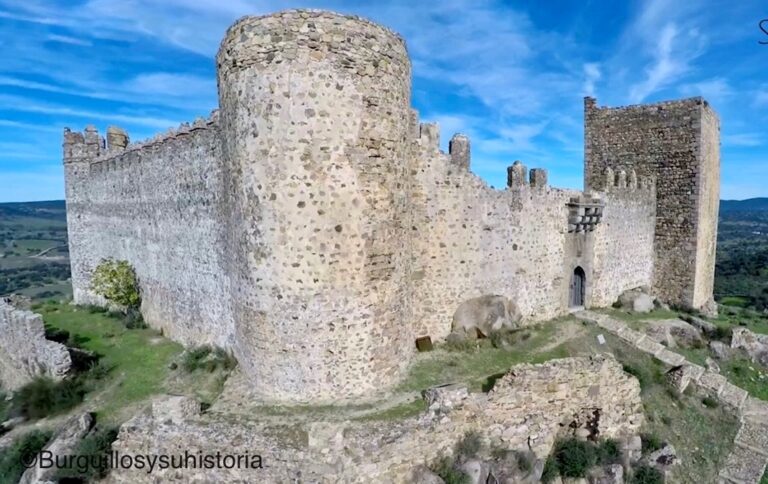
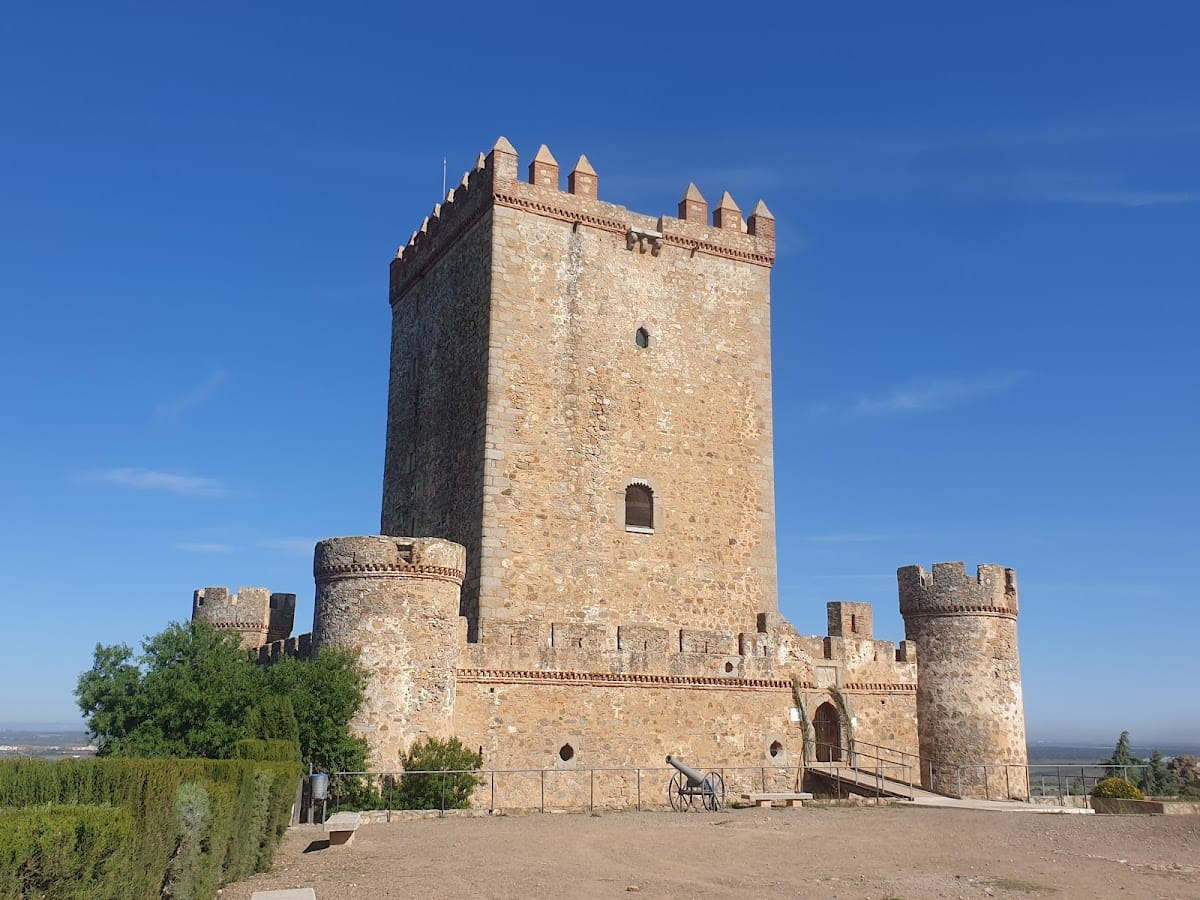
The Castle of Nogales presents a compact layout dominated by a tall, slender keep tower enclosed within a roughly square defensive wall. The fortress reflects typical 15th-century military architecture, emphasizing strong vertical protection along with defensive walls designed for surveillance and combat readiness.
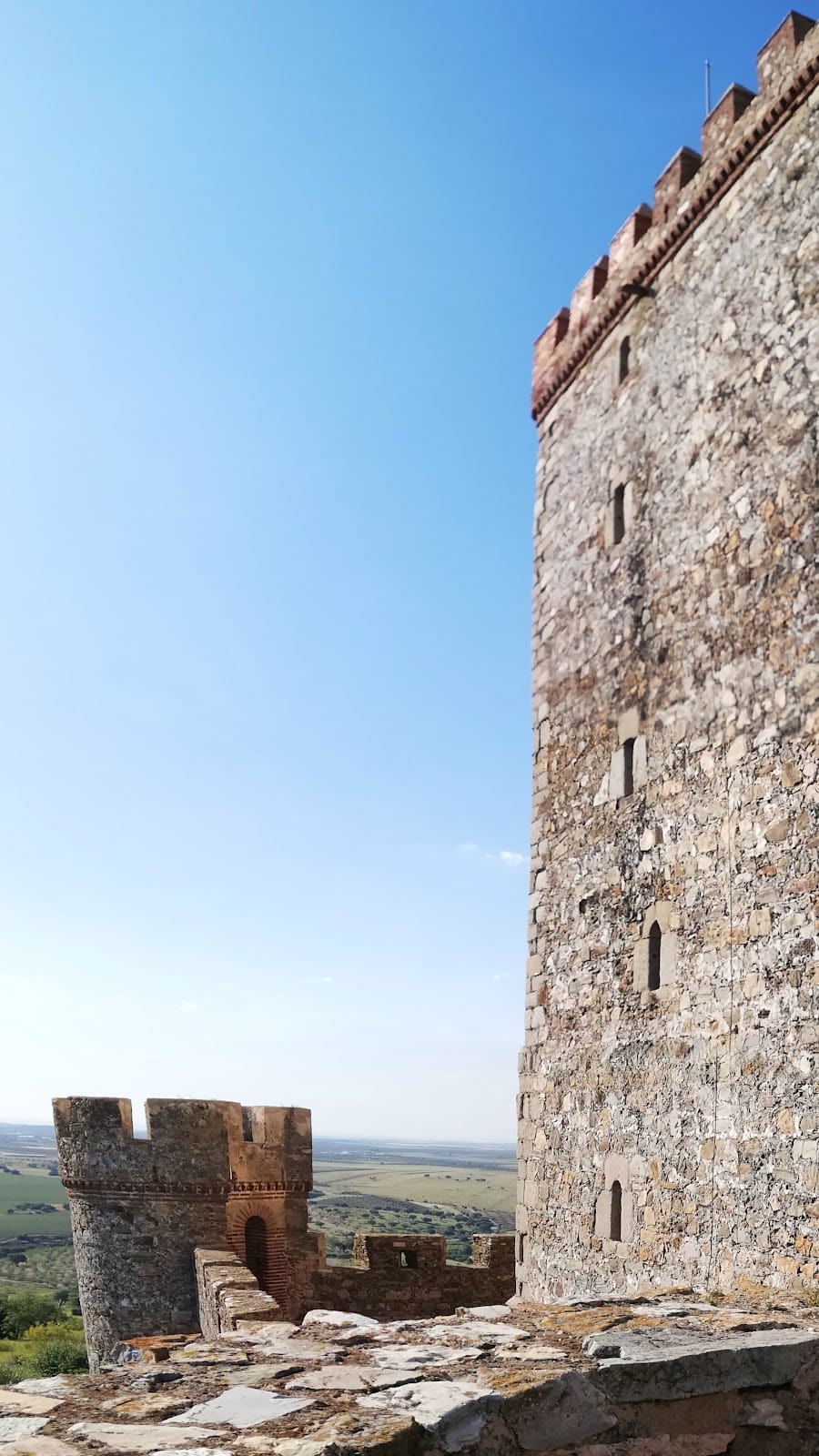
The central keep tower measures approximately 13 meters on each side and rises to a height of 35 meters. Constructed primarily of masonry, it features reinforced corners built from finely cut stone blocks known as ashlar, chosen for strength and stability. Small, narrow openings — arrow slits — punctuate the thick walls and are topped by intricately carved stone elements in the Gothic style, demonstrating the architectural influences of the time. Inside, the keep spans three floors, each supported by rib-vaulted ceilings. At the upper levels, brick cornices line the interior walls, originally supporting battlements designed for defense, although most of these protective parapets have since vanished.
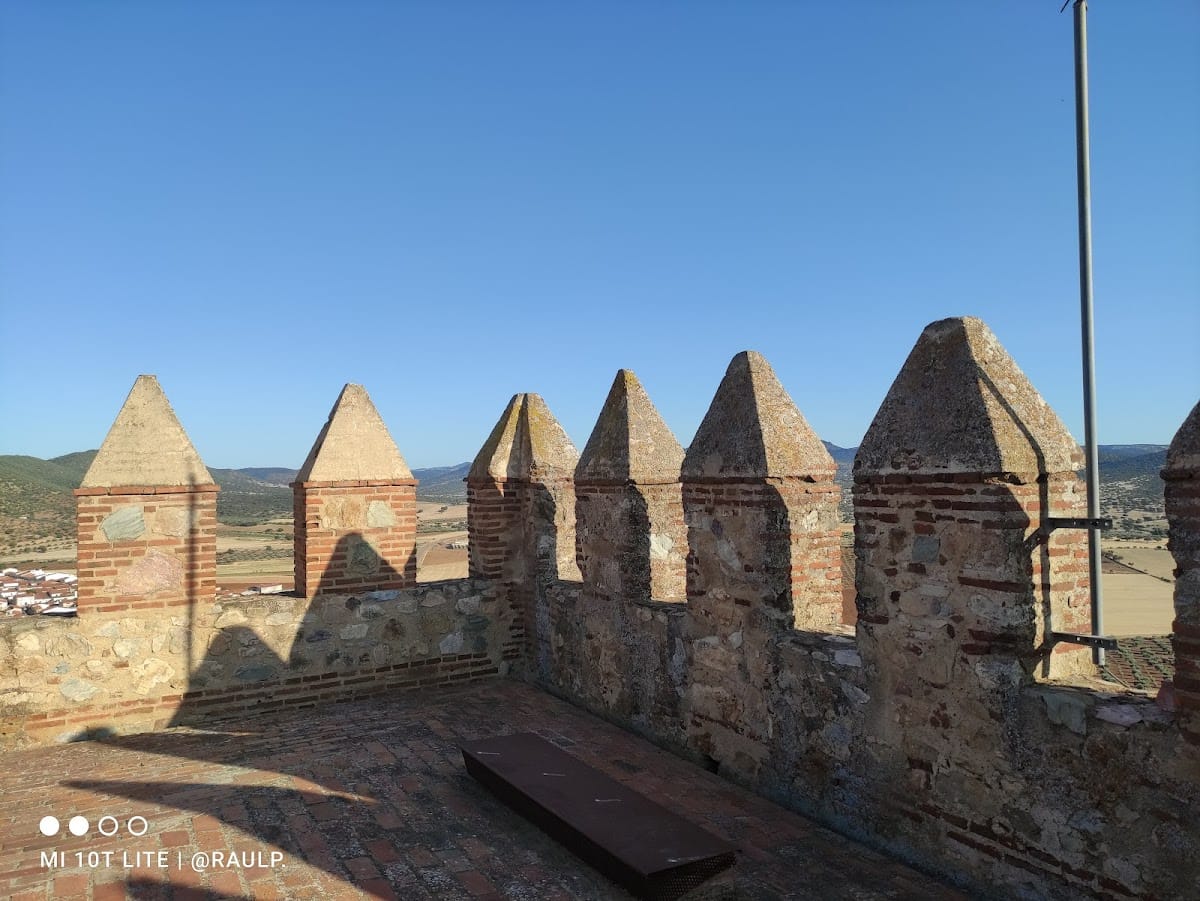
Surrounding the keep is a square perimeter wall also built of masonry, reinforced at its corners by cylindrical towers. Both the curtain walls and these corner towers display crenellations, the notched battlements common in fortifications allowing defenders to shelter while observing or firing upon attackers. The walls are capped with brick cornices at the level where defenders would have moved along the walkways. Defensive features include narrow arrow slits embedded along the walls, facilitating protection while maintaining visibility.
Access to the interior was gained through a single main gate in the enclosure wall, which historically was defended by a drawbridge spanning over a moat. Although this drawbridge no longer exists, its former presence underscores the fortress’s design as a self-contained, well-protected defensive site. The remain of the castle, restored at the end of the 20th century, stands as a well-preserved example of late medieval fortification in this region of Spain.
Nearby sites