Castle of Millesimo: A Medieval Fortified Residence in Italy


Site at a Glance
- Rating
- 4.4
- Popularity
- Very Low
- Country
- Italy
- Primary era
- Medieval
- Eras represented
- Medieval
- Civilizations
- Unclassified
- Site type
- Military
- Remains
- Castle
On this page5 sections
History
Castle of Millesimo is a medieval fortified residence in Millesimo, Italy, whose oldest surviving parts date from the second half of the thirteenth century. It protected the fief of Millesimo and served for centuries as the residence of the Del Carretto di Millesimo, a branch of a noble lineage whose territories included several marquisates, or territorial lordships governed by a marquis, in northwestern Italy.
Foundation and Del Carretto rule
Millesimo was transformed into a fortified borough by Enrico II Del Carretto in 1206. The castle itself may have been built after 1268, when the division of Giacomo Del Carretto’s domains among his three sons created the marquisates of Finale, Millesimo, and Novello. Its oldest structural elements belong to this period, including the tower, keep, and eastern wall.
The marquises of Millesimo first aligned themselves with the commune of Asti and, from 1393, with the marquises of Monferrato, rulers of a major lordship in northwestern Italy. Together with the castles of Cosseria, Roccavignale, and Cengio, Castle of Millesimo formed part of a defensive system controlling the valley.
War, dismantling, and abandonment
In 1447, the castle hosted a meeting of several Del Carretto branches. They gathered to decide how to respond to the Republic of Genoa, an independent maritime state whose expansion had brought it into conflict with neighbouring territories, including Finale. During the war of 1447–1448, the castle sheltered Bannina, the wife of Galeotto I Del Carretto, lord of Finale.
After the building had been converted from a fortress into a fortified residence, its strategic role ended in 1553. Gerolamo Sacco of Ceva, acting as imperial commissioner on the orders of Ferrante I Gonzaga, governor of Milan, dismantled the castle because of fears that French forces might seize it during the conflict with France. The building was devastated and partly made unusable, then abandoned. The Del Carretto family moved its residence to the building now occupied by Millesimo’s town hall.
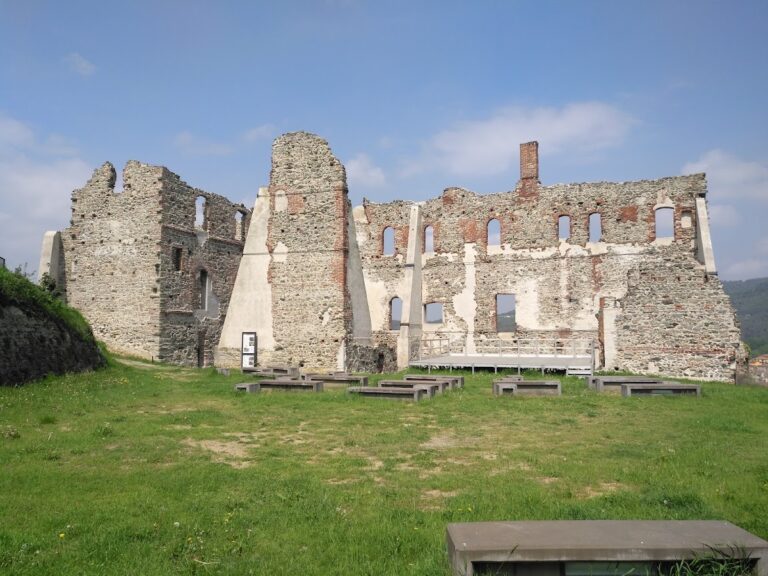
Further damage occurred during the early Napoleonic battles of 1796, fought in the area between French and Austro-Piedmontese forces. The municipal administration acquired the castle in 1989, after which it underwent restoration. The surviving structure now also accommodates classical-music concerts and exhibitions.
Remains
Fortified layout
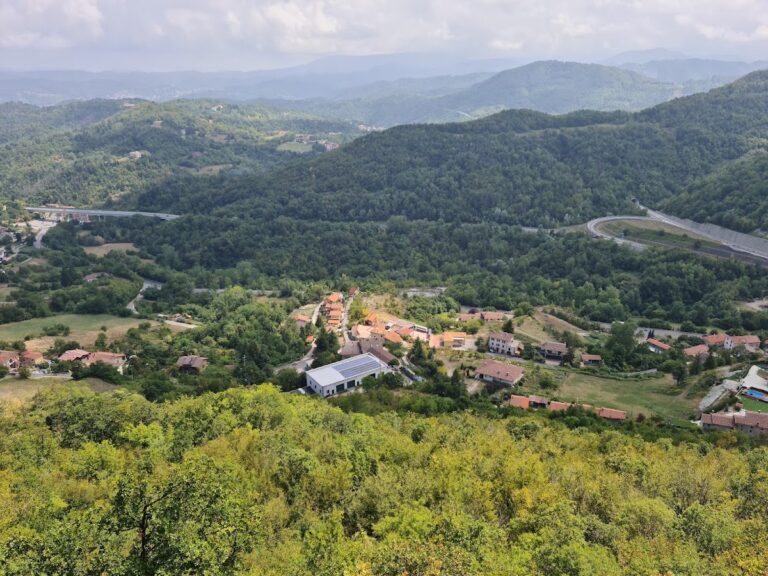
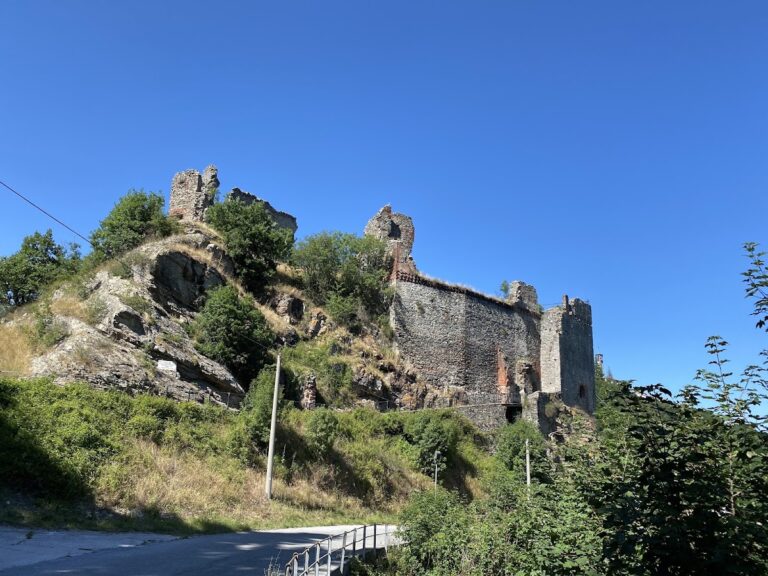
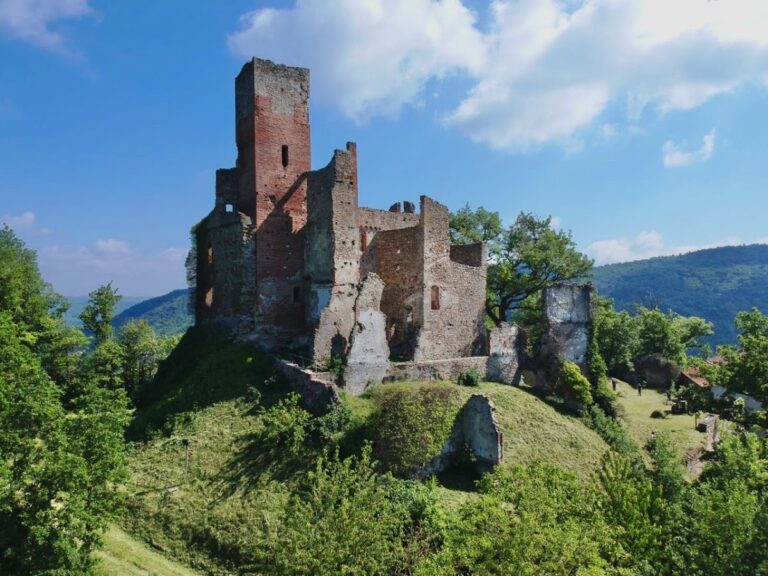
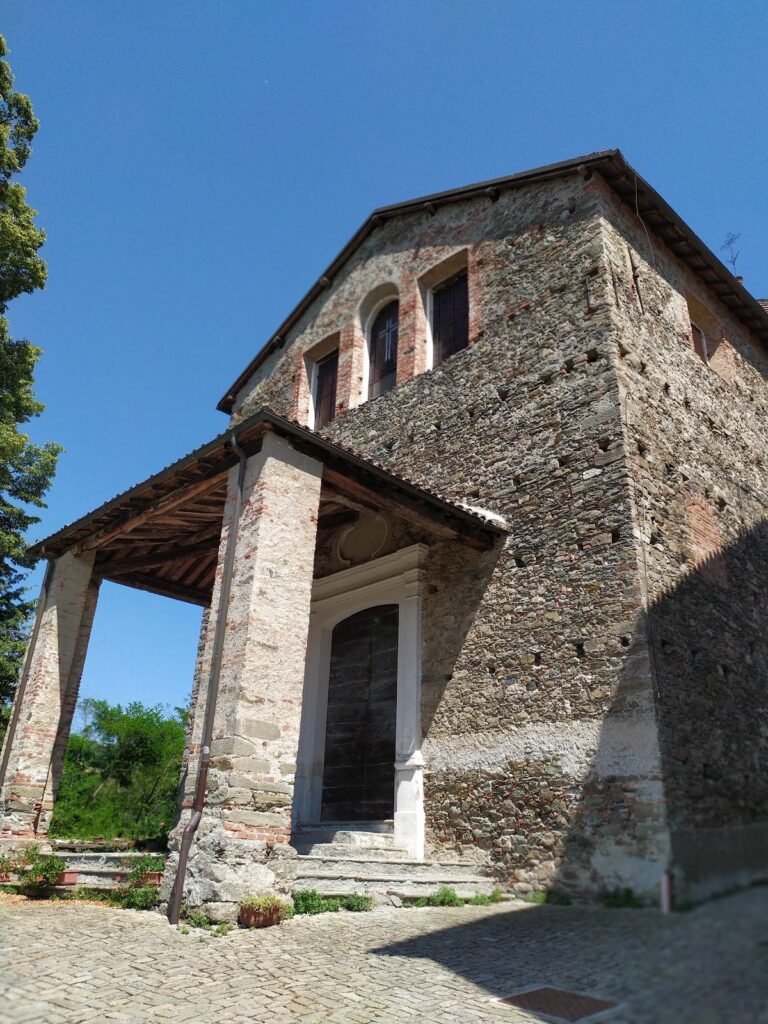
The castle occupied a dominant position above Millesimo’s historic centre in the upper Bormida Valley, in the province of Savona. Its plan was quadrangular, with two lateral towers and fortified perimeter walls. This arrangement combined a defensible enclosure with the residence required by the Del Carretto marquises.
The tower, keep, and eastern wall are the oldest identified parts of the complex and date from the second half of the thirteenth century. Later changes adapted the defensive fortress into a fortified residence. Dismantling in 1553 and the fighting of 1796 left the building devastated and partly unusable, while modern restoration has preserved and renewed the surviving structure.
Nearby sites