Castle of Roccavignale: A Medieval Defensive Stronghold in Italy


Site at a Glance
- Rating
- 4.2
- Popularity
- Very Low
- Country
- Italy
- Primary era
- Medieval
- Eras represented
- Medieval
- Civilizations
- Unclassified
- Site type
- Military
- Remains
- Castle
On this page6 sections
History
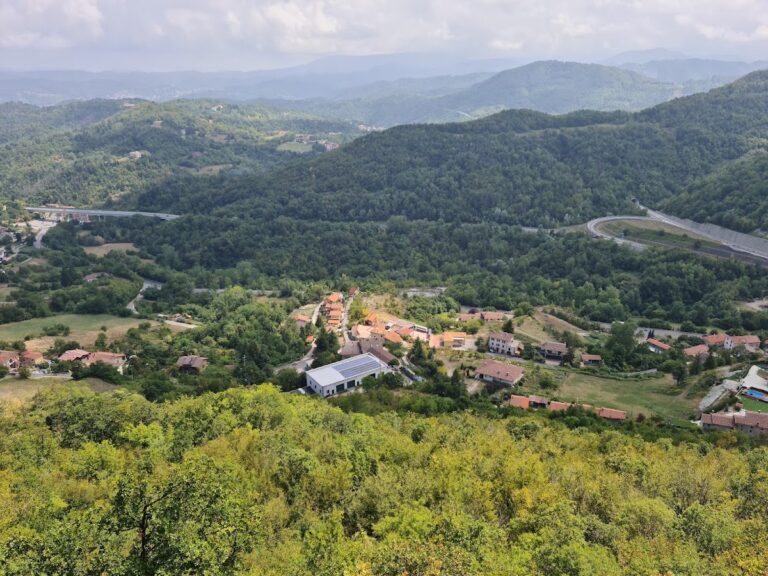
The Castle of Roccavignale is a defensive stronghold in Roccavignale, Italy, whose first nucleus may date from the political reorganization of the region in the twelfth century. Built above the upper Bormida Valley, it controlled an ancient commercial road of Roman origin between the area around Ceva and Savona, while protecting communications with Ceva, lower Piedmont, and the principal fief of Millesimo.
Origins and Del Carretto rule
The construction date is not securely known. After the medieval marquis Bonifacio del Vasto’s domains were divided among his sons in the twelfth century, the mountain ridge above Roccavignale became the boundary between the Marquisate of Ceva and the March of Savona. A first fortified nucleus may have emerged during this period. The area was probably later recorded as Rocha Vinealis, while the older place-name Vineale had appeared in an imperial diploma dated 6 September 999 among the dependencies of the Church of Savona.
The castle remained in the hands of the Del Carretto family, a noble dynasty that held several fiefs, or territories governed by feudal lords, in northwestern Italy. It was enlarged during the fourteenth century, with further adjustments and extensions carried out in later periods. During one episode, several prominent glassmakers from Altare were imprisoned there in chains after Felice Carretto, Marquis of Grana, unjustly accused them of destroying the local castle at Altare. The craft guild’s consulate, a representative and regulatory body for the trade, intervened, and the prisoners were released after seventy days when a substantial payment had been made.
Changes of ownership and destruction
In 1686, the defensive position and its associated fief passed to Leopoldo Filippo d’Arenberg, Duke of Aarschot. In 1741, both passed to the Kingdom of Sardinia, a monarchy whose continental territories included Piedmont.
The castle was drawn into two eighteenth-century military episodes. In 1747, during the War of the Austrian Succession, a European conflict fought from 1740 to 1748 over the succession to the Habsburg monarchy, Piedmontese troops encamped there were defeated and scattered by Spanish soldiers. In 1799, during the decisive stages of the French campaigns in Italy, French troops besieged the fortress, set it on fire, and then blew it up. Its strategic military function ended in the eighteenth century.
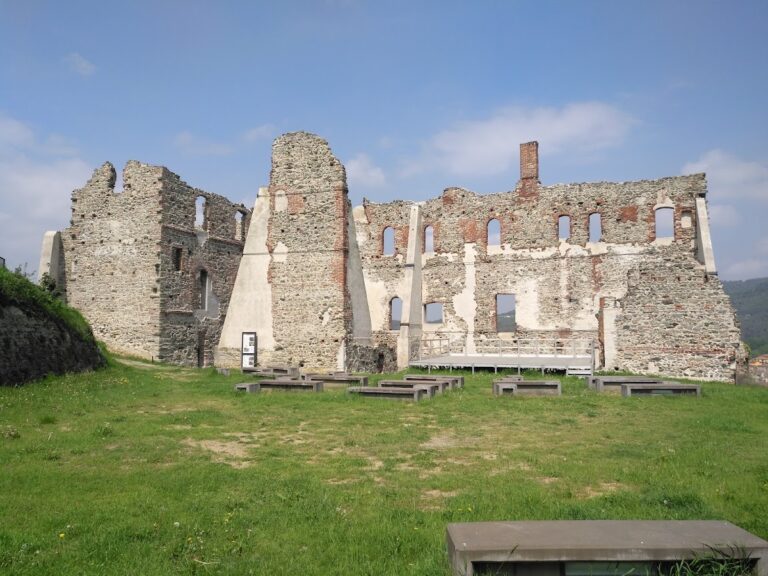
The property later belonged to the Centurione family. In the 1980s, the Municipality of Roccavignale acquired the ruins, undertook conservation restorations, and adapted the site for cultural events and activities.
Remains
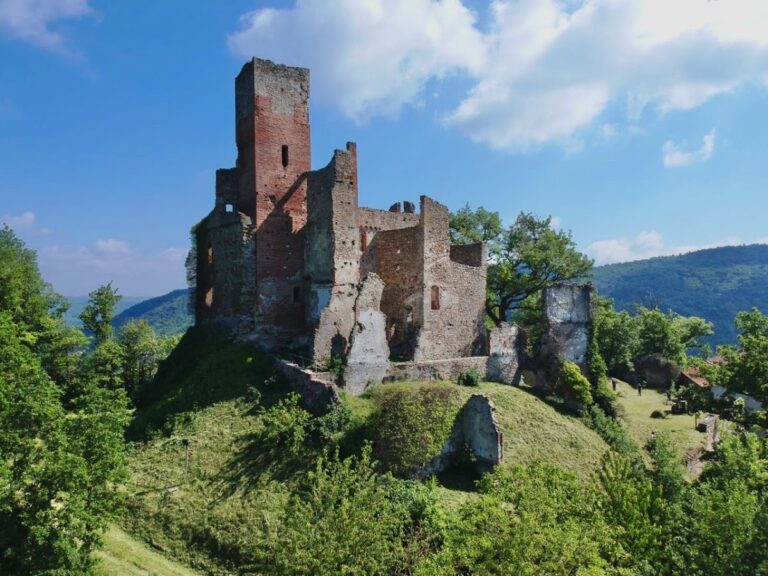
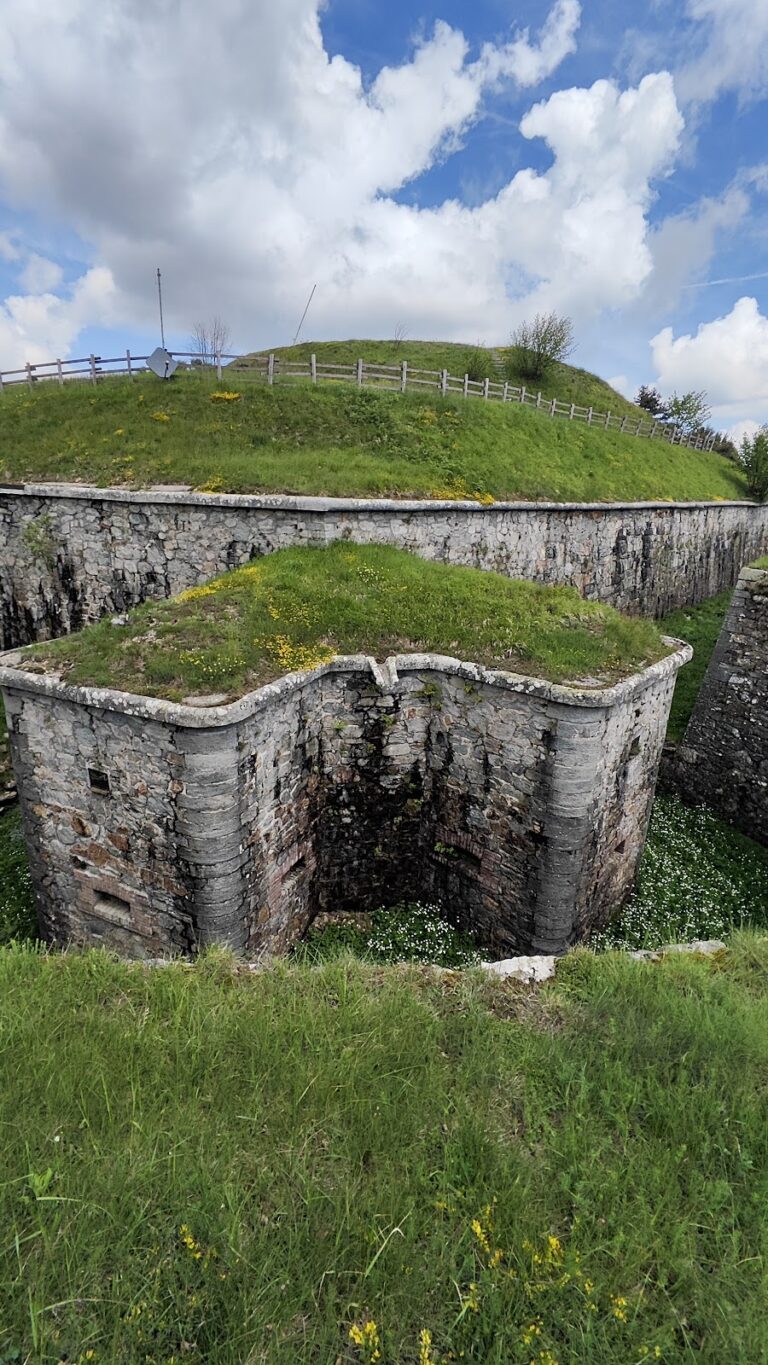
The Castle of Roccavignale stands on a rocky spur at approximately 474 metres above sea level. Its surviving plan is roughly trapezoidal, with irregular lines that follow the underlying rock. Four square towers occupy the corners, defining the principal defensive outline of the ruined complex.
Defensive approach
Perimeter path and entrance
Access was arranged along a narrow, steep path that followed the outer perimeter of the walls. The approach exposed those using it to fire from the defenders, and it ended by rising toward a well-defended drawbridge. A drawbridge is a movable bridge used to control access across an entrance gap. The castle is now preserved as ruins.
Nearby sites