Dego Castle: A Medieval Defensive Fortification in Italy


Site at a Glance
- Rating
- 4.5
- Popularity
- Very Low
- Country
- Italy
- Primary era
- Medieval
- Eras represented
- Medieval
- Civilizations
- Genoese
- Site type
- Military
- Remains
- Castle
On this page7 sections
History
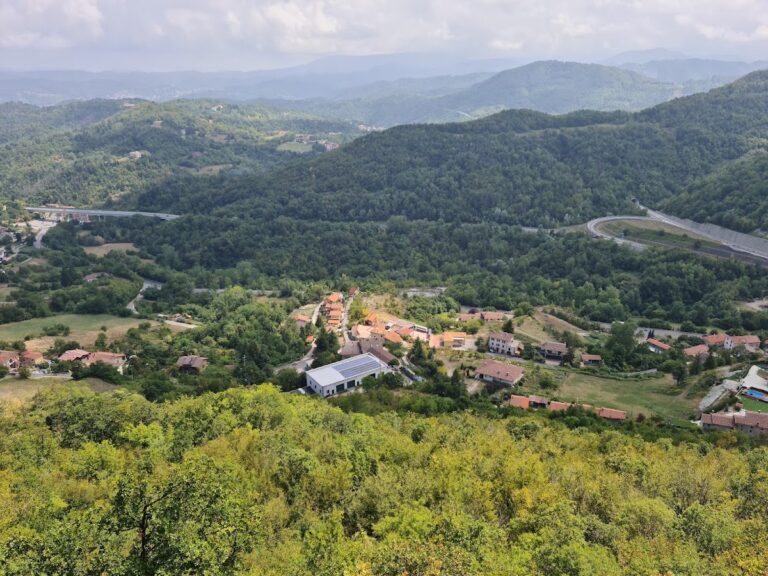
Dego Castle is a ruined defensive fortification in Italy, positioned above the village of Dego in the upper Bormida Valley. It was probably built by the Del Carretto family during the thirteenth century as a military stronghold rather than a residence, although its construction date is uncertain. Local tradition places its origins earlier, in the tenth century, when Dego was a court among the lands donated to Aleramo, founder of the Aleramici dynasty associated with Montferrat.
Del Carretto rule and Genoese authority
Around 1185, Dego passed to Ottone Del Carretto, lord of Cairo, after the death of his father, Enrico I Del Carretto, known as “the Squinter.” The Del Carretto family was a medieval ruling lineage whose fiefs included several territories in the Bormida Valley. In 1214, Ottone I transferred his lands to the Republic of Genoa, a maritime republic whose authority extended into northwestern Italy, and received an official investiture in return. The agreement was signed at Cairo Montenotte Castle, the Del Carretto court’s residence. A contemporary document referred to Dego Castle as castrum quod vocatur Decus, meaning “the castle called Decus.”
In 1339, the fief of Dego and its castle passed to the Scarampi family of Asti. The Del Carretto family regained control in 1350 and retained it until 1419, when Dego became part of the Marquisate of Montferrat. This was a feudal and later sovereign territory in northwestern Italy governed by marquises. The castle was probably also the site of a mint, an establishment where official coins were produced, operated by the Marquis of Ponzone, who administered the fief of Giusvalla until the fifteenth century.
Sieges, occupation, and destruction
In 1553, French troops commanded by Charles I de Cossé-Brissac besieged the castle. Charles was a Marshal of France serving King Henry II, who ruled France from 1547 to 1559. The fortification surrendered without resistance. Soldiers of Amedeo I of Savoy occupied it in 1625. After 1735, Dego was annexed to the Kingdom of Sardinia, a state ruled by the House of Savoy.
Franco-Spanish troops sacked the castle in 1745. Its final military phase came during the second Battle of Dego in 1796, when Napoleonic troops defeated Austrian forces near the castle. The fighting caused the deaths of nearly 400 townspeople and damaged the fortification so severely that it entered a semi-ruined state. The castle’s strategic role in protecting Dego ended that year, and the site remains in ruins.
Remains
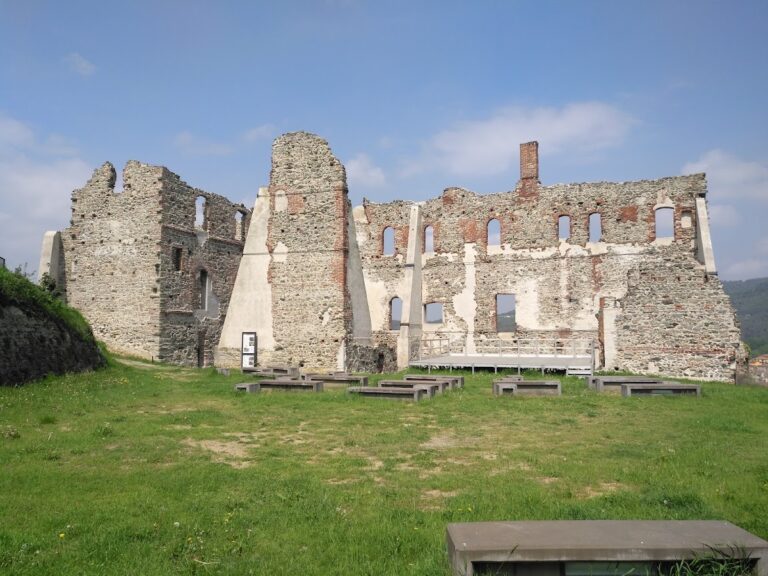
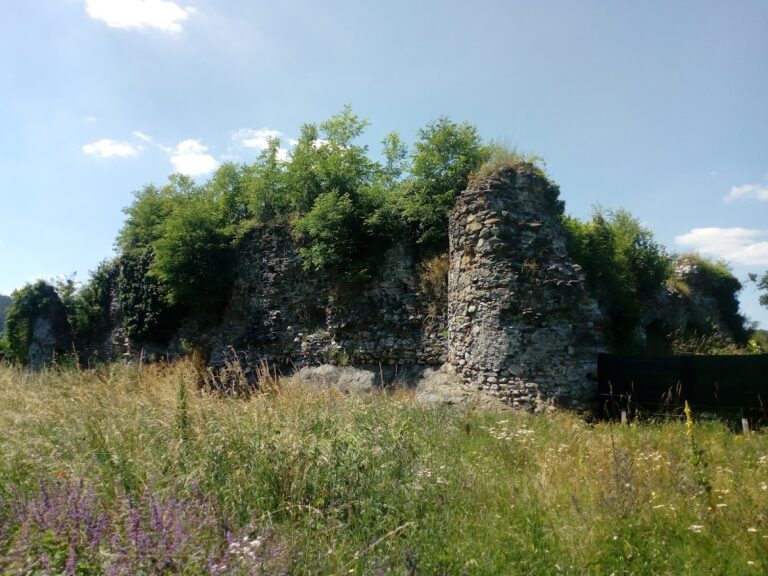
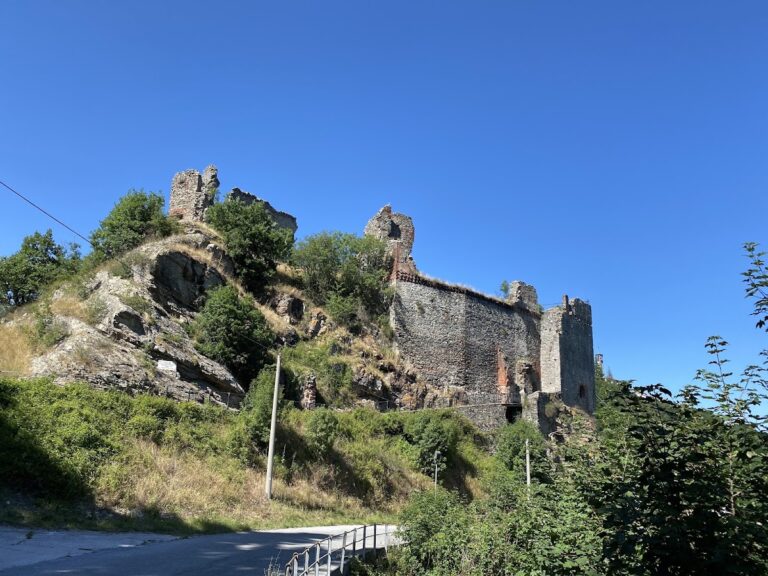
The surviving remains occupy Cua, a dominant position above Dego in the upper Bormida Valley. They preserve parts of the fortification enclosure and the ruins of a tower, reflecting the site’s organization as a military fortress intended to protect the settlement. Damage sustained in 1796 left only part of the surrounding wall intact, and the castle is now in a ruined condition.
Fortification remains
Enclosure wall
Part of the castle’s surrounding fortification enclosure survives at Cua. The wall formed the defensive boundary of the stronghold, but the destruction associated with the 1796 fighting reduced it to a partial remnant. Its surviving sections are incorporated into the present ruins.
Tower
The remains also include a ruined tower. It belonged to the castle’s defensive system and survives alongside the fragmentary enclosure, providing part of the physical evidence for the fortress that once protected Dego.
Nearby sites