Castle of Cosseria: A Medieval Fortress Guarding the Montecala Pass


Site at a Glance
- Rating
- 4.5
- Popularity
- Very Low
- Country
- Italy
- Primary era
- Medieval
- Eras represented
- Medieval
- Civilizations
- Holy Roman Empire
- Site type
- Military
- Remains
- Castle
On this page8 sections
History
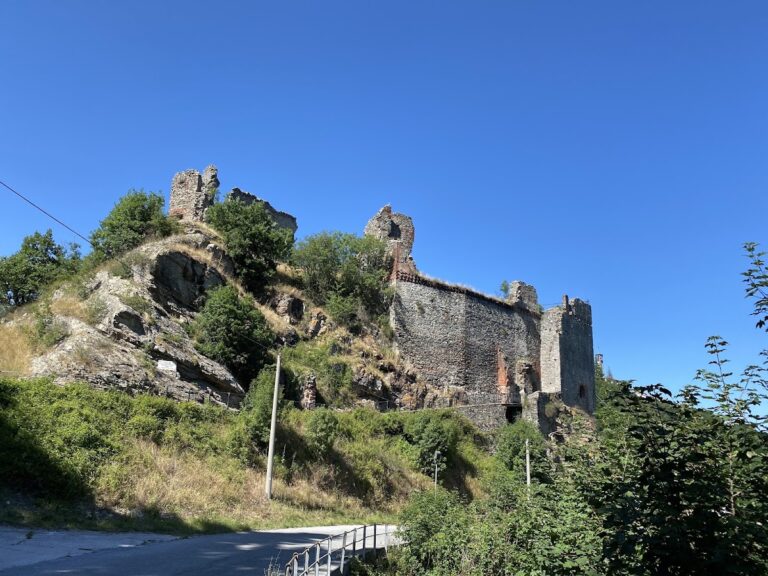
Castle of Cosseria is a medieval fortification in Italy, located at Cosseria in the upper Bormida Valley. An early fortification may have stood here as soon as the tenth century, while the castle itself was probably built between the twelfth and fourteenth centuries. Its position above the Montecala pass allowed it to control routes toward Lower Piedmont, and the stronghold also offered refuge to the local population during wartime.
Medieval lordships and military purpose
Cosseria appears in a donation to Aleramo in 967. Aleramo was a tenth-century nobleman traditionally regarded as the founder of the Aleramici dynasty. The locality later entered the lands of the Del Vasto family, passed by inheritance to Ugo, the first Marquis of Clavesana, and subsequently came under the Del Carretto family. The Marquisate of Clavesana was a medieval lordship governed by a branch of the Aleramici family.
The castle is associated with the siege of 1262, when Charles of Anjou took shelter there while Genoese troops carried out the siege. Charles, a French-born count of Anjou who later became king of Sicily, was an important political and military figure in thirteenth-century Italy. The episode reflects the castle’s role as both a defended position and a place of security during conflict.
Disarmament and the battle of 1796
In 1553, Gerolamo Sacco, the imperial commissioner of Ceva, ordered the castle to be disarmed and partly demolished so that it could not fall into enemy hands. This ended its strategic military function.
The ruins were again used during the French Revolutionary and Napoleonic campaigns. On 13 and 14 April 1796, Austro-Savoyard-Croatian troops commanded by Colonel Filippo del Carretto barricaded themselves inside the remains while avoiding the larger Napoleonic army led by General Pierre François Charles Augereau, with General Claude-Victor Perrin also taking part. Del Carretto’s grenadiers resisted for two days without artillery before surrendering to French troops advancing toward Lombardy. The marquis was fatally wounded by a rifle shot during the fighting. Giosuè Carducci later recalled the episode in La Bicocca di San Giacomo.
Restoration of the ruins
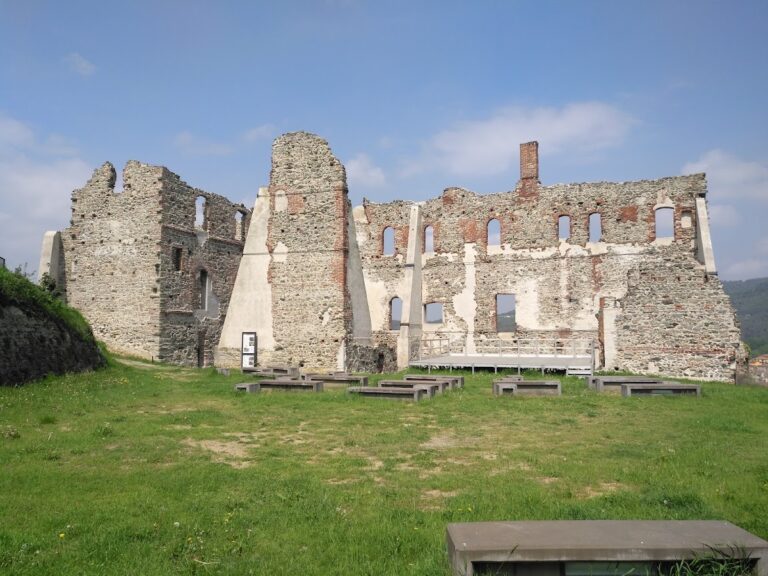
Between 2009 and 2013, the ruins were restored and made safe through a European P.O.R. regional funding programme, together with resources from the Municipality of Cosseria. These works preserved the surviving structures and improved their physical stability.
Remains
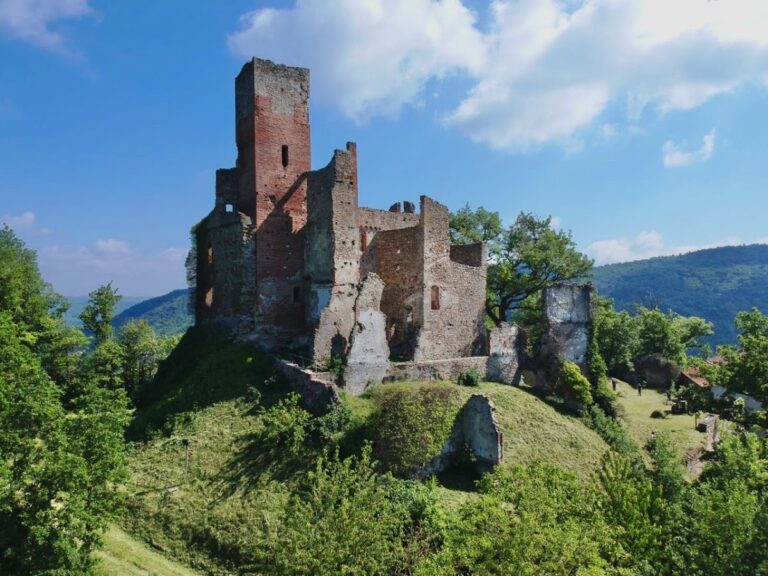
At approximately 697 metres above sea level, the castle occupied a rise overlooking the Montecala pass. Its polygonal plan consisted of a central building enclosed by two circuits of walls. The first circuit remains clearly visible, including part of its entrance, while the second was arranged to protect the valley and the tip of the hill.
Fortifications and interior spaces
Wall circuits
The surviving sections of the first wall circuit provide the clearest indication of the castle’s defensive boundary and entrance. The outer circuit extended the defenses toward the valley and the hilltop’s extremity, forming a broader protective system around the central building. The castle now survives in a ruined condition, with restoration and safety work completed between 2009 and 2013.
Underground rooms, watchtower, and chapel
Vaults survive over underground rooms that were almost certainly used for storage and prisons. The base of a demolished watchtower is still visible, together with part of a chapel. These remains preserve elements of the castle’s defensive, practical, and religious functions within its polygonal layout.
Nearby sites