Forte Tortagna: A Royal Italian Army Fort on the Melogno Barrage


Site at a Glance
- Rating
- 4.3
- Popularity
- Very Low
- Country
- Italy
- Primary era
- Modern
- Eras represented
- Modern
- Civilizations
- Italian
- Site type
- Military
- Remains
- Fort
On this page8 sections
History
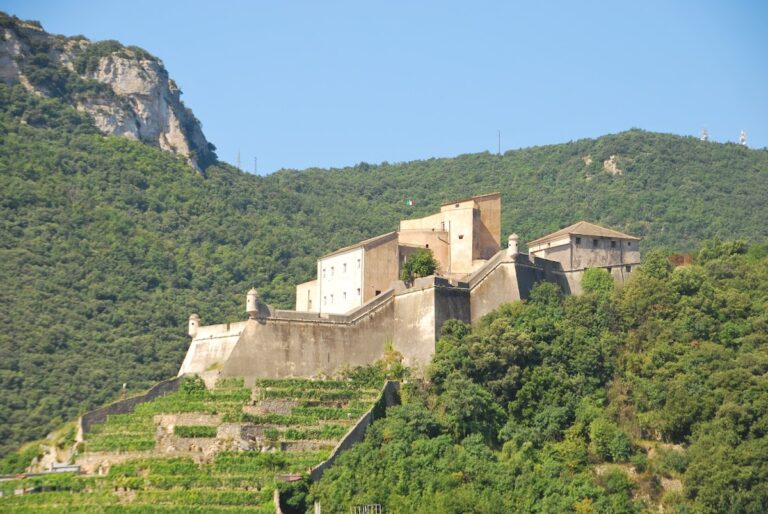
Forte Tortagna is a defensive fort in Italy, built by the Royal Italian Army between 1883 and 1895 as part of the Melogno Barrage near the Melogno Pass. The fort guarded the route between the upper Bormida Valley and the Finale hinterland in the Province of Savona, protecting Lower Piedmont and the Ligurian Apennine chain against possible land attacks from the Ligurian coast.
The Melogno defensive system
The Royal Italian Army, the land force of the Kingdom of Italy before the Italian Republic was established in 1946, commissioned a group of connected defensive works for the pass. Constructed between 1883 and 1895, the system included Forte Tortagna, Forte Centrale del Melogno, Forte Settepani, and a supporting battery on Bric Merizzo. Forte Tortagna stands at the eastern edge of Calizzano, along the administrative boundary with Magliolo. Its strategic role ended during the twentieth century.
The 1944 execution
On 27 November 1944, following a clash near the Melogno Pass, partisans of the 5th Garibaldi Brigade captured and executed 17 men from the Cadore Battalion of the 4th Alpine Division “Monterosa” near the fort. The Garibaldi Brigades were Italian partisan formations associated with the Communist Party during the Second World War and the Italian Resistance. The “Monterosa” division belonged to the Italian Social Republic, the German-backed state that controlled parts of northern Italy after the 1943 armistice.
During the event, medical second lieutenant Mario Da Re secured a pardon from the execution squad for a 17-year-old soldier surnamed Albareti, who may not have understood the choice he was being forced to make. Da Re later received a gold medal from the Italian Social Republic. The Italian Republic did not recognize this award, and it is not included on the banner of the Italian Alpine Association, the organization of former and serving Alpine troops. A memorial plaque near Forte Tortagna commemorates the 17 soldiers.
Abandonment and later alteration
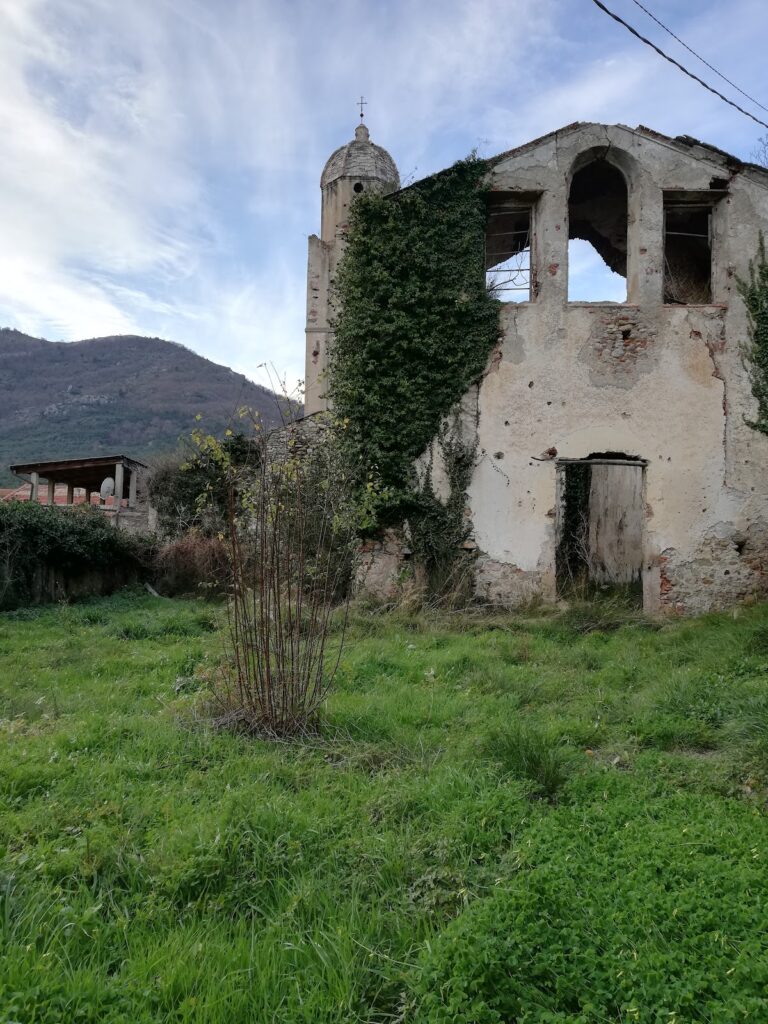
Although built as a military installation, Forte Tortagna had been abandoned by 2010. After private owners purchased the property, the interior was renovated, and the fort was subsequently offered for sale.
Remains
Forte Tortagna occupies a hill about 200 metres from the supporting battery on Bric Merizzo. The fort has a polygonal plan and is enclosed by a deep ditch, with caponiers, projecting defensive structures that allowed fire to cover the ditch, providing additional protection. It stands higher and farther south of the Melogno Pass than Forte Centrale, which is positioned along Provincial Road 490.
Barracks and entrance
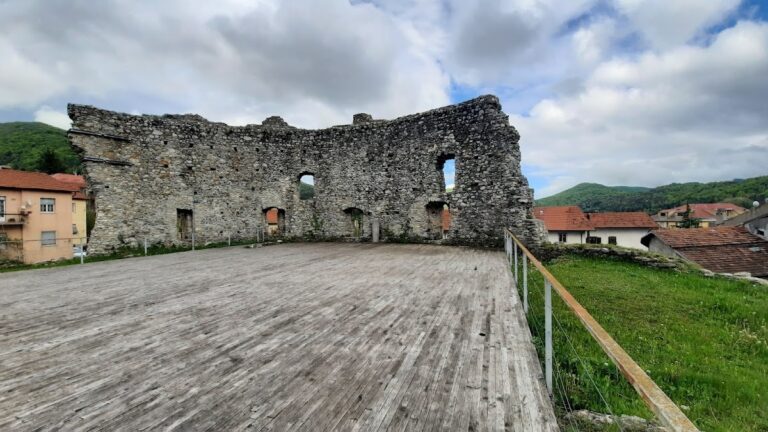
On the side facing the pass is a single-storey barracks built from local stone from the Finale area. It contained the fort’s logistical services. A wooden bridge leads to the barracks, although the bridge is no longer stable and may originally have been a drawbridge. Inside, a corridor connects the surviving rooms and other spaces, where traces of the original plaster, iron grilles, and some window and door fittings remain.
Artillery courtyard
An outer courtyard adjoining the barracks contained the fort’s defensive and offensive artillery in the open air. The armament consisted of either four or six 15 GRC Ret cannons and two 12 GRC Ret cannons. The fort was originally built on a single level. Its interior covers 1,251 square metres, while the external area extends over 65,000 square metres and was partly adapted to create a helicopter landing area.
Memorial plaque
A memorial plaque near the fort marks the execution of the 17 soldiers on 27 November 1944, linking the surviving military structure with one of the violent episodes that took place at the Melogno Pass during the Second World War.