Castle of Coruña del Conde: A Medieval Fortress in Spain
Visitor Information
Google Rating: 3.9
Popularity: Very Low
Country: Spain
Civilization: Medieval European, Medieval Islamic
Site type: Military
Remains: Castle
History
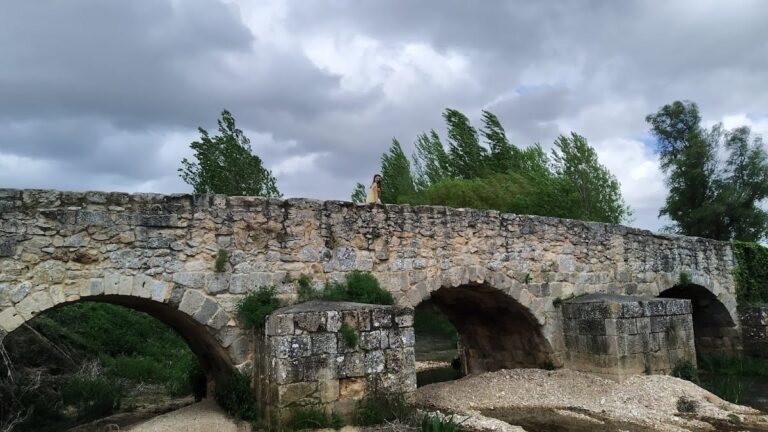
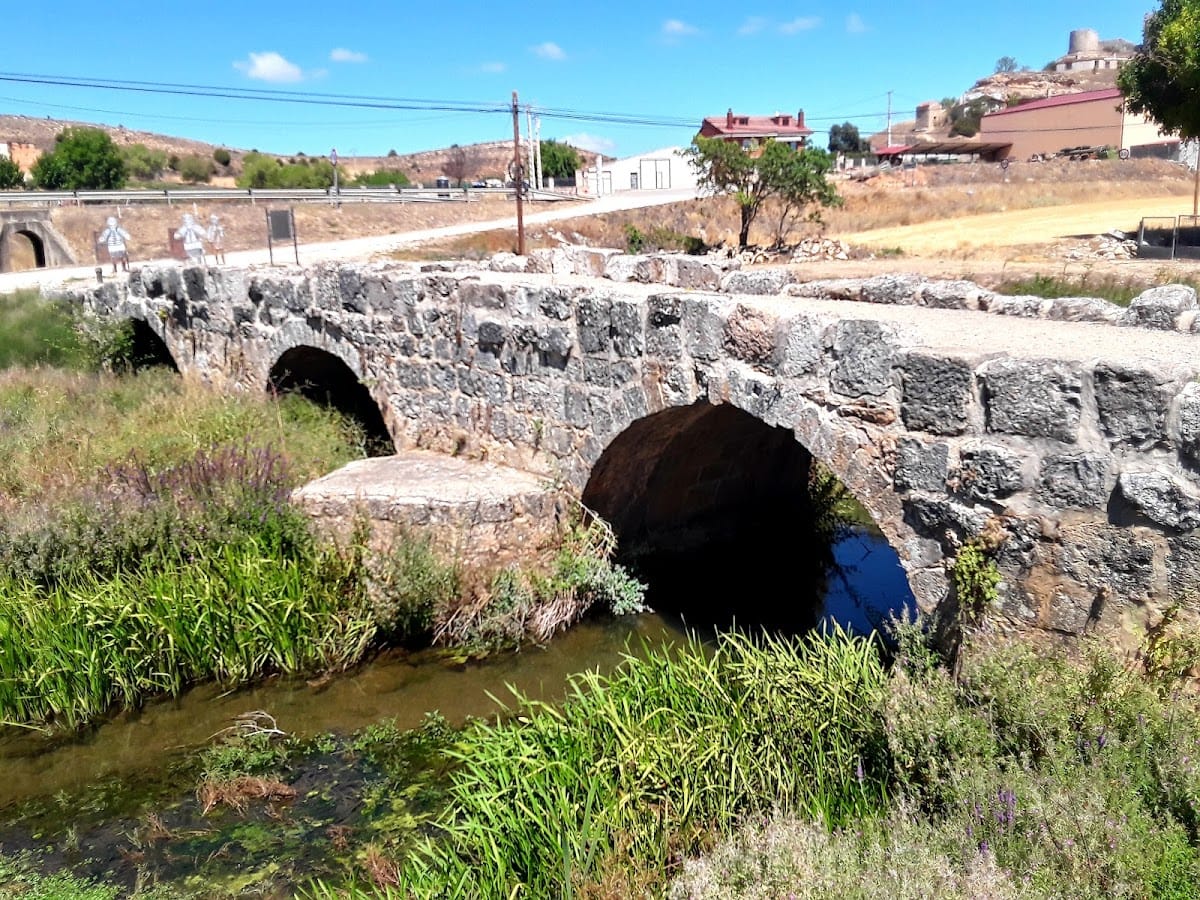
The Castle of Coruña del Conde is a medieval fortress situated in the municipality of Coruña del Conde, Spain. Its origins trace back to a strategic military initiative during the 10th century, when the Kingdom of León, under King García I, sought to repopulate and secure the southern approaches to Castilla. The fortress was established to guard the valley of the Arandilla river, an important route that included remnants of a Roman road and bridges linking to the nearby ancient city of Clunia.
During the period of Muslim incursions, the castle fell under the control of the Muslim leader Almanzor, a key figure in the late 10th century known for his military campaigns in the Iberian Peninsula. Almanzor undertook significant construction at the site, including erecting the main tower featuring an arched doorway at its base. He also added a section of wall adorned with a caliphal-style arch, reflecting the architectural influences of his rule. This fortress became a base for the Muslim garrison, used for launching raids into Christian territories.
Following the Reconquista—the Christian effort to regain control of the peninsula—the castle underwent further adaptations that shaped its current form. These modifications reinforced its defensive capabilities in line with the evolving warfare of the time. However, as Christian dominion expanded southward, the fortress’s strategic importance diminished. Eventually, it was deserted and fell into neglect, with its stones repurposed by locals for building materials.
In the Middle Ages, the nearby population moved from the declining area of Clunia to the village of Coruña, seeking protection within the castle’s vicinity. This community focused on agriculture and livestock, while the surrounding territory became contested among noble houses. Notably, Juan Martínez de Leiva and Lorenzo Suárez de Mendoza emerged as local power holders. The latter received the noble title of count from King Enrique IV, reflecting the region’s ongoing political significance during this period. More recently, parts of the castle’s walls have served practical roles for villagers, and local authorities have sought to preserve the monument despite limited resources.
Remains
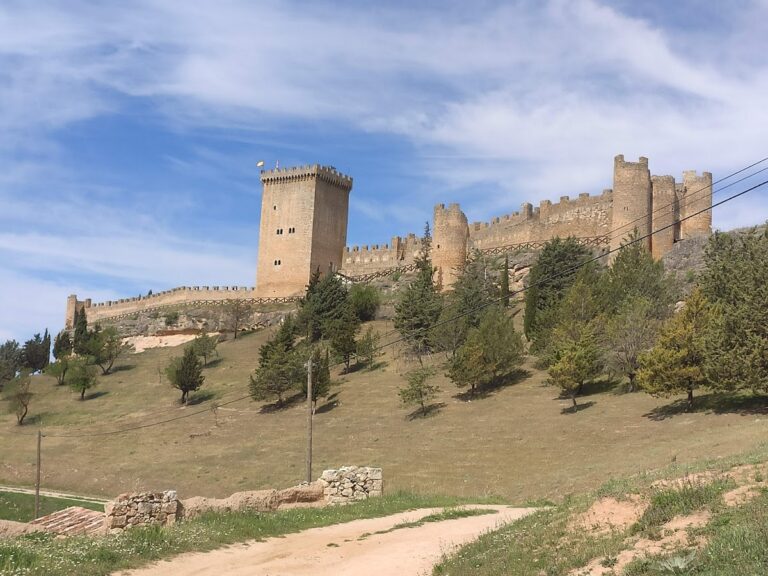
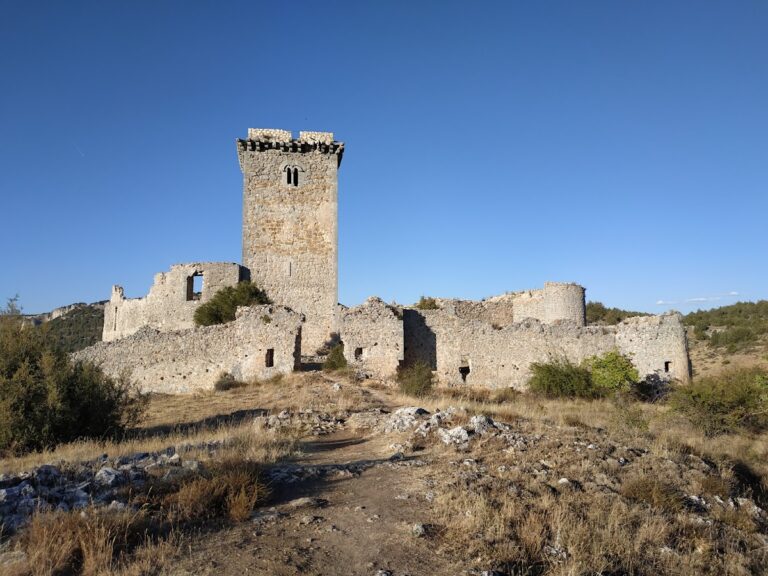
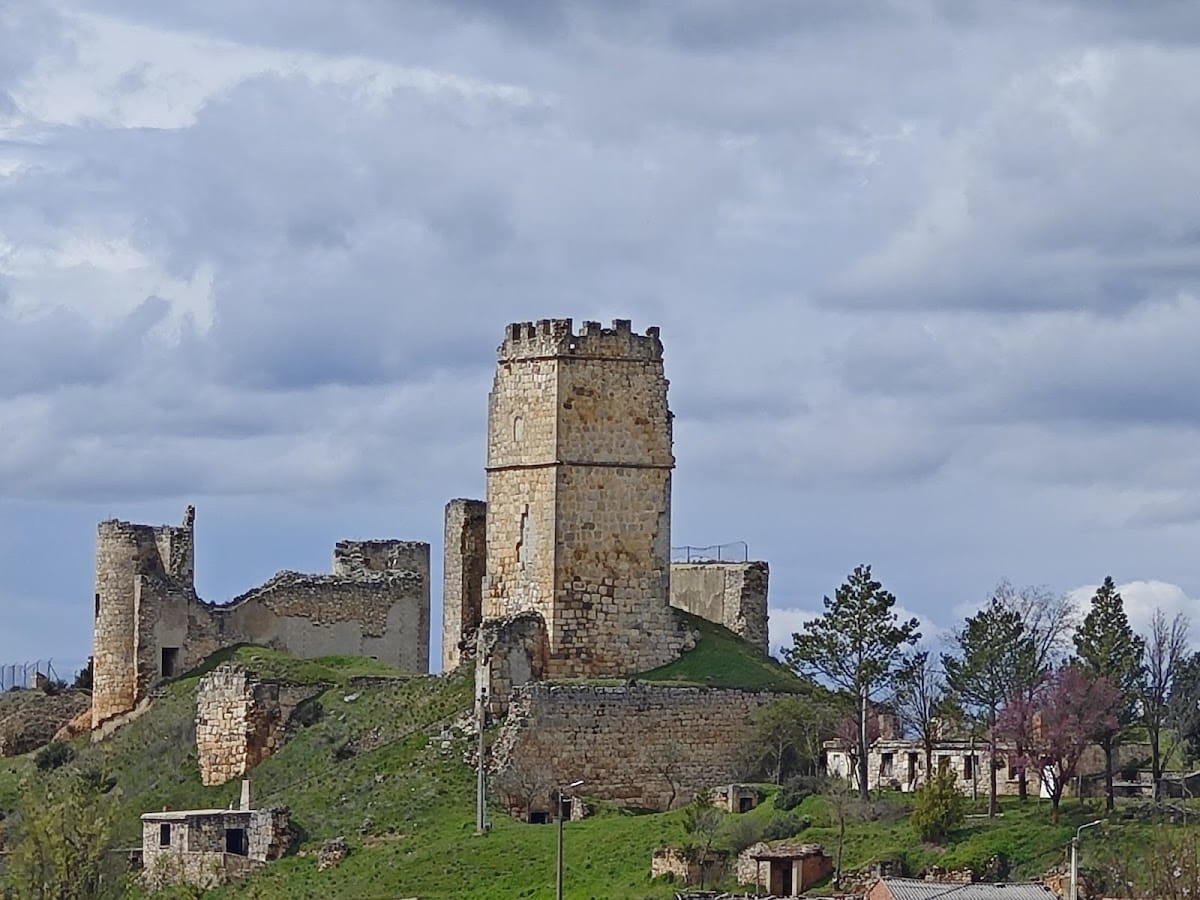
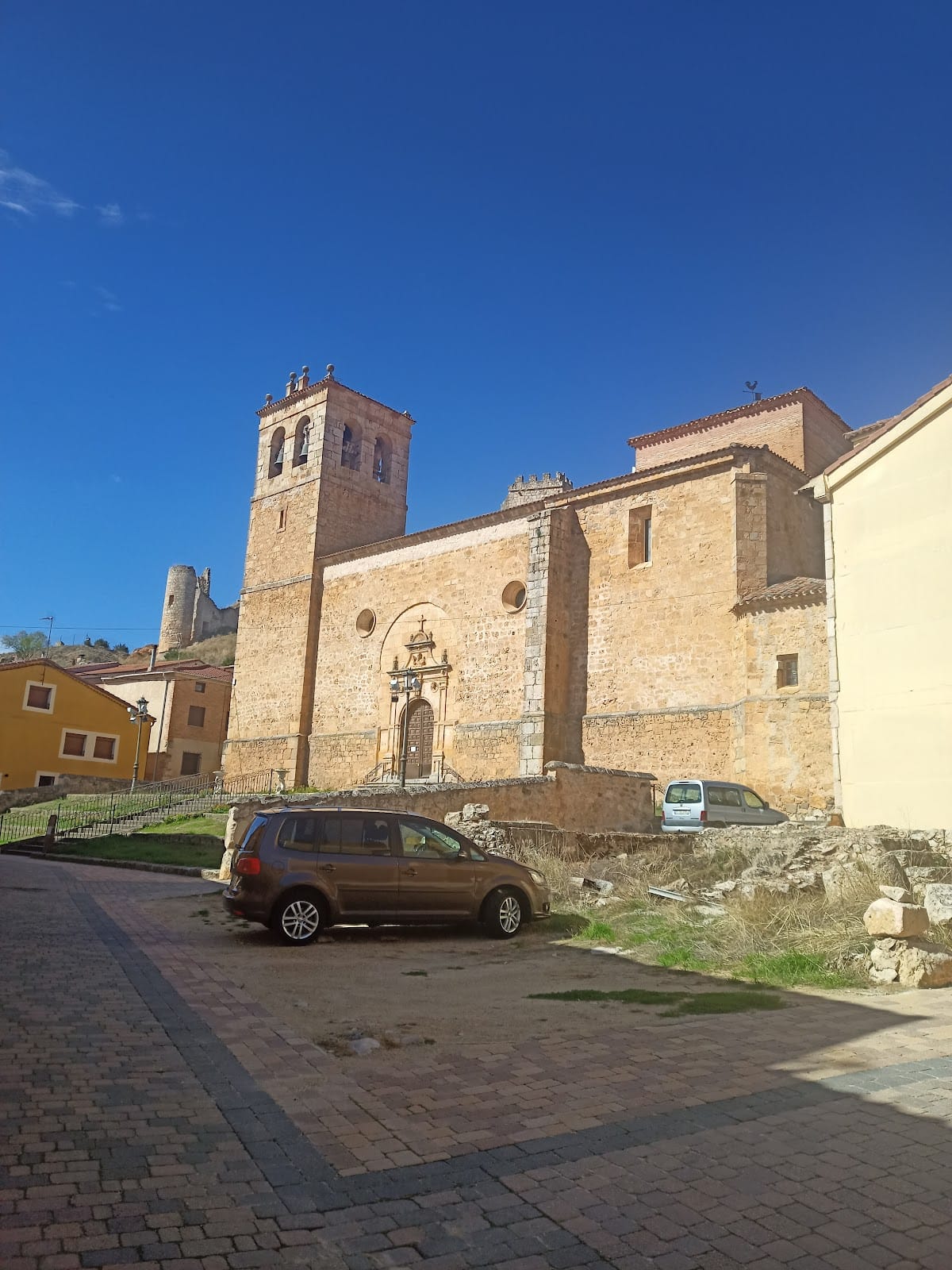
The Castle of Coruña del Conde crowns the western side of a hill with an elongated outline that follows the natural terrain. Beneath the visible fortress lie the traces of an earlier stronghold, indicating that the site maintained military relevance over successive periods. Surrounding the castle, defensive walls once enclosed the entire area on all sides, though their preservation today is fragmentary.
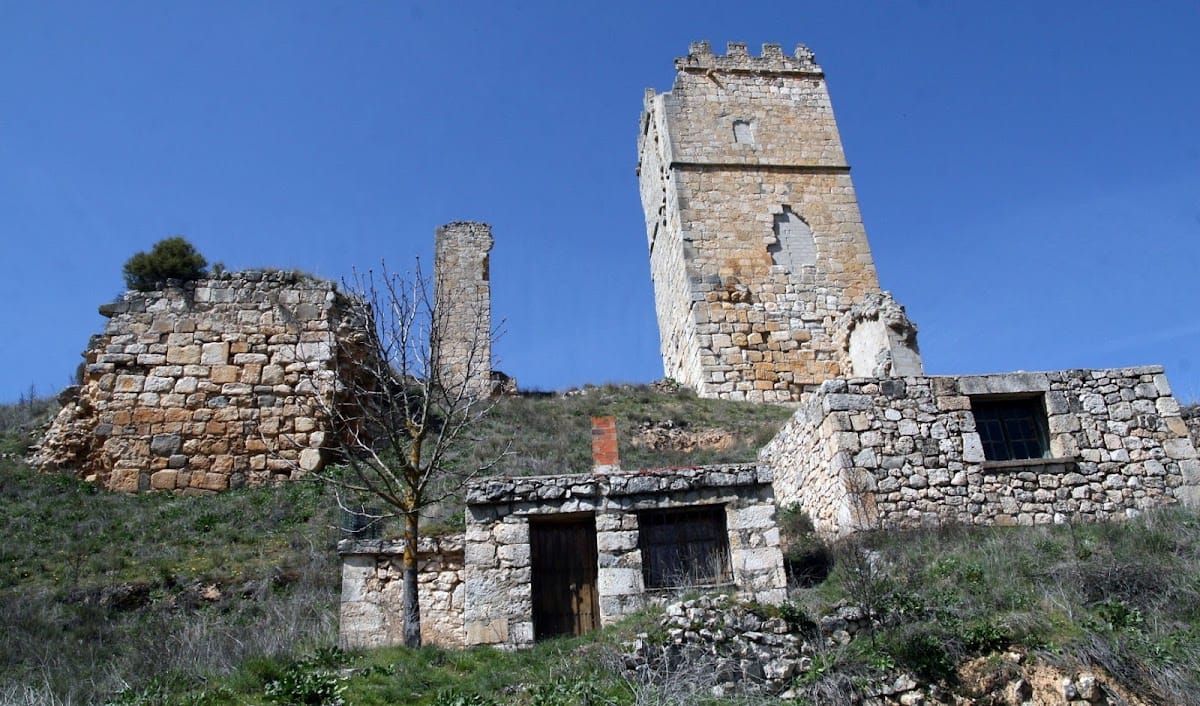
Due to the uneven topography of the hill, builders carved trenches into the slope to support and strengthen the walls, which in some places reached an exceptional thickness of up to 22 meters. Their lengths extended approximately double this measure. The section of the curtain walls considered most vulnerable, where they were closest to each other, received additional protection through the construction of towers. These towers exhibit different shapes, including both square and round bases, and vary in height to enhance the defensive coverage.
The castle’s principal entrance was positioned on the northern side, serving as the main access point. Within the former courtyard, a portion of the wall has been adapted in recent times by local residents as a fronton court, a traditional space for playing ball games. One of the defining features from the Muslim era was the main tower commissioned by Almanzor, which displayed inscriptions and decorative elements. Although these details no longer survive, their previous existence highlights the cultural and military importance placed on the structure during his occupancy.
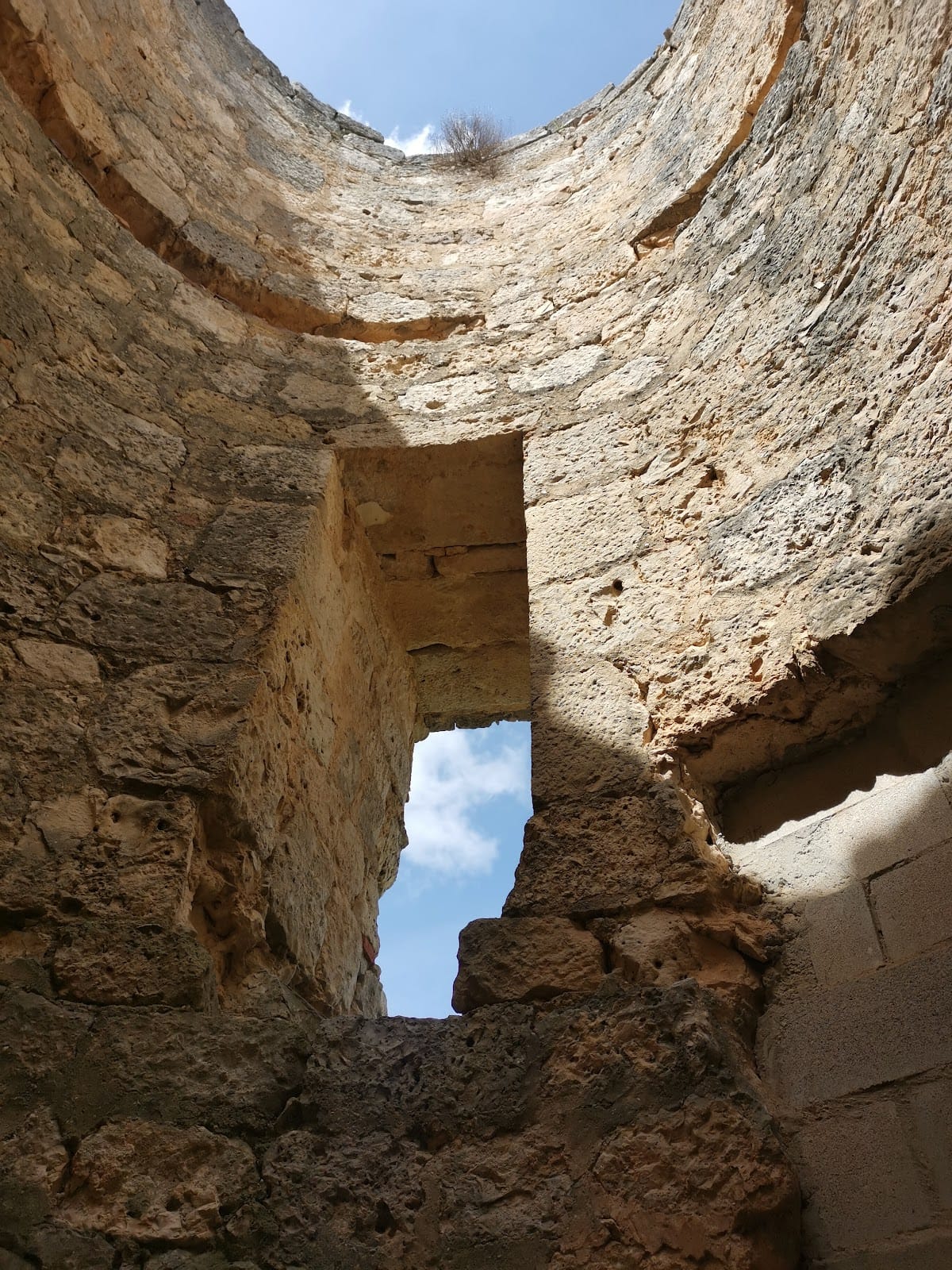
Over time, parts of the fortress fell into ruin and were altered or reused by the community. Efforts to preserve what remains continue, although the castle today stands mainly as a historical landmark revealing layers of its past through its surviving walls and structural features.
Nearby sites