Cranendonck Castle: Medieval Water Castle and Estate in the Netherlands
Site at a Glance
- Rating
- 4.4
- Popularity
- Very Low
- Country
- Netherlands
- Primary era
- Modern
- Eras represented
- Medieval, Modern
- Civilizations
- Duchy of Brabant, Holy Roman Empire
- Site type
- Domestic
- Remains
- Castle
On this page7 sections
History
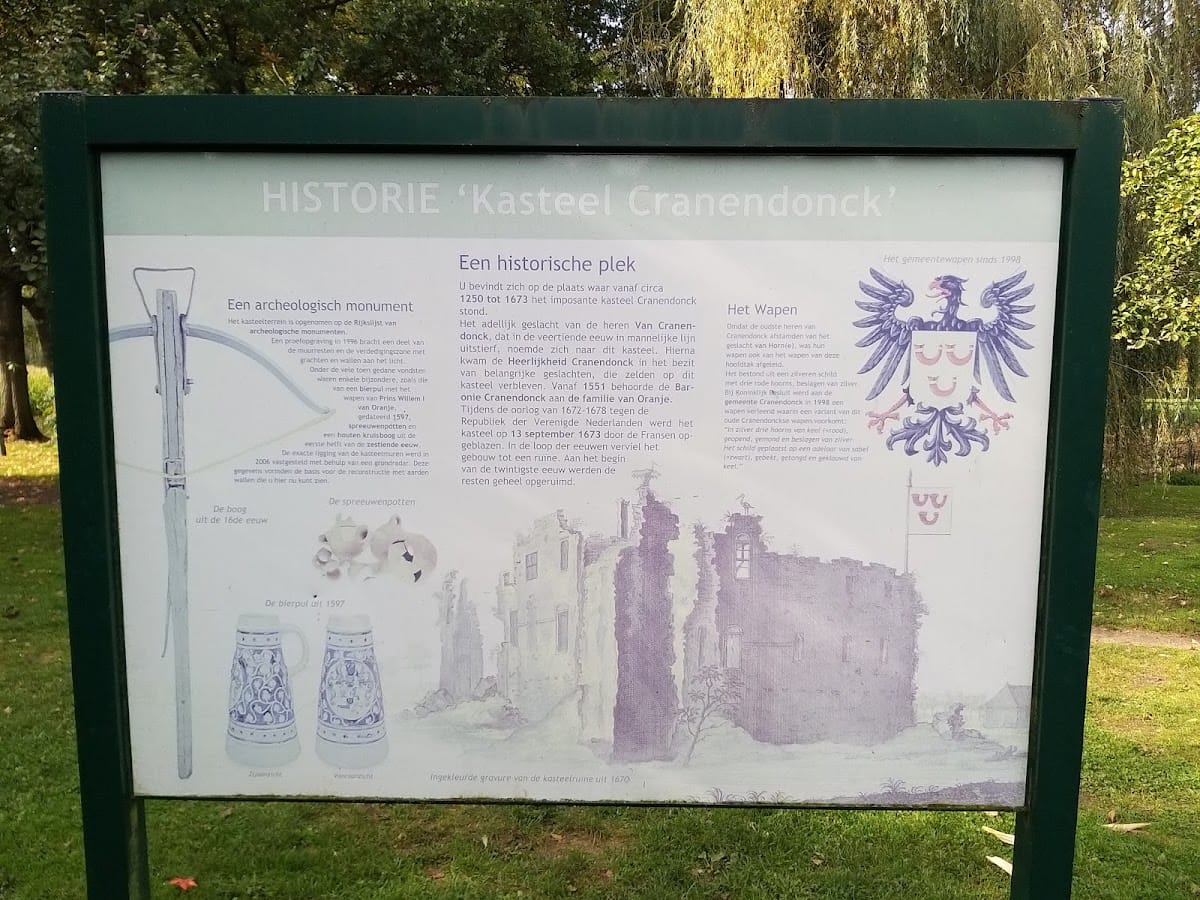
Cranendonck Castle is a historic estate in the Netherlands, at Soerendonk near Maarheeze, whose original brick water castle was built around 1250. It became the seat associated with the lords of Cranendonck, a territorial jurisdiction that later passed through several noble families and into the House of Orange.
Origins and the Land of Cranendonck
Maarheeze was first mentioned in 1223, when Dirk van Altena granted the area of Hugten, which belonged to its parish, as a fief to the lord of Heeze. A fief was land granted by a superior lord in return for obligations such as service or loyalty. After Dirk died without children in 1242, his cousin Engelbert van Horne inherited the area and probably commissioned a castle between Maarheeze and Soerendonk. The castle was built around 1250.
The name Cranendonk was connected with the natural surroundings, where migrating cranes settled. It combines the Dutch words for “crane” and a height or hill in a watery setting, and the name may have been used for the area before the castle was constructed.
Engelbert van Horne’s son, Willem I van Cranendonck, was the first to style himself lord of “Cranendunc.” The lords of Cranendonck also held the lordship of Eindhoven. A lordship was the jurisdiction and estate controlled by a lord. By 1421, Maarheeze, Soerendonk, Gastel, and Budel had been organized into two aldermen’s courts responsible for administration and justice. Together, these territories formed the Land of Cranendonck.
Noble Ownership and Destruction
Ownership of the lordship passed through the Van Sevenborn, Van Milberg, Van Schoonvorst, Van Horne, and Van Egmond families by inheritance and sale. In 1551, Anna van Egmond, the first wife of Willem van Oranje, brought Cranendonck into the House of Orange. The House of Orange-Nassau is the Dutch royal dynasty. Cranendonck remained associated with the Orange dynasty until the end of the Ancien Regime, the political and social order that preceded the major changes connected with the French Revolution and the abolition of feudal privileges. Baron of Cranendonck remains one of the titles of Willem-Alexander, king of the Netherlands.
The lords of the Van Horne, Van Egmond, and Orange families generally lived elsewhere and rarely stayed at the castle. Their deputy, known as a drost, resided there. A drost was an official who represented a lord and combined administrative and judicial responsibilities for Eindhoven and Cranendonck. This arrangement continued until French forces largely destroyed the castle in 1673.
After the destruction, the surviving ruin continued to deteriorate. The estate remained in the possession of the House of Orange until the feudal system was abolished around 1798. It became royal property in 1814, when the Kingdom of the Netherlands was established, and was sold to private owners in 1820.
Later Estate History
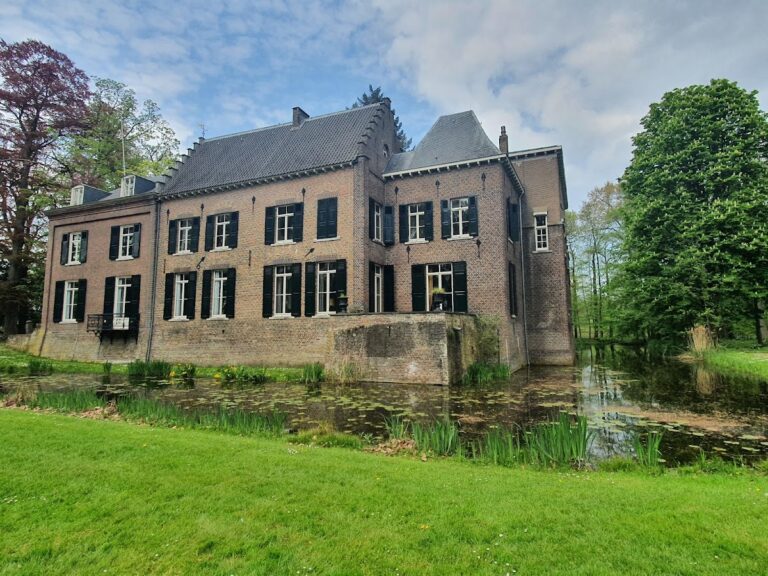
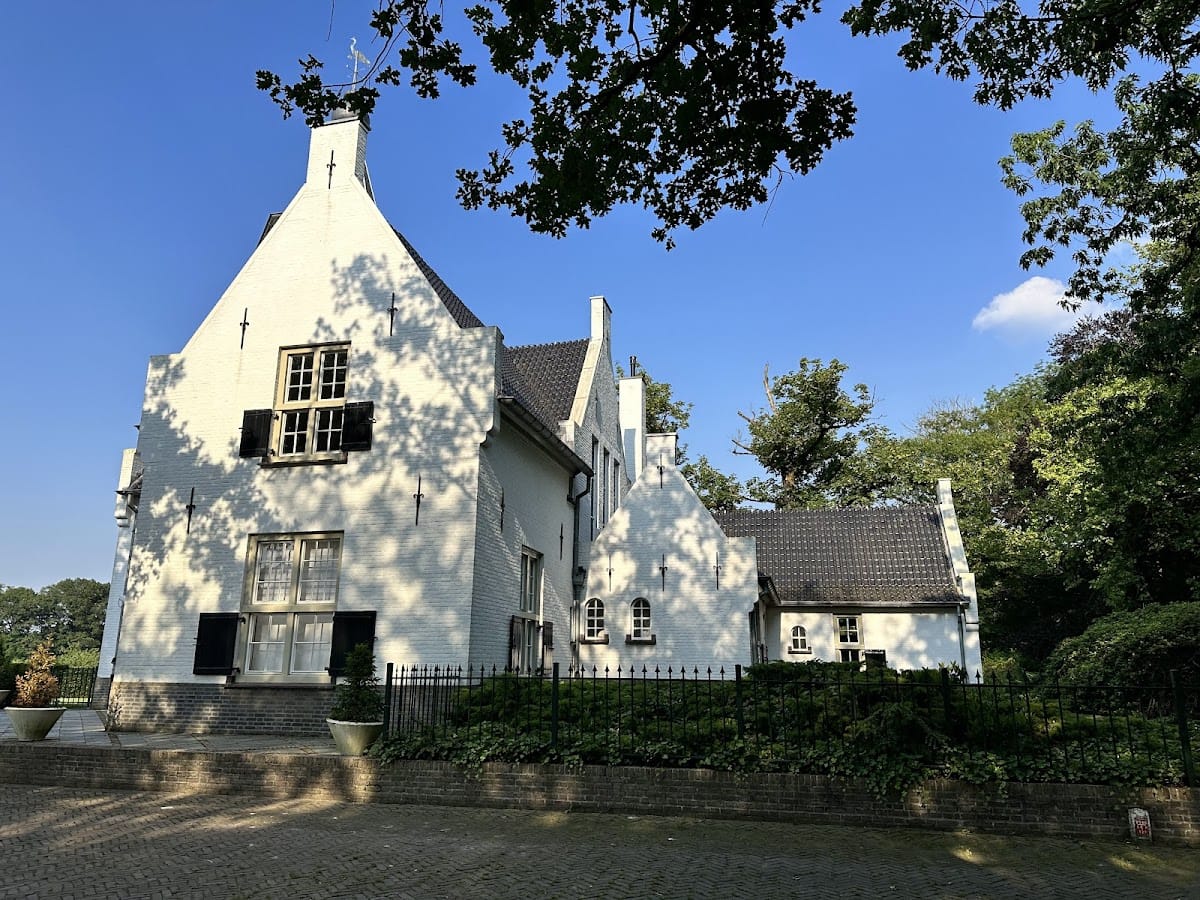
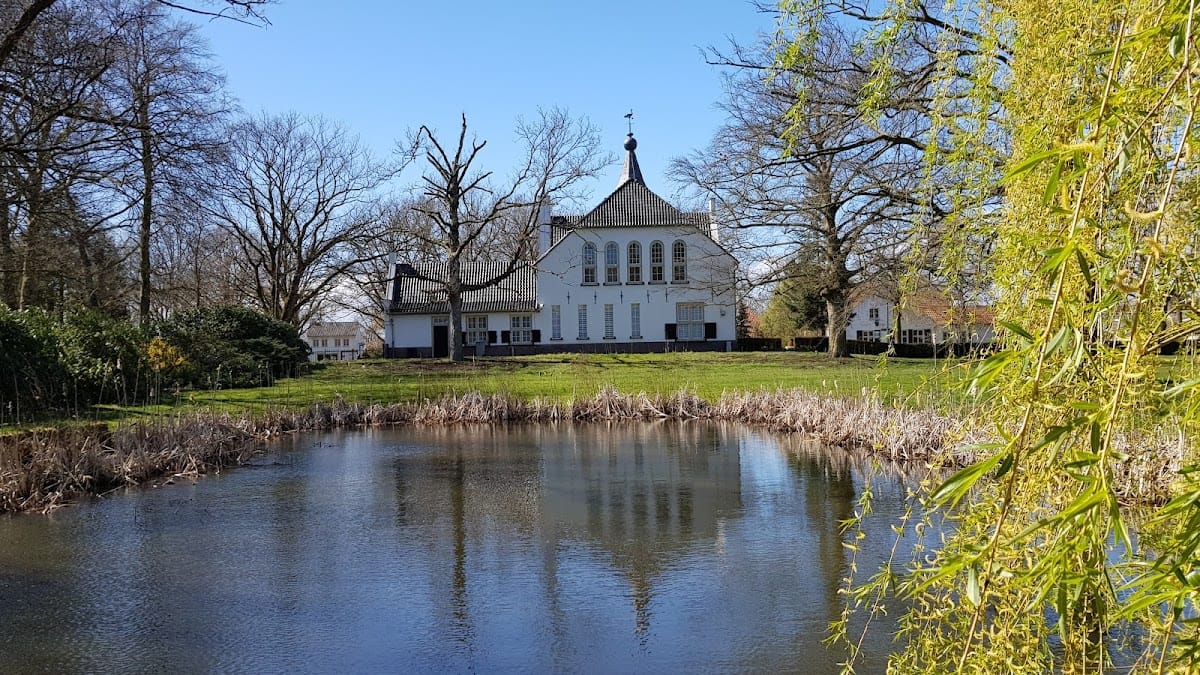
The castle farm was demolished in 1899, and a villa was built in its place. This villa formed the basis of the present castle-like building at Cranendonck 1. A small tower was added in the early twentieth century. The building should therefore be distinguished from the original thirteenth-century castle.
In 1938, the municipality of Maarheeze bought the estate and converted the surviving castle-like building into a town hall. That use continued until Maarheeze merged into the municipality of Cranendonck in 1997. The building later served as a wedding venue and was used again as Cranendonck’s town hall between 2013 and 2014, while the municipal location in Budel was renovated and insulated. The estate also acquired an agricultural experimental use. It is currently owned by the municipality of Cranendonck.
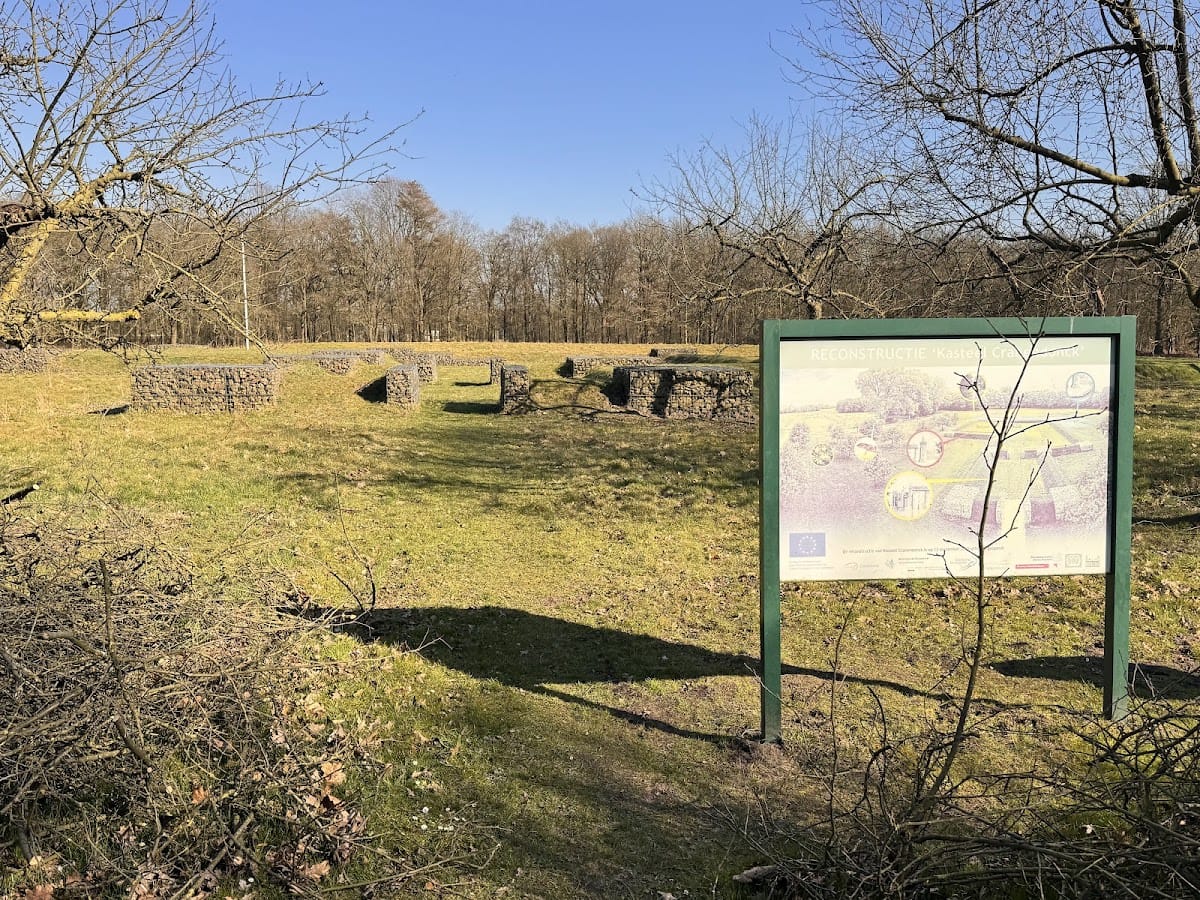
Archaeological research took place in 1996 at the site of the feudal castle, east of the present building near the Buulder Aa. The castle’s outlines were measured and were marked out again on the ground in 2008. The surrounding area is protected and forms part of a planned landscape park of approximately 400 hectares, combining small-scale natural and cultural development.
Remains
Cranendonck’s physical remains consist of the archaeological traces of the medieval water castle and the later castle-like building that occupies the former farm site. The original castle stood slightly east of the present building, close to the Buulder Aa, while the later estate complex developed beside it.
Medieval Water Castle
The original castle was a thirteenth-century water castle built of brick. It stood between Maarheeze and Soerendonk, near the Buulder Aa, and was largely destroyed by the French in 1673. The surviving remains became a deteriorating ruin. Archaeological work in 1996 measured the outlines of the medieval castle, and those lines were marked out on the ground again in 2008, allowing the former plan to be represented within the landscape.
Later Castle-Like Building and Estate
The present castle-like building began as a villa erected after the castle farm was demolished in 1899. Its small tower, added in the early twentieth century, contributes to its castle-like appearance, but the building is not the original medieval castle. Several associated estate buildings accompany it, and the complex stands within protected surroundings covering approximately 400 hectares.