Château de Chinon: A Historic Castle in Central France
Visitor Information
Google Rating: 4.4
Popularity: Medium
Official Website: forteressechinon.fr
Country: France
Civilization: Celtic, Medieval European
Site type: Military
Remains: Castle
History
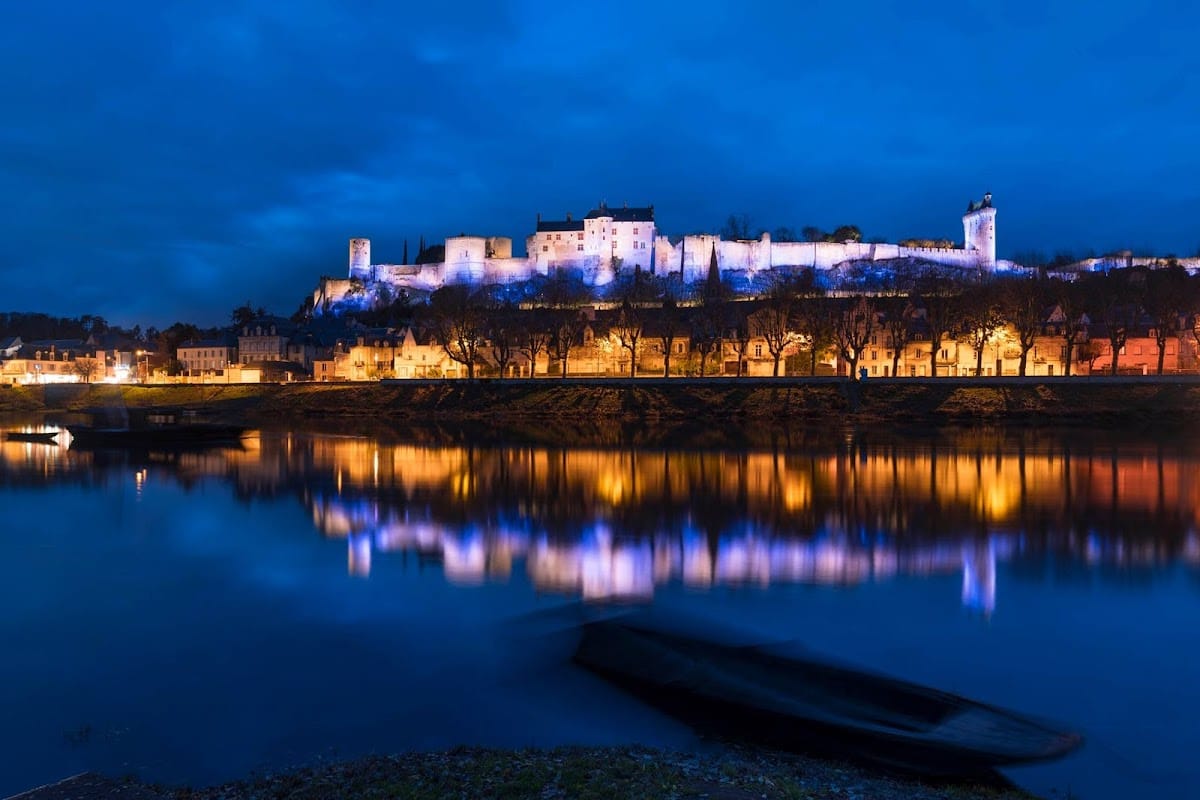
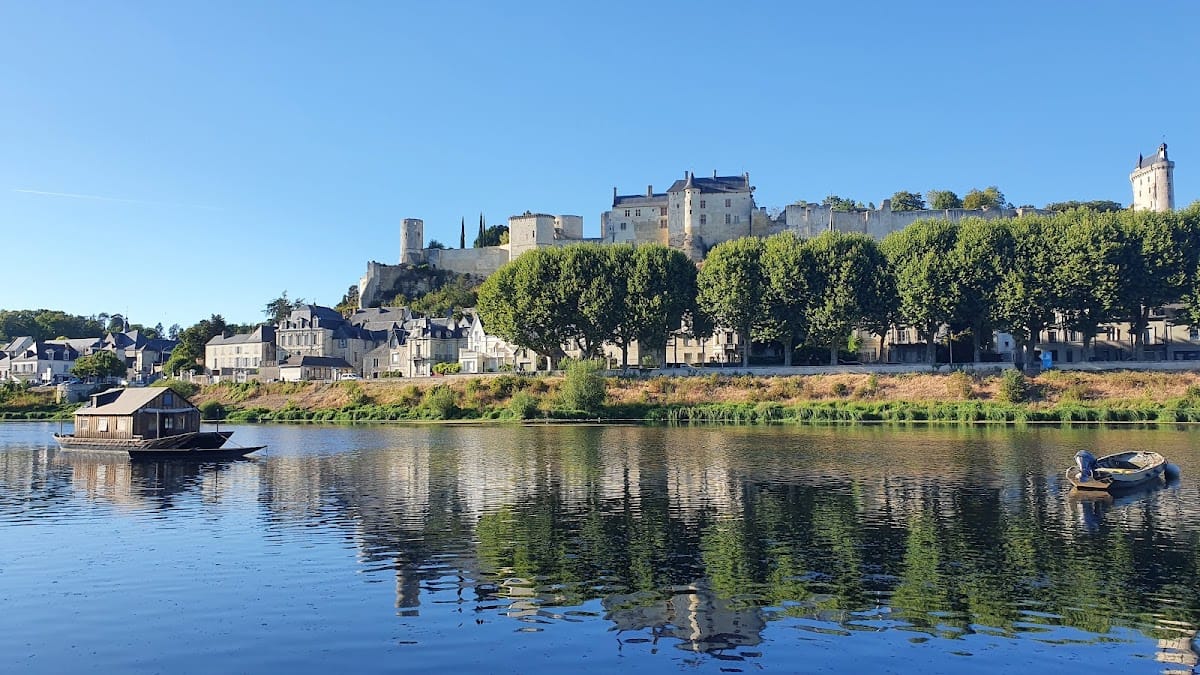
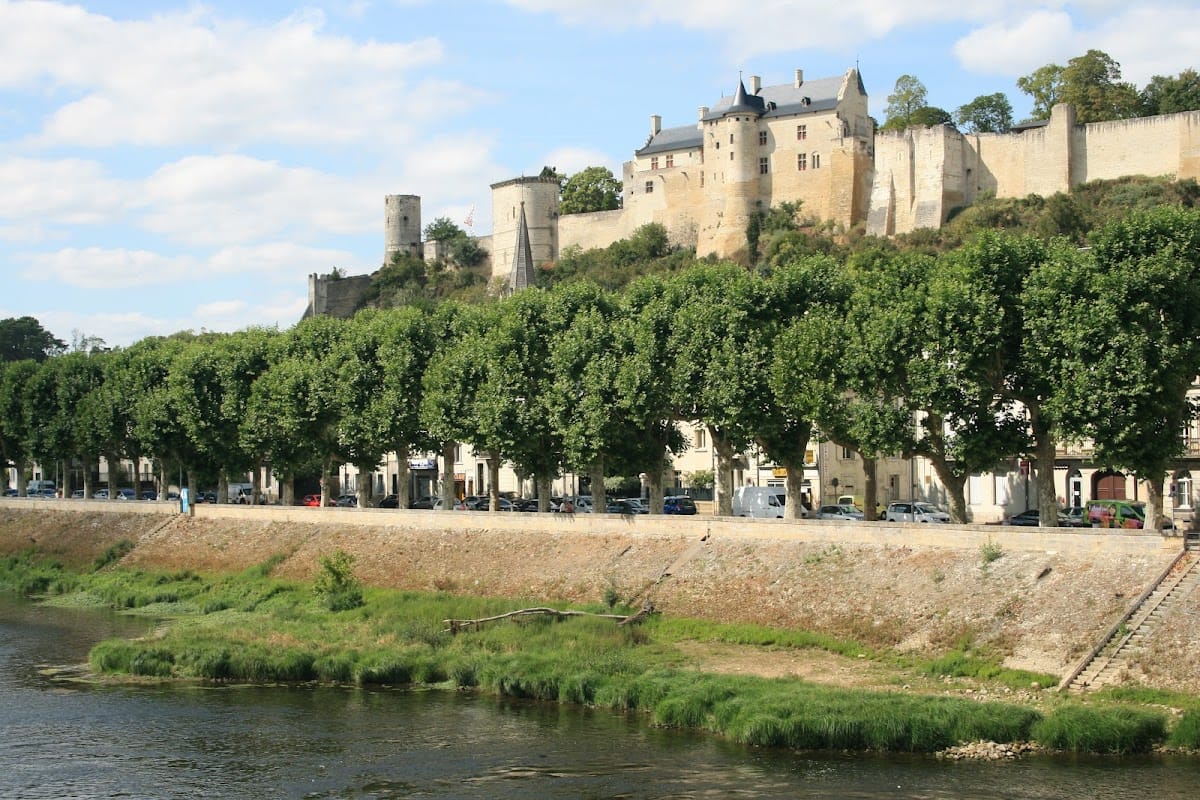
The Château de Chinon is situated in the town of Chinon, within the Indre-et-Loire department of central France. It occupies a rocky promontory overlooking the Vienne River near where it joins the Loire. This strategic position controlled an important river crossing and has been occupied for around three thousand years. Archaeological evidence shows that a Gaulish aristocratic residence once stood here, later replaced by a fortified Gallo-Roman castrum during the late Roman Empire.
The first known castle on the site was established in the 10th century by Theobald I, Count of Blois. He constructed a stone tower and defensive walls to secure the location. In the 11th century, the castle came under the control of the Counts of Anjou, including Fulk III and his successors, who expanded and strengthened the fortifications.
In 1156, Henry II of England, from the House of Anjou, seized the castle from his brother Geoffrey. Henry II made Chinon his main continental residence and capital, building much of the castle that remains today. He died there in 1189, in the chapel dedicated to Saint-Melaine.
The castle was besieged and captured by King Philip II of France in 1205 after a lengthy siege, ending Angevin rule. Philip II enhanced the defenses, adding the cylindrical keep known as the Tour du Coudray, featuring vaulted interiors and arrow slits.
In the early 14th century, the castle served as a prison for prominent Knights Templar members during King Philip IV’s suppression of the order. The Grand Master Jacques de Molay was held here, and in 1308, papal cardinals interrogated the Templars at Chinon, an event recorded in the “parchment of Chinon.”
During the Hundred Years’ War, the castle was a residence of Charles VII from 1427 to 1450, a time when much of France was controlled by English or Burgundian forces. In 1429, Joan of Arc arrived at Chinon, met Charles VII, and stayed in the Tour du Coudray. This meeting marked a turning point in the war.
From the 17th century, the castle lost its military importance and fell into ruin. It was owned by the Dukes of Richelieu until the French Revolution, after which it was sold and partially dismantled.
Recognized as a historic monument in 1840, the castle underwent restoration beginning in the 19th century, notably through the efforts of Prosper Mérimée. In the early 21st century, major archaeological work uncovered and preserved Henry II’s palace within Fort Saint-Georges, leading to further restoration.
Remains
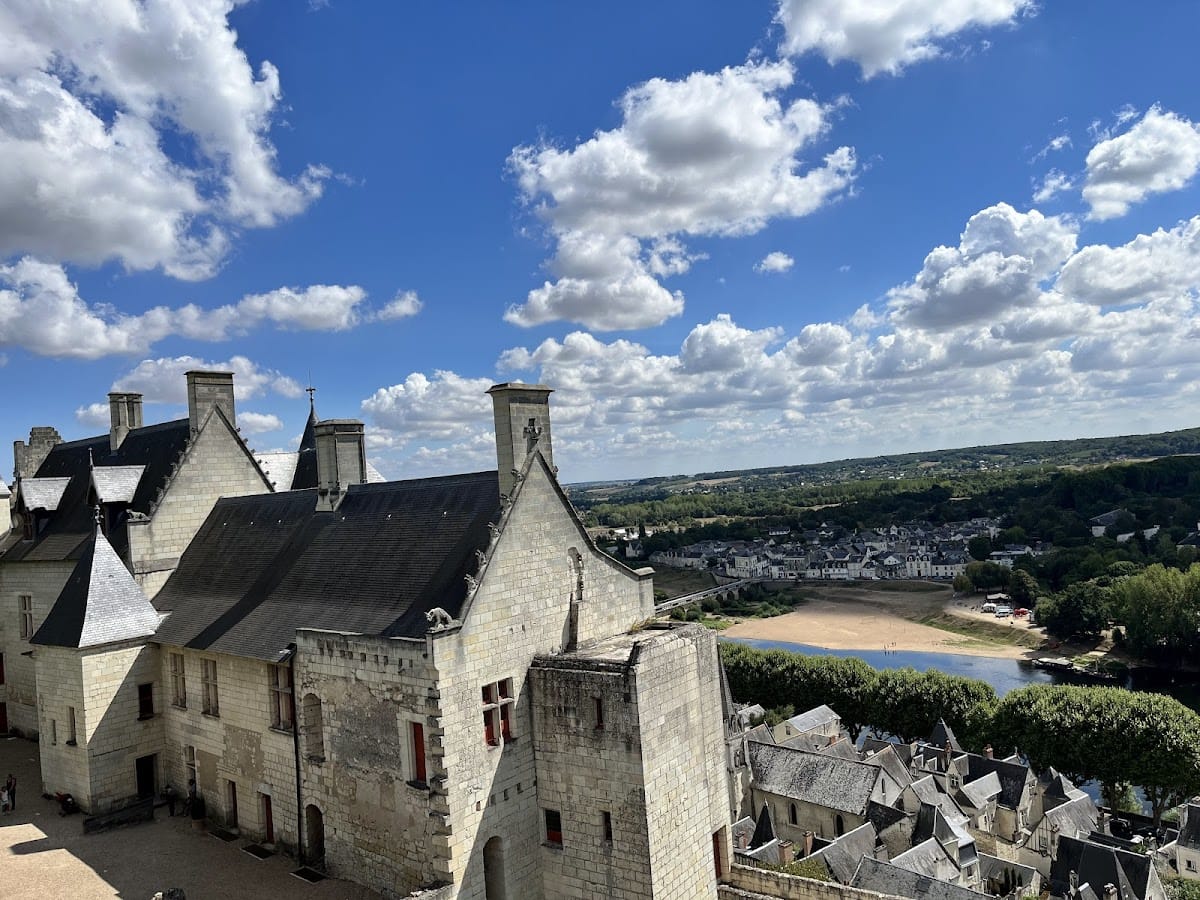
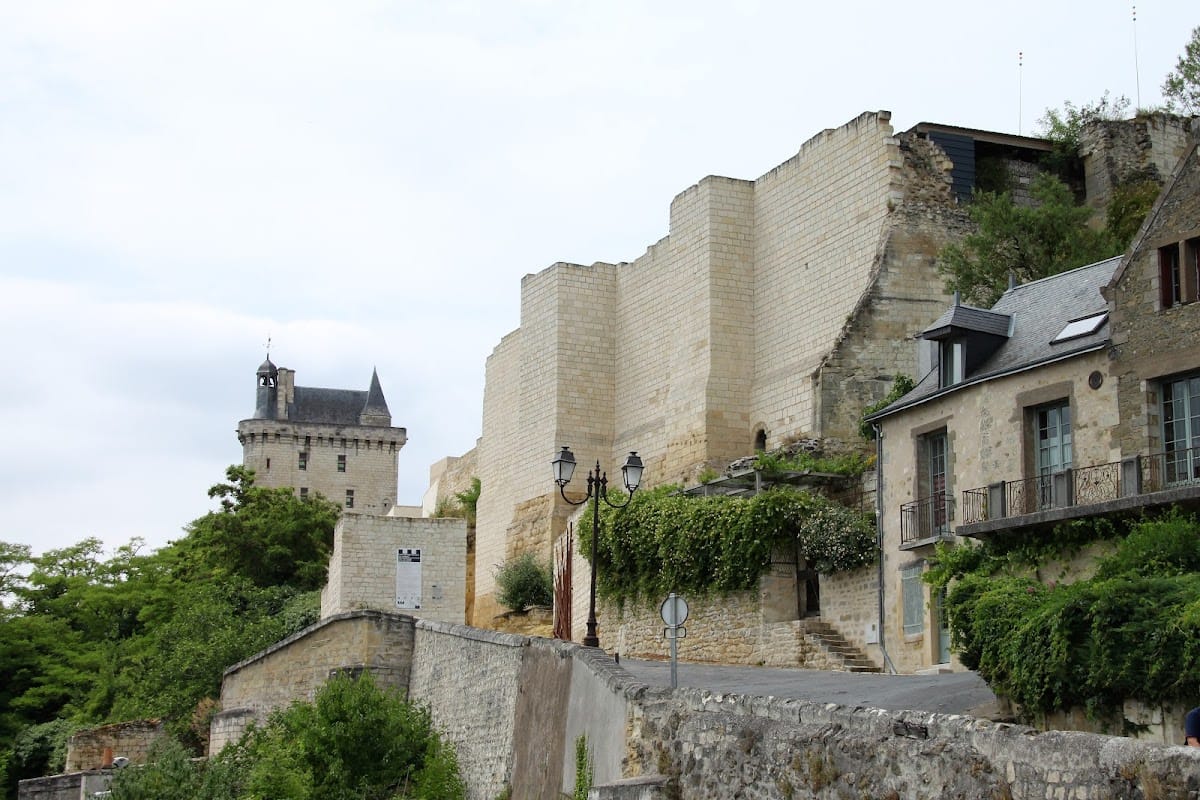
The Château de Chinon extends about 300 meters along a rocky ridge overlooking the Vienne River. It is divided into three separate fortified areas, each with its own defensive walls. From east to west, these are the Fort du Coudray, the Château du Milieu (middle castle), and the Fort Saint-Georges.
The Fort du Coudray, at the eastern end, includes the cylindrical keep built by Philip II after 1205. This tower features vaulted ceilings with pointed arches and narrow arrow slits cut through thick stone walls. It connects to the Château du Milieu by a bridge and has a subterranean passage leading to a hidden postern gate.
The Château du Milieu contains the main royal living quarters and the priory of Saint-Melaine. The royal lodgings were rebuilt in the late Middle Ages. A surviving south wing housed a large courtroom called the “Salle de la Reconnaissance” and heated chambers used by Charles VII and Marie d’Anjou. The great hall was demolished in 1699, leaving only its fireplace base and foundations.
Fort Saint-Georges, built under Henry II, includes a palace with three wings arranged perpendicular to a main building parallel to the river. It contained a chapel dedicated to Saint George and was enclosed by a simple wall without towers. Access was through two monumental gates, including a rectangular gatehouse tower on the west side. This palace was unknown until excavations between 2003 and 2005 revealed its foundations, now preserved beneath a garden.
The castle’s defenses include dry moats and drawbridges, now replaced by modern bridges, multiple towers for flanking fire, and fortified gatehouses such as the Porte des Champs. This gate lies between the Château du Milieu and Fort Saint-Georges and is protected by two large round towers, a portcullis (a heavy grilled door), and a drawbridge.
The walls are constructed from locally quarried stone, with some blocks reused from earlier Gallo-Roman buildings. Restoration has repaired parts of the curtain walls and towers, including the southern rampart of Fort Saint-Georges and an eastern tower near the Château du Milieu.
Archaeological excavations have uncovered the square ditch enclosure of the original Gaulish aristocratic residence and foundations of various medieval structures. Artifacts include a large sword buried with the Gaulish owner, now displayed in the local archaeology museum.
The castle’s layout reflects construction phases from the 6th to the 15th centuries, with significant additions by the Angevins and Capetians. Philip II’s architectural style is evident in the circular towers with pointed vaults and arrow slits.
Recent restoration efforts have focused on preserving original structures while reconstructing roofs and timber frameworks inspired by 15th-century designs. This includes a sculpted roof truss in the king’s chamber. The great hall remains a ruin to protect its archaeological remains.
A visitor center now occupies part of Fort Saint-Georges, built after extensive excavation of nearly 4,000 square meters, revealing the fort’s interior layout.
Nearby sites