Castle of Cergneu: A Medieval Fortress in Northern Italy
Visitor Information
Google Rating: 4
Popularity: Very Low
Official Website: consorziocastelli.it
Country: Italy
Civilization: Medieval European
Site type: Military
Remains: Castle
History
The Castle of Cergneu is situated near the municipality of Nimis in northern Italy. Its origins trace back to an early defensive site established by Roman settlers, predating the arrival of the Lombards in the region. This strategic position on a hill at the entrance of the Terska Valley underscores its early military importance.
The place now known as Cergneu appears in historical records for the first time in 1170, under the name Černjeja. That year, the patriarch of Aquileia entrusted the village to Ulrich of Moosberg, a Tuscan count of Bavarian descent. Later that same year, Ulrich returned control of the property to the patriarch, marking the beginning of a complex relationship between local nobility and ecclesiastical authorities.
During the 13th century, the patriarchs of Aquileia granted the castle and its surrounding lordship as a fief to the Savorgnan family. Notably, members of this family, including Conrad and his sons Detalm and Peter, adopted the name Černjejski in reference to the castle itself. The estate is explicitly mentioned in a 1270 document detailing a division of property involving Peter Savorgnano, indicating its established role within regional aristocracy.
In 1323, the Černjejski family expanded their presence by erecting a small church dedicated to Saints Peter and Paul, situated near the castle. This religious construction originally honored Mary Magdalene, signaling shifting devotional practices within the family and community.
The castle faced significant challenges beginning in 1348, when a powerful earthquake caused serious damage. Additionally, ongoing conflicts between forces loyal to the patriarch of Aquileia and those allied with the Savorgnans extended through much of the 14th century, further affecting the fortress. To strengthen their hold, in 1386, Detalm Černjejski and his six children undertook an expansion project. They added a large palace attached to the west wall of the existing tower, reinforcing the castle’s residential and defensive capacities.
Patriarch Markward reaffirmed the castle and lordship as a fief in 1371. Later developments included the addition of Brazzacco Castle as a superior fief in 1491, having been attached to the Savorgnan holdings since 1480. Despite the family’s prominence in the region, the strategic and military significance of the Castle of Cergneu diminished over time, leading to neglect and marginalization by the 15th century.
In 1420, control of the castle shifted to the Venetian Republic. Subsequent wars between Venice and the Holy Roman Empire brought further damage, compounded by an earthquake in 1511. By 1521, historical accounts described the castle as largely destroyed, placing it among other ruined strongholds in Friuli. Nonetheless, records from 1567 mention the death of John the Baptist Černjejski, implying that some parts of the castle might still have been occupied during the mid-16th century.
Following this period, the castle was fully abandoned, likely in the first half of the 1500s, and subsequently referenced only as a fief connected to the Brazzacco family. Over the centuries, it remained in ruins, preserved as a historical landmark accessible via an old mountain path.
Remains
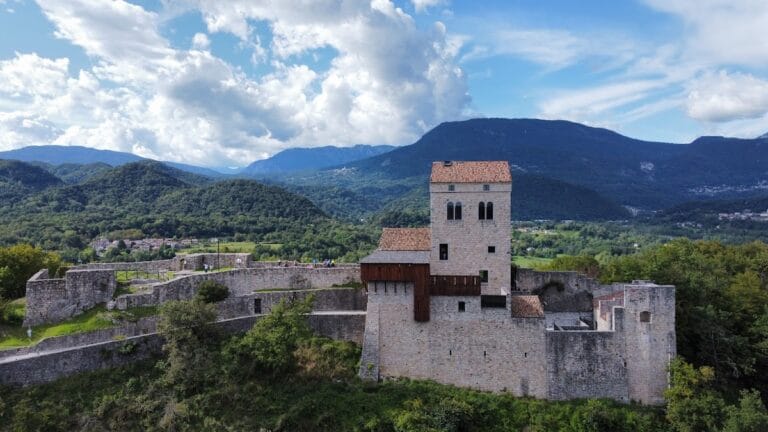
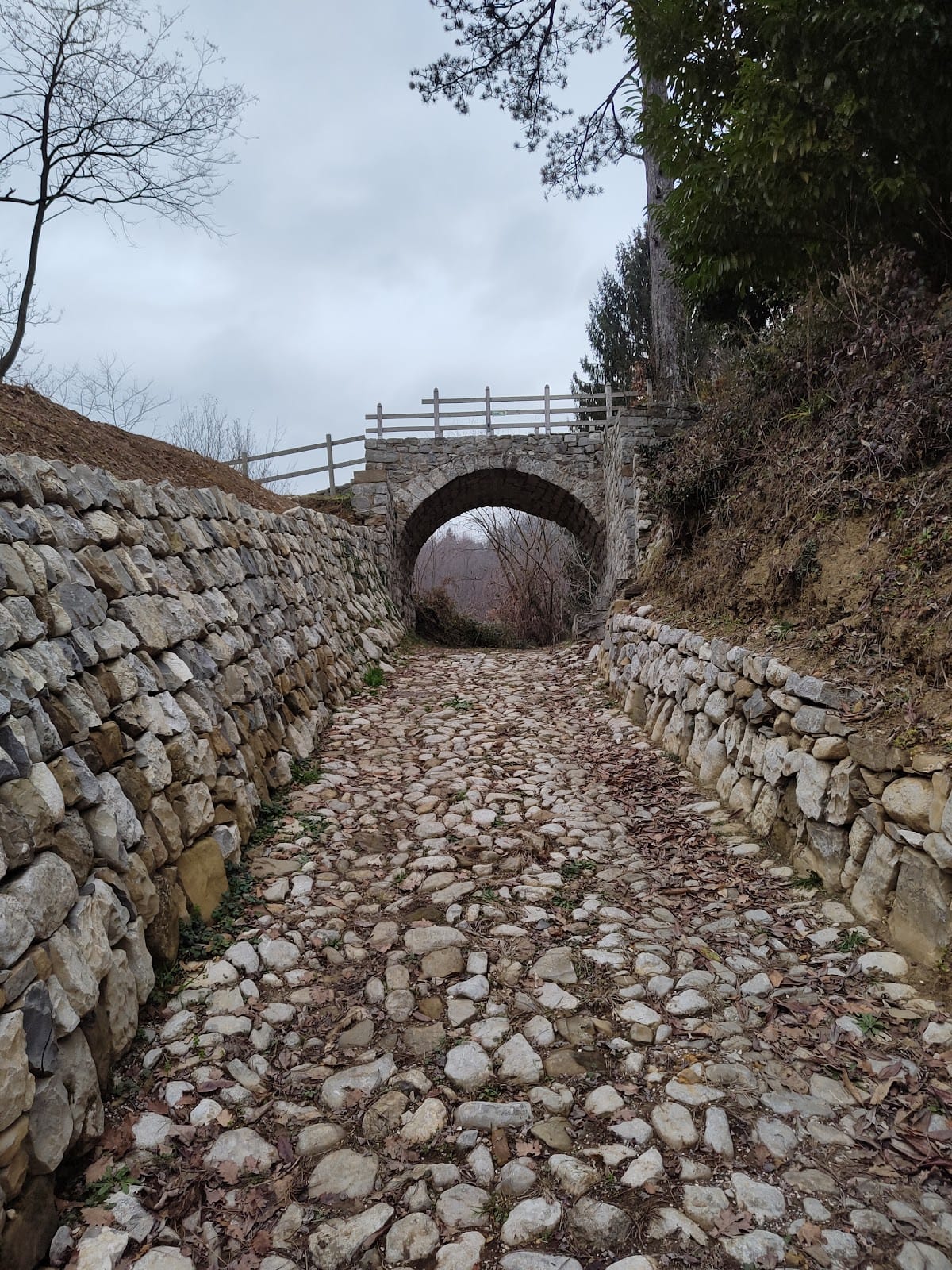
Perched at roughly 321 meters above sea level, the site of the Castle of Cergneu is approached by a path beginning near the village known as Čarnjeja. Visitors of past centuries would have crossed a small arched bridge that led to a substantial man-made terrace, which was originally encircled by a moat, serving as both a defensive barrier and a foundation for the castle’s structures.
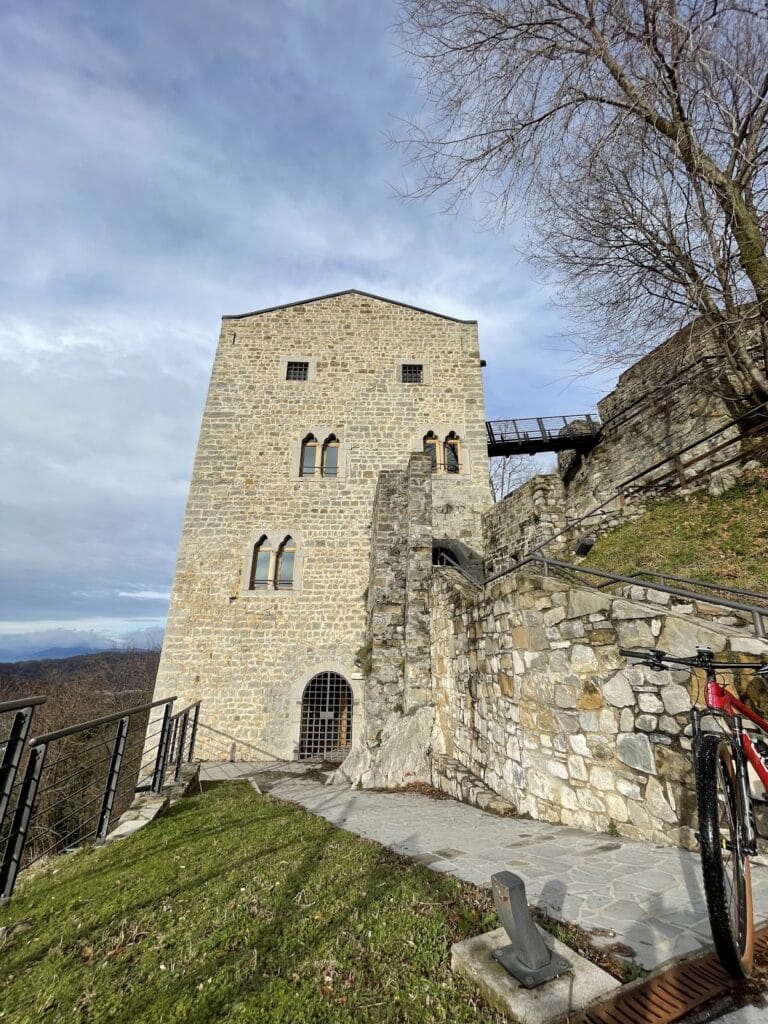
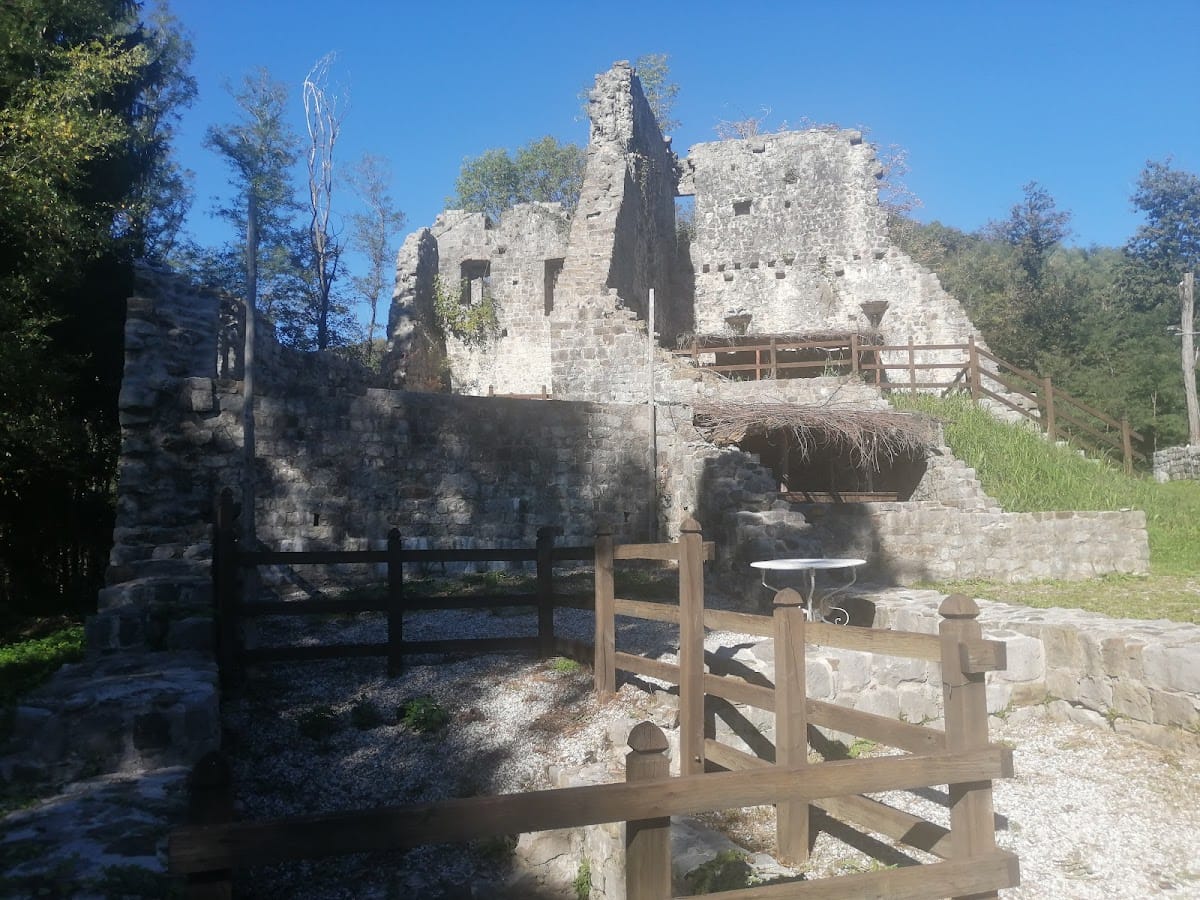
The most prominent surviving element is the quadrangular tower, constructed with stone walls that reveal several window openings and original entrance doors. Inside, the structure is divided into four distinct floors, evidencing vertical organization typical of medieval military architecture. Surrounding the tower, fragments of defensive walls hint at the castle’s original perimeter fortifications.
Facing this tower stands a residential building, often referred to as the “domus,” which dates back to the 13th century. This structure served as living quarters and demonstrates the evolution of the castle from a purely military installation to a noble residence.
Nearby the castle is the small church dedicated to Saints Peter and Paul. Erected in 1323 by members of the Černjejski family, this ecclesiastical building initially honored Mary Magdalene before changing its patronage. Its proximity to the castle underscores its close ties to the fortress’ lords and their spiritual life.
Additional features of the site include the keep, known in Italian as the “mastio,” which formed the castle’s central stronghold. Parts of the curtain walls, the defensive walls linking towers and buildings, survive in various states of preservation, outlining the layout of the castle’s enclosure.
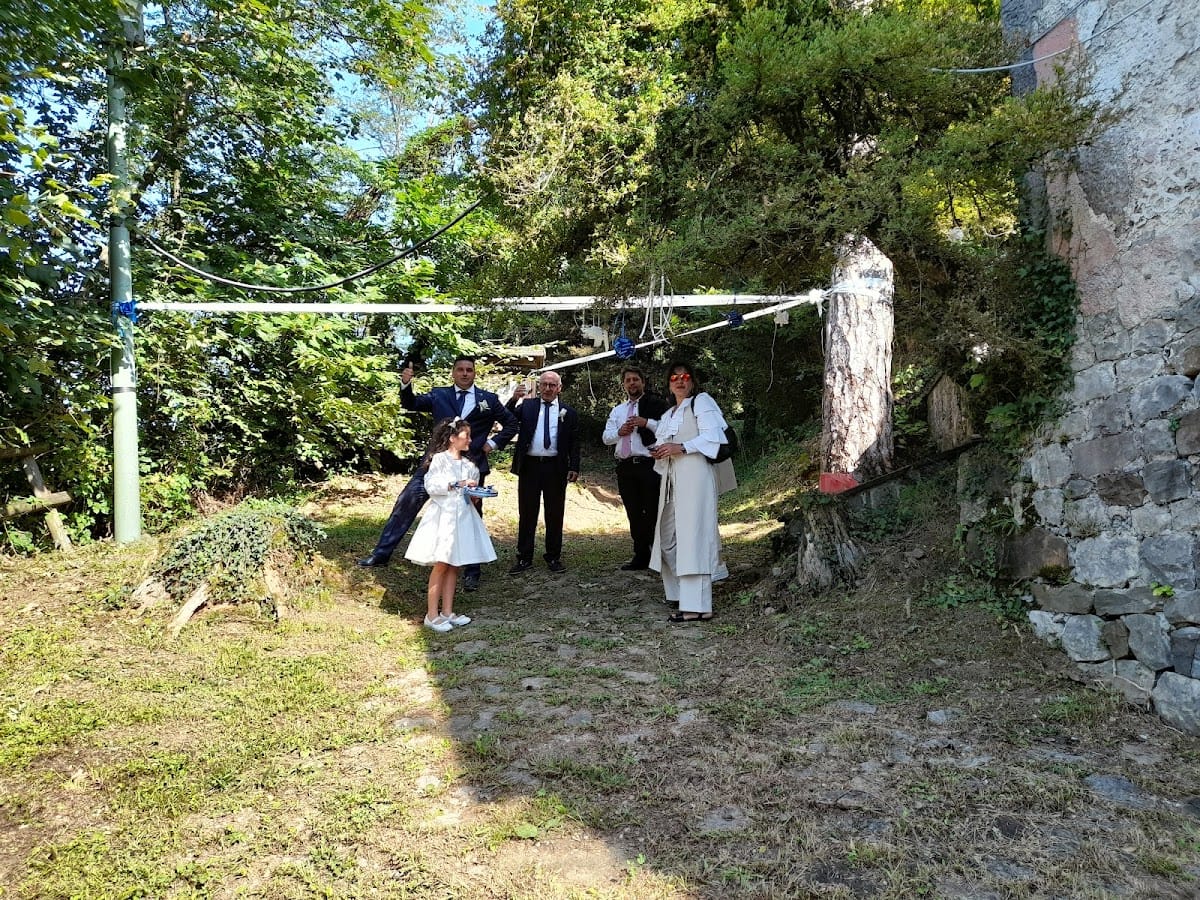
The original access road to the castle still retains patches of its ancient paving stones, winding through a short forested stretch and offering insight into the historic route taken by residents and visitors. This path, along with the ruins, provides a tangible connection to the castle’s long history, remaining as visible reminders of its medieval past.
Nearby sites