Castle Englar: A Late Gothic Noble Residence in Italy


Site at a Glance
- Rating
- 4.6
- Popularity
- Low
- Country
- Italy
- Primary era
- Medieval
- External website
- Open
- Eras represented
- Medieval, Early Modern
- Civilizations
- Habsburg, Holy Roman Empire
- Site type
- Domestic
- Remains
- Castle
On this page7 sections
History
Early records and the Firmian residence
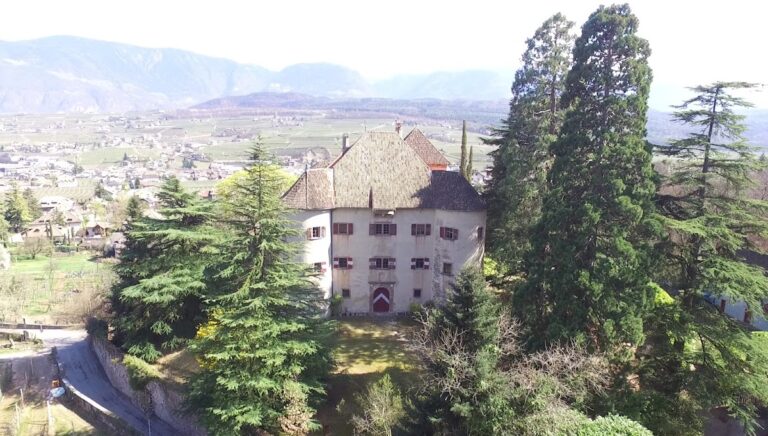
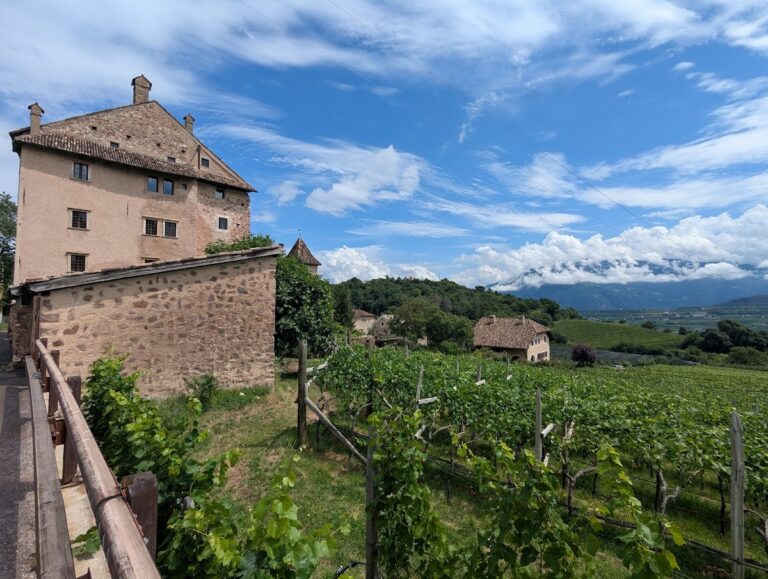
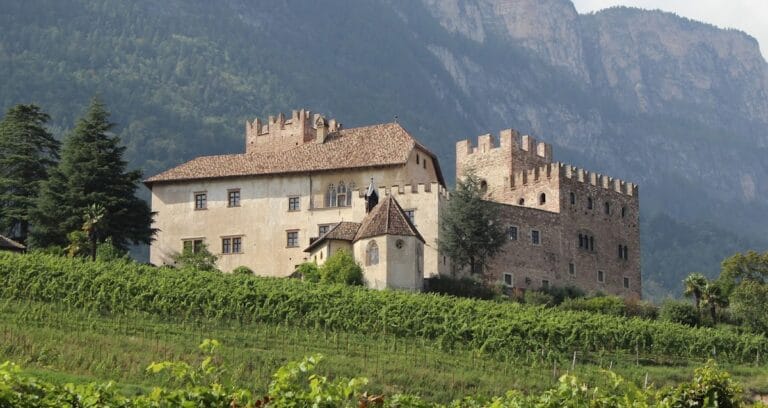
Castle Englar is a late Gothic castle residence in Italy, above the center of St. Michael in the Pigeno district of Eppan, South Tyrol. The present residence was built in 1475 for the noble Firmian family, placing its principal form within the late Gothic period, an architectural style known for elaborate decoration and vertically emphasized spaces.
Englar first appears in written records in 1256, when Count Meinhard II and Albert I of Gorizia and Tyrol granted the Firmian knights two holdings, together with vineyards, mills, and houses. They retained the castle site for themselves. The name also referred to the surrounding area. In 1326, Swikerus Gelter of Paludo of Englar and his wife Agnes were recorded as tenants in the parish of Eppan. In 1381, Adelheid, widow of Hildebrand von Firmian, made her will at the house of Englar in the presence of Petrus, a priest of Eppan.
Christoph von Firmian commissioned the nearby Chapel of Saint Sebastian in 1450, and the chapel was consecrated in 1475. A family benefice, an endowed foundation supporting chapel maintenance and religious duties, was established for it, although the date of that foundation is unknown. After Christoph died in 1486, his son Bartholomew von Firmian inherited Englar.
Changes of ownership
Several families held the property at the same time until the seventeenth century. Through the marriage of Caspar von Thun, who died in 1528, to Dorothea von Firmian, the property passed to their sons. An additional wing was built in 1528. By about 1588, the Colonna von Völs held Englar and adopted the noble designation “zu Englar.” A coat of arms of the Firmian and Thun families, dated 1586, remains above the entrance portal.
Arbogast von Thun sold part of Englar to the Counts Khuen von Belasi in 1621. In 1662, Franz Wilhelm von Firmian sold the estate, including the rear tower, to Count Franz Carl von Khuen. The Khuen family then became the sole owner. Count Karl von Khuen held the estate during the first half of the nineteenth century, while Count Bruno von Khuen used the castle as a summer residence. The Khuen family remains its owner.
Writers, protection, and later use
From 1895 to 1899, the German poet and writer Otto Julius Bierbaum lived on the castle’s main floor and composed several major works there. His guests included the painter Max Arthur Stremel and the poet Rainer Maria Rilke. In 1897, Rilke wrote a poem titled Englar in Eppan.
Englar and the Chapel of Saint Sebastian received monument protection in 1951. The western wing was converted into a small eight-room hotel in the late twentieth century. The chapel underwent comprehensive restoration in 2015. Englar later served as a filming location for the German fairy-tale film Prinzessin Maleen in 2015 and the Austrian-Italian comedy Alles wird gut in 2018.
Remains
Castle residence
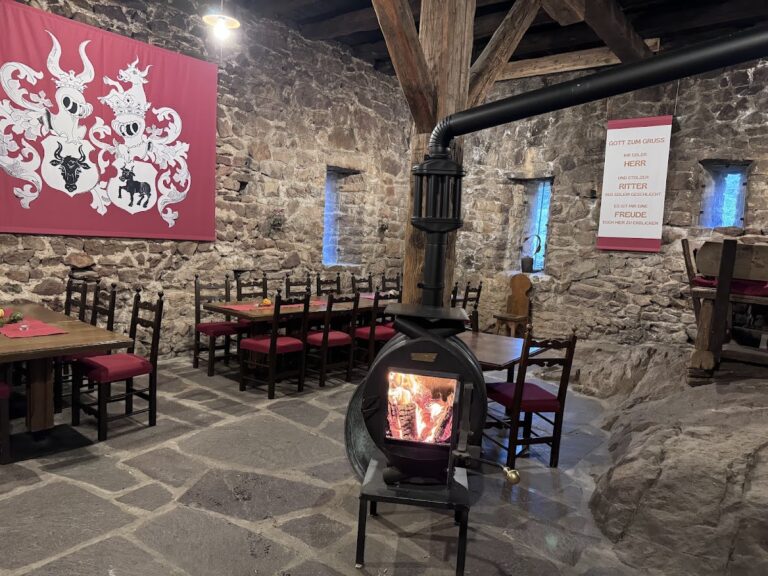
Castle Englar is distinguished by very high hipped roofs, which slope on all sides rather than ending in vertical gables. Its western wing now contains a small hotel with eight rooms. Inside, the Knights’ Hall contains portraits of members of the Khuen comital family, the family belonging to the rank of counts. The rear tower forms part of the estate transferred to Count Franz Carl von Khuen in 1662.
Chapel of Saint Sebastian
The Chapel of Saint Sebastian stands near the castle as a delicate late Gothic building. Its gabled-roof tower is attached to a nave that ends in a narrower choir. Ribbed vaulting covers the interior, with ornamental decoration and ribs resting on consoles in the choir. Sixteenth-century frescoes remain inside, together with three eighteenth-century Baroque altars, a pulpit, and three doors decorated with flat ornamental designs.