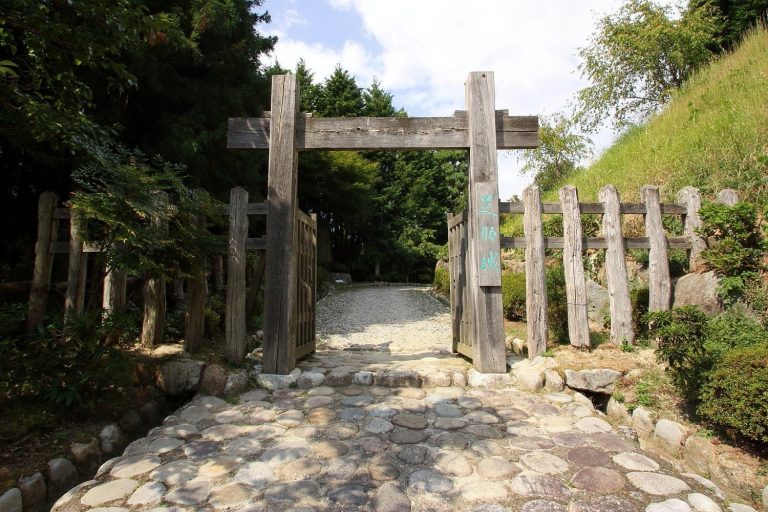
Chōkō-ji Temple: A Rinzai Zen Temple in Toyota, Japan
Site at a Glance
- Rating
- 3.8
- Popularity
- Very Low
- Country
- Japan
- Primary era
- Modern
- Eras represented
- Early Modern, Modern
- Civilizations
- Japanese, Tokugawa
- Site type
- Religious
- Remains
- Monastery
On this page12 sections
History
Chōkō-ji Temple, formally Chōkō Zenji, is a Rinzai Zen temple in Toyota, Japan, founded in 1335 by Chūjō Hidenaga as the family temple of the Chūjō family. Rinzai is one of Japan’s major Zen Buddhist traditions, and Chōkō-ji belongs to its Tōfukuji branch, a lineage associated with Tōfukuji Temple in Kyoto. The temple is classified as a temple of special status, and its principal image is the Eleven-Faced Kannon, a form of the Buddhist bodhisattva of compassion represented with multiple faces.
Foundation and Medieval Decline
Chūjō Hidenaga, lord of Koromo Castle in Mikawa Province, invited the monk Taiyō Gichū to establish Chōkō-ji. The precinct then extended for more than five chō from north to south and more than four chō from east to west. A chō was a traditional Japanese unit used to describe distances and landholdings. The temple contained 18 subtemples and was regarded as the largest temple in the region.
Chōkō-ji declined after the Ōnin War, a civil conflict fought from 1468 to 1477 that weakened many medieval warrior families and institutions. The Chūjō family also declined during this period. In 1567, troops commanded by Oda Nobunaga burned the temple after mistaking its imposing appearance for a castle. Nobunaga was a sixteenth-century military leader whose campaigns helped unify much of Japan before his death in 1582.
Rebuilding and the Koromo Settlement
In 1583, Yogo Masakatsu, a retainer of Nobunaga and deputy lord of Koromo Castle, rebuilt Chōkō-ji. He held a memorial service there on the first anniversary of Nobunaga’s death, when a portrait of Nobunaga by Kano Motohide was donated to the temple. Kano Motohide was associated with the Kano school, a major tradition of Japanese painting.
The main hall and monks’ quarters were rebuilt during the Genroku era, from 1688 to 1704. During the Edo period, Chōkō-ji and the surrounding settlement formed Chōkō-ji Village within the territory of the Koromo Domain. The village was a rural settlement assessed at approximately 400 koku, a historical measure of agricultural production based conventionally on the rice needed to support one person for a year, rather than a castle town.
As the local population grew, the settlement supplying offerings to the temple was divided into eastern and western sections. The place-name Kuze was established through this division, which is identified as the origin of the modern place-name shared by the temple and its surrounding district. In the mid-Meiji period, Chōkō-ji Village merged with neighboring villages to form Negawa Village. In 1906, Negawa merged with the castle town to create Koromo Town.
Tradition and Cultural Properties
A local folktale called “The Bell of Chōkō-ji” tells of a bell stolen by a thief. The bell continued to ring, calling for Chōkō-ji and asking to be returned. The temple’s associated cultural properties include three nationally designated Important Cultural Properties: a silk painting of the Buddha’s death, a paper painting of Oda Nobunaga by Kano Motohide, and a silk portrait of the Zen monk Mui Shōgen. The Buddha’s-death painting carries an inscription dated 1421.
Remains
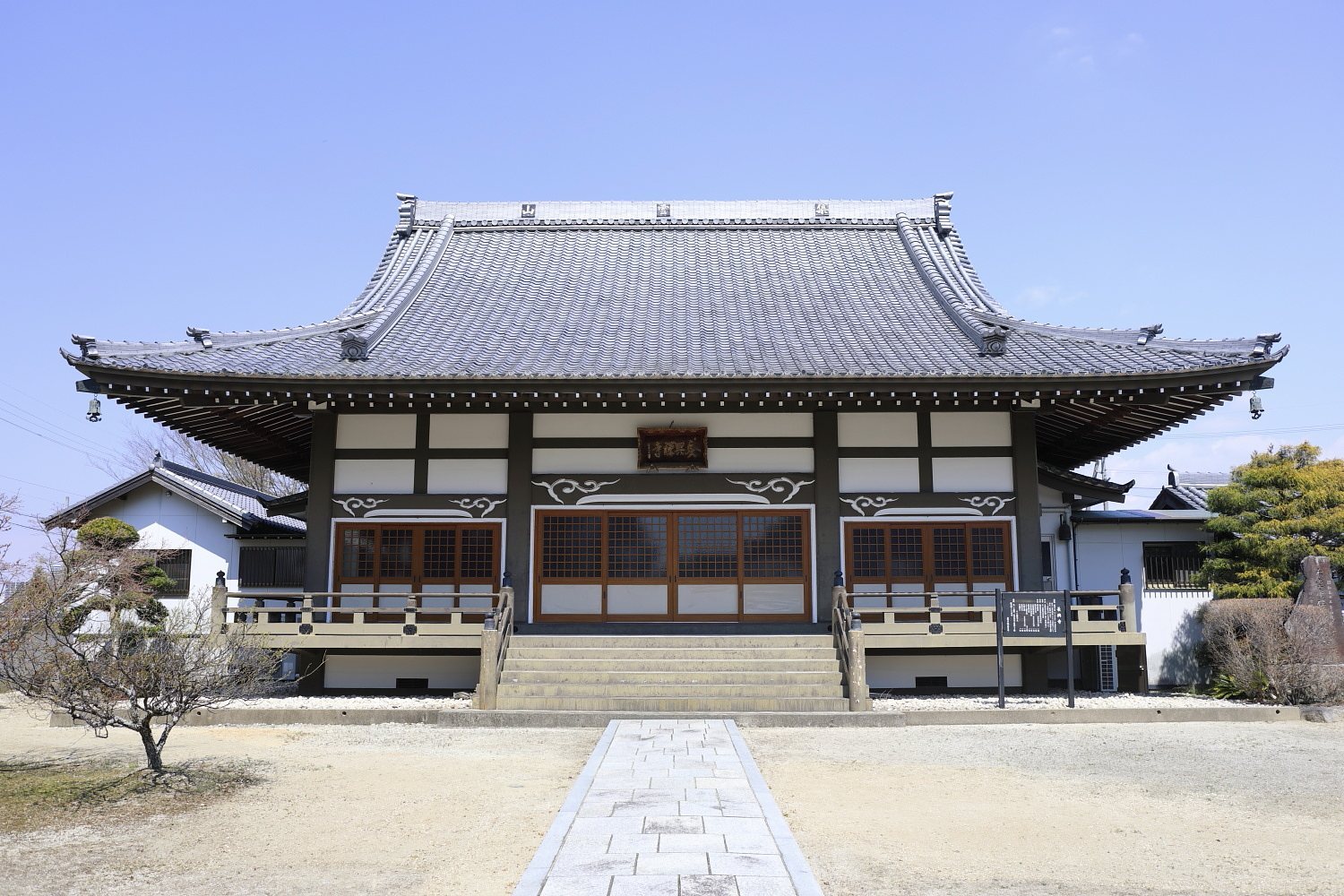
The historic temple precinct covered more than five chō from north to south and more than four chō from east to west, with 18 subtemples arranged within it. The main hall and monks’ quarters belonged to the Genroku-period rebuilding, while the present main hall is a reinforced-concrete structure reconstructed during the Shōwa 50s, the fiftieth decade of the Shōwa era.
Temple Buildings and Precinct
Historic Precinct
The former layout comprised an extensive temple precinct with numerous subtemples. Its recorded dimensions and 18-subtemple arrangement convey the scale of Chōkō-ji during its historic development.
Main Hall and Monks’ Quarters
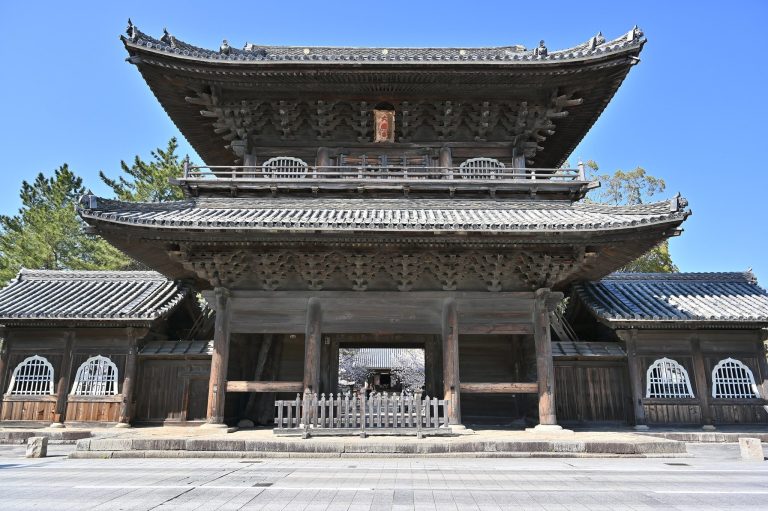
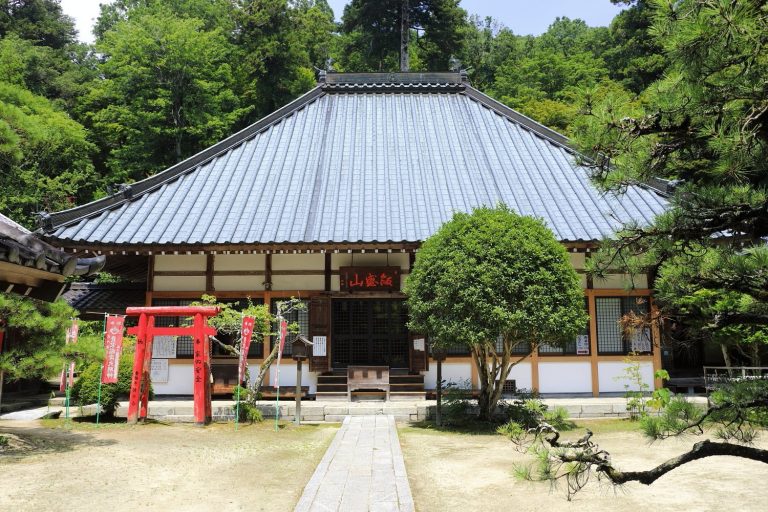
The main hall and monks’ quarters were rebuilt between 1688 and 1704. The current main hall was later reconstructed in reinforced concrete during the Shōwa 50s, preserving the building’s role as the principal hall while changing its construction.
Paintings and Portraits
Buddha’s-Death Painting
A silk painting depicting the Buddha’s death is associated with Chōkō-ji. An inscription on the work dates it to 1421, providing a medieval date for one of the temple’s preserved religious paintings.
Portrait of Oda Nobunaga
The temple preserves a paper painting of Oda Nobunaga by Kano Motohide. It was donated in 1583 during the memorial service held at Chōkō-ji on the first anniversary of Nobunaga’s death.
Portrait of Mui Shōgen
A silk portrait of Mui Shōgen, a Zen monk, is also among Chōkō-ji’s nationally designated Important Cultural Properties. The work serves as both a religious portrait and an example of the artistic heritage associated with the temple.