Ranighat Palace: A Rana Memorial Palace in Nepal
Site at a Glance
- Rating
- 4.4
- Popularity
- Medium
- Country
- Nepal
- Primary era
- Modern
- External website
- Open
- Eras represented
- Modern
- Civilizations
- Unclassified
- Site type
- Domestic
- Remains
- Palace
On this page6 sections
History
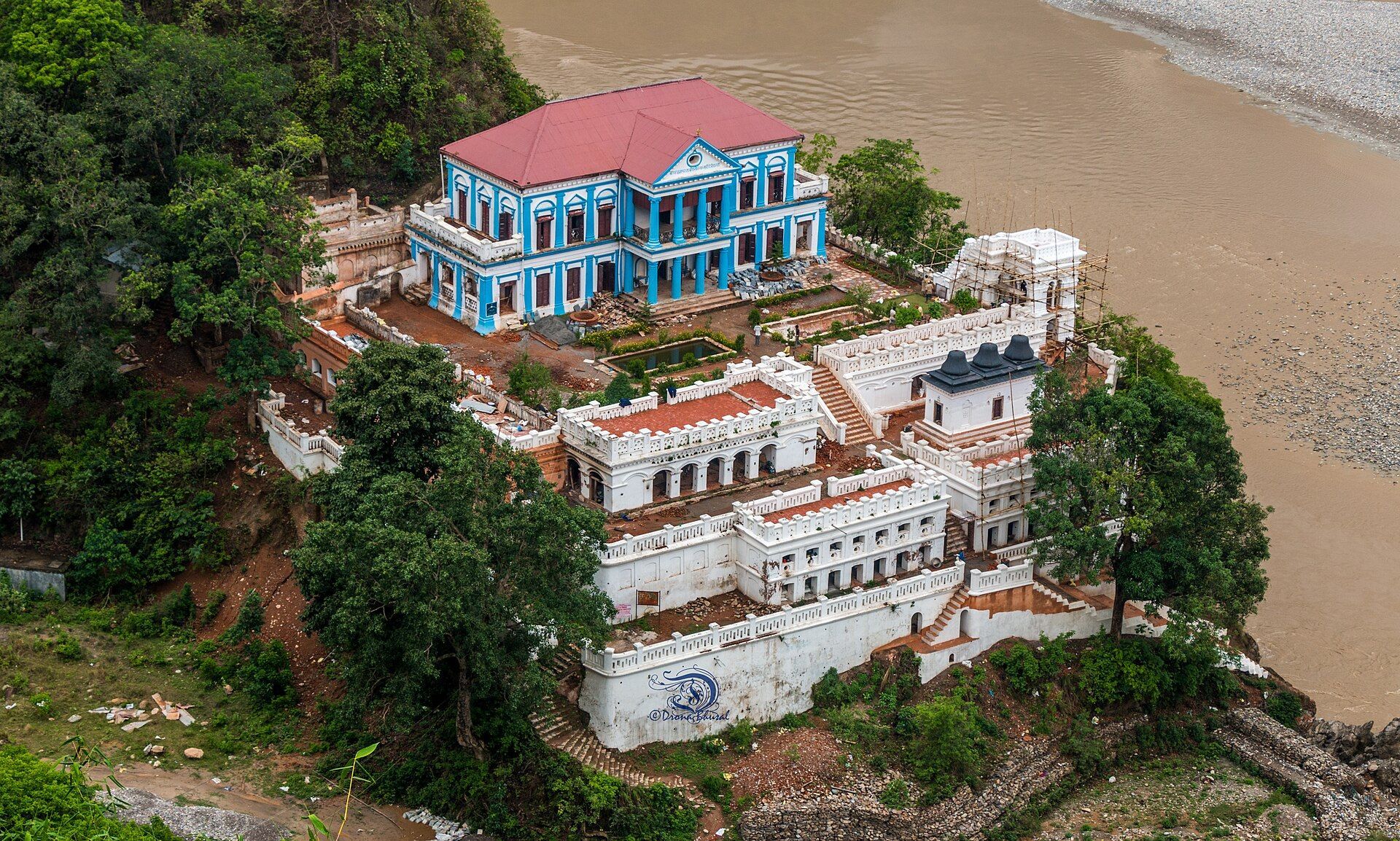
Ranighat Palace, also known as Rani Mahal, is a late nineteenth-century Rana palace in Nepal, near Tansen in Palpa District. Built by General Khadga Shamsher Jang Bahadur Rana in a Neoclassical and European style, construction began in 1893 and ended four years later. The Rana family was Nepal’s hereditary ruling elite, whose powerful prime ministers governed while the monarchy formally remained in place. The palace served as both a royal residence and accommodation for royal guests, while also commemorating Khadga Shamsher’s youngest wife, Tej Kumari Devi.
Khadga Shamsher and the Palace’s Foundation
Tej Kumari Devi died in 1892. Her reported final wish was for a pilgrimage site to be established in her name, and Khadga Shamsher built the palace as her memorial. He named it Rani Mahal, meaning “Queen’s Palace.” The surrounding landscape was given related names: the nearby forest became Rani Ban, or “Queen’s Forest,” and the river landing became Rani Ghat. The site was also used by residents of Tansen for funerary rites and cremations.
Before moving to Palpa, Khadga Shamsher had played a major part in Nepalese politics. In 1885 he assassinated Ranauddip Shamsher Rana, helping Bir Shumsher Jung Bahadur Rana become prime minister while Khadga Shamsher became commander in chief. His attempt to remove Bir Shumsher in 1887 failed. He was arrested, stripped of his royal titles and command, and banished to Thada in Gulmi District. In 1888 he regained limited authority as governor general and commander in chief of western Nepal, and was allowed to relocate to Palpa-Gauda.
Abandonment and Restoration
In 1902, Khadga Shamsher and his family fled to India. The palace was left without a proper owner or caretaker, and it remained unoccupied and poorly maintained. Its condition deteriorated severely, and the roof collapsed in 1985.
By the end of the twentieth century, the palace’s decline had become a concern for local residents and the Government of Nepal. A government restoration program received funding in 2017 and restored the building toward its original appearance. The restored palace also became a museum. It is popularly called the “Taj Mahal of Nepal” because both buildings were created in memory of a beloved partner and stand beside a river.
Remains
The Palace and Its Setting
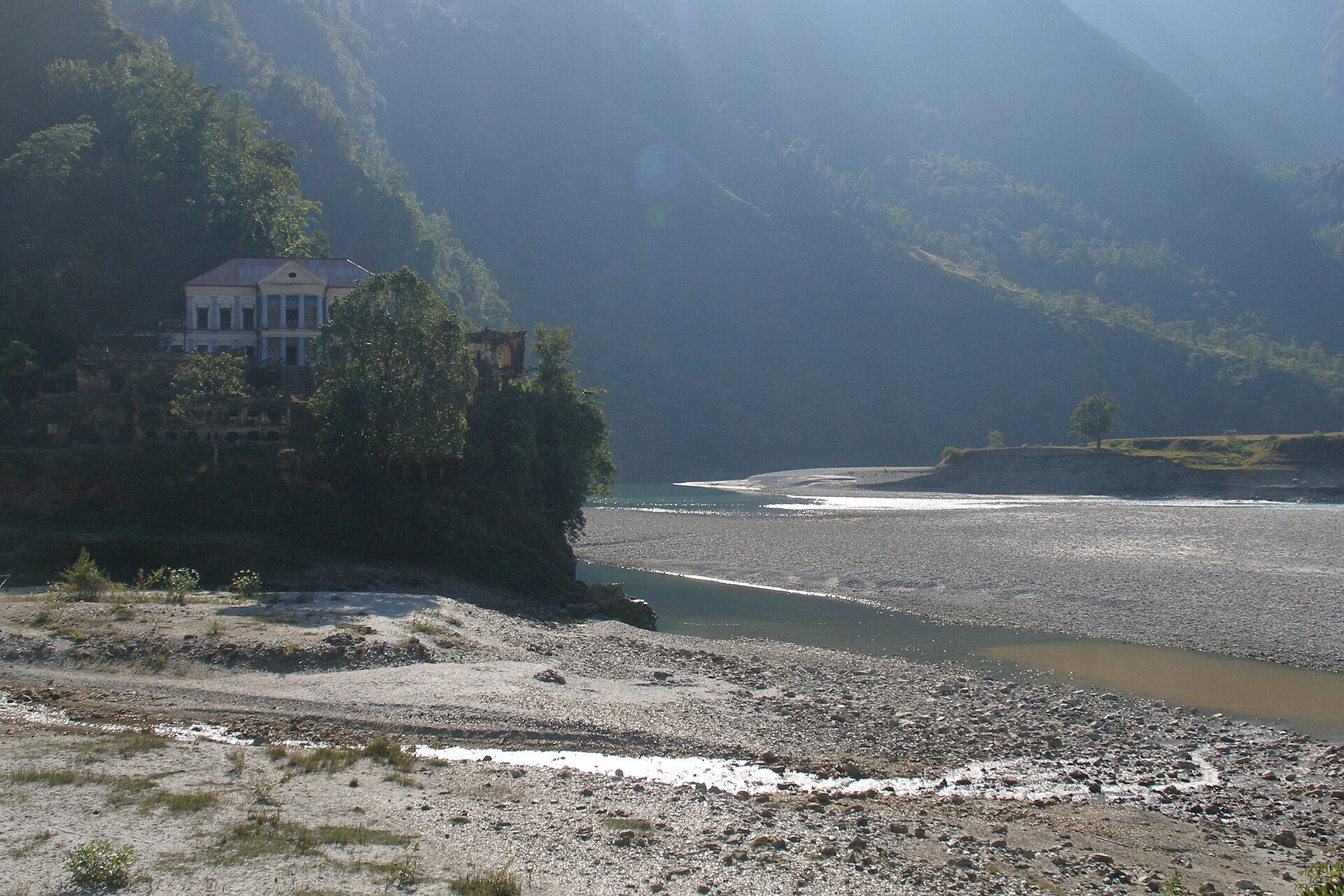
Ranighat Palace stands on a rocky promontory above the Kali Gandaki River, close to its confluence with the Barangdi Khola and approximately 13 kilometres from Tansen. Its design combines Neoclassical forms, which draw on the symmetry and proportions associated with ancient Greek and Roman buildings, with European architectural elements. Brick and mortar form the structural system. The construction cost was stated as 35 crore.
A British architect is credited with the design, while English engineers from Calcutta supervised the work. Workers came from India, and four army platoons stationed in Palpa, together with local villagers, were mobilized for construction. Forced labour was used among neighbouring villagers, while members of the Agri community broke rock for the approach road and the palace foundations.
The palace was supplied with electricity by a generator. Each room had an open fireplace, and the rooms were described as decorated. After its restoration, the building continued to convey its original role as a formal residence while also accommodating a museum.
River Access and Waterworks
Ghats, stepped access structures leading to a river or other water body, descend from the palace toward the Kali Gandaki. Their position connected the residence and memorial site with the river, where the landing was known as Rani Ghat and where funerary rites and cremations took place.
A road near the palace was laid during the original construction works, and a canal brought water to the building. Together with the river stairs and the palace’s rocky setting, these works formed part of the wider construction scheme that established Ranighat as a residence, memorial, and riverside ceremonial site.