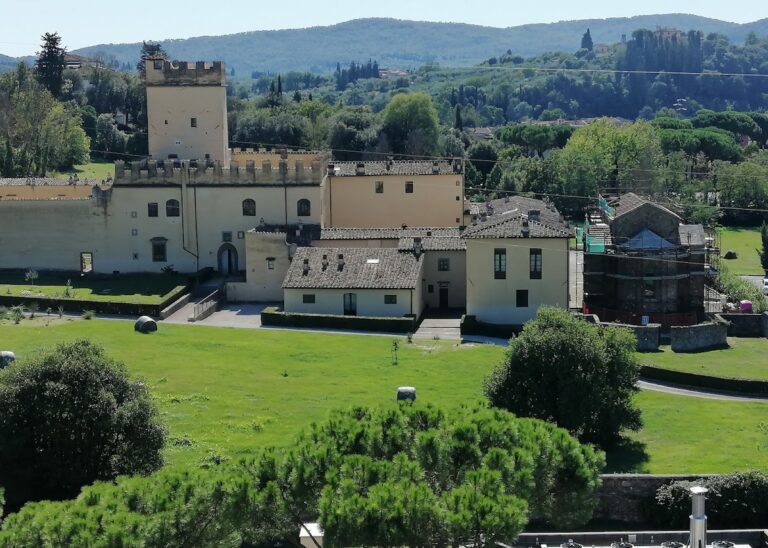
Castello Nipozzano: A Medieval Fortress and Residence in Italy
Visitor Information
Google Rating: 4.7
Popularity: Low
Official Website: www.frescobaldi.com
Country: Italy
Civilization: Early Modern, Medieval European
Site type: Military
Remains: Castle
History
Castello Nipozzano stands near the village of Pelago in Italy, built by medieval Italian civilization in the early 11th century. It began as a fortified site surrounded by moats, reflecting the strategic importance of the location on the Tuscan hills overlooking vital river valleys and roads.
The earliest records date back to 1062 when Count Guido Guerra acquired part of the estate encompassing the castle, signaling its established presence and military value. For much of the 12th and early 13th centuries, the castle belonged to the Counts Guidi, a noble family confirmed as its lords through imperial diplomas issued by Emperor Henry VI in 1191 and Emperor Frederick II in 1220. However, before 1225, their ownership ended, as the castle does not appear in the property divisions of Guido Guerra’s heirs.
Following this, control moved to the Da Quona family, vassals who eventually donated it to the Abbey of San Fedele a Strumi, a religious institution in the Casentino region. Facing financial challenges, the abbey leased the estate’s lands and vineyards at Nipozzano in 1218 to the Adimari family for five years, extending this arrangement until 1275. In 1283, the monks decided to transfer ownership of the castle to the Cerchi family of Florence. Bindo de’ Cerchi, a prominent member, obtained it in exchange for lands situated closer to the city.
By the early 14th century, Castello Nipozzano had become part of the Republic of Florence’s holdings. The Florentines stationed a castellan there, a position documented in 1312 when correspondence mentioned guarding movements of Emperor Henry VII of Luxembourg’s army as his forces advanced from Arezzo toward Florence.
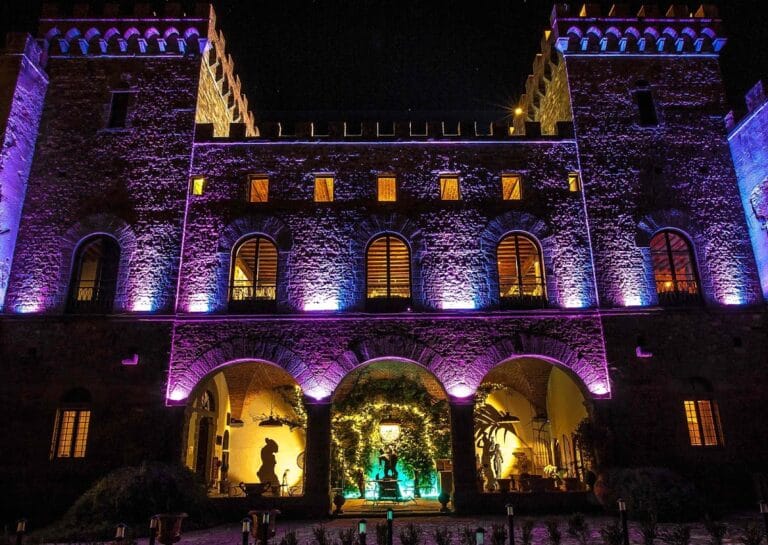
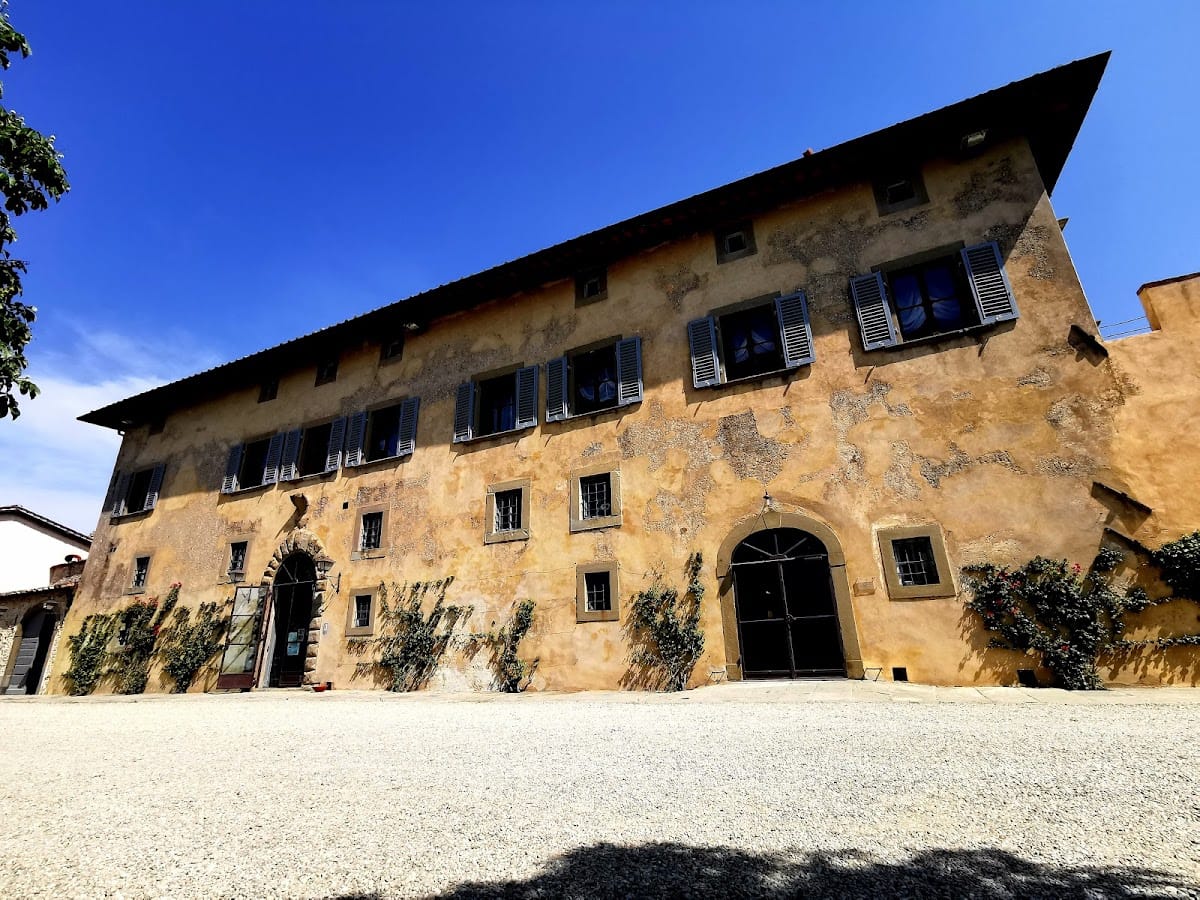
Later, the castle passed into the hands of the Albizzi family, allies of the Cerchi, who transformed the site into an elegant countryside residence and a center of cultural activity by the late 1300s. Their tenure lasted until the Medici family rose to power in Florence, ultimately overcoming the Albizzi’s influence. During the Albizzi period, significant structural developments occurred in the 15th century, with additions extending into the early 1600s.
In the 19th century, Vittorio degli Albizzi introduced innovative grape-growing techniques at nearby Pomino, in Rufina. After his death in 1877, the estate passed to his sister Leonia, married to Angelo Frescobaldi, marking the beginning of the castle’s association with the Frescobaldi family, who continue to hold the property. Throughout its history, the castle’s position atop a hill roughly 350 meters above sea level allowed control over key valleys and the ancient Roman road known as Cassia Vetus, underscoring its long-standing defensive significance.
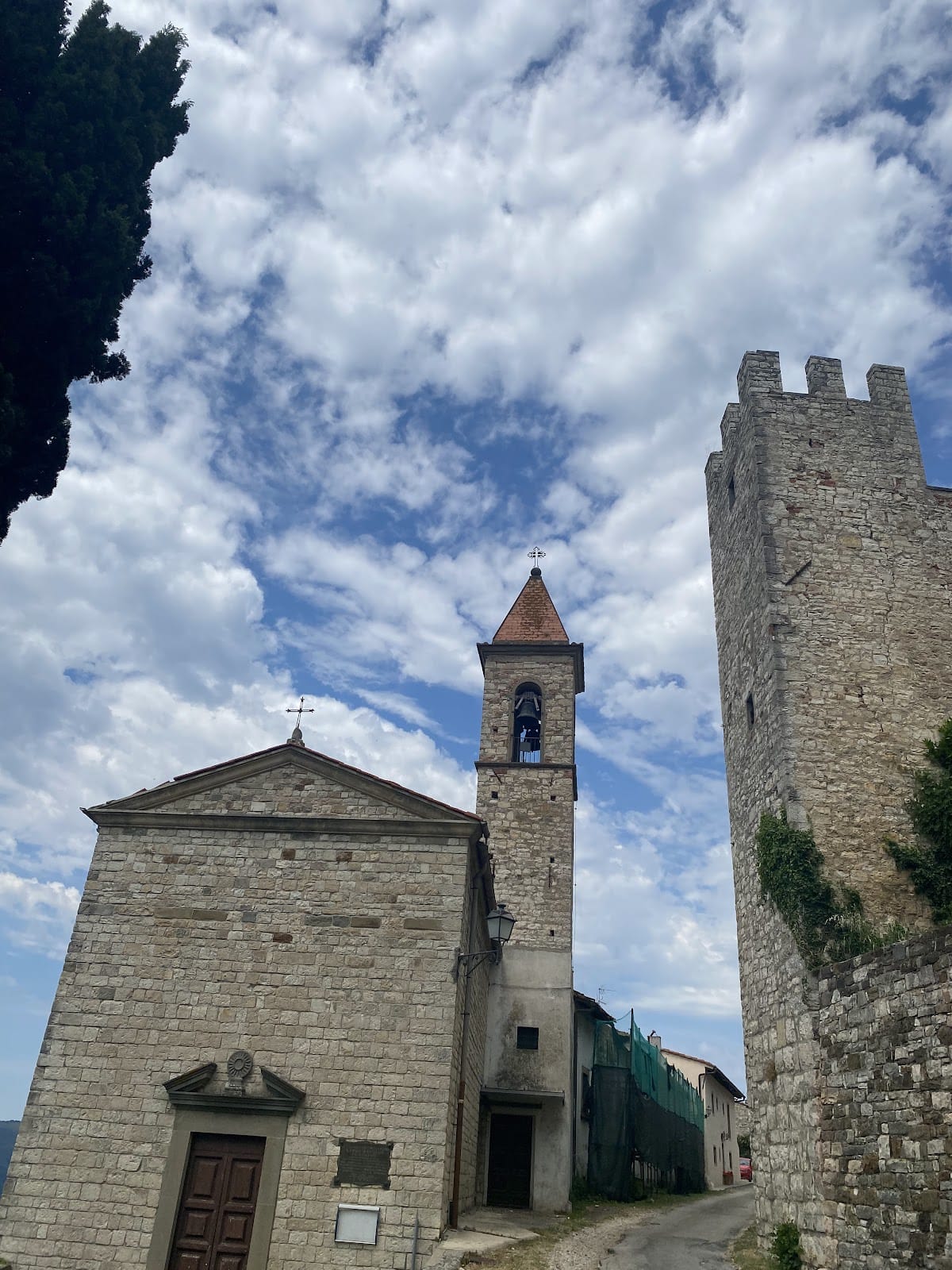
The castle complex historically included a settlement and the church of San Niccolò within its protective walls. After the destruction caused by German mine explosions in 1944, which led to the collapse of the castle’s central tower, the church was rebuilt on the same site following World War II.
Remains
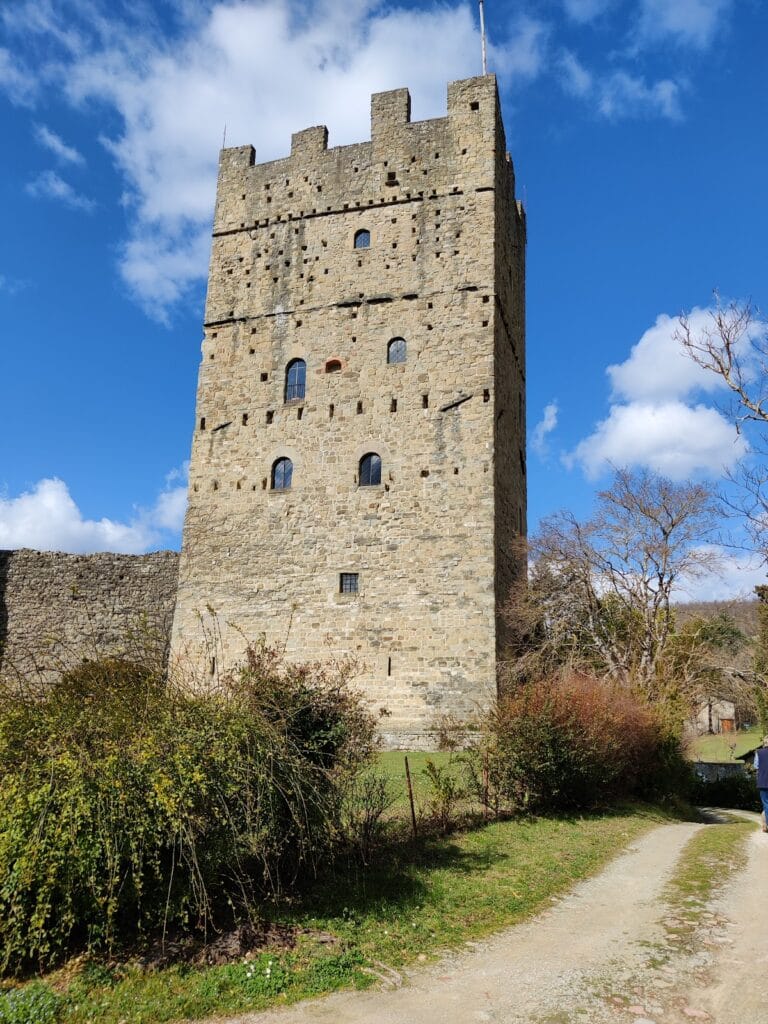
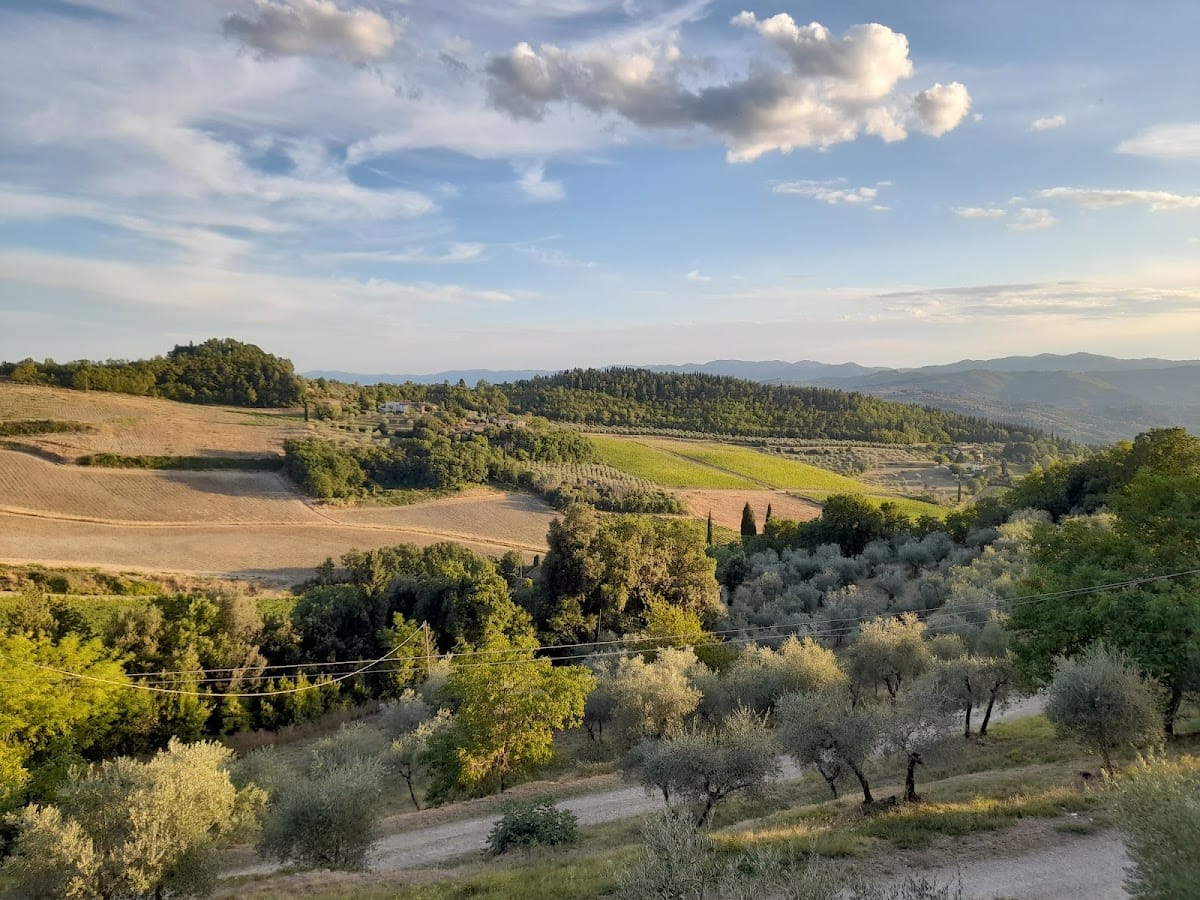
Castello Nipozzano’s layout is defined by its elevated hilltop location at approximately 350 meters above sea level, overseeing nearby villages such as San Francesco and Pontassieve, as well as the convergence of the Sieve and Arno rivers. The fortification features a quadrilateral donjon, a central fortified keep, first documented in 1371. This massive structure once rose above the castle courtyard, anchoring the defensive ensemble. The donjon was topped by a tall tower that dominated the skyline until its destruction by German military mines in 1944 during the Second World War.
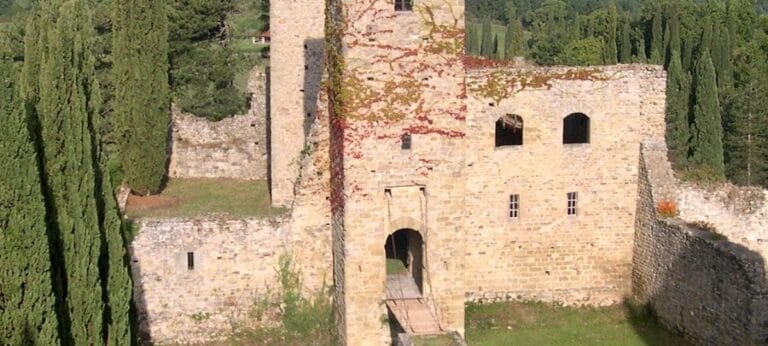
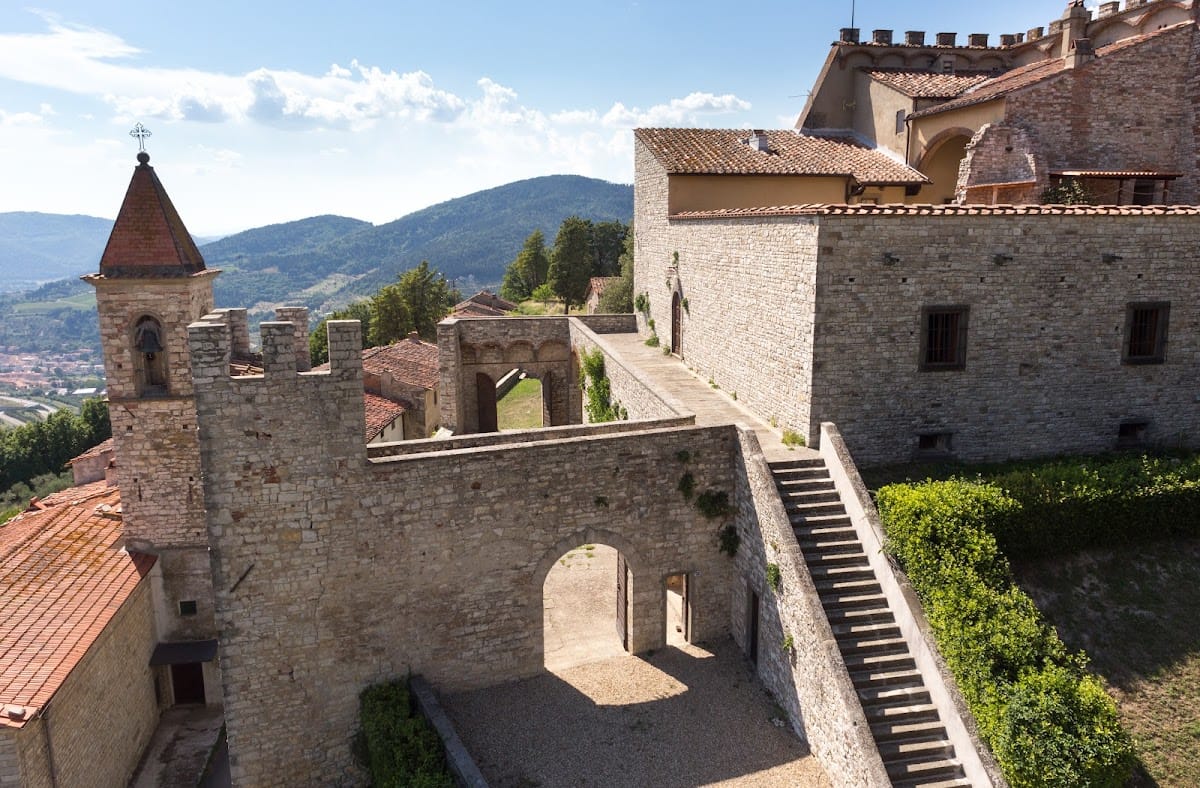
Surrounding the courtyard, a series of buildings extend along the main approach to the castle, forming its internal settlement. The entire site was enclosed by two concentric defensive walls, which also surrounded the inhabited area and incorporated the church of San Niccolò within this fortified perimeter. Today, the outermost ring of walls is largely hidden beneath more recent residential developments, but the inner walls and building arrangements continue to reflect the medieval layout.
Following the wartime collapse of the donjon’s tower, the church of San Niccolò was reconstructed after 1945 on the exact location where the keep once stood. This rebuilding preserved the church’s presence as part of the castle complex, maintaining the historical link between religious and defensive structures at Nipozzano.
The castle’s fortifications and strategic placement allowed surveillance and control over the surrounding landscape, including monitoring traffic along the ancient Cassia Vetus, a Roman road that passed through the valleys below. This military function is evident in the castle’s design and positioning, which capitalized on natural elevations to manage access to river confluences and nearby settlements.
Overall, the remains at Castello Nipozzano reveal a well-planned medieval fortress that evolved into a refined residence while preserving its original defensive qualities. The surviving walls, central courtyard, and church site convey the site’s layered historical uses, from military bastion to cultural and religious center.
Nearby sites