Castello di Gabbiano: A Renaissance Aristocratic Residence in Tuscany


Site at a Glance
- Rating
- 4.8
- Popularity
- Low
- Country
- Italy
- Primary era
- Medieval
- External website
- Open
- Eras represented
- Medieval, Early Modern, Modern
- Civilizations
- Republic of Florence
- Site type
- Domestic
- Remains
- Castle
On this page10 sections
History
Castello di Gabbiano is a Renaissance aristocratic residence in Italy, in the municipality of San Casciano in Val di Pesa, Tuscany, whose construction belongs broadly to the fifteenth and sixteenth centuries. The Renaissance was a European cultural and artistic period that drew heavily on classical forms and ideas. The castle combines the character of a seigneurial residence with elements of an earlier fortified complex.
The Bardi and Soderini ownership
From the beginning of the fifteenth century, Castello di Gabbiano belonged to a branch of the Bardi family. It was later acquired by Tommaso Soderini, the father of Pier Soderini, who became gonfalonier of the Florentine Republic. The gonfalonier was a senior civic official in the government of Florence, and Pier Soderini’s office placed the castle within the history of one of the city’s leading political families.
After the Medici family returned to political power in Florence, the Soderini were banished and the castle was abandoned. The Medici were a powerful Florentine family whose restoration of control altered the political position of their opponents. In 1623, Castello di Gabbiano was returned to its former owners. By then, it was in very poor condition, a state remembered by a plaque above the entrance.
Nineteenth- and twentieth-century changes
During the nineteenth century, the castle belonged to the Rosselli Del Turco family, who added a Neoclassical chapel. Neoclassical architecture revived and adapted forms derived from ancient Greek and Roman architecture. The family of Adriano Lemmi later acquired the property and undertook extensive restoration, helping shape the condition in which the complex survives.
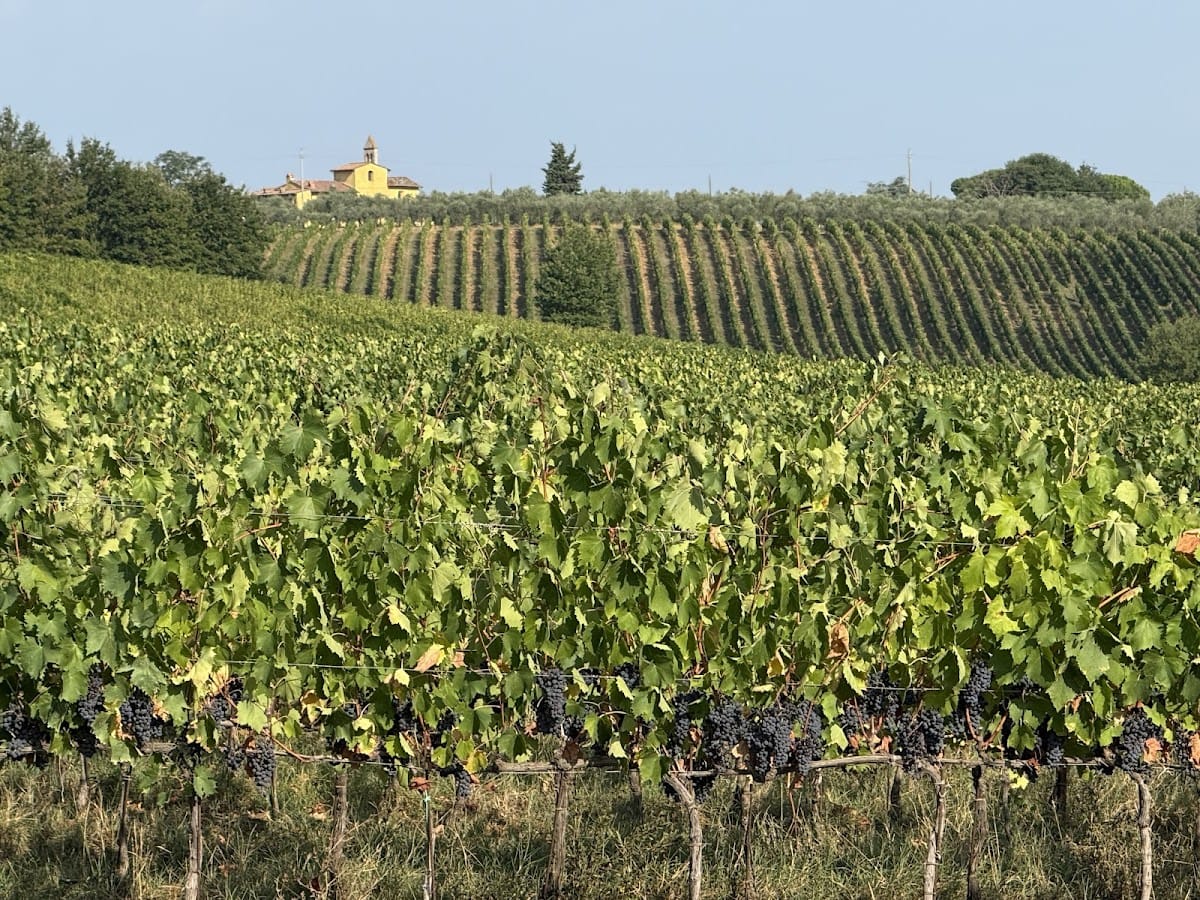
In the twentieth century, ownership passed first to the writer Arnaldo La Cagnina and later to the Arcaini family. The complex is now a private residence and also houses a winery owned by the Beringer Blass family.
Remains
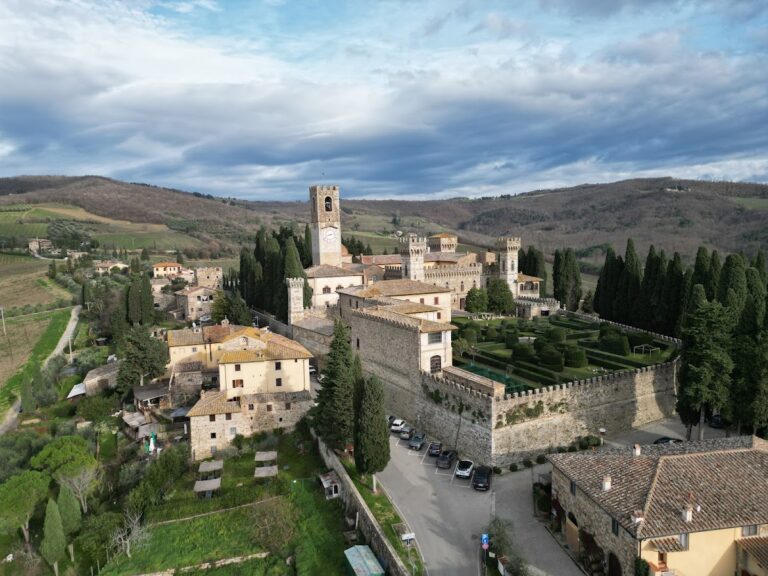
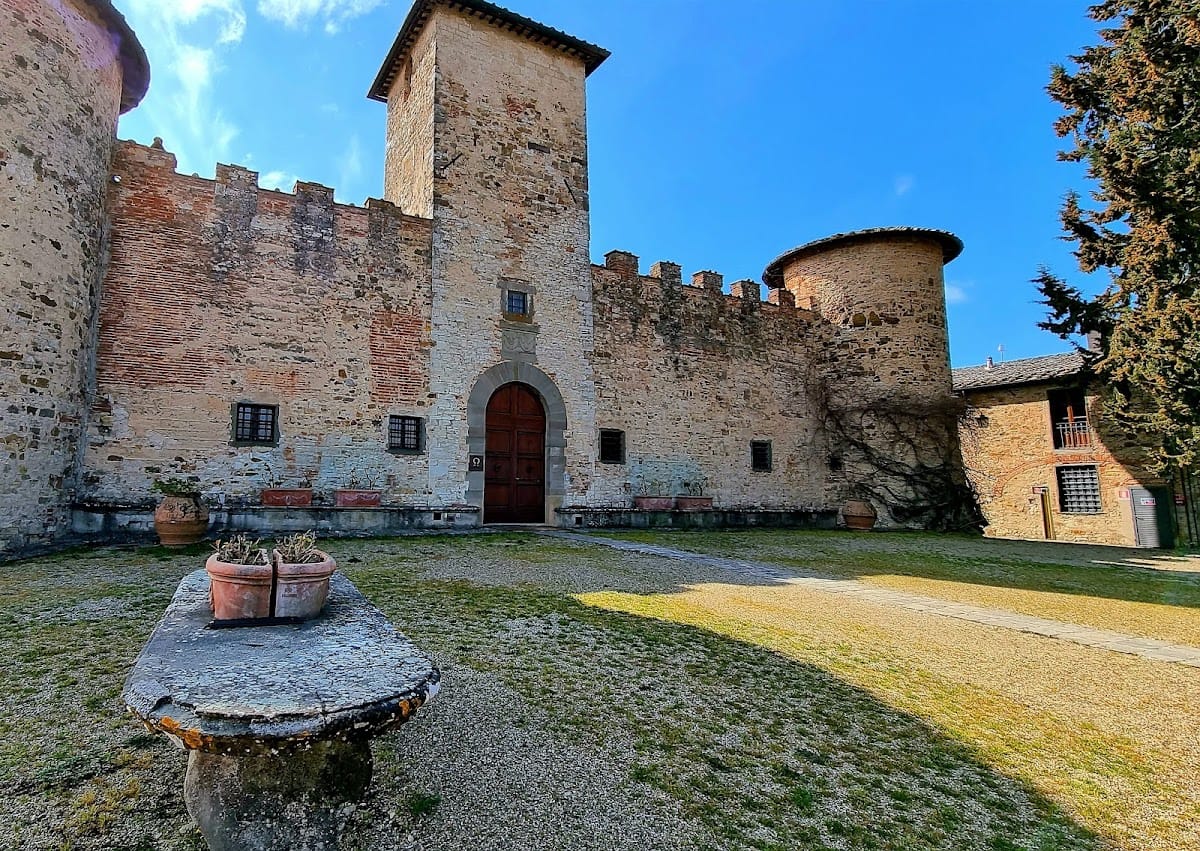
Castello di Gabbiano consists of an approximately quadrangular block with four cylindrical corner towers. The towers were added after the middle of the fifteenth century. Their defensive purpose was combined with a pronounced aesthetic role, giving the residence a carefully composed architectural form. A square central tower rises on the main facade and appears to belong to an earlier phase of the complex.
Fortified structure
Corner towers
The four cylindrical towers occupy the corners of the main block and were built after the middle of the fifteenth century. They formed part of the castle’s defensive arrangement while also contributing to its appearance as a Renaissance residence. Their relationship with the continuous defensive wall joining the fortified elements creates the principal outline of the surviving complex.
Central tower
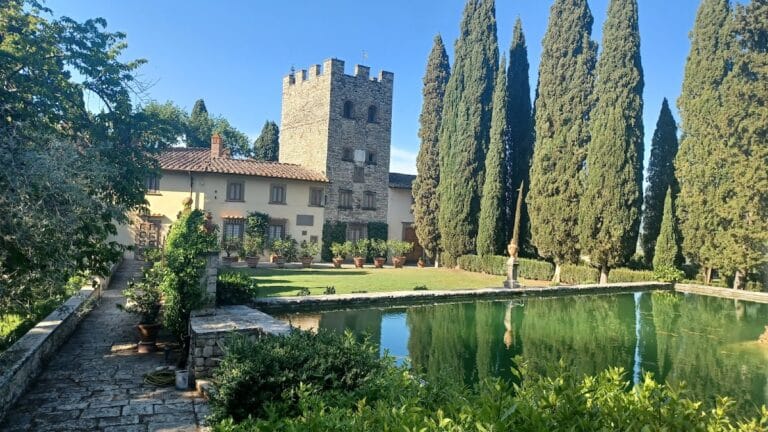
The square-plan tower on the main facade probably represents the original nucleus of Castello di Gabbiano. Its masonry differs from that of the surrounding defensive wall, suggesting an earlier building phase. The tower remains an important physical indication of how the later quadrangular residence developed around an older core.
Chapel and interior decoration
Neoclassical chapel
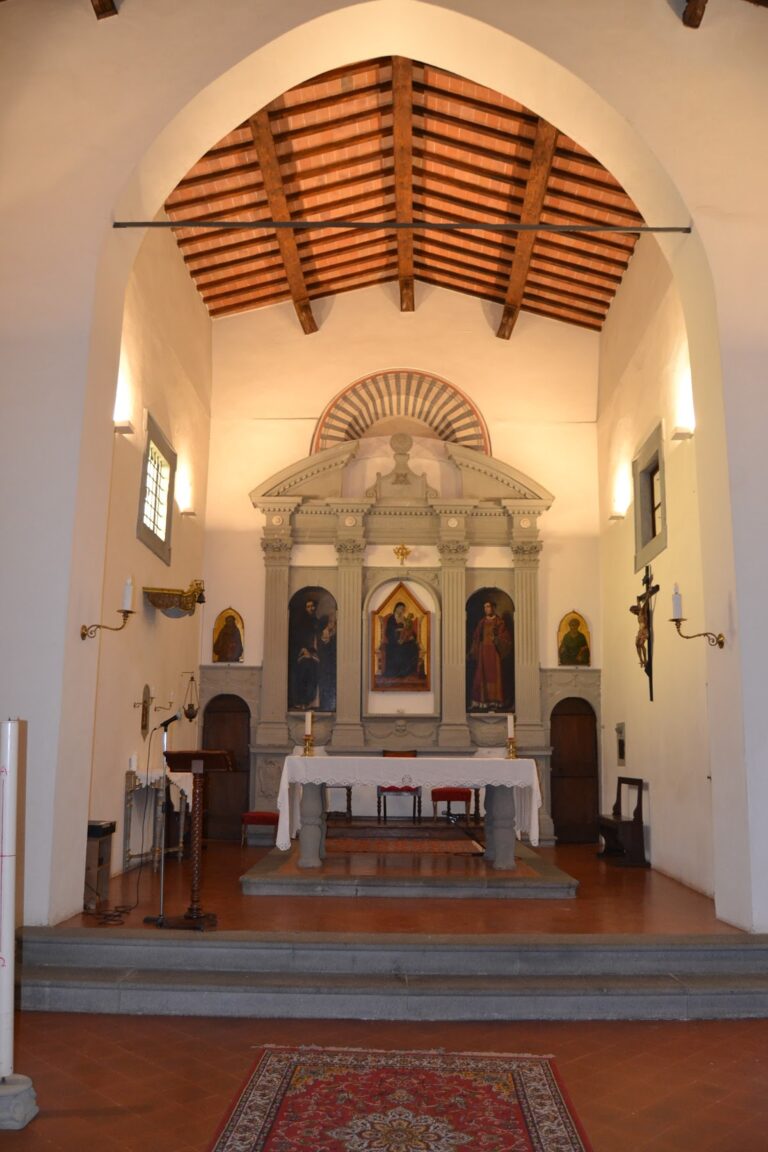
The chapel was constructed during the nineteenth century for the Rosselli Del Turco family. Its Neoclassical design introduced a later architectural phase into the castle complex, alongside the older medieval and Renaissance elements.
Tower rooms and main hall
During the nineteenth century, rooms inside the corner towers were decorated with frescoes, wall paintings made on fresh plaster. Their subjects were idyllic and Arcadian, presenting idealized pastoral scenes. The main hall has a coffered ceiling composed of recessed decorative panels arranged in a regular pattern, which has been restored.