Castello di Sant’Alessio Siculo: A Historic Fortress in Italy
Visitor Information
Google Rating: 4.1
Popularity: Very Low
Country: Italy
Civilization: Byzantine, Medieval European, Modern
Site type: Military
Remains: Castle
History
The Castello di Sant’Alessio Siculo is situated in the municipality of Sant’Alessio Siculo in Italy. Its origins trace back to ancient times, when the strategic rocky promontory it occupies was first recognized and fortified by Roman builders.
In antiquity, the promontory was known by the Greek settlers of Sicily as Arghennon Akron, meaning “Silver Cape.” It served as a natural boundary dividing the territories of Messana and Naxos until the fifth century BCE. The Romans later referred to it as Promontorium and established the earliest known fortifications on the site to secure control over this important coastal landmark.
During the Byzantine period, the current castle was constructed to replace the Roman defenses. Built in the 11th century under the reign of Emperor Alexios I Komnenos, it was named after Saint Alexius, a figure venerated in the Greek-Orthodox tradition. The fortress functioned primarily as a defensive stronghold against the frequent Arab raids that occurred during the prolonged Byzantine-Arab conflicts in the region.
The 12th century brought notable changes under Norman rule within the Kingdom of Sicily. Structural alterations reshaped the castle into a form closely resembling what remains today. Documentary records from 1117 mention the promontory as “Scala Sancti Alexi” in a donation granted by King Roger II of Sicily, highlighting its growing significance at the time.
In the early 1400s, the castle became the center of a small barony. Here, a castellan exercised military command and judicial authority over the nearby villages of Sant’Alessio and Santa Margherita, both administratively and defensively autonomous. Over the subsequent centuries, ownership of the fortress passed through several noble families, beginning with the Angelica family, followed by the Colonna-Romano family from 1453 to 1558. Later, the Furnari family held the castle before it came into the possession of the Romeo family in 1608. From 1703 until the end of feudalism in 1812, the Paternò-Castello dynasty governed the estate.
The castle also witnessed key historical episodes. In 1535, Emperor Charles V stayed at the fortress following his military campaign that culminated in the capture of Tunis. Later, in 1676, the castle was utilized as a food storage site during the anti-Spanish uprising in nearby Messina. In the early nineteenth century, British forces undertook restoration work on the castle and constructed an external curtain wall to strengthen defenses against potential French attacks originating from Calabria. During the Second World War, German troops installed artillery batteries within two underground tunnels carved beneath the castle, which opened onto the cliffs overlooking the cities of Messina and Taormina.
In the twentieth century, ownership passed into private hands when Giovanni Impellizzeri acquired the property in 1900. Today, the castle remains partially in ruins and is not accessible to the public.
Remains
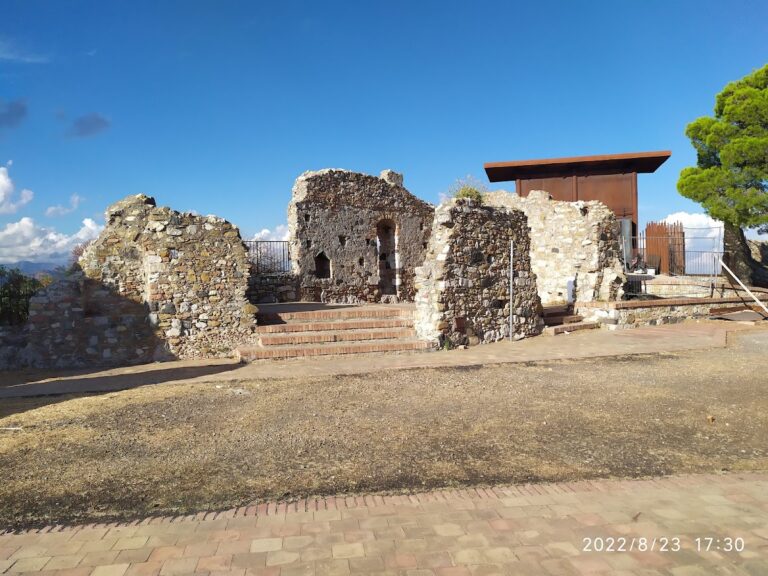
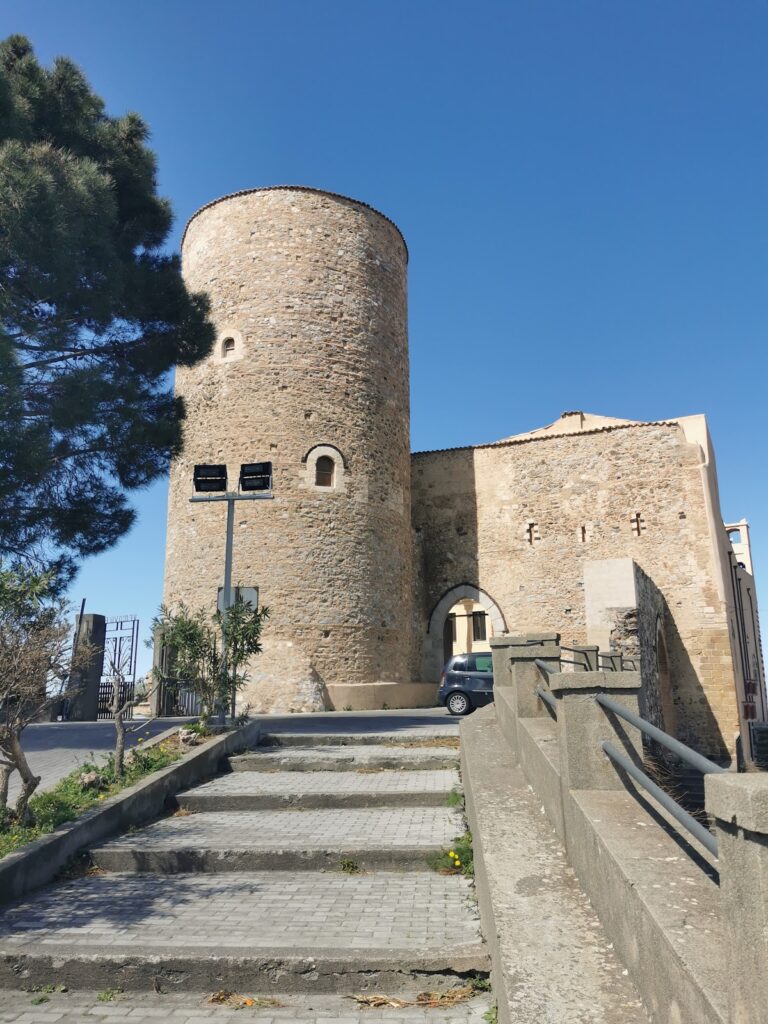
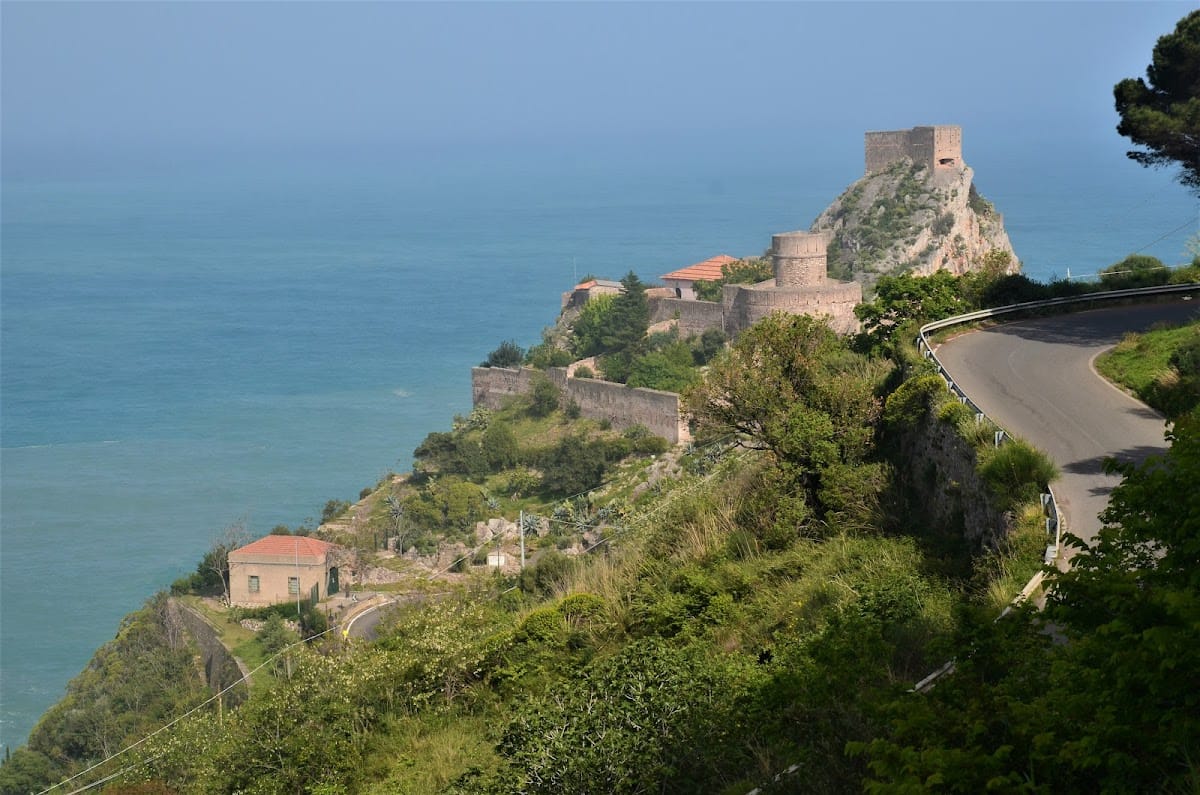
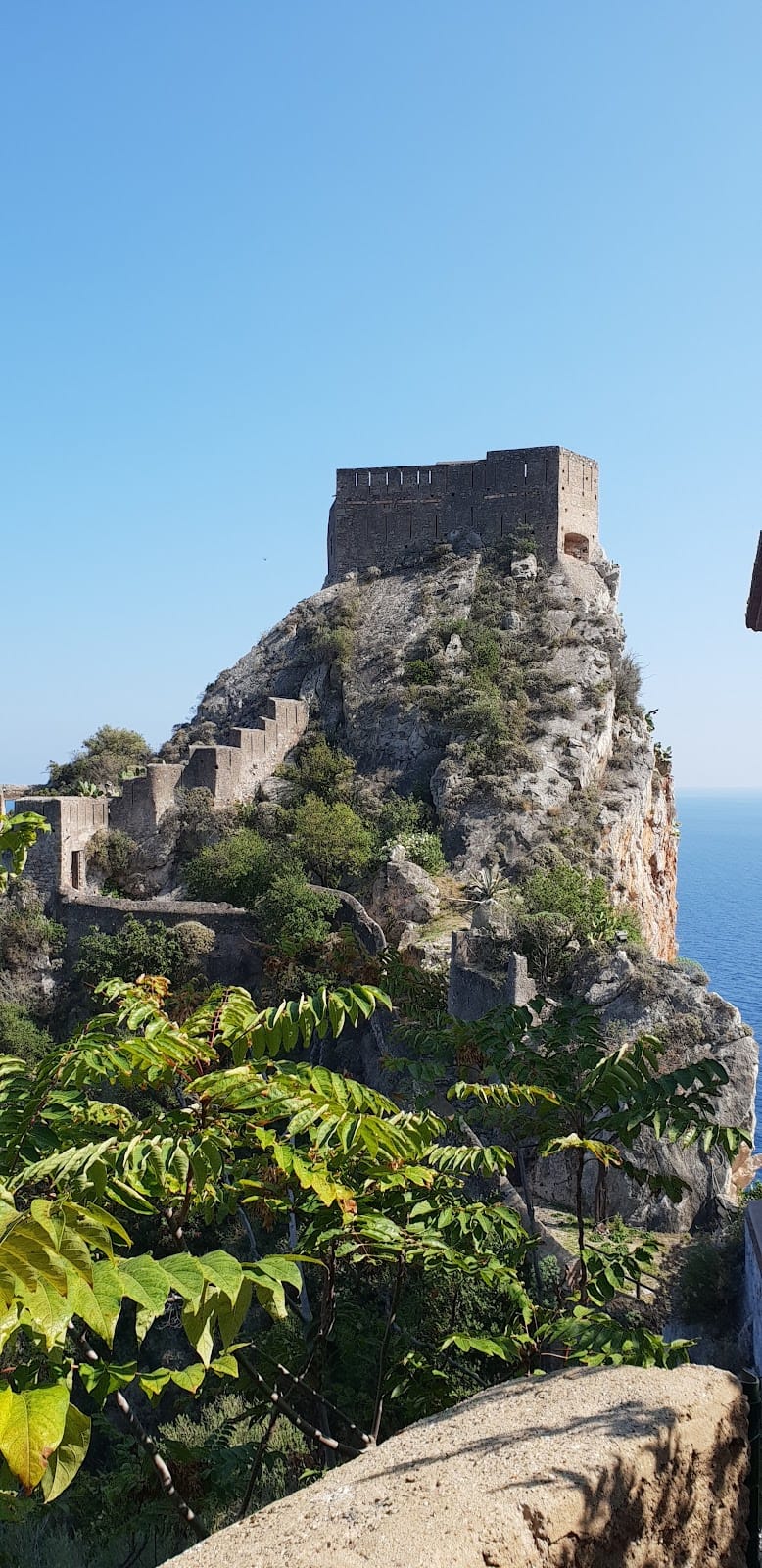
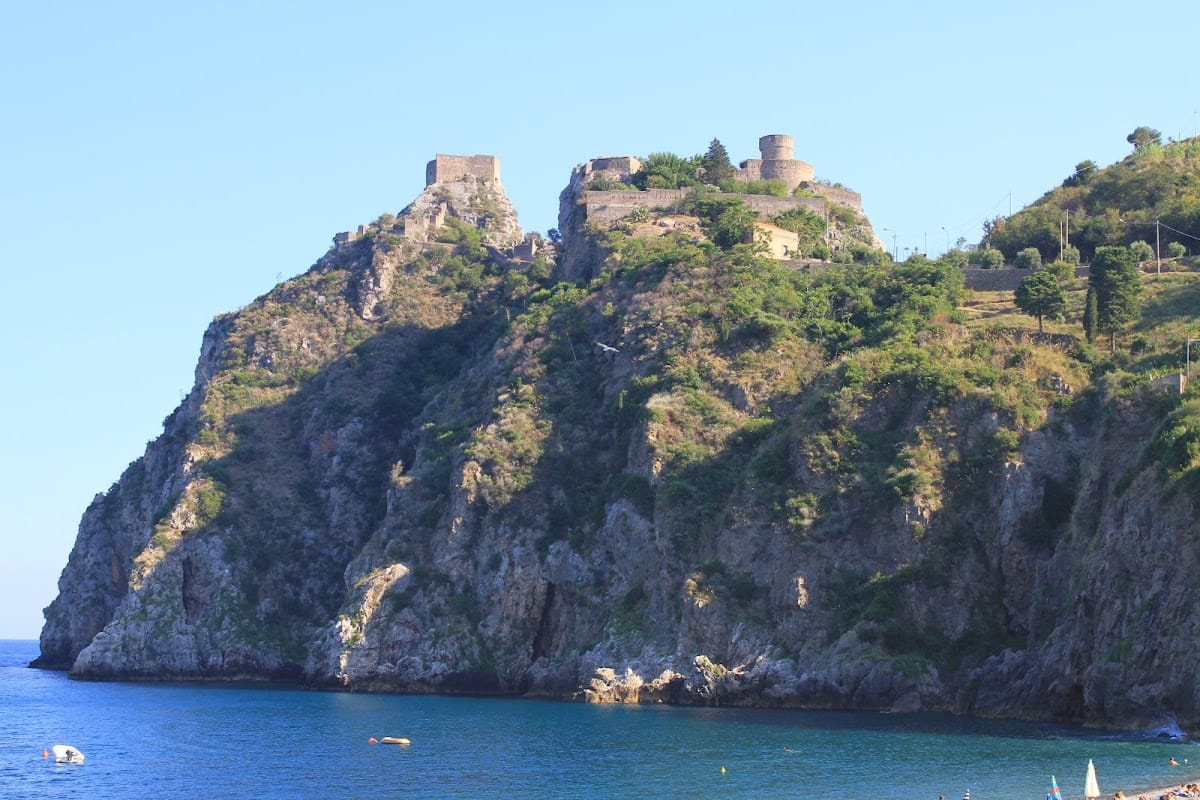
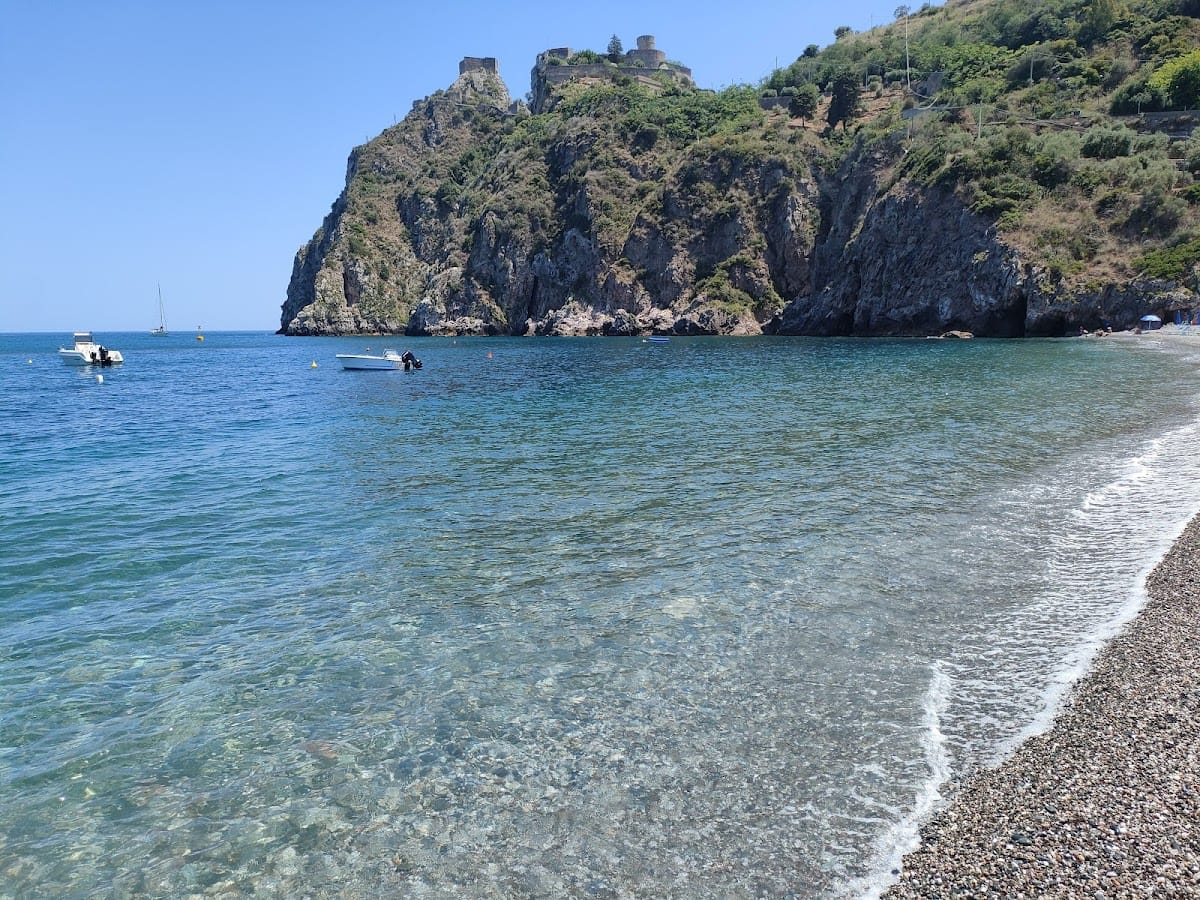
The structure of the Castello di Sant’Alessio Siculo is defined by two principal towers linked by a defensive curtain wall. One of these towers features a rectangular footprint and is perched on the seaward peak of the promontory, while the other, circular in shape, occupies the mountain-facing summit. Both towers command views of the sea, standing on cliffs that emphasize the castle’s strategic position.
The earliest fortifications in this location were established by the Romans, but the present castle primarily reflects Byzantine construction from the eleventh century during Emperor Alexios I Komnenos’s reign. These Byzantine works replaced the Roman defenses, laying the foundations for the site’s medieval military architecture. Later, Norman modifications in the twelfth century refined the castle’s layout, shaping the form recognizable today.
Visible today is an external curtain wall that was added much later, during the restoration efforts carried out by British forces in the early 1800s. This wall was built to enhance protection against French offensives from nearby Calabria.
Beneath the castle lie two notable subterranean galleries that stretch from the main front of the fortress, running underneath it and terminating in separate openings on the rocky cliffs. One of these openings faces the city of Messina, while the other overlooks Taormina. During the Second World War, these tunnels were adapted to house artillery positions installed by German troops, harnessing the natural rock formations for concealed defense.
Although parts of the castle stand in various states of ruin today, the two main towers and the curtain walls remain discernible. Access to the interior buildings is restricted, and the overall complex retains the layered history of construction and adaptation spanning from antiquity to the modern era.
Nearby sites