Odeon Taormina: A Roman Covered Theatre in Italy


Site at a Glance
- Rating
- 4.4
- Popularity
- Low
- Country
- Italy
- Primary era
- Classical
- External website
- Open
- Eras represented
- Classical
- Civilizations
- Ancient Greek, Roman
- Site type
- Entertainment
- Remains
- Odeon
On this page8 sections
History
Roman foundation and use
Odeon Taormina is a small Roman theatre in Italy, built in 21 BC when Taormina became a military colony under Augustus, Rome’s first emperor, who ruled from 27 BC to AD 14. Designed as a covered performance building, it served for musical recitals, literary presentations, auditions, and official events.
Its audiences apparently consisted of magistrates, prominent civic, military, and religious figures, their families, and other distinguished guests. The building therefore supported performances and formal gatherings intended for selected members of the community.
Rediscovery
The Odeon came to light by accident on June 5, 1892, when the blacksmith Antonio Bambara uncovered a red-brick structure while digging on his land behind St. Catherine’s Church. Excavations began the following year and revealed a monument that was badly damaged in several sections.
Remains
Layout and construction
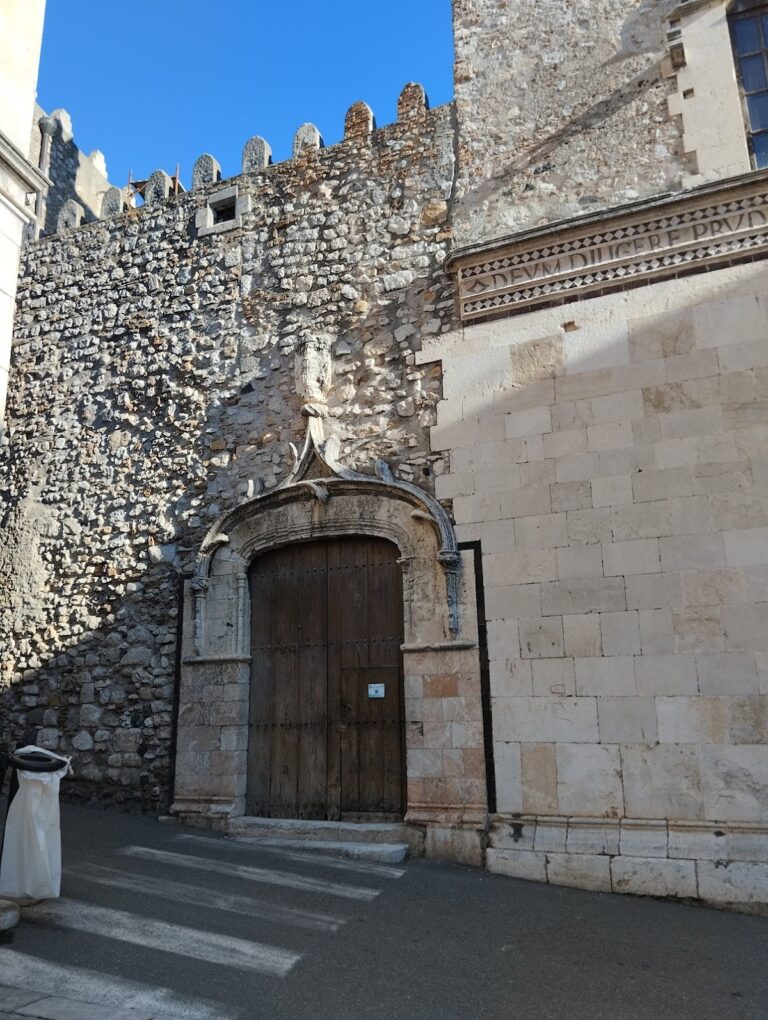
The Odeon stands in central Taormina behind St. Catherine’s Church, near Palazzo Corvaja and beside the hill associated with St. Catherine of Alexandria. Its general plan closely resembles Taormina’s larger Greek-Roman Theatre, although the Odeon is oriented toward the northeast while the larger theatre faces south. Large clay bricks joined with lime formed the structure, which was roofed and held fewer than 200 people.
Principal features
Auditorium and orchestra
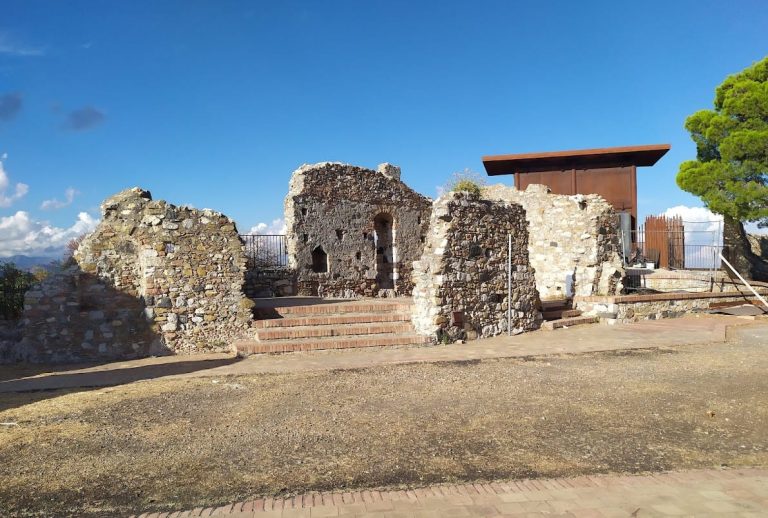
Like other Roman theatres, the building is arranged in three main parts: the scene, or stage area, the orchestra, the central performance space in front of the stage, and the cavea, the seating area. The cavea is divided into five sections. The surviving auditorium and orchestra remain enclosed among surrounding residential buildings.
Stage and actors’ room
The scene incorporated the stylobate, the base supporting a colonnade, and the peristyle, a surrounding row of columns, of a Greek temple. This temple is sometimes identified as a sanctuary dedicated to Aphrodite, although that attribution remains uncertain. A room for actors stood close to the scene.