Castello di Castellaro Lagusello: A Medieval Fortress in Italy
Visitor Information
Google Rating: 4.3
Popularity: Low
Country: Italy
Civilization: Medieval European
Site type: Military
Remains: Castle
History
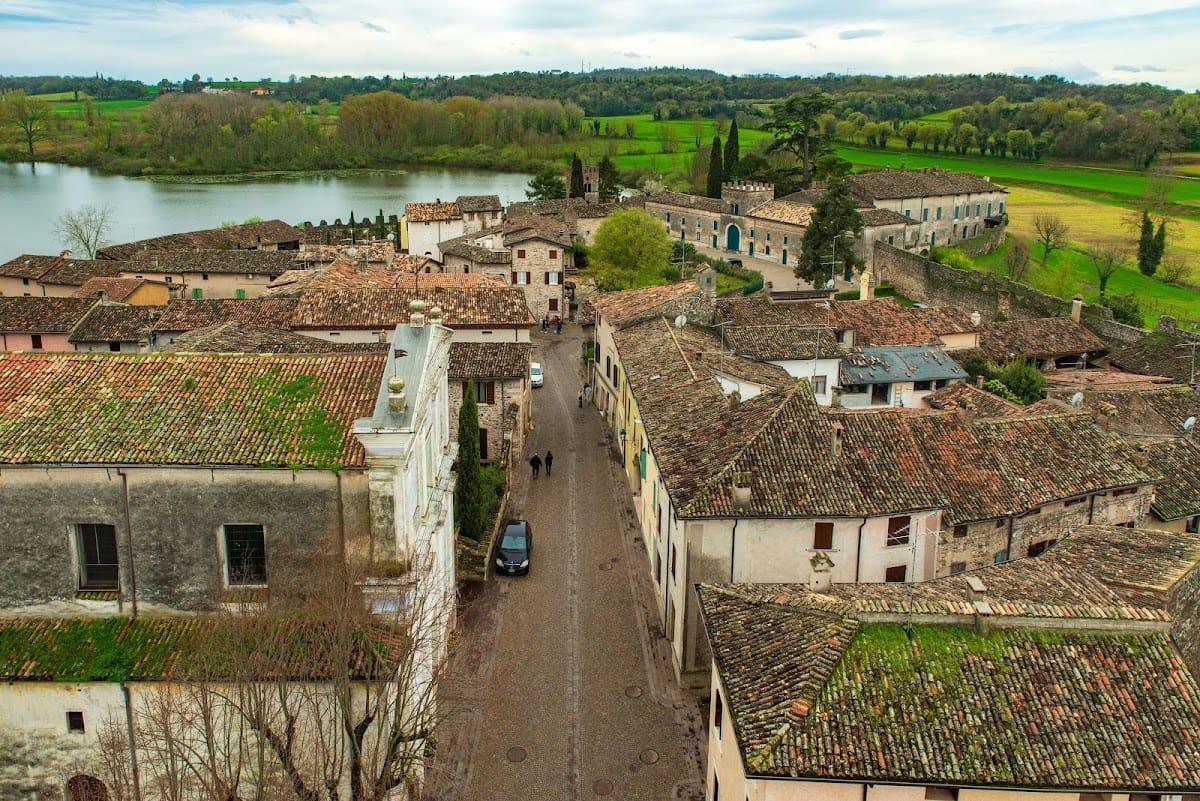
The Castello di Castellaro Lagusello is located within the small village of Castellaro Lagusello, part of the municipality of Monzambano in Italy. This medieval fortress was originally built by the Scaligeri family from Verona during the 13th century, serving both military and residential purposes.
In its earliest phase, the castle was constructed to establish control over this strategic border area. It comprised two main sections: a northern part equipped with defensive features including a square tower and a drawbridge, and a southern segment that faced the lake, designed as a fortified home. The site’s position made it a valuable stronghold contested by regional powers over several centuries.
Control of the castle shifted repeatedly between influential dynasties. The Visconti family held the fortress at intervals, notably between 1390 and the early 15th century, while the Gonzaga family maintained authority from 1391 up to the mid-15th century, and again until 1441. During this time, the castle was often caught in the power struggles typical of northern Italian politics.
By the mid-15th century, the Republic of Venice expanded its influence and absorbed the castle into its territories, retaining possession until the early 1600s. During Venetian rule, the fortress lost much of its military importance. Subsequently, it was sold to a noble family, who adapted parts of the structure into a private residence, marking a shift from purely defensive use to domestic occupation.
Remains
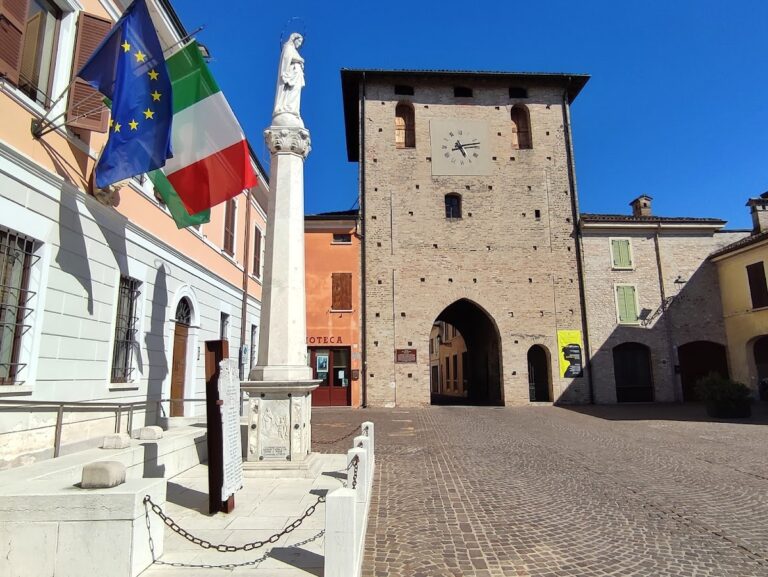
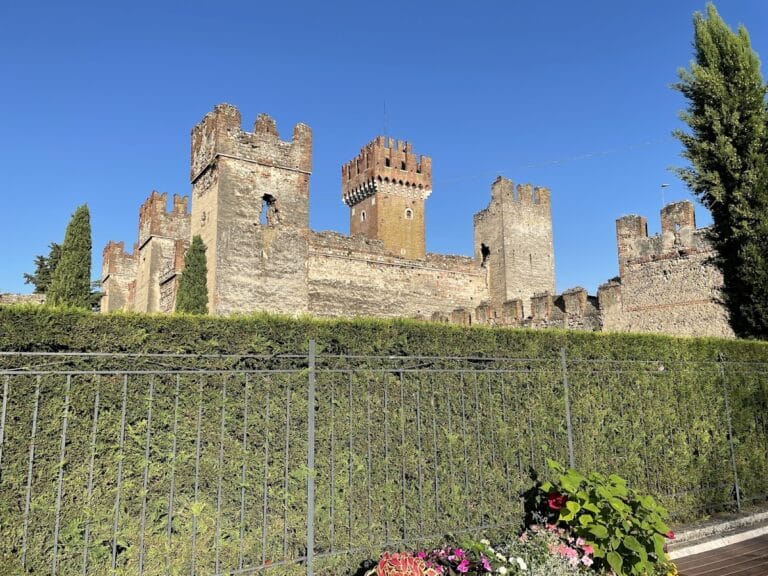
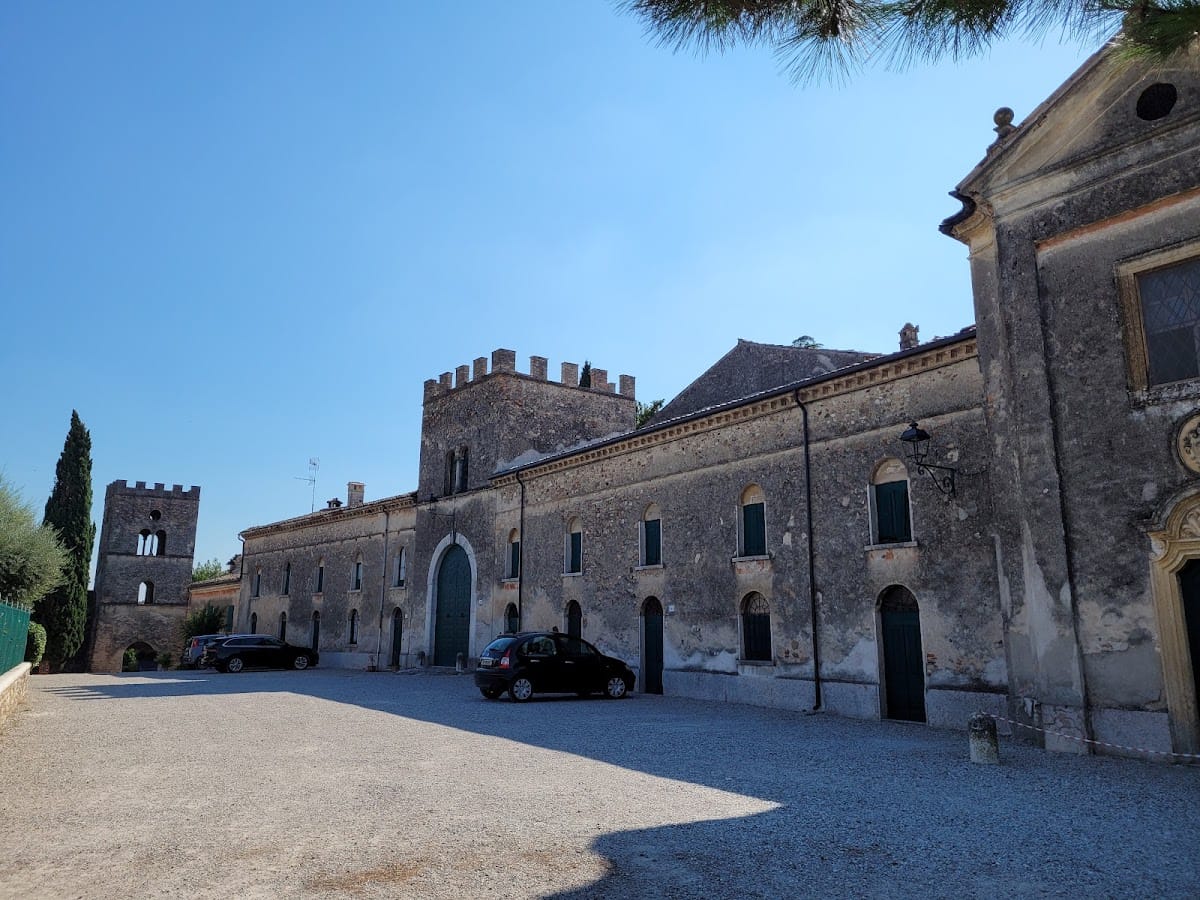
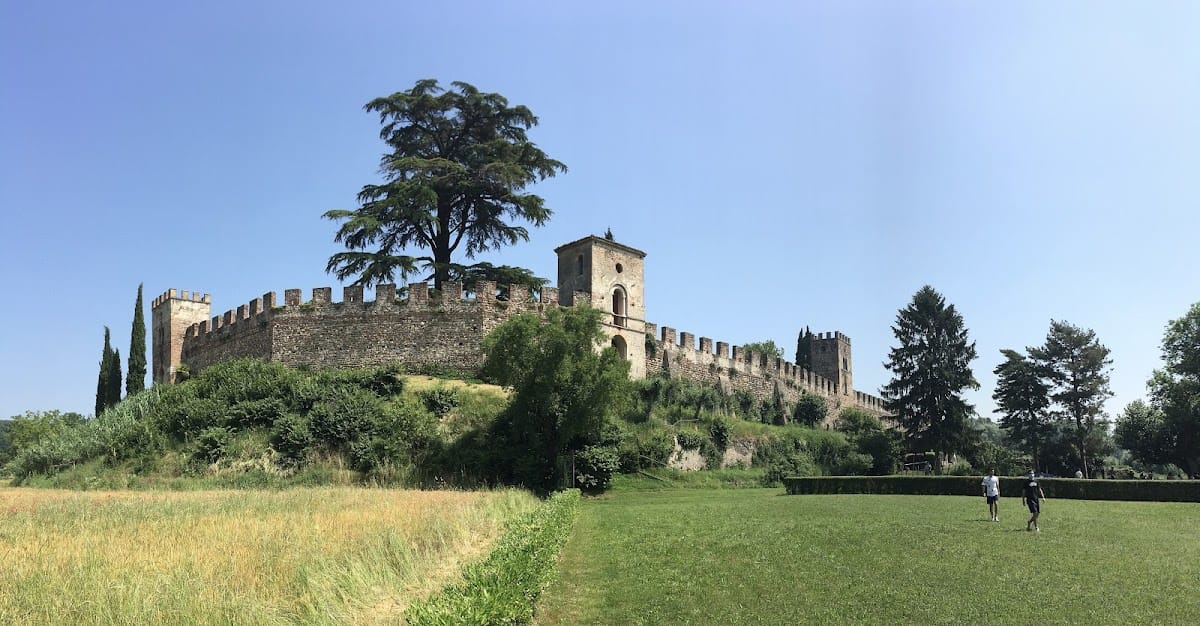
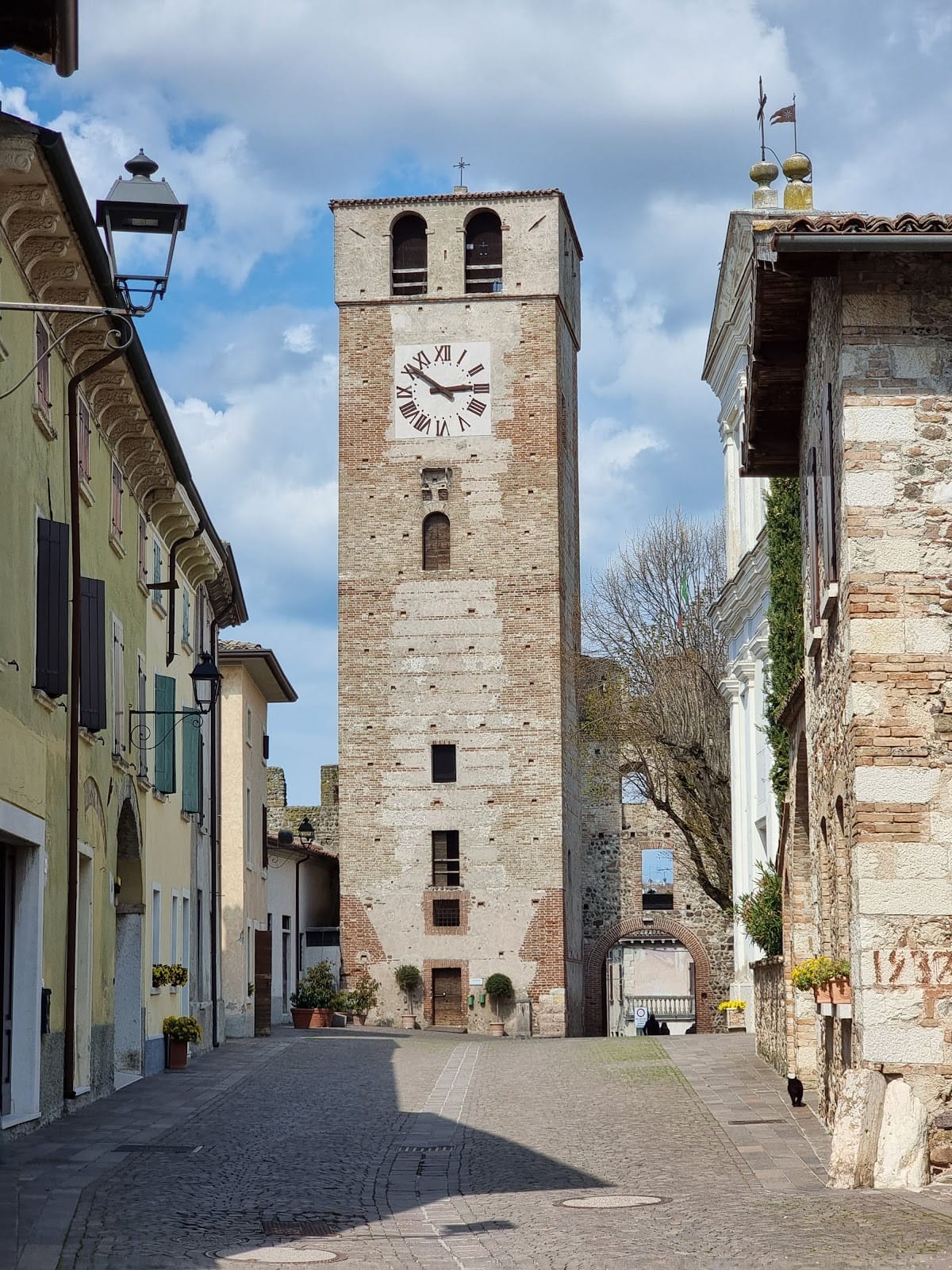
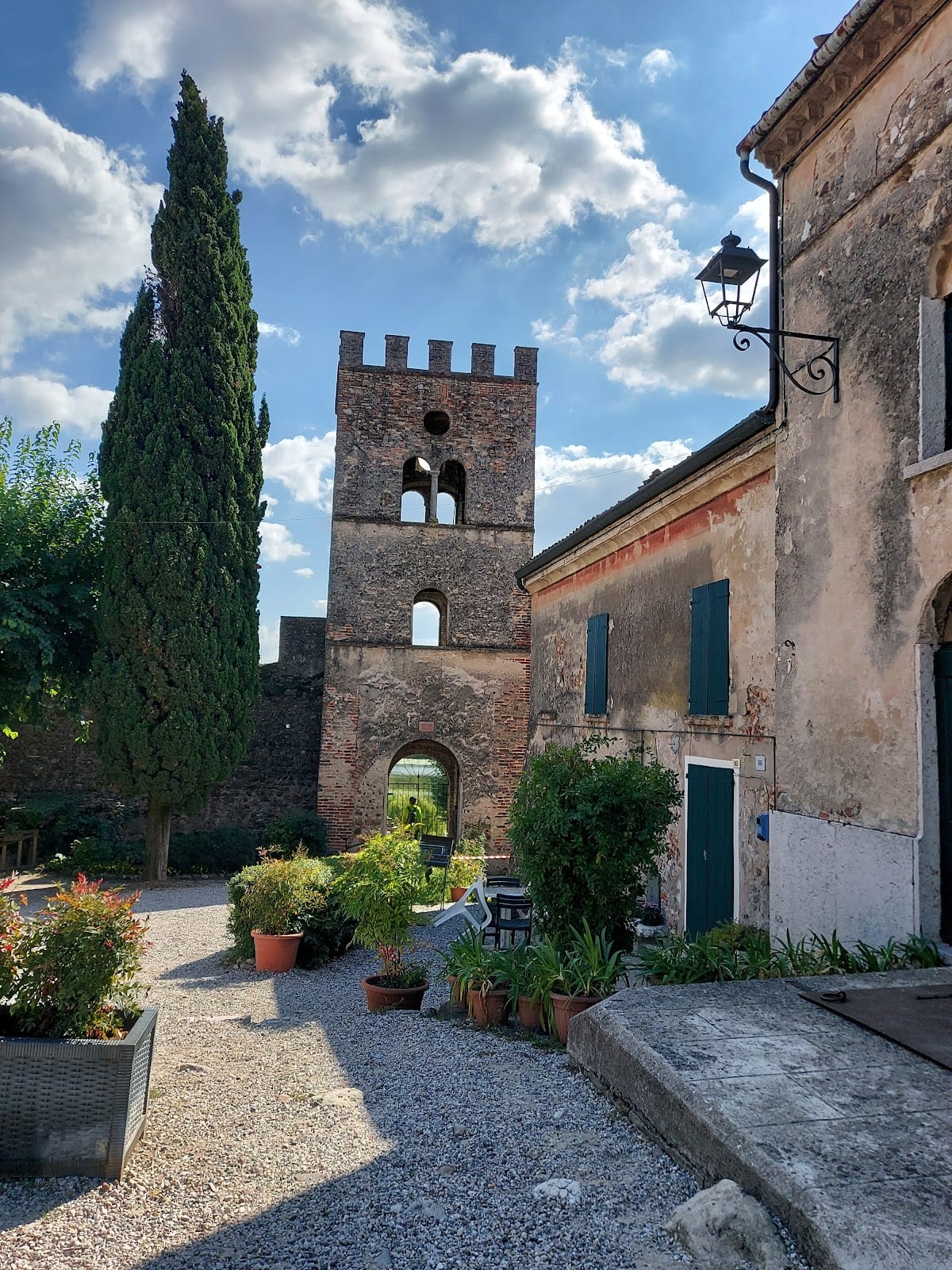
The fortress still preserves much of its original medieval plan, prominently featuring urban structures and defensive works arranged around the village center. Four towers are integrated into the perimeter walls, which encircle the settlement, forming a fortified enclosure that recalls the castle’s role in protecting the community.
The perimeter walls include a patrol walkway called a cammino di ronda, enabling guards to move along the defenses. Particularly notable is the northern section of the castle, distinguished by a square tower paired with the original drawbridge, which exemplifies the strategic design focused on controlling access. These elements date back to the initial 13th-century construction phase.
Facing the lake, the southern portion of the fortress served as the residential area. It was fortified but more focused on habitation rather than pure defense, reflecting the dual-use nature of the complex. Over time, this section was modified to meet the needs of a private noble residence following the castle’s decline in military significance.
Despite centuries of change, the structure remains remarkably well preserved, allowing the medieval layout and fortification features to be clearly seen today. The combination of defensive walls, towers, and the integration of living spaces within the fortified enclosure offers a comprehensive glimpse into the castle’s original function and historical evolution.
Nearby sites