Castello di Capua: A Medieval and Renaissance Castle in Gambatesa, Italy
Visitor Information
Google Rating: 4.6
Popularity: Low
Official Website: www.musei.molise.beniculturali.it
Country: Italy
Civilization: Early Modern, Medieval European
Site type: Military
Remains: Castle
History
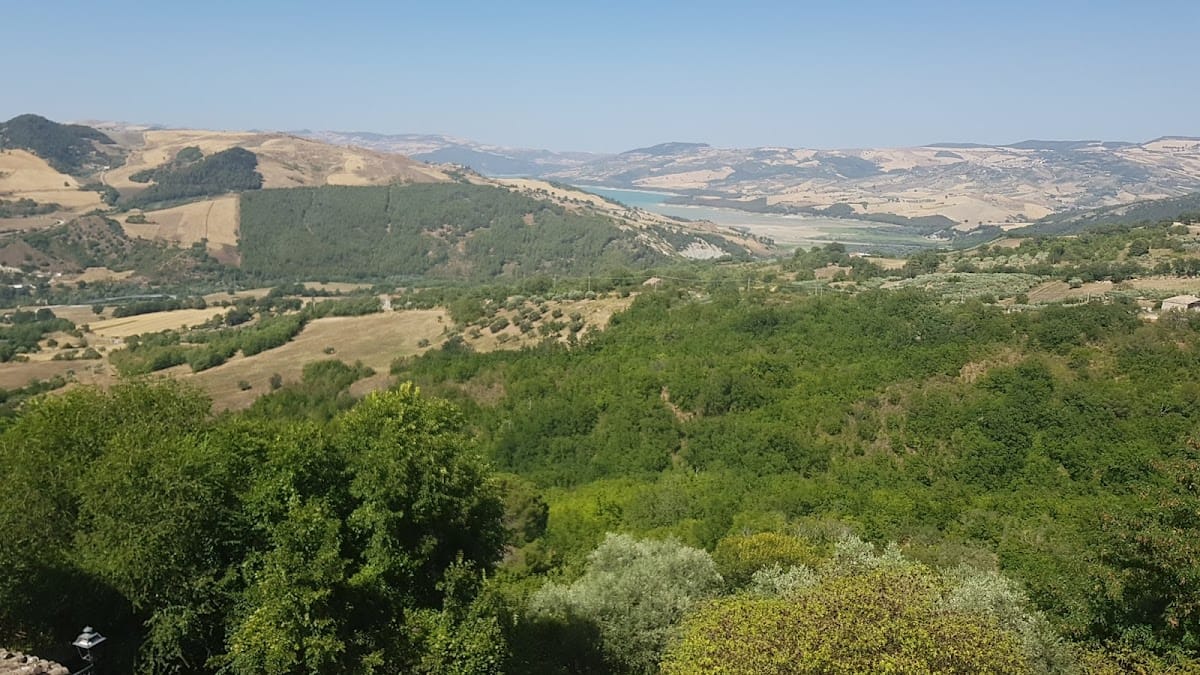
Castello di Capua is situated in the town of Gambatesa in Italy. This castle originated as a medieval fortress located on Serrone hill, an area historically positioned at the border between the regions of Molise and Puglia. Its initial role was that of a defensive military outpost protecting the frontier.
The castle’s early history is connected with local noble families, notably Riccardo di Pietravalle, who was recorded as the first lord of Gambatesa in the 13th century. Through the Middle Ages, Castello di Capua functioned primarily as a feudal residence and a military stronghold, reflecting the turbulent nature of the region’s frontier status.
A transformative phase began in 1484 when the Di Capua family acquired the castle. Under their lordship, especially during the mid-16th century, the fortress underwent a significant change into a Renaissance palace. The prominent figure Vincenzo di Capua spearheaded this remodeling, commissioning an extensive cycle of frescoes in 1550 by the Salento artist Donato Decumbertino. These decorations combined themes from mythology, Christianity, and history with the intention of celebrating the family’s virtues—moral, civil, and military.
Several historical events and personal stories are associated with the castle and its owners. Giovanni di Capua earned distinction for saving King Ferdinand II of Aragon’s life in 1495, while Matteo di Capua is remembered for his death during the 1480 Battle of Otranto, a significant conflict in the region’s history. Over time, ownership of the castle passed through various noble titles, including barons and marquises.
In more recent centuries, the castle transitioned to private hands before becoming property of the Italian state. Since 2014, it has been managed by the Ministry of Cultural Heritage as part of the Molise Museum Network, highlighting the site’s importance within regional heritage.
Remains
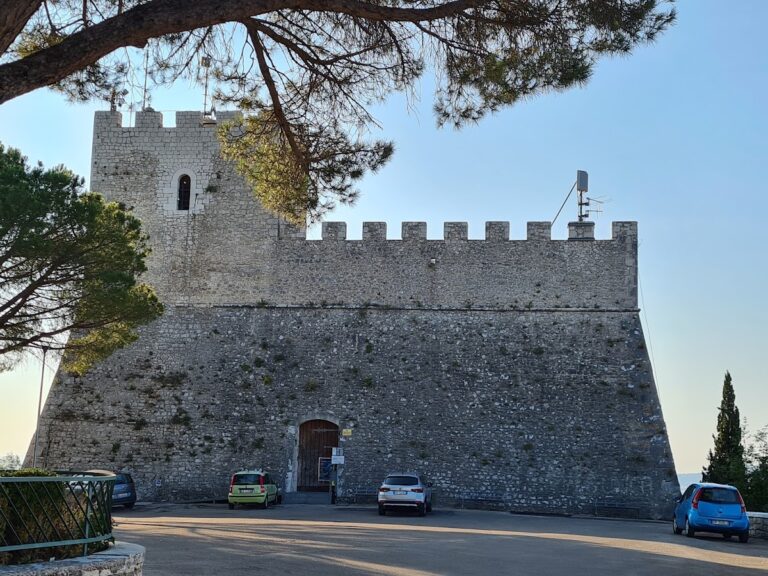
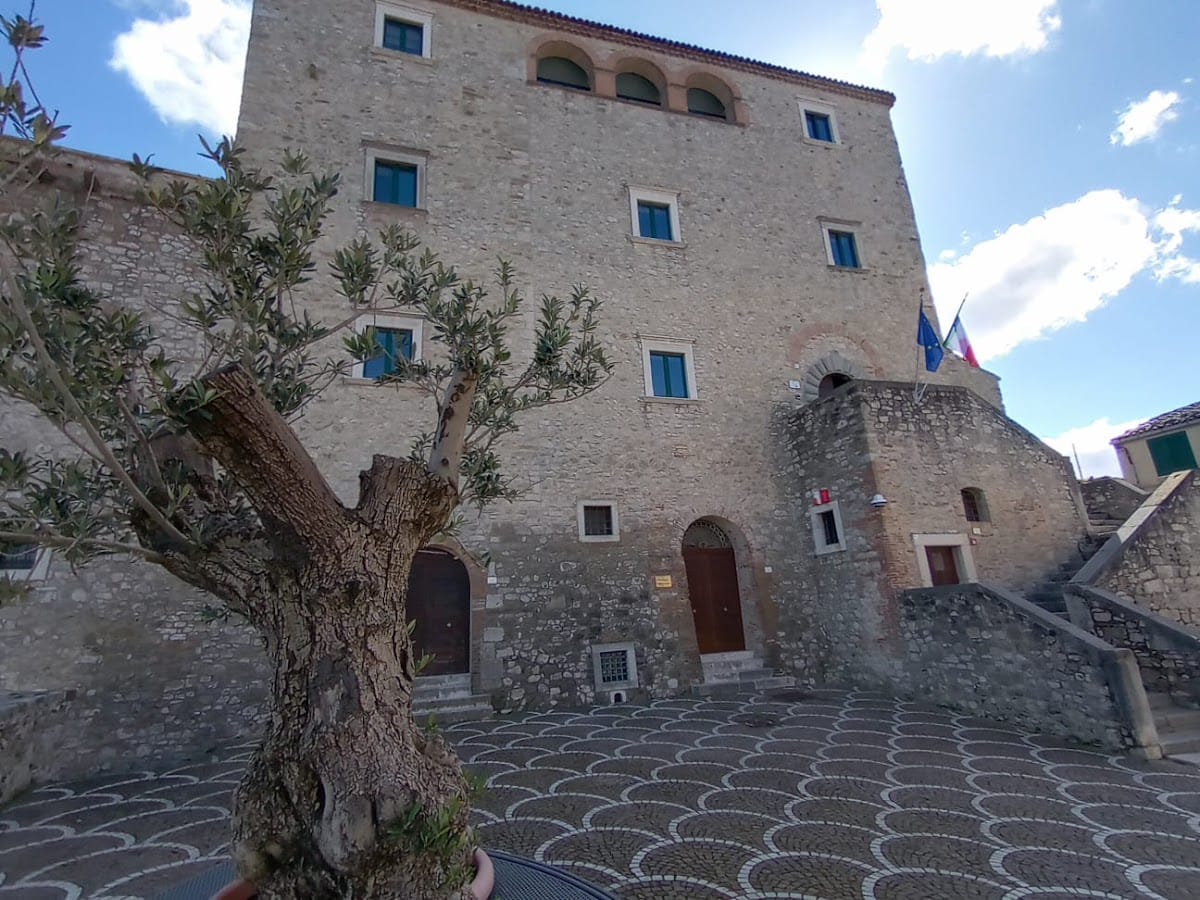
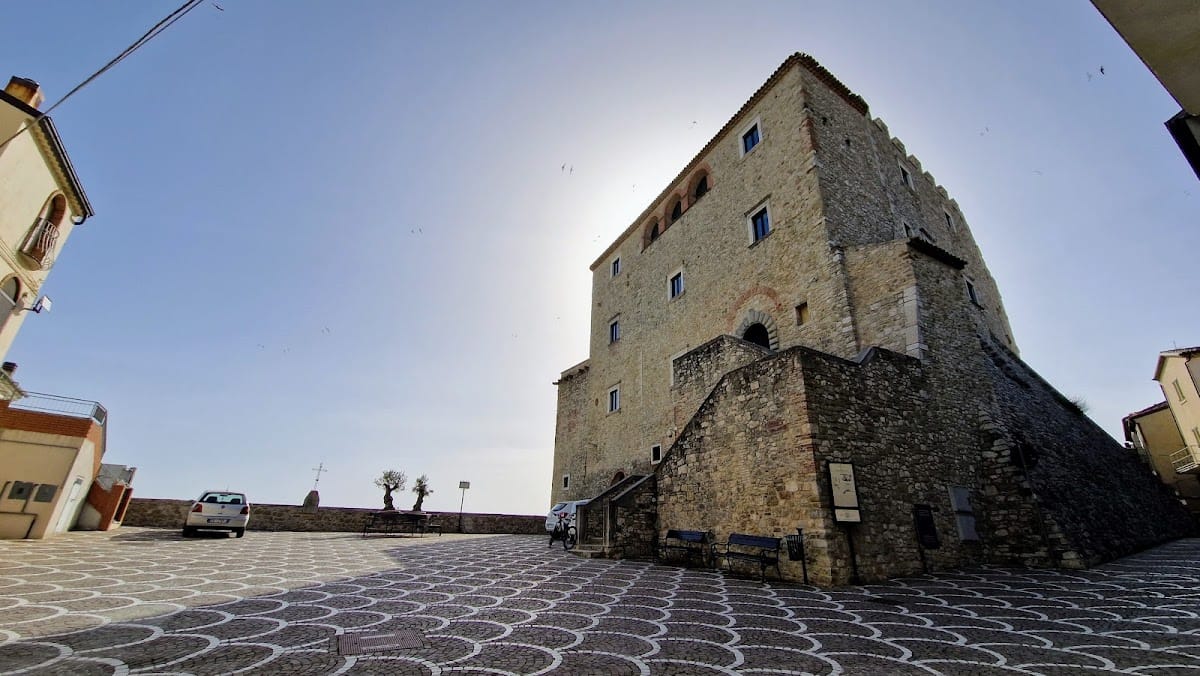
Castello di Capua maintains its characteristic medieval quadrangular layout, constructed primarily from stone, and standing prominently on a hilltop. Its architectural form includes massive defensive walls topped with Guelph battlements—square-shaped parapets common in medieval fortifications—especially visible on the southwest side. Corner towers are oriented towards the northeast, serving as lookout and defensive points, and remain integral to the castle’s original design.
The Renaissance period brought notable additions to the castle’s exterior, particularly along the northwest façade. A rusticated portal, fashioned with rough-textured stonework to convey strength and elegance, marks the entrance. The same façade features windows and a loggia consisting of three rounded arches, typical elements of Italian Renaissance architecture dating from the late 15th to the mid-16th century.
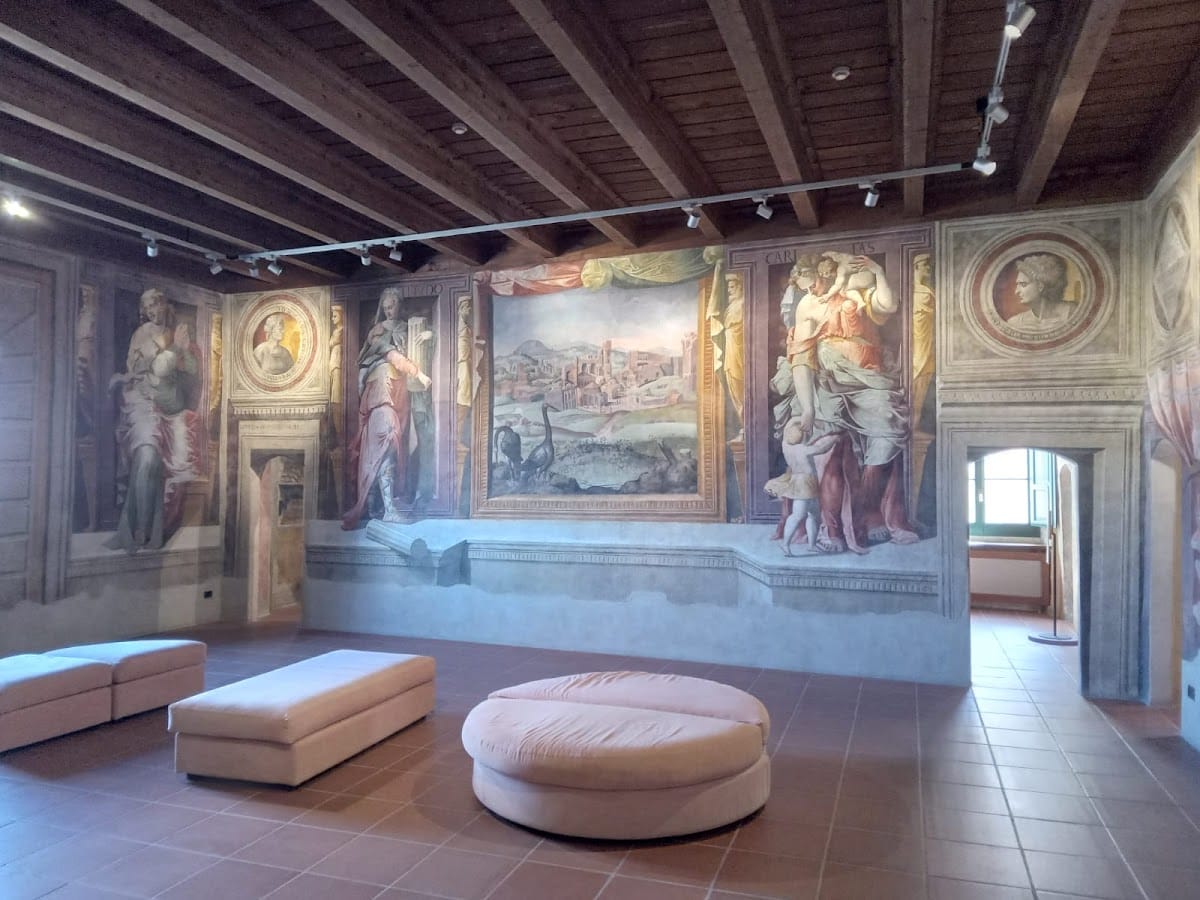
Inside, the castle is remarkable for its extensive cycle of fresco decorations completed in 1550 by Donato Decumbertino. These paintings cover the main noble floors, enriching the rooms with intricate images blending mythology, religion, and family history. The atrium illustrates the Loves of Zeus, drawing on classical mythology to convey messages of passion and power. Another chamber centers on a fireplace room that celebrates the Di Capua family’s virtues, highlighting their ideals.
A particularly notable space is the Sala delle Maschere, which contains densely symbolic frescoes. Among its imagery, Minerva—the Roman goddess of wisdom—is portrayed alongside an owl, her traditional emblem. This room also includes an inscription bearing the painter’s signature and the date of completion. The coats of arms of the Di Capua and de Balzo families appear here as well, symbolizing their alliance through marriage.
Other rooms decorated with frescoes include the Sala del Pergolato, which is adorned with trompe-l’oeil (a painting technique creating an optical illusion of three-dimensionality) depicting a pergola and a naval battle scene believed to represent the Battle of Otranto. The Salone delle Virtù stands out with a richly painted polychrome ceiling and allegorical figures embodying virtues such as charity, fortitude, prudence, justice, peace, and faith.
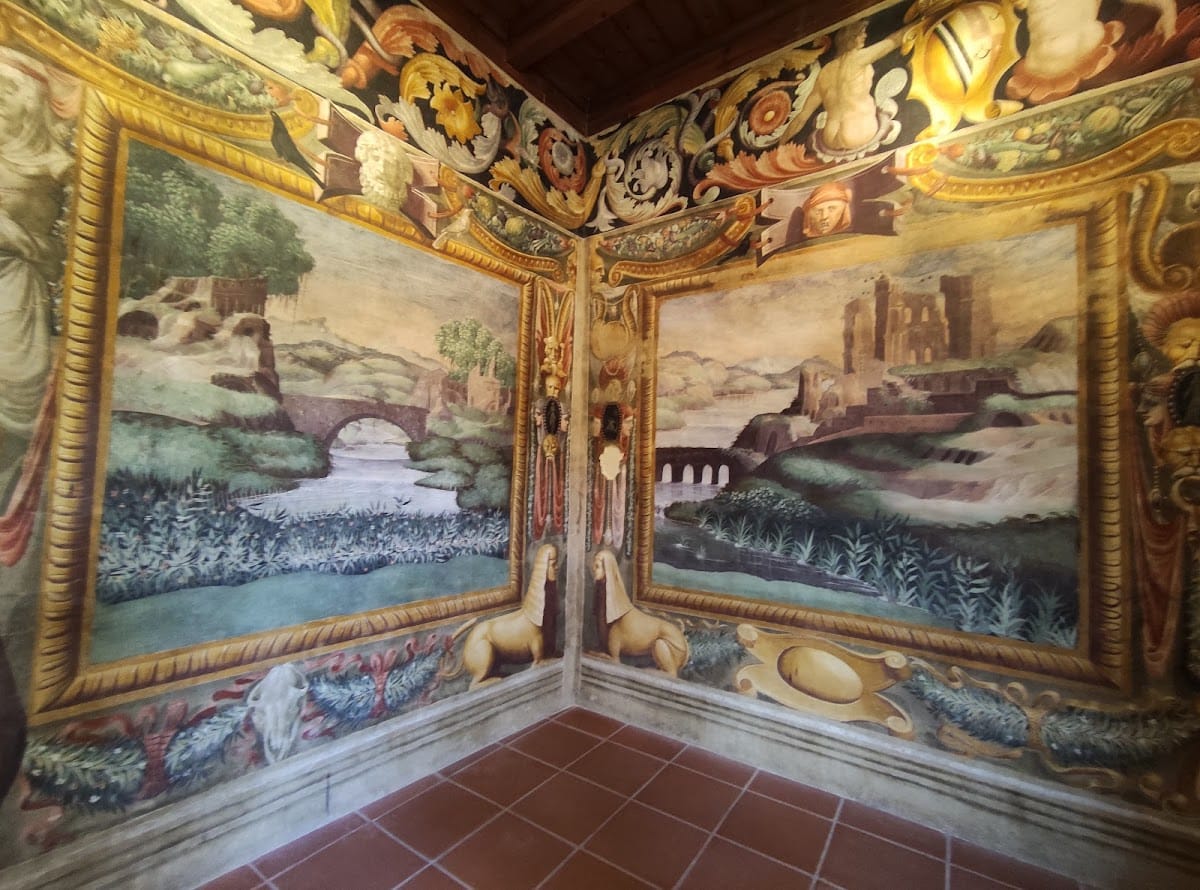
The Sala del Canneto presents painted landscapes featuring rivers and medieval ruins, contributing to an evocative natural setting within the castle’s walls. The Studiolo, a smaller intimate room possibly used as a bedroom, displays scenes of mythological love stories, further intertwining classical themes with the domestic space.
Throughout these frescoes, clear references to classical literature, particularly Ovid’s Metamorphoses, are evident, alongside allusions to regional history. The complex symbolic and allegorical content was designed to communicate the Di Capua family’s ideals and prestige to those visiting the castle.
Overall, the castles’ architecture and interior decoration form a cohesive record of its evolution from a medieval fortress into a Renaissance noble residence, reflecting layers of history and artistry preserved within its walls.
Nearby sites