Ariano Irpino Norman Castle: A Lombard and Norman Hilltop Fortress in Italy


Site at a Glance
- Rating
- 4.5
- Popularity
- Low
- Country
- Italy
- Primary era
- Medieval
- Eras represented
- Medieval, Early Modern
- Civilizations
- Kingdom of Naples, Lombard, Norman, Spanish
- Site type
- Military
- Remains
- Castle
On this page14 sections
History
Ariano Irpino Norman Castle is a hilltop fortress in Italy whose earliest phase is associated with Lombard rule, while its major medieval rebuilding was Norman. Its development extended from the early medieval period through the fifteenth century and incorporated Norman, Angevin, and Aragonese architectural phases. Positioned above the Sella di Ariano, the principal pass through the Campanian Apennines, it served as a stronghold designed to withstand prolonged siege and delay an invading force.
Lombard origins
The castle’s foundation date remains uncertain. It may have originated in the seventh or eighth century, and by 892 it was associated with the Lombard period. The Lombards were a Germanic people who established kingdoms in Italy after the decline of Roman rule. The fortress was initially linked to the Principality of Benevento and probably had an anti-Byzantine purpose, directed against forces of the eastern Roman Empire that retained territories in southern Italy.
The castle was not primarily intended to defend Ariano against local attacks. That function belonged to the town walls, which had formerly been equipped with nine gates supervised by a portulano, an official responsible for guarding or supervising the entrances. The castle instead occupied a separate defensive role, providing a fortified refuge capable of resisting a lengthy siege and slowing movement through the surrounding mountain routes.
Norman rebuilding and the Assises of Ariano
The Normans radically restored and enlarged the fortress. They were a people of Scandinavian origin who established states in southern Italy during the eleventh and twelfth centuries. King Roger II probably selected the castle for the Assises of Ariano in 1140, a series of royal legal and administrative measures associated with the consolidation of his Norman kingdom in southern Italy.
The Norman rebuilding gave the castle a large keep and strengthened its wider defensive arrangement. The keep, the principal fortified tower of a castle, stood beside a courtyard and included cisterns for storing water. These provisions supported the fortress’s role in extreme defence rather than ordinary urban protection.
Angevin and Aragonese phases
In 1255, Ariano was captured by the Saracens of Lucera, and the castle suffered severe damage. King Charles I of Anjou restored it in 1266. Charles was an Angevin ruler of southern Italy and the Kingdom of Naples, where the Angevin dynasty had established a new political order. During the following century, his successor King Louis I of Anjou resided at the castle for several months.
King Ferrante of Aragon ordered another enlargement in the fifteenth century. Ferrante was the fifteenth-century king of Naples, and the work associated with his reign gave the fortress distinctive external characteristics connected with Aragonese architecture. The last recorded alterations were commissioned in 1537 by Duke Ferrante Gonzaga.
War, abandonment, and later investigation
The castle played an important part during the Italian Wars of the sixteenth century, a prolonged series of conflicts in which European powers contested control of territories in Italy. It was definitively abandoned afterward. A succession of earthquakes between 1688 and 1732 caused the collapse of the keep, while the corner towers and other basal structures remained standing.
During the second half of the nineteenth century, the ditches and pastureland around the fortress were levelled and planted with trees. This work created Ariano Irpino’s municipal park, which covers approximately 40,000 square metres. Part of the complex underwent prolonged restoration in the early twenty-first century. From 2009 to 2023, the ruins housed the Museum of Norman Civilization before the museum was moved to the eighteenth-century Palazzo Bevere-Gambacorta in Ariano Irpino.
Archaeological investigations and surveys carried out from the late twentieth century into the early twenty-first century added evidence about the site’s economic role. They indicated that Ariano was a major manufacturing centre by the beginning of the fourteenth century, if not earlier, and showed that sugar consumption was widespread in the inland region during the Angevin period. Finds from the castle also provide physical evidence for sugar-processing activity within the Kingdom of Naples.
Remains
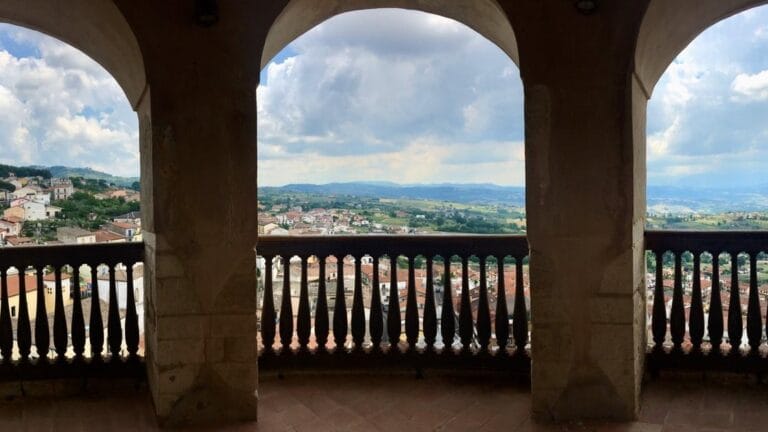
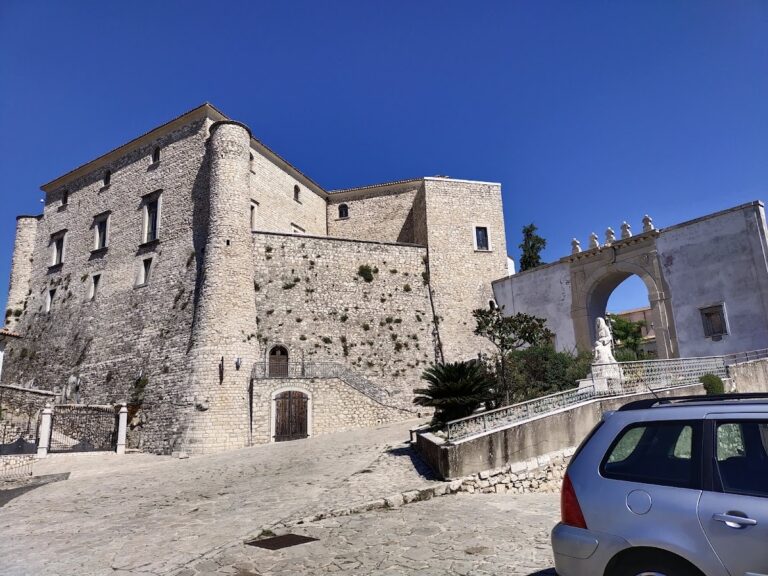
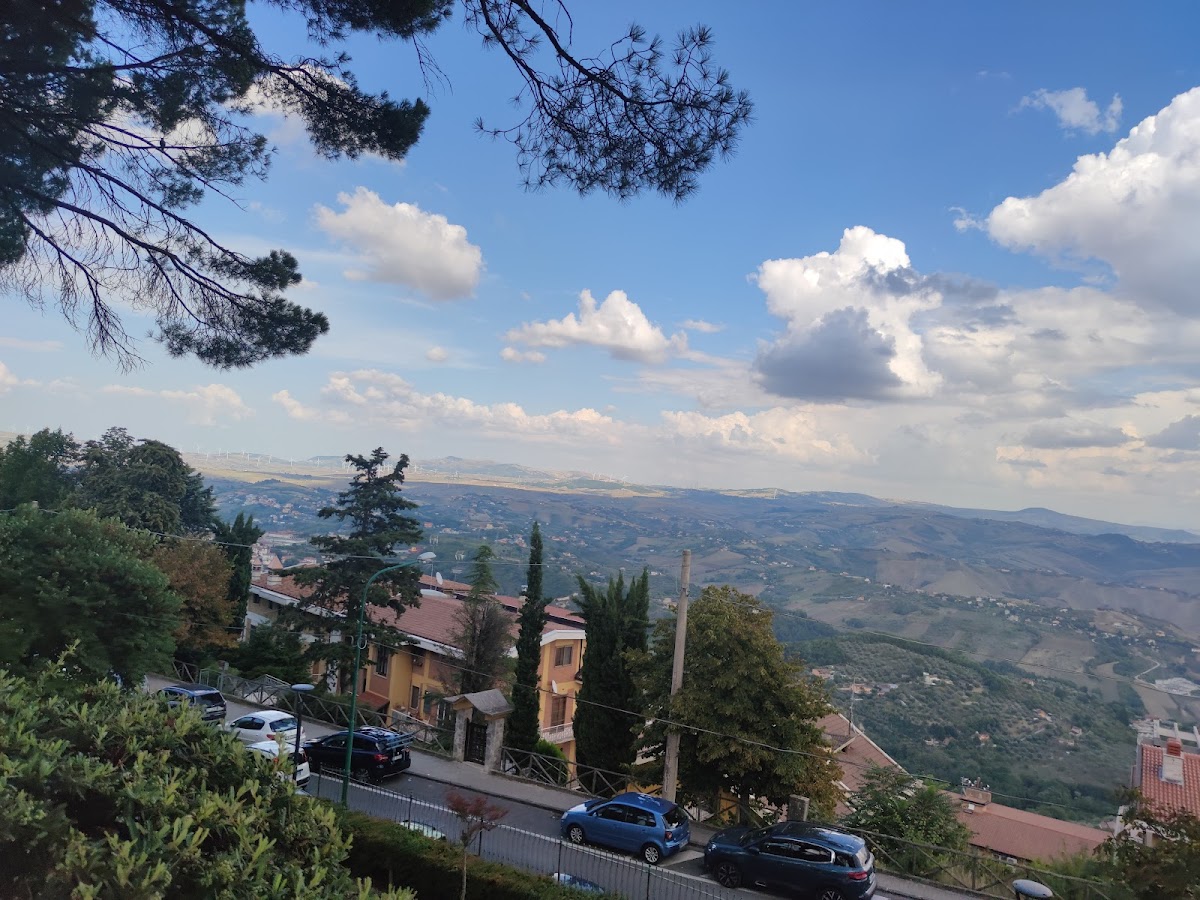
The surviving castle occupies the summit of its eponymous hill in the highest part of Ariano Irpino, at more than 800 metres above sea level. The keep’s elevation is approximately 811 metres. From this difficult-to-access position above the Sella di Ariano, the fortress overlooks the Ufita, Miscano, and Cervaro valleys. Built of sandstone bonded with mortar, the complex has an approximately trapezoidal plan with unequal sides and reflects construction and alteration from the early medieval period through the fifteenth century.
Hilltop fortifications
Walls and corner towers
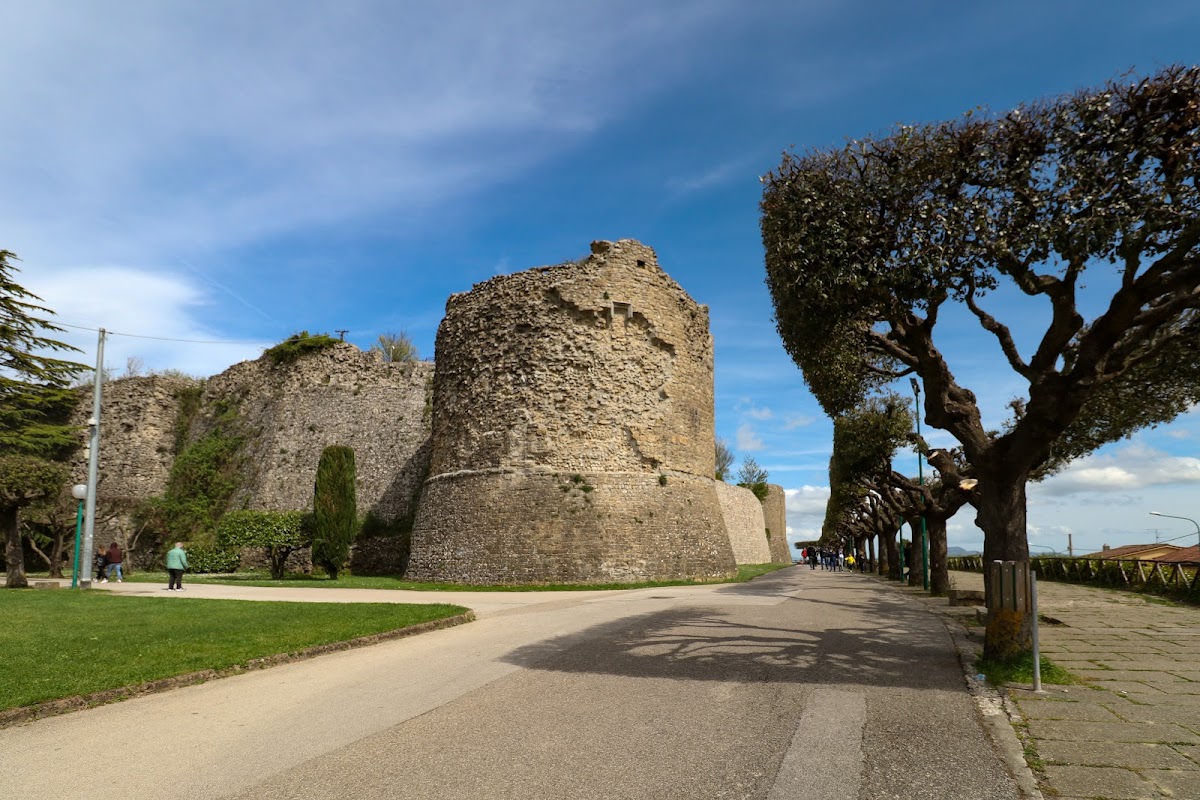
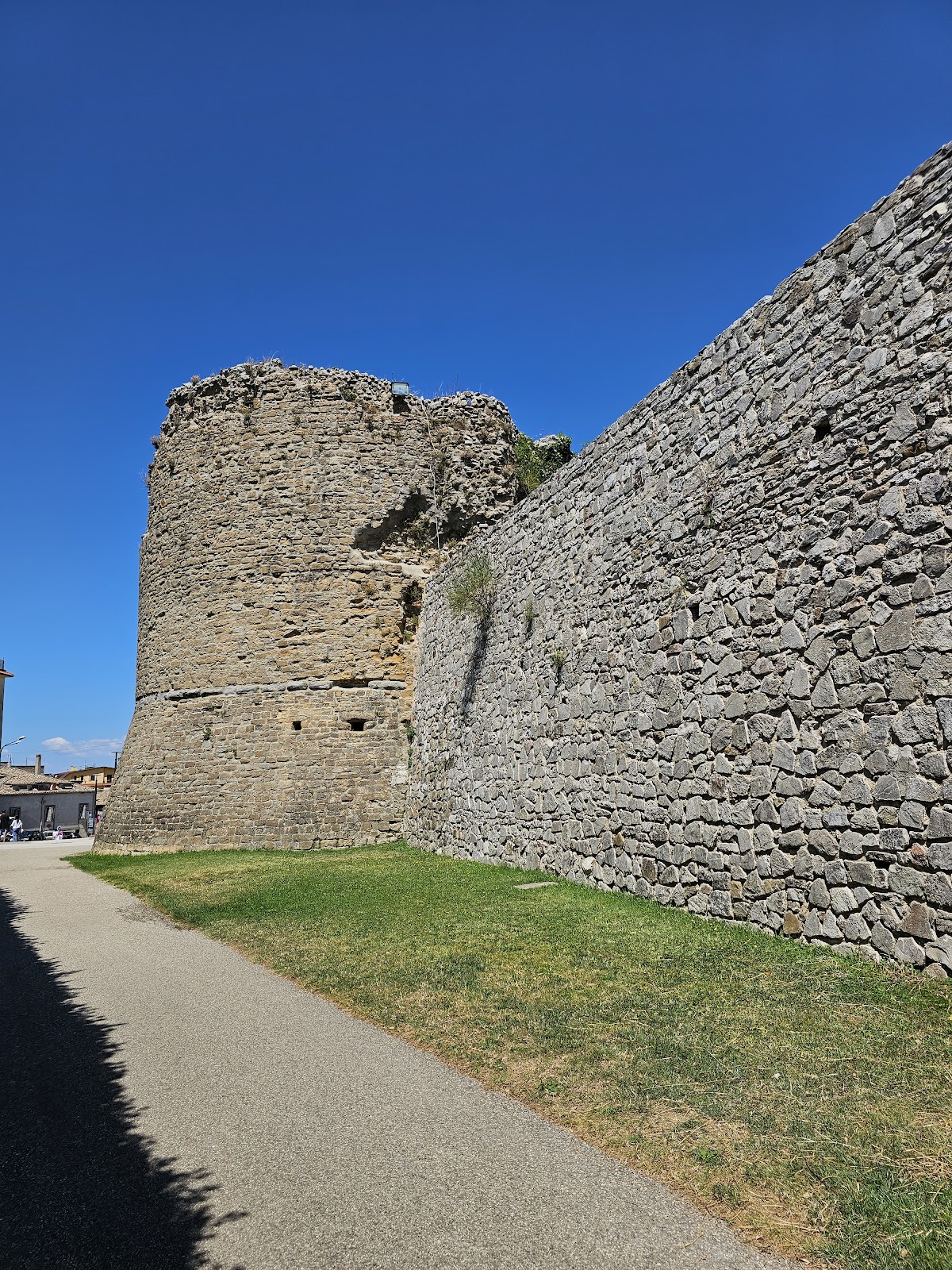
The fortress is enclosed by curtain walls, meaning the defensive walls that connect towers or other fortified structures. The north side measures about 40 metres, the south side about 56 metres, the east side about 72 metres, and the west side about 81 metres. Internal walkways ran along the walls, which were reinforced by buttresses that were later buried. The entrance lies on the eastern side.
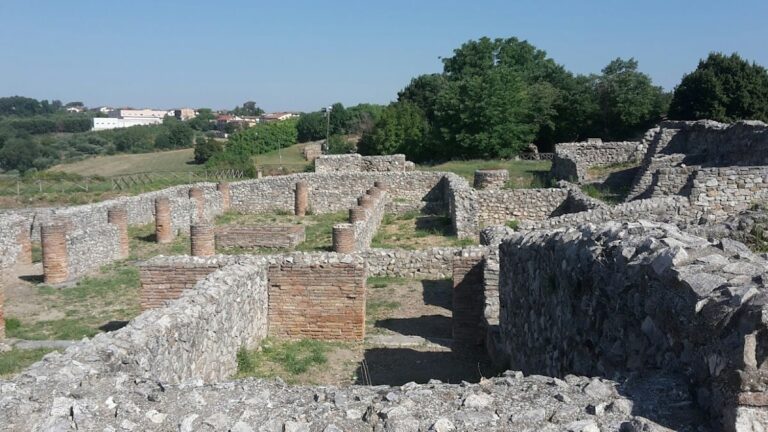
Towers occupy all four corners of the trapezoidal enclosure. Their internal rooms vary in size, generally becoming smaller toward the upper levels, and the towers measure approximately 13 to 16 metres in diameter. The earthquakes of 1688 to 1732 left the complex in ruins but did not destroy the corner towers and other lower structures. Today the remains consist chiefly of four large, nearly intact corner towers together with additional fragments of the fortress buildings.
Eastern entrance and bridges
The eastern entrance formed part of the castle’s defensive and monumental arrangement. A second drawbridge, probably positioned farther outside the Norman-period fortress, may have reinforced the approach and contributed to the entrance’s monumental appearance. The evidence for the entrance is connected with the wider Norman reorganization of the site.
Upper fortress
The Torre Grande
The upper part of the fortress contained a large rectangular keep identified as the Torre Grande in a document of 1585. Built during the Norman period in the twelfth century, it could be reached only by a bridge. The building initially contained two rooms and later received two smaller rooms. It stood beside a courtyard and had cisterns for collecting and storing water. Earthquake damage eventually brought the keep down, leaving only limited ruins.
Archaeological finds
Ceramics and vessels
Excavations produced a substantial quantity of locally made majolica, a glazed earthenware used for vessels and other ceramic objects, together with other ceramics. The finds include amphorae, jars, jugs, and bowls. The earliest cited vessel is a small one-handled jug dating from the Lombard period. These materials contribute to the interpretation of the fortress and its surrounding settlement across successive medieval phases.
Sugar processing and coins
Artefacts and tools used in sugar refining date broadly from the thirteenth to the fifteenth century. Their presence provides physical evidence that sugar was processed at the site and is described as unique within the Kingdom of Naples. The finds place the castle within the manufacturing activity associated with medieval Ariano.
Several ancient coins were recovered during surveys conducted in the late twentieth century. They date from the second half of the thirteenth century to the first half of the sixteenth century, spanning the Angevin and Aragonese periods and extending into the era of the castle’s later military importance.