Carriganass Castle: A 16th-Century Irish Tower House in County Cork
Visitor Information
Google Rating: 4.5
Popularity: Low
Official Website: carriganasscastle.com
Country: Ireland
Civilization: Early Modern
Site type: Military
Remains: Castle
History
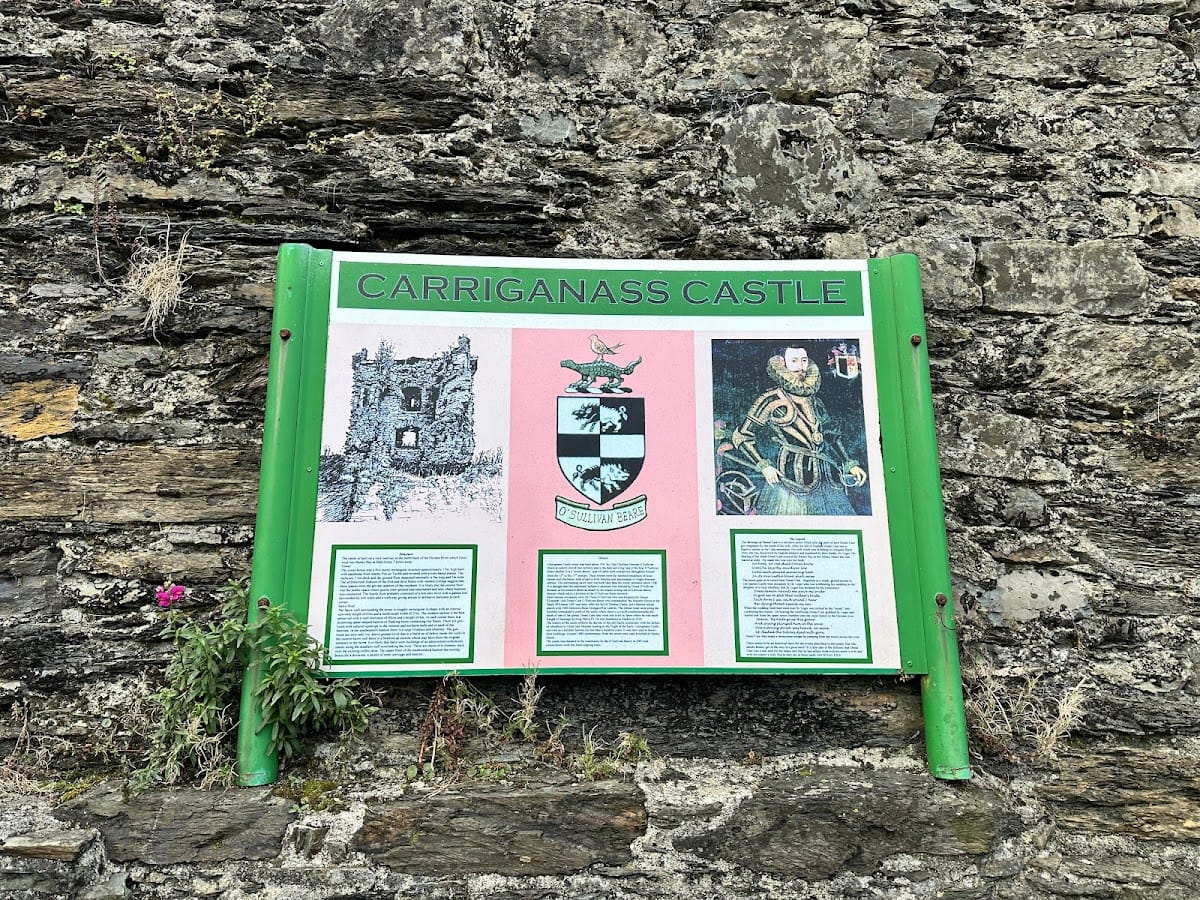
Carriganass Castle stands in Carriganass, County Cork, Ireland, and was built by the Gaelic Irish O’Sullivan Beare clan during the mid-16th century. This family dominated much of West Cork during that period and constructed the castle as a fortified residence and defensive stronghold.
The castle’s origins trace back to around 1540 when Dermot O’Sullivan, a chief of the clan, commissioned its construction. Over the following decades, Carriganass repeatedly passed between different branches of the O’Sullivans due to internal disputes. However, by 1601, the clan presented a more united front as they joined forces with Hugh O’Neill, a leading Irish lord, during the Nine Years’ War against English rule. This culminated in the Battle of Kinsale, where Irish forces were decisively defeated.
Following the battle, English forces led by Sir George Carew advanced into O’Sullivan territory on the Beara Peninsula. As the main O’Sullivan force withdrew to the more formidable Dunboy Castle, they left a small garrison at Carriganass. Carew’s troops captured Carriganass Castle with relative ease before proceeding to lay siege to Dunboy. After these military defeats, the English dispossessed the O’Sullivan clan of Carriganass, granting ownership instead to the Barrett family. The Barretts retained possession of the castle until the 1930s, although they chose to live in a modern house they constructed nearby rather than the castle itself. Over time, with no occupants maintaining the structure, the castle was abandoned and gradually fell into ruin.
Historically, Carriganass Castle marks an important site along the route taken by the O’Sullivan Bere during the conflicts of the Nine Years’ War. Additionally, it lies on the path of St. Finbarr’s Way, a historic pilgrimage route, linking it to religious journeys that have passed through the area for centuries.
Remains
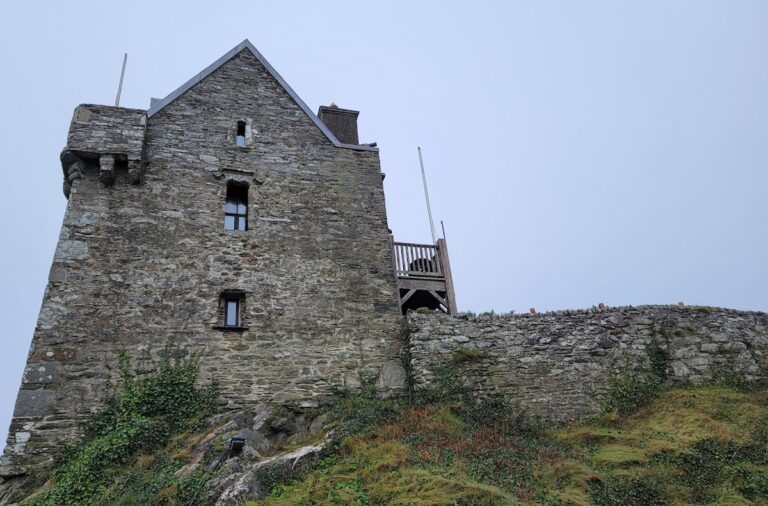
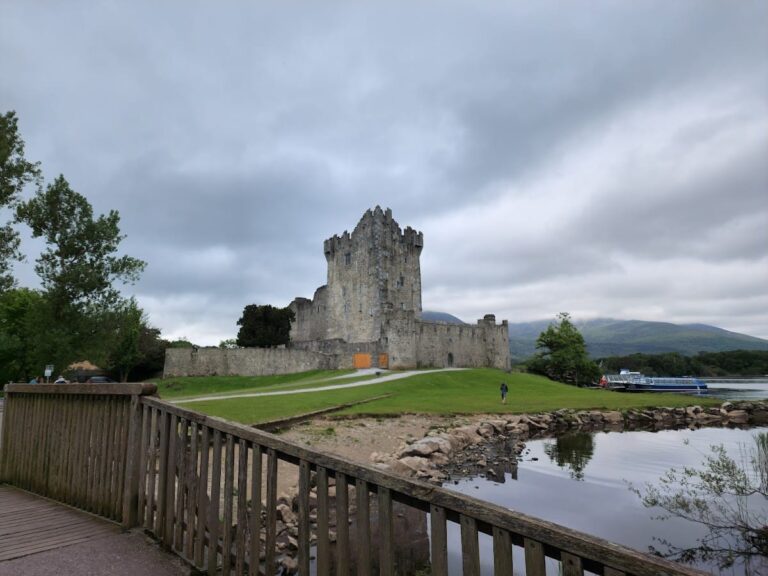
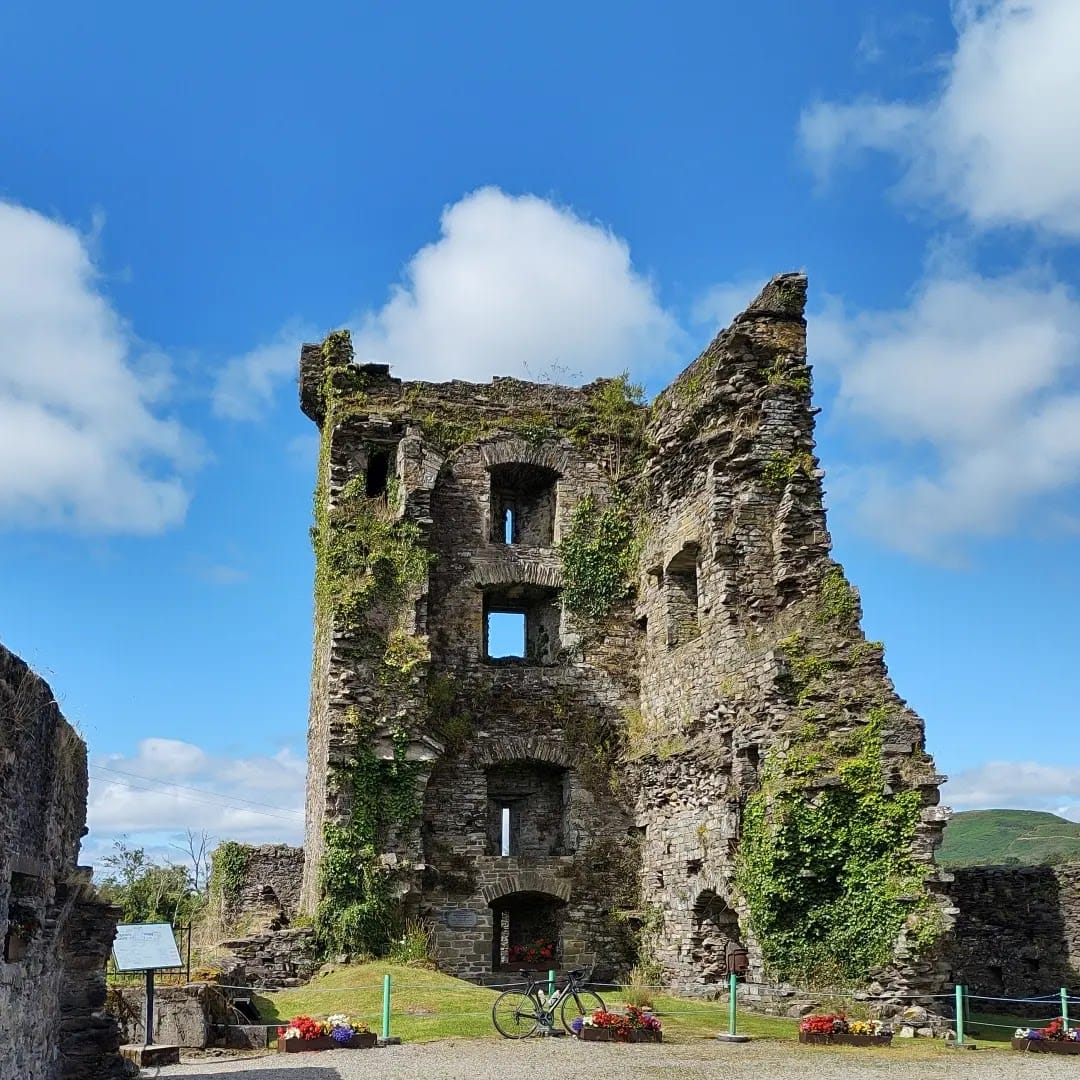
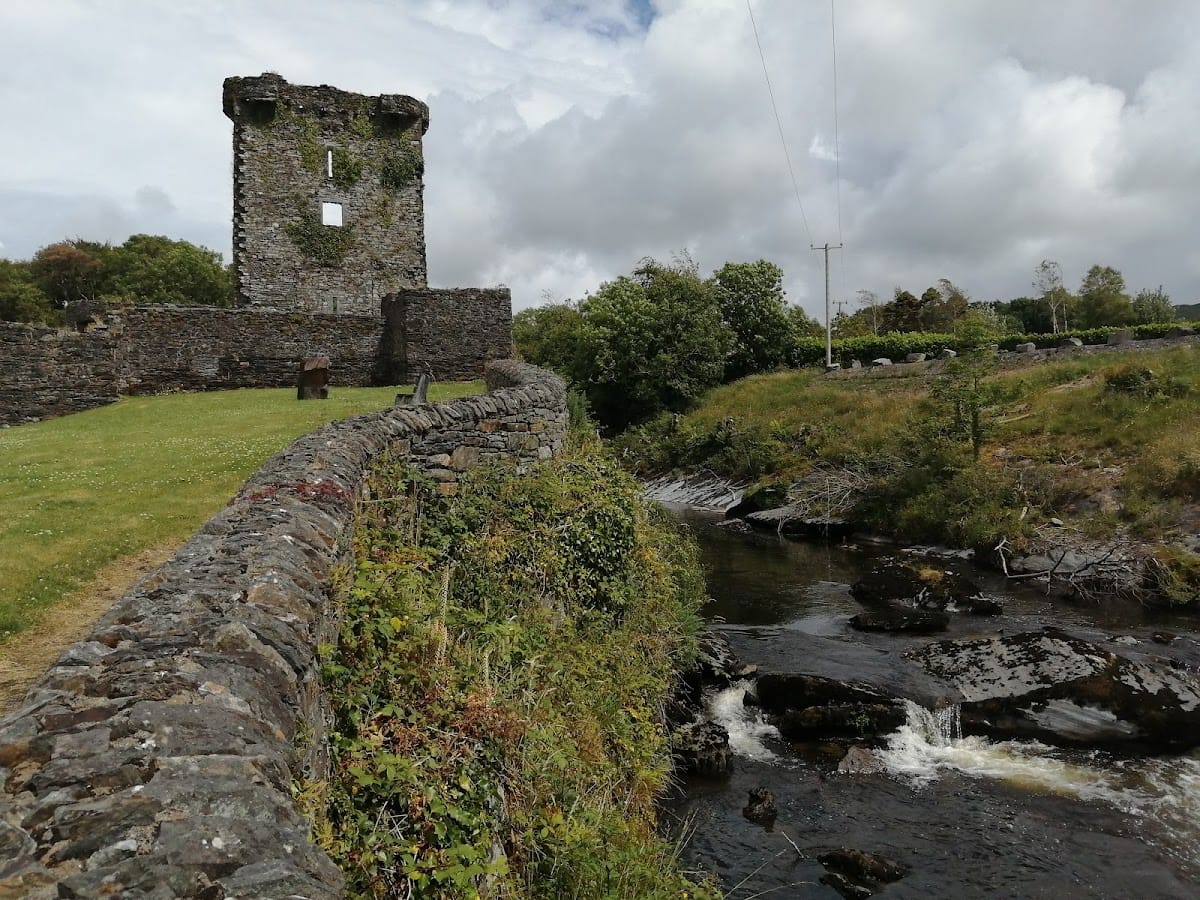
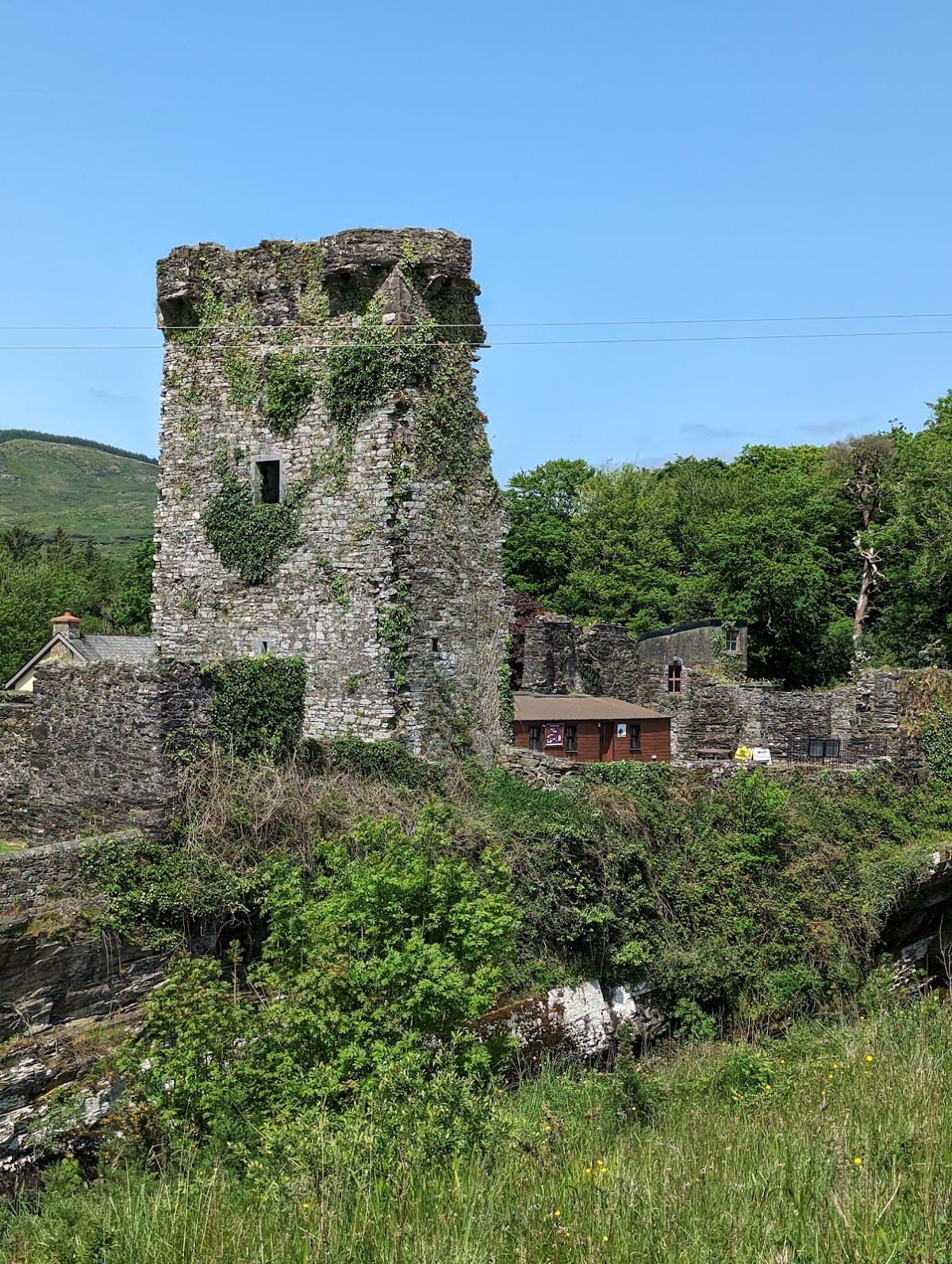
Carriganass Castle is a classic example of a 16th-century Irish tower house, designed both for defense and residence. The principal component is a four-story stone tower built atop a rocky outcrop overlooking the Ouvane River, which provided natural protection on one side. This tower includes four corner turrets, small projecting towers that likely served as lookouts or defensive positions.
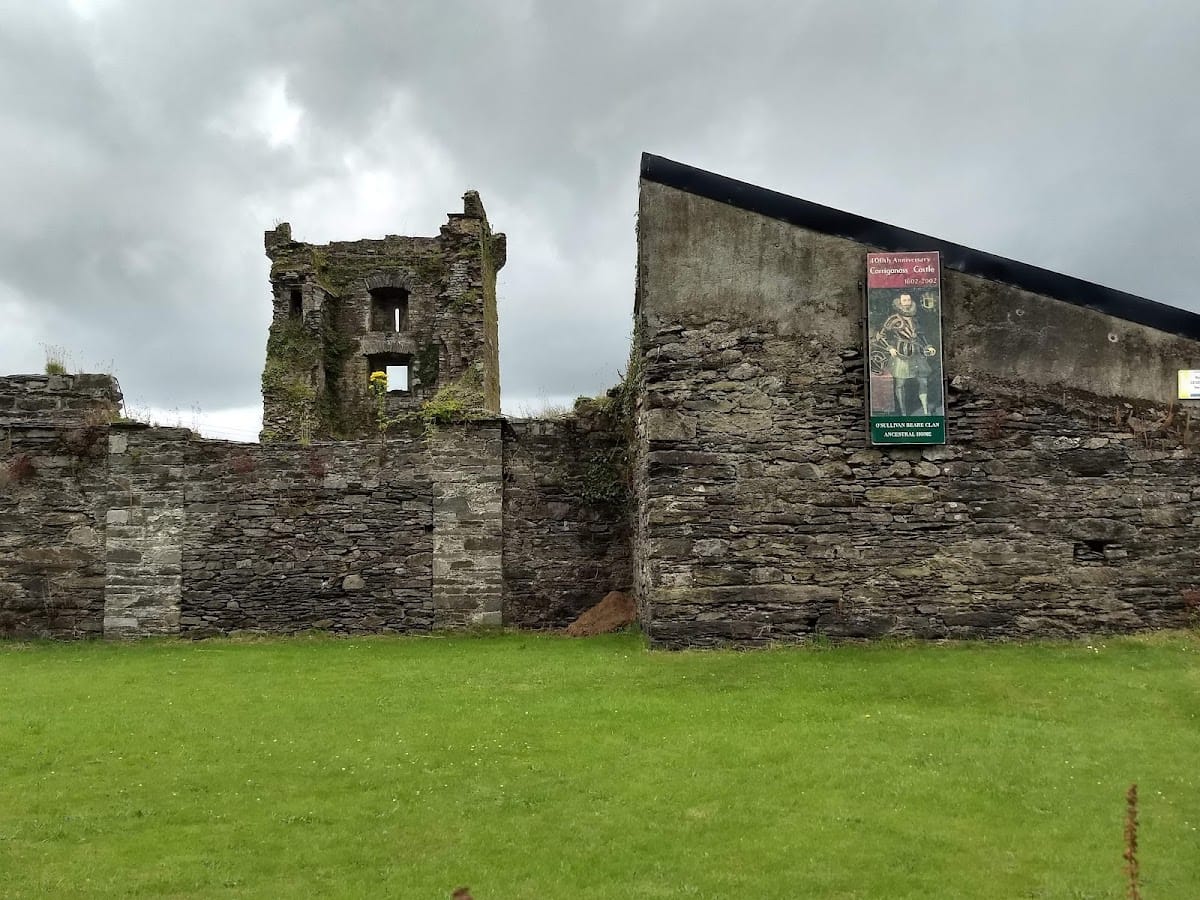
Surrounding the main tower is a strong outer enclosure known as a bawn, which is a defensive courtyard surrounded by a curtain wall approximately 14 feet high. The bawn itself is reinforced with four corner towers, enhancing its defensive capabilities. The main tower is integrated directly into the western section of this defensive wall, contributing to the overall strength of the fortification. Entry into the castle complex was controlled through a gate located in the northern wall of the bawn, which allowed for guarded access.
Today, much of the castle stands in a ruined state, with parts of the main tower having collapsed over time. The site’s proximity to the Barrett family’s later-built residence, situated nearby outside the curtain walls, contributed to the structure’s abandonment. The ruins are positioned at a crossroads of multiple regional trails, including the Beara-Breifne Way and Sheep’s Head Way, in addition to St. Finbarr’s Way, underscoring the castle’s continued geographical relevance.
Overall, Carriganass Castle’s surviving features showcase the defensive architectural style of Irish tower houses, reflecting the turbulent history of warfare and clan rivalry in the area during the 16th and early 17th centuries.
Nearby sites