Dunasead Castle: A Fortified House in Baltimore, Ireland


Site at a Glance
- Rating
- 4.4
- Popularity
- Low
- Country
- Ireland
- Primary era
- Early Modern
- External website
- Open
- Eras represented
- Early Modern
- Civilizations
- English
- Site type
- Military
- Remains
- Castle
On this page6 sections
History
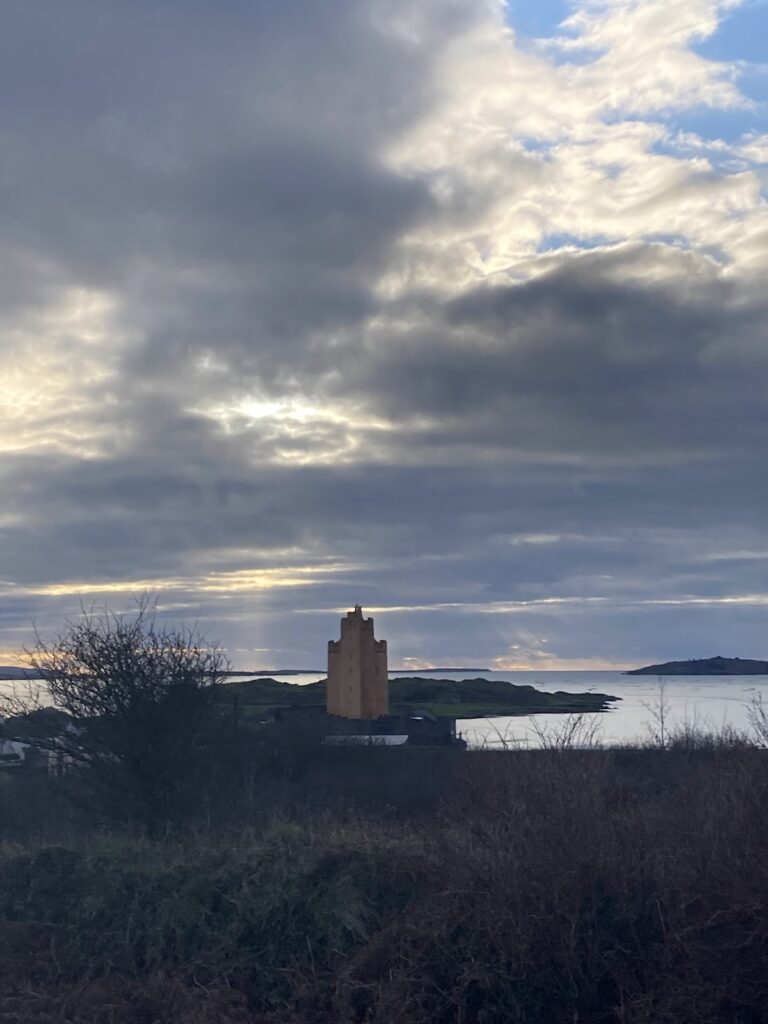
Dunasead Castle, also known as Baltimore Castle, is a seventeenth-century fortified house in Baltimore, Ireland, associated with the O’Driscoll clan and their control of local territory and trade. The present building probably dates from the 1620s, although the site had earlier fortifications and a long history of conflict.
Early Fortifications and O’Driscoll Control
In 1215, the Anglo-Norman settler FitzStephens built a tower house and enclosed yard on a site occupied by an earlier fortification, probably a ringfort. Anglo-Norman settlers were communities and institutions descended from the Norman conquest and settlement of Ireland. The castle later became associated with the O’Driscolls, a Gaelic sept, meaning an extended kin-based political and territorial group.
In 1305, the MacCarthys attacked and burned the castle. The O’Driscolls then took possession of Dunasead and rebuilt it. Their position remained under pressure from Anglo-Norman settlers and rival Gaelic clans, whose efforts to control territory and trade brought repeated attacks that damaged or destroyed the castle.
The Waterford Feud
A prolonged conflict between the O’Driscolls and the merchants of Waterford began in 1368, after an O’Driscoll attack on the Waterford fleet. In December 1413, the mayor of Waterford reputedly captured members of the O’Driscoll family and brought them to Waterford. The feud continued intermittently for almost two centuries, ending in 1537 when a Waterford fleet sacked Dunasead, Baltimore, and other O’Driscoll castles.
Dunasead was rebuilt after the destruction of 1537. During the Spanish military intervention in 1601, Spanish troops occupied the castle. After the O’Driscolls supported Hugh O’Neill at the Battle of Kinsale, English forces took possession of it. Hugh O’Neill was a leading Gaelic Irish lord who opposed English expansion, while the Battle of Kinsale was a major defeat for the Irish-Gaelic and Spanish alliance.
The Seventeenth Century and Restoration
Some members of the O’Driscoll family received pardons, and Dunasead was returned to Florence O’Driscoll. Financial difficulties led Florence to lease the castle along with most of the family’s lands. The present castle was probably built during the 1620s, and it was surrendered to Oliver Cromwell’s forces in the 1640s. Cromwell was the English military and political leader whose forces campaigned in Ireland during the mid-seventeenth-century conflict.
The castle later fell into ruin. Members of the McCarthy family purchased and restored it between 1997 and 2005. It was partially opened to the public from 2005 and is now used as a private residence.
Remains
Castle and Enclosure
Dunasead Castle stands on a sandstone ridge or rock in the centre of Baltimore, overlooking the harbour. The surviving building is a rectangular structure of two storeys with additional attic space. It is set into the south-west wall of a bawn, an enclosed defensive yard surrounding an Irish tower house or fortified residence. The main building measures approximately 6 by 18 metres.
Compared with earlier tower houses in the region, the castle has limited defensive features. Narrow slit windows pierce the ground floor, while a bartizan, a small projecting defensive turret, extends from the south-west corner. These features form the principal surviving evidence of the building’s defensive design.
Nearby sites