Castle Donovan: An O’Donovan Tower House in County Cork
Site at a Glance
- Rating
- 4.7
- Popularity
- Low
- Country
- Ireland
- Primary era
- Early Modern
- External website
- Open
- Eras represented
- Early Modern
- Civilizations
- Irish
- Site type
- Military
- Remains
- Castle
On this page7 sections
History
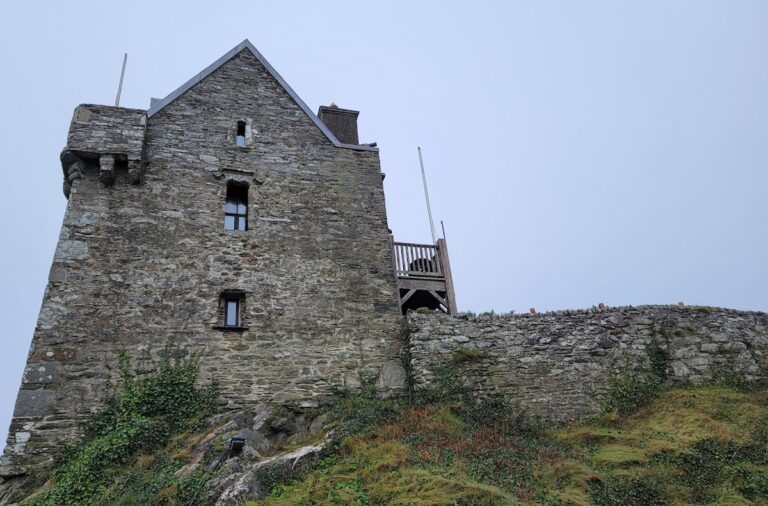
Castle Donovan is the ruin of a sixteenth-century tower house in Ireland, located at Castledonovan in County Cork. A tower house was a fortified residential tower, and this building was associated with the Clann Cathail sept, a Gaelic kin-group within the O’Donovan family. Construction or major enlargement is generally attributed to Donal of the Hides, Lord of Clancahill, between about 1560 and 1584.
The O’Donovan Lordship
For part of the sixteenth century, Castle Donovan served the O’Donovans, an Irish noble family. Before the seventeenth century, the building was known as Sowagh, Sooagh, or Suagh. Its later name derived from the Manor of the Castle of O’Donovan and became associated with a regrant made by James I in 1615. James I was the Stuart king of England, Scotland, and Ireland who ruled from 1603 to 1625.
Donal of the Hides established the building’s principal sixteenth-century form. Several decades later, his son Donal II O’Donovan repaired and altered it, although he did not reside there. During the first decade of the seventeenth century, the family seat is believed to have moved to the more profitable Rahine Manor on the coast, where the O’Donovans could protect their maritime interests. Their later principal residence, Rahine Castle, stood at Myross beside Castlehaven Harbour.
Seventeenth-Century Destruction
Tradition holds that soldiers serving Oliver Cromwell severely damaged Castle Donovan in the late 1640s and blew it up with gunpowder. Cromwell was an English military and political leader whose forces campaigned in Ireland during the 1640s and 1650s. The attack was presented as retaliation for Donal III O’Donovan’s support for the Stuart side and his involvement in the 1641 rebellion and massacres. The castle was uninhabitable thereafter.
Rediscovery and Conservation
Philip Dixon Hardy described the Vale of Castle Donovan after travelling through it in 1828. His account, published in the Dublin Penny Journal in 1834, included a drawing that still showed several outbuildings. Between 2001 and 2014, the Office of Public Works carried out conservation and stabilisation work. Castle Donovan is a National Monument of Ireland, officially listed as Castledonovan Castle under reference number 656.
Remains
The Tower House
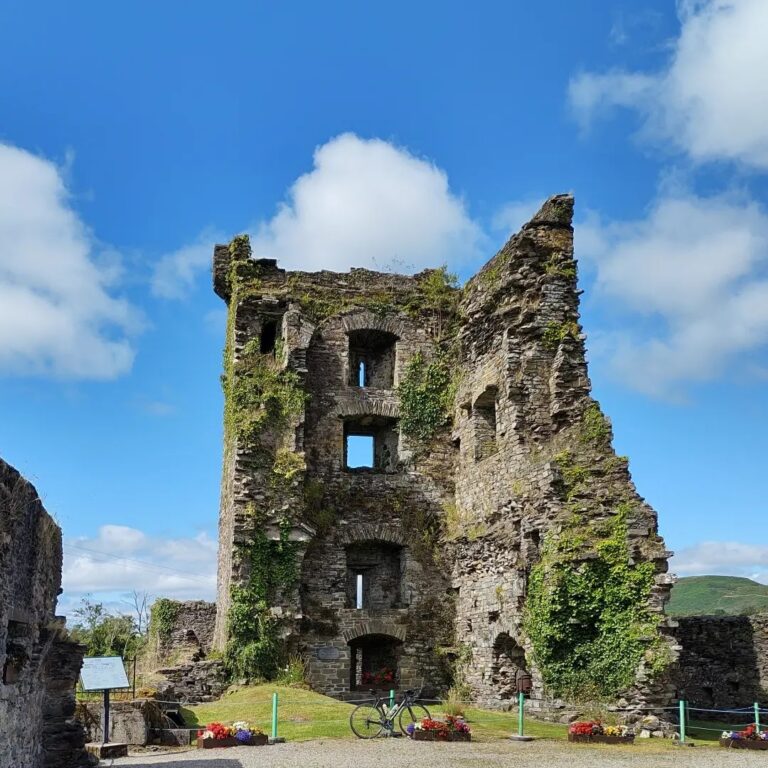
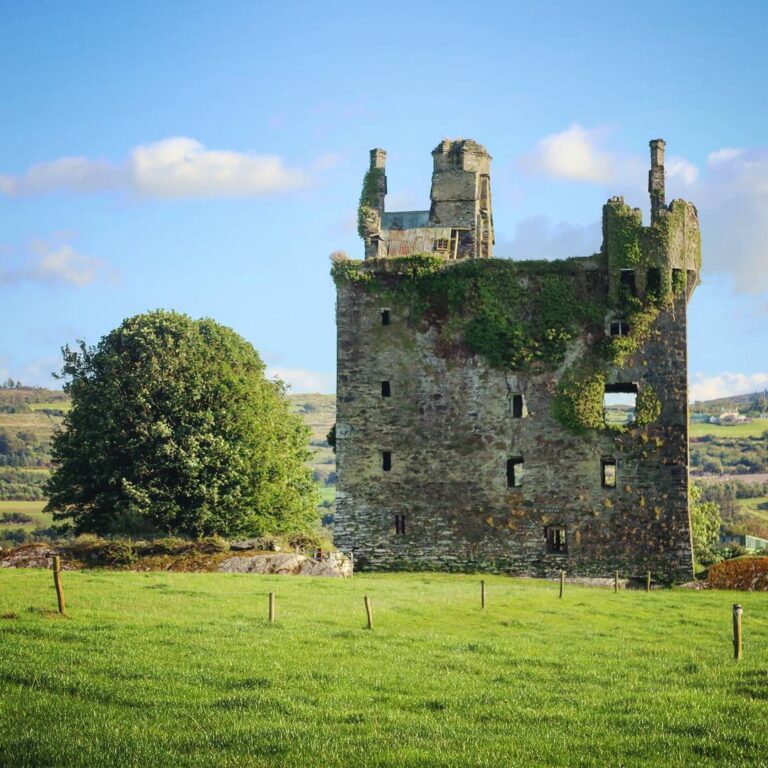
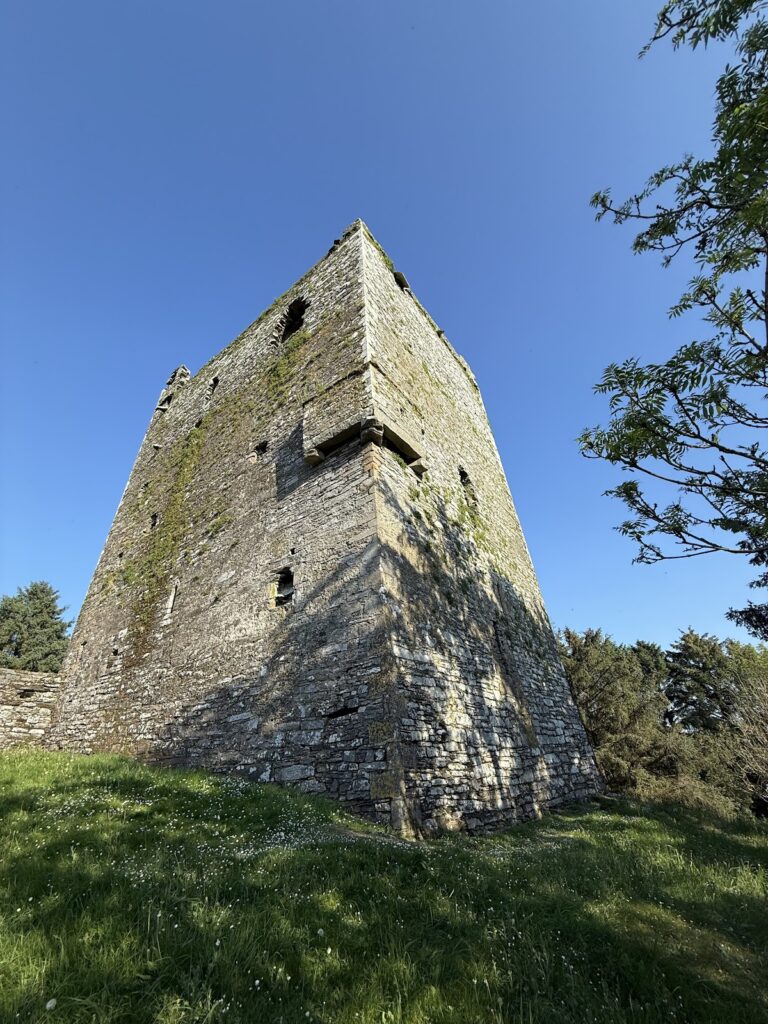
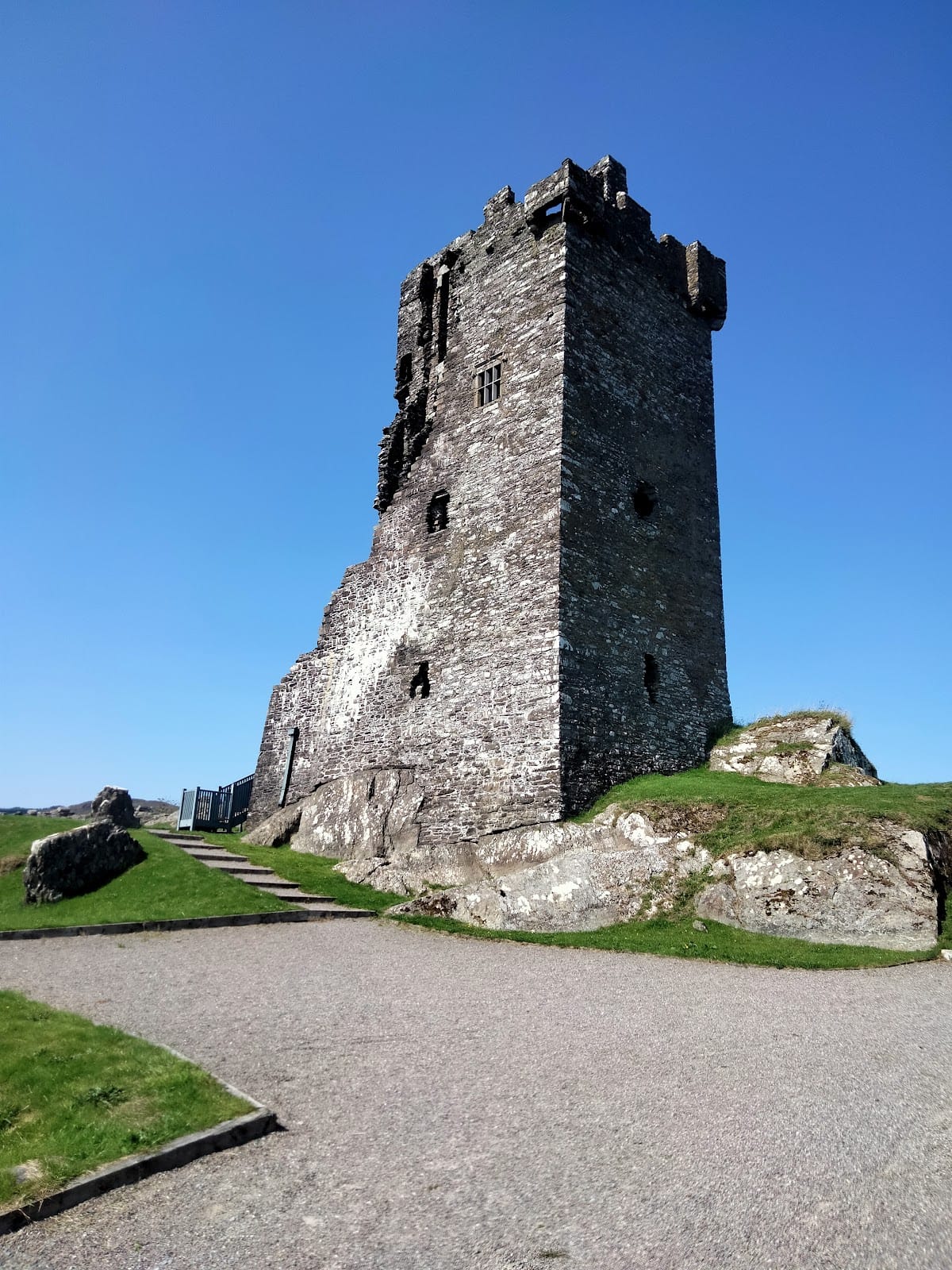
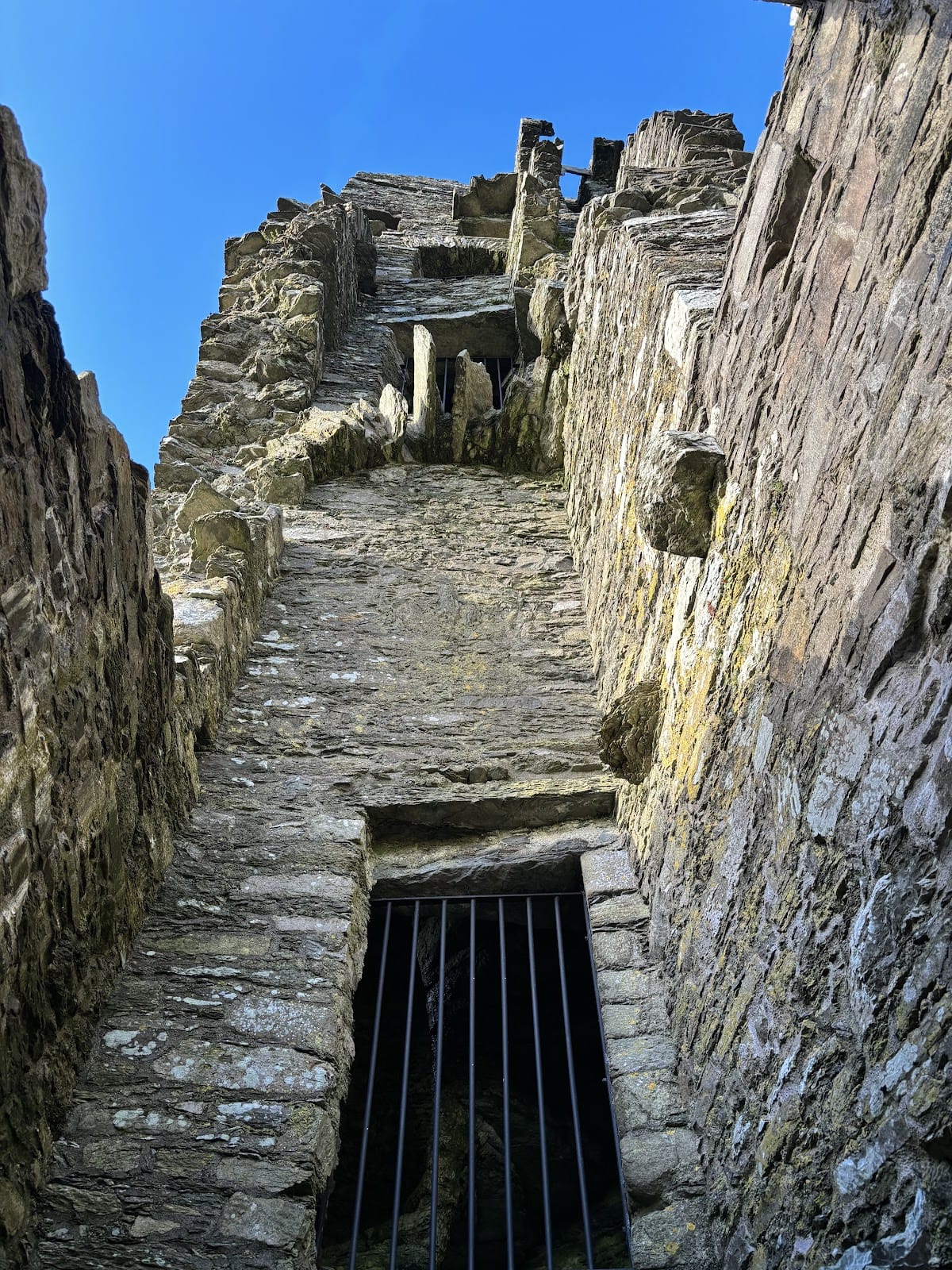
Castle Donovan is a medium-sized rubble-stone tower rising approximately 18 metres, or 60 feet, above a large rock outcrop beside the River Ilen. The rock itself forms the base of the ground floor. More than two-thirds of the tower survives, preserving the scale and robust masonry of the fortified residence.
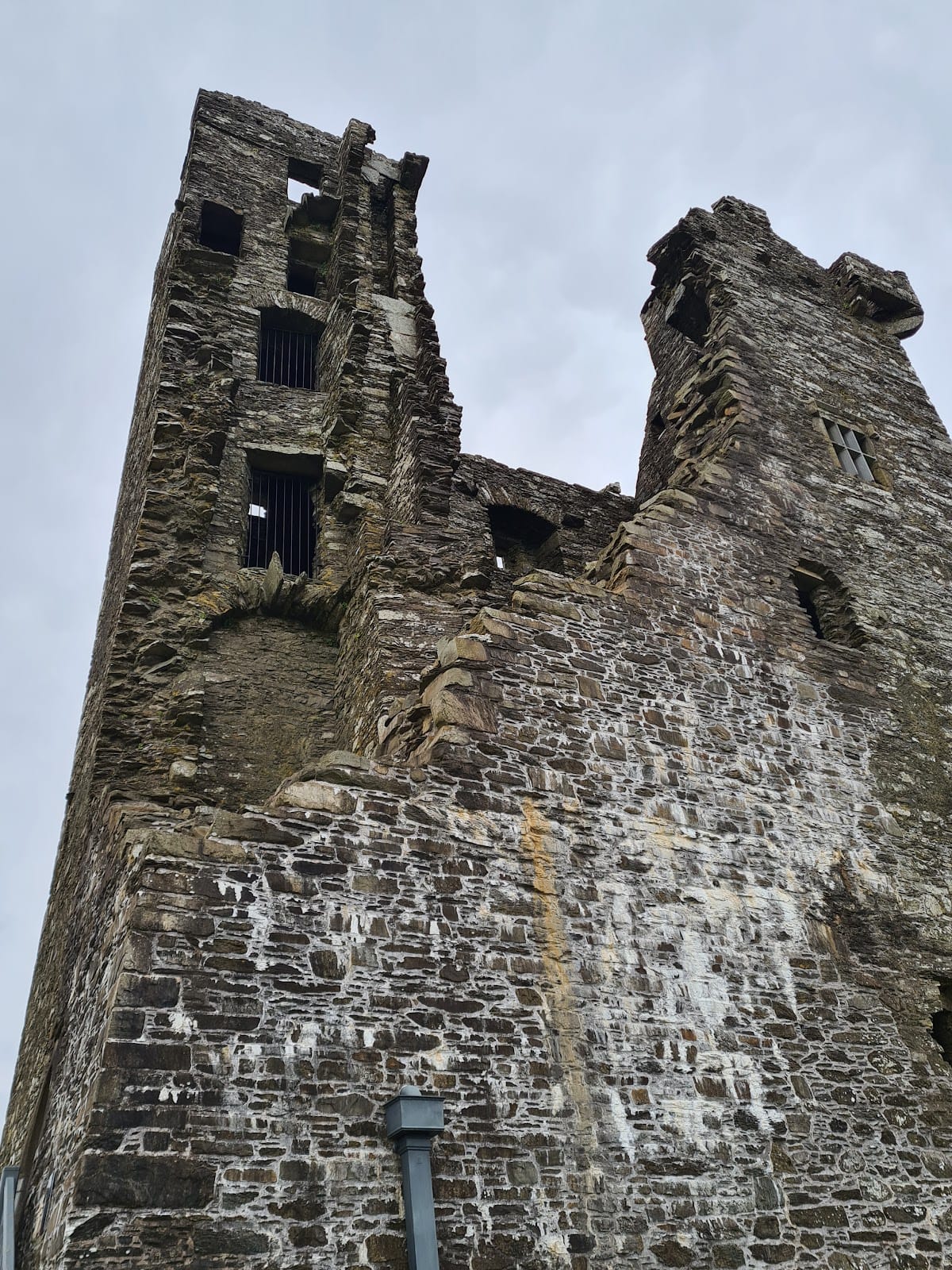
The explosion in the seventeenth century left a small gouge at the south-west corner and extensive cracking through the masonry. More than two centuries later, the west wall collapsed while the spiral staircase remained standing, and most of the south wall also fell. Conservation and stabilisation work have helped secure the surviving fabric.
Surviving Staircase and Landscape
The spiral staircase remains intact and rises toward the upper floors. Its survival provides a continuous vertical element within the damaged tower and helps convey how the building connected its different levels.
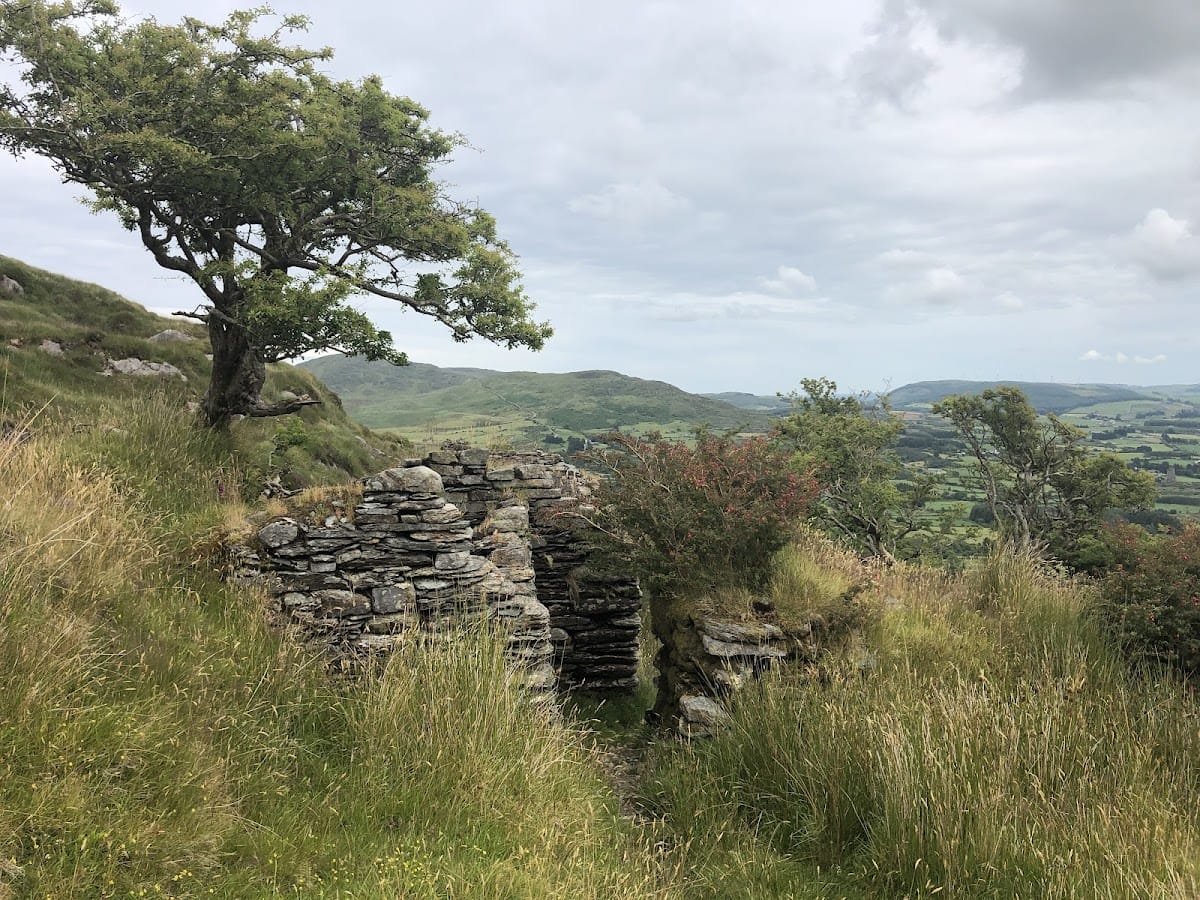
Hardy described the tower as a tall fortified building standing in the centre of the valley. Beyond it, he saw an extensive marshy meadow bounded by steep, rocky hills that he identified as Mullaugh-Nesha and neighbouring peaks. He characterised the surrounding district as treeless and covered with heath-like vegetation.