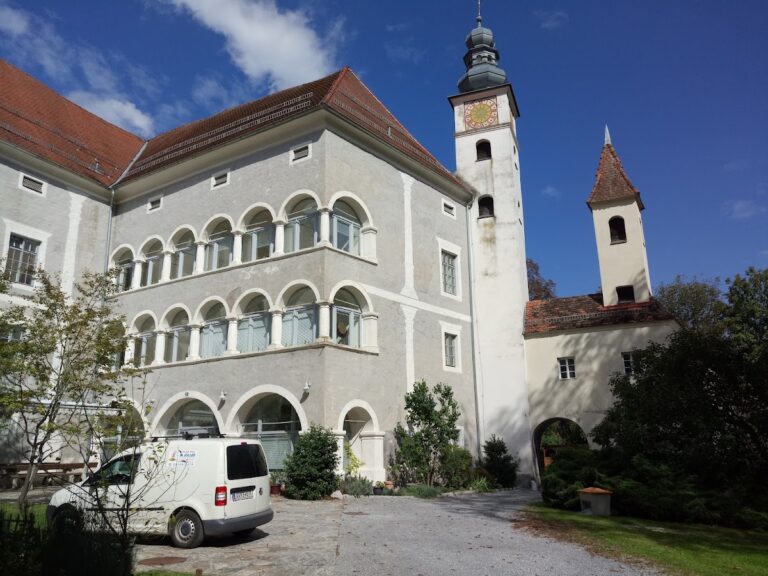
Burgruine Landskron: A Hilltop Castle Ruin in Austria


Site at a Glance
- Rating
- 4.6
- Popularity
- Low
- Country
- Austria
- Primary era
- Medieval
- External website
- Open
- Eras represented
- Medieval, Early Modern, Modern
- Civilizations
- Habsburg, Holy Roman Empire, Kingdom of Bohemia
- Site type
- Military
- Remains
- Castle
On this page14 sections
History
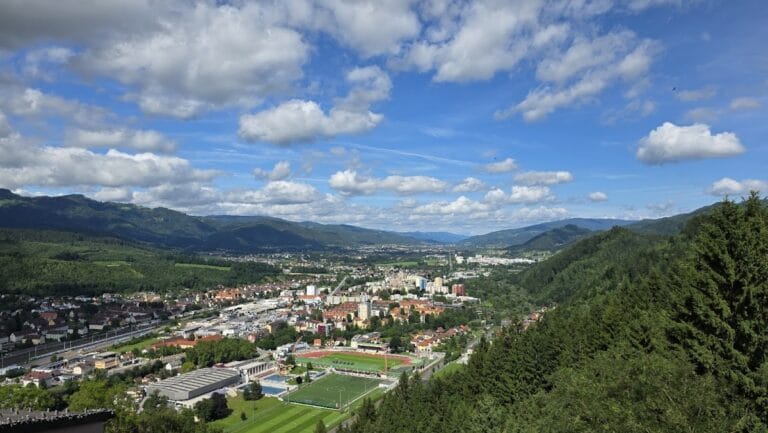
Burgruine Landskron is a hilltop castle ruin in Bruck an der Mur, Austria, whose origins lie in a medieval defensive installation on the Schlossberg. A site known as Castrum Prukke existed by 1263 during the Bohemian rule of King Ottokar II, when its elevated position helped secure the town and control routes through the area.
Medieval Origins and Expansion
The early installation was originally owned by the Eppensteins, a medieval ruling dynasty associated with Styria and neighboring southeastern Alpine territories. It was probably administered by Herbord von Füllenstein, who used the name Herbord von Bruck. He served as steward to Bishop Bruno of Olomouc, the royal governor, and probably also acted as captain of the town and castle.
Hermann von Krottendorf is recorded as castle captain in 1268, soon after Bruck was newly established. The fortress is believed to have been enlarged or developed to protect the new town. A possible earlier date around 1112 has also been proposed, although that claim rests on a document that can no longer be located.
Fief, Pledges, and Military Administration
Landskron became a princely fief of St. Lambrecht Abbey, a Benedictine monastery in Styria. Lesser nobles from the surrounding area usually administered it, including members of the Krottendorfer, Timmersdorfer, Preitenfurter, and Gaaler families. At various times, control was pledged as security to nobles or townsmen. The recipients included the Bruck citizen Hans Klemm the Younger in 1345, Ulrich Wasner in 1353, Lorenz Vogel until 1478, and Pankraz Kornmeß from 1505 to 1510. The town eventually received control of the property.
During the Hungarian War in 1460, an imperial castellan, an official responsible for a fortress and its defense, was appointed to maintain a force of six mounted men and twelve infantrymen. The castle acquired the name Landskron in 1461.
Town Ownership, Fire, and Later Fortification
Bruck purchased the Schlossberg from Emperor Ferdinand II, a Habsburg ruler of the Holy Roman Empire and the Austrian hereditary lands, on 20 November 1626. Financial difficulties led the town to sell the property on 30 April 1771 to the ironmaster Franz Xaver Fraydt von Fraydenegg-Monzello of Nechelheim Castle.
The entire Landskron complex burned in the devastating town fire of 1792, which destroyed 164 of Bruck’s 166 houses. Local inhabitants later reused the castle’s stones in rebuilding the town. In 1809, during the campaign of imperial-royal General Count Gyulay against the French, the Schlossberg was fortified with earthworks, firing trenches, and an underground chamber for gunpowder. French forces were approaching from Leoben.
At the town administration’s request, Emperor Francis permitted six captured French cannon to be installed in the structure known as the Stuckhütte in 1815. Two of these cannon survive. The castle walls, strengthened in 1642, were later largely dismantled. The main gate and fortification tower were also dismantled in 1934, although both were subsequently rebuilt. The remains are protected as a monument.
Twentieth-Century Changes
The surviving southern main-building remains housed a restaurant from 1907 and later served as a residence. They burned down in 1979. Toward the end of the Second World War, several protective tunnels were cut into the mountain to shelter the population, adding another military layer to the history of the Schlossberg.
Remains
Landskron survives as only a small part of the formerly extensive hilltop complex on Bruck’s Schlossberg. The remains combine fragments of the medieval castle, rebuilt elements of its entrance and tower, later defensive works, and features associated with military use in the nineteenth and twentieth centuries.
Castle Structures
Entrance Gate and Fortification Wall
The entrance gate was connected with a fortification wall that formed part of the castle’s defensive boundary. The main gate was dismantled in 1934 and later rebuilt. The surviving remains therefore include both the position of the historic entrance and a later reconstruction of its principal element.
Clock Tower
The former fortification tower now serves as the clock tower. Like the main gate, it was dismantled in 1934 and subsequently rebuilt, preserving the presence of a tower within the surviving castle complex.
Southern Main Building
The remains of the southern main building once accommodated a restaurant and later a residence. The structure burned down in 1979, leaving the building’s history as part of the present ruin.
Military Features
Ramparts, Trenches, and Powder Magazine
The defensive works created in 1809 included earthen ramparts, firing trenches, and an underground powder magazine, a secure chamber for storing gunpowder and other explosives. These features reflect the Schlossberg’s renewed military use during the campaign against the French.
Stuckhütte and French Cannon
The Stuckhütte held six captured French cannon installed in 1815 by imperial permission. Two of the cannon remain, preserving a material link to the post-war defensive arrangements on the Schlossberg.
Protective Tunnels
Several tunnels were cut into the mountain near the end of the Second World War to shelter the population. They form part of the later underground features associated with the site.
The ruin is illuminated at night, and the lighting changes color according to temperature.
Nearby sites