Burgruine Kammerstein: A Medieval Hill Castle near Perchtoldsdorf, Austria
Visitor Information
Google Rating: 4.3
Popularity: Very Low
Official Website: www.burgenseite.com
Country: Austria
Civilization: Medieval European
Site type: Military
Remains: Castle
History
Burgruine Kammerstein is a ruined hill castle situated near the municipality of Perchtoldsdorf in present-day Austria. It was established during the High Middle Ages by members of the medieval Austrian nobility.
The castle’s origins date back to roughly 1240–1250, when Otto II of Perchtoldsdorf, an important official known as the Kämmerer or chamberlain of Austria, oversaw its construction. This position likely inspired the castle’s original name, “Chemerstain.” The creation of Kammerstein occurred following the destruction of the original Perchtoldsdorf castle, which had been destroyed during uprisings by rebellious nobles under Otto I. After regaining favor with Duke Frederick II of the Babenberg dynasty, Otto II fortified his family’s position by building Kammerstein. Otto II eventually died in the nearby town of Lilienfeld and was interred in the abbey there.
The castle’s strategic relevance grew considerably during the Austrian Interregnum, a time of political uncertainty after the death of Emperor Frederick II around 1250. During this period, various factions vied for control, heightening the importance of well-defended residences such as Kammerstein. After 1273, when the Habsburg ruler Rudolf I and his son Albert I began redistributing feudal estates, noble resistance intensified. Otto III, who inherited Kammerstein as the son of Otto II, joined these rebellions. Following the destruction of the main Perchtoldsdorf fortress, Otto III sought refuge at Kammerstein. However, his enemies used a deceptive tactic: luring him away to Vienna, which left Kammerstein undefended and easy to seize. From the city, Otto III is said to have witnessed as his stronghold was set ablaze. Afterward, he was captured and sentenced to lifelong imprisonment, marking the end of Kammerstein’s active military use.
Remains
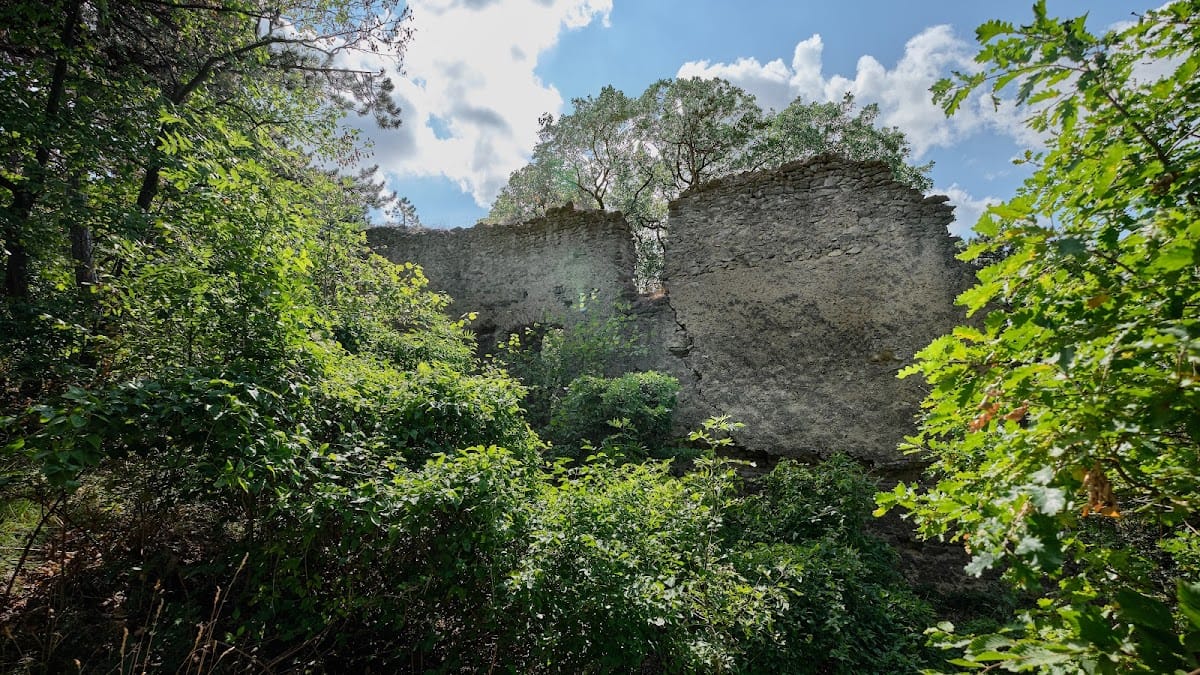
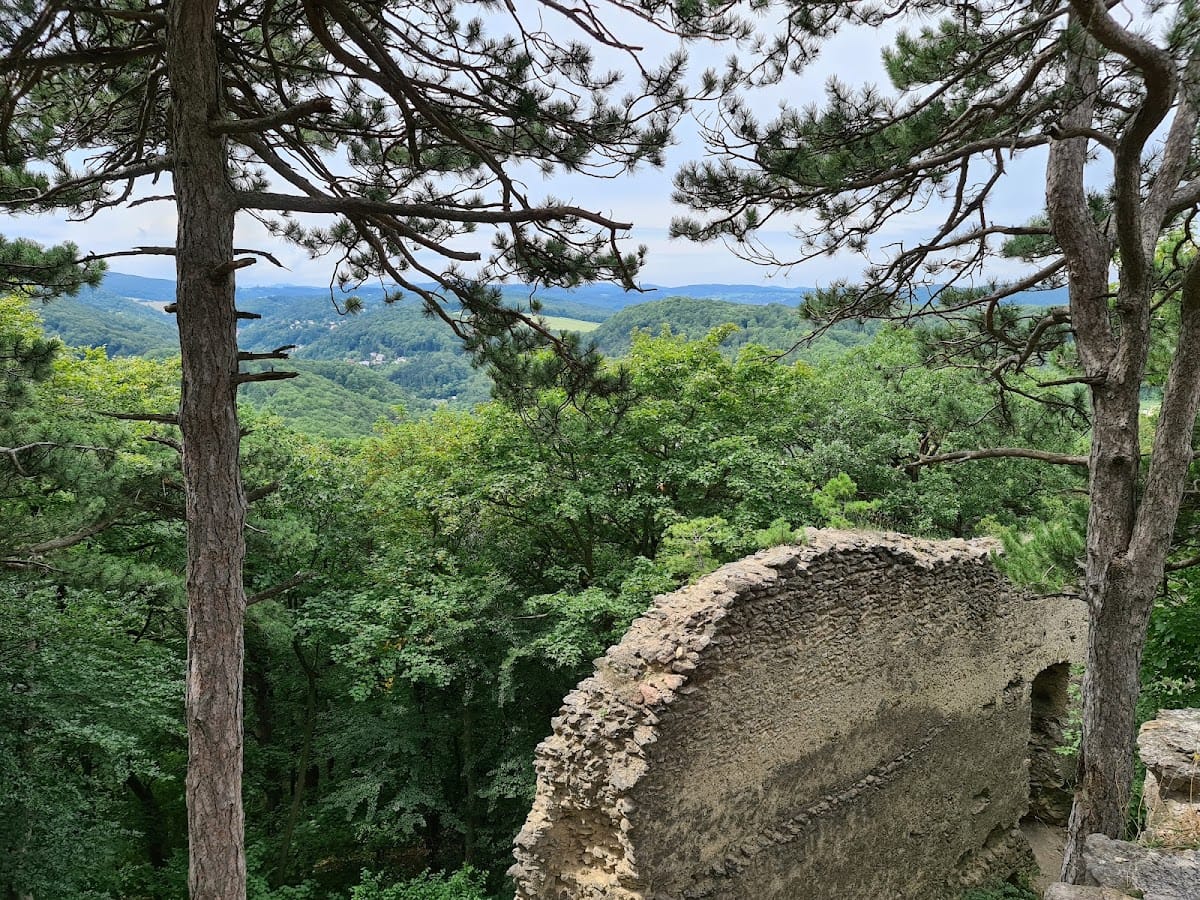
The site of Burgruine Kammerstein reveals the layout of a compact hilltop castle covering an area approximately 40 meters long and 25 meters wide. Defensive walls, some built up to 15 meters high, enclosed the complex. Its position on the hill benefits from natural defenses, with steep slopes protecting three sides. The castle was accessible only from the west, where a narrow hanging bridge about one meter wide once provided entry, controlling and restricting access.
Key living quarters occupied the southeastern side within the curtain wall, where a four-story half-timbered residential building, known as a palas, was attached. This structure provided the main domestic space for the castle’s inhabitants, rising prominently within the defensive enclosure.
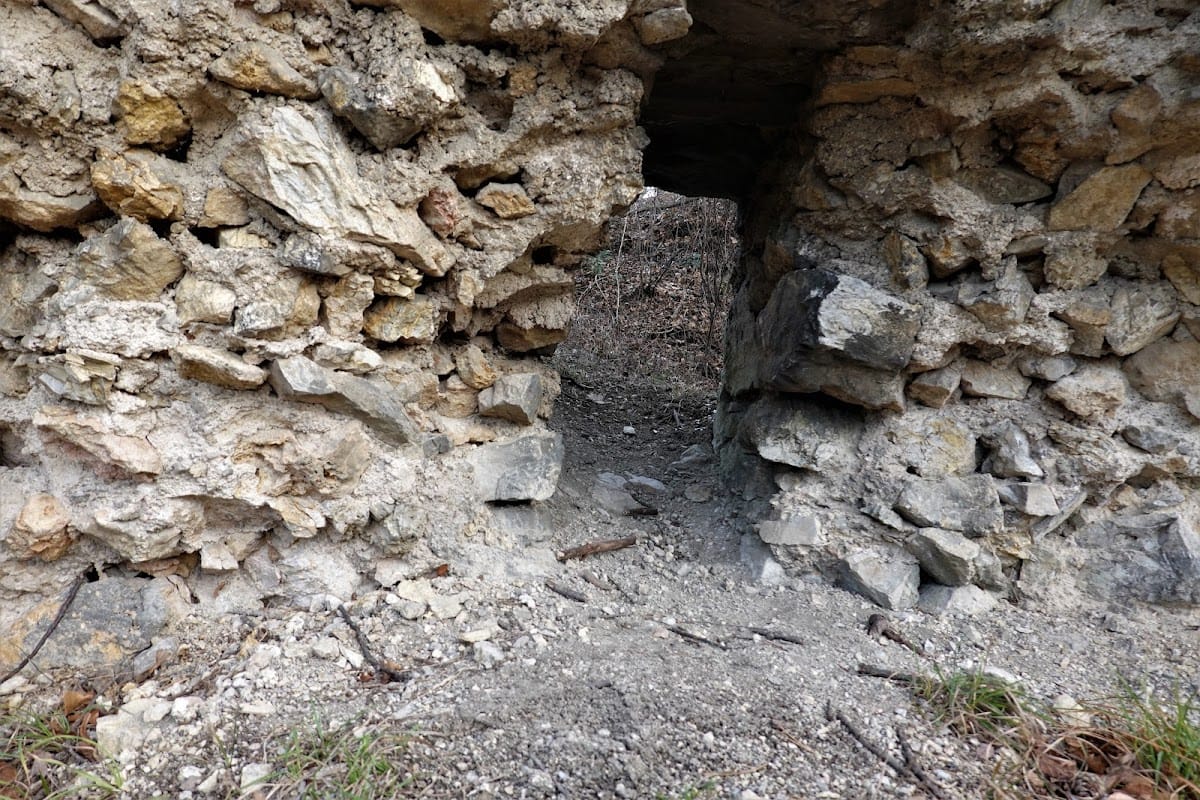
At the highest point of the castle stood a pentagonal bergfried, the primary tower or keep, which served as a last refuge and stronghold. This tower rose through four floors, constructed with walls up to three meters thick to resist attack. Access to the bergfried was internal only and achieved by ladders, emphasizing its defensive role. Today, only certain sections survive, including parts of the surrounding ring wall and a segment of masonry connected to the bergfried’s base. These remnants allow observers to understand the castle’s original layout and defensive design but stand as partial vestiges of its former structure.
Nearby sites