Franzensburg: A Historicist Castle and Habsburg Museum in Austria
Site at a Glance
- Rating
- 4.7
- Popularity
- Medium
- Country
- Austria
- Primary era
- Modern
- External website
- Open
- Eras represented
- Medieval, Modern
- Civilizations
- Habsburg, Holy Roman Empire
- Site type
- Domestic
- Remains
- Palace
On this page12 sections
History
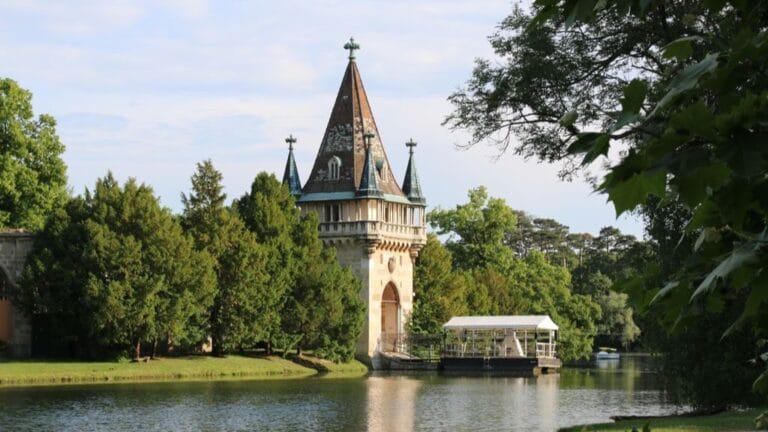
Franzensburg is a palace-and-castle complex in Laxenburg, Austria, built between 1801 and 1836 in the style of a medieval castle. Emperor Franz II commissioned the court architect Johann Ferdinand Hetzendorf von Hohenberg to create the complex on an artificial island in a specially excavated pond within Laxenburg park. Named after Franz II, the last Holy Roman Emperor and later the first Emperor of Austria as Franz I, it was intended to become the centre of a group of existing and newly built residences known as the Laxenburg Castles.
Foundation and construction
From the beginning, Franzensburg had two purposes. It was planned as a luxurious residence and as a museum for works of art belonging to the Habsburg dynasty, which ruled the Austrian lands and, for much of the period represented by the museum, the Austro-Hungarian Empire. Hetzendorf von Hohenberg divided the design into a residential section called the “knight’s castle” and a museum wing known as the Knappenburg.
The use of medieval architectural forms made Franzensburg an early example of Historicism, a nineteenth-century approach that deliberately revived earlier historical styles. Its construction also coincided with the beginnings of high-quality brick production south of Vienna. Concerned about the cost of bricks, Franz II purchased the brickworks at Vösendorf together with Vösendorf Castle, which became an administrative and production centre for the enterprise.
War, completion, and public ownership
Construction stopped in 1805 after the Austrian army was defeated during the Napoleonic Wars, the conflicts associated with Napoleon’s attempts to expand French power across Europe. Work resumed after the anti-Napoleonic coalition defeated France and continued for more than two decades, ending in 1836. Franz II died shortly before the complex was completed.
The castle’s imperial purpose changed after the First World War. In 1918, following Austria’s defeat and the collapse of the Austro-Hungarian Empire, Habsburg property was confiscated and members of the deposed dynasty were barred from entering the Austrian Republic. Franzensburg became national property and thereafter operated as a publicly accessible museum complex.
Museum and park
The museum reopened in 2003 after restoration, with Otto von Habsburg taking part in the ceremony. Its collections focus principally on the Habsburgs in Austria-Hungary and complement related holdings at Bad Ischl, Schönbrunn Palace, and Gödöllő. The complex holds the Austrian Museum Quality Seal, a national accreditation recognizing professional museum standards and particular cultural significance.
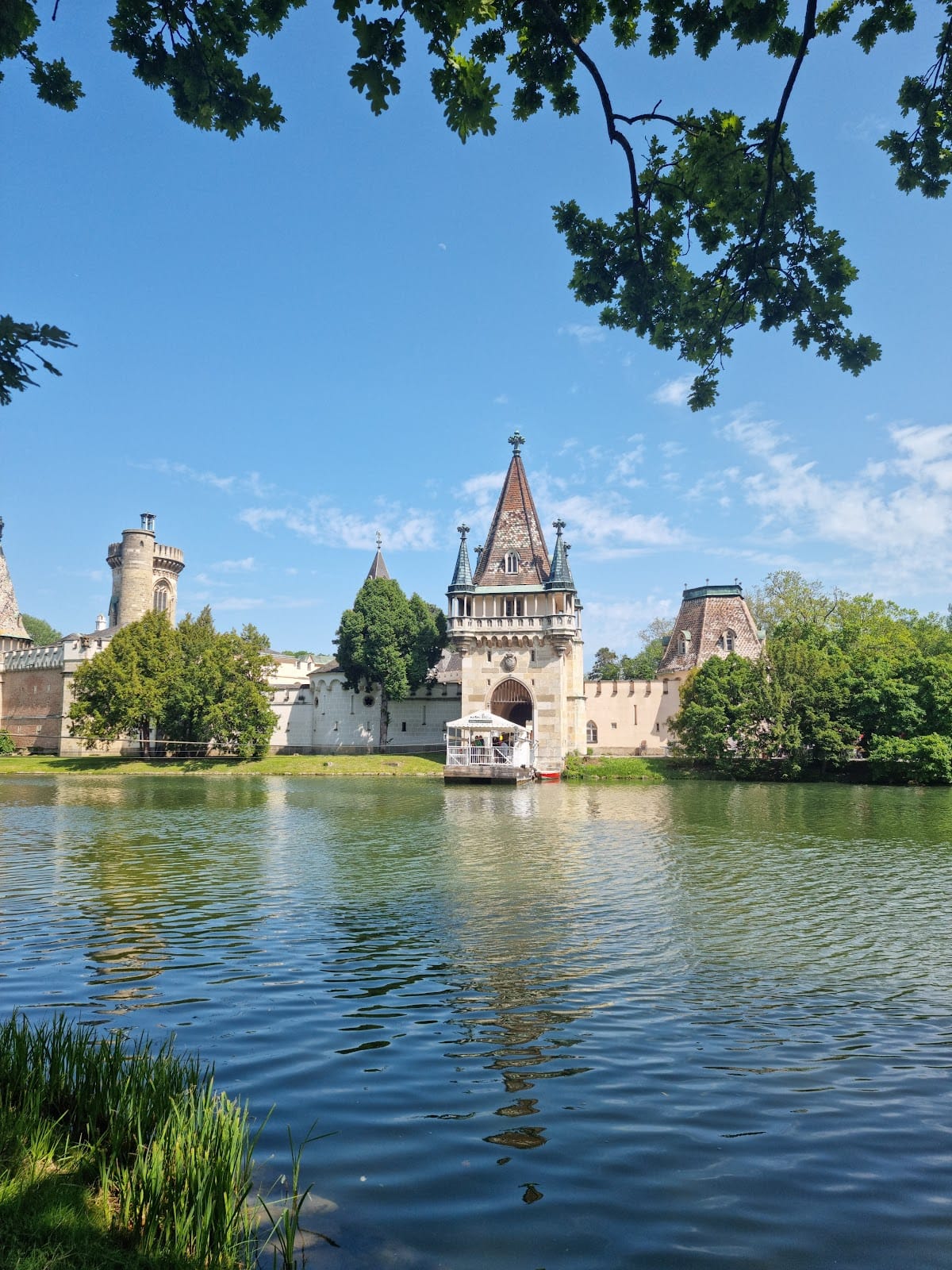
Franzensburg was conceived within a park of roughly 250 hectares. The park had been laid out in the late eighteenth century, before a specific plan for the castle existed, in the manner of an English landscape garden. A ferry to the island was established in 1806. The crossing continued as a licensed shipping service, while a wooden bridge was used in winter and a permanent stone bridge provided access from the opposite side throughout the year.
Remains
Castle form and medieval elements
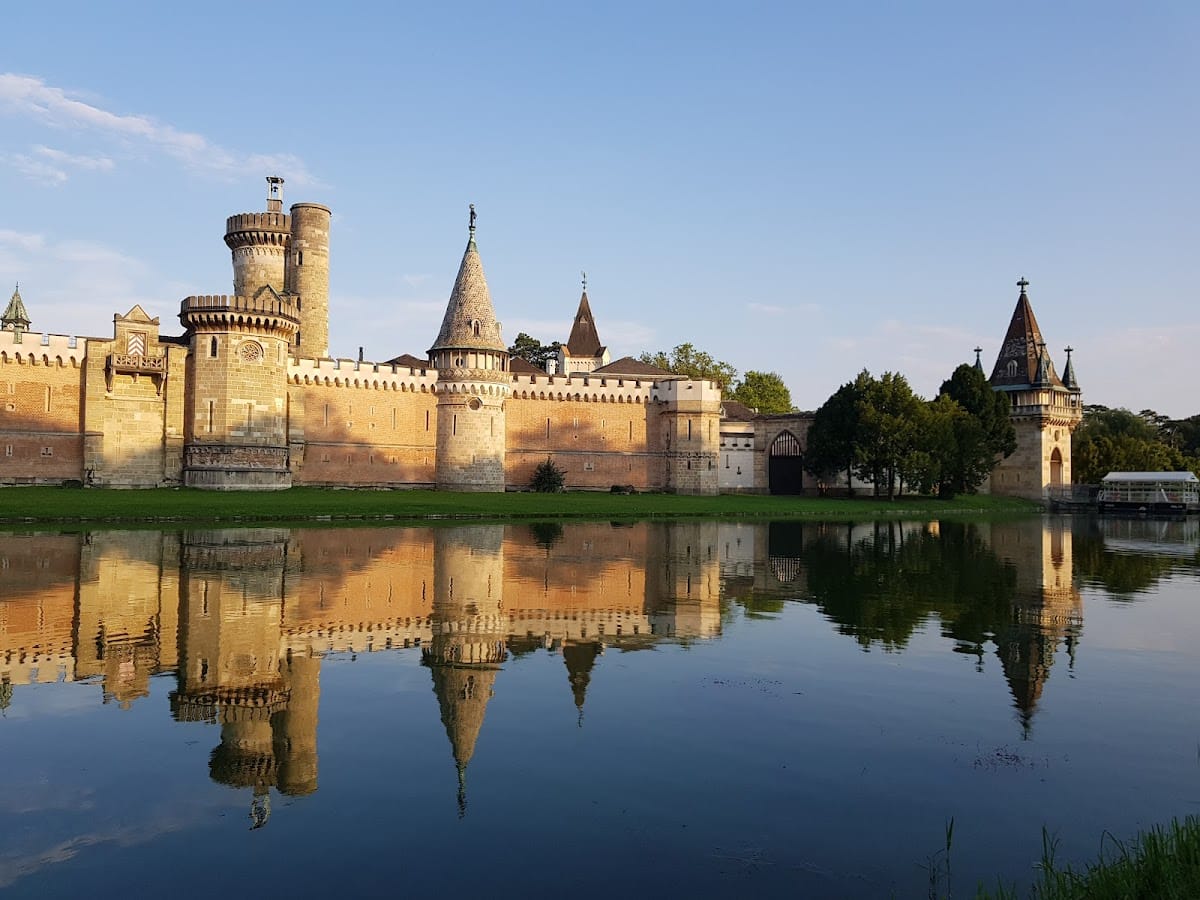
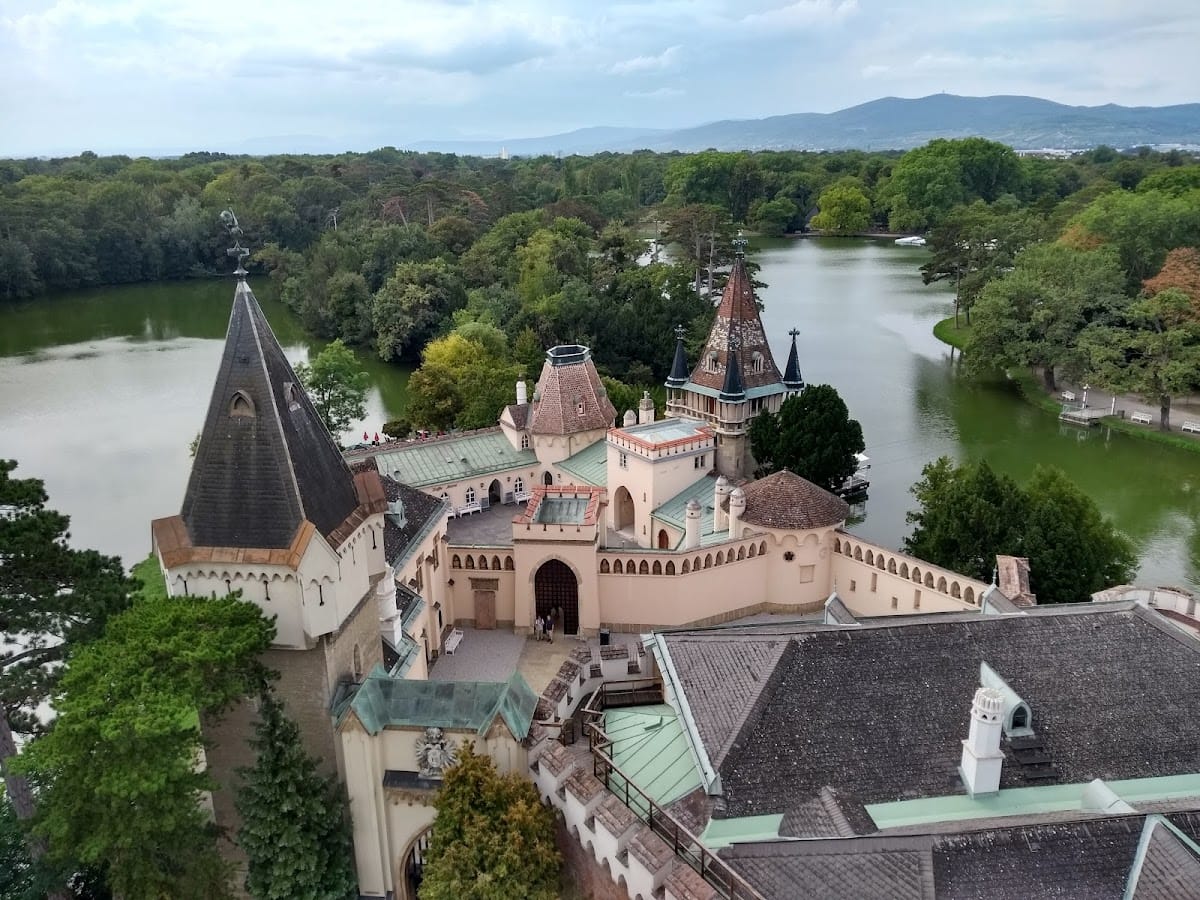
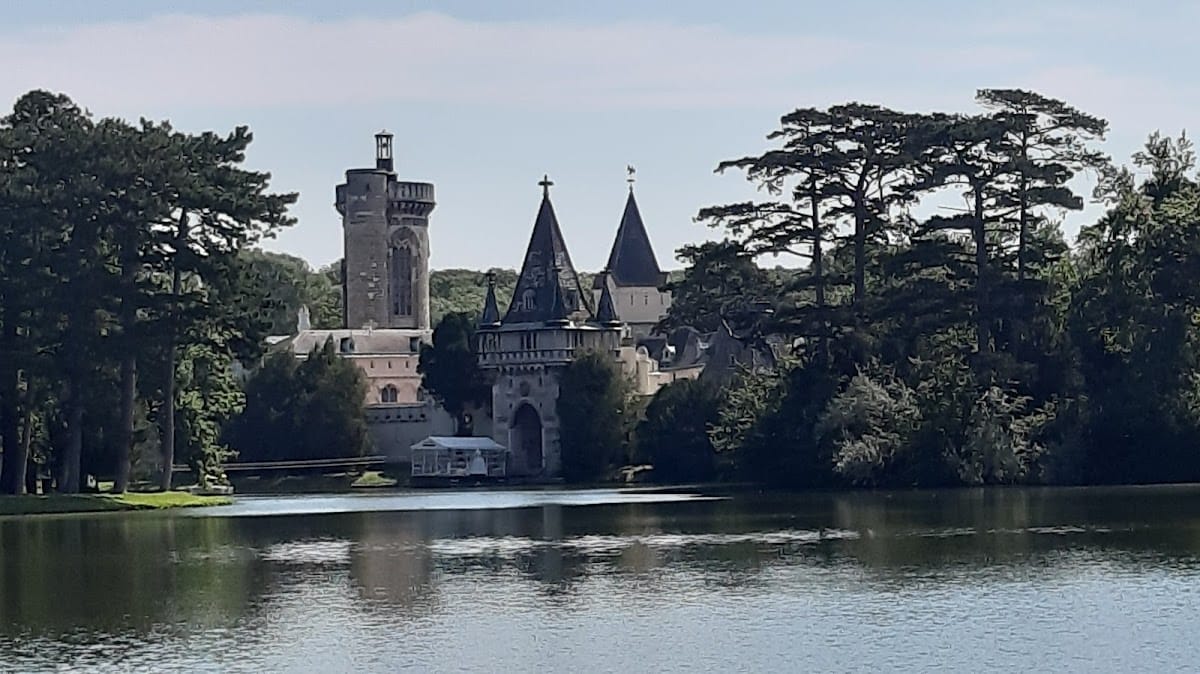
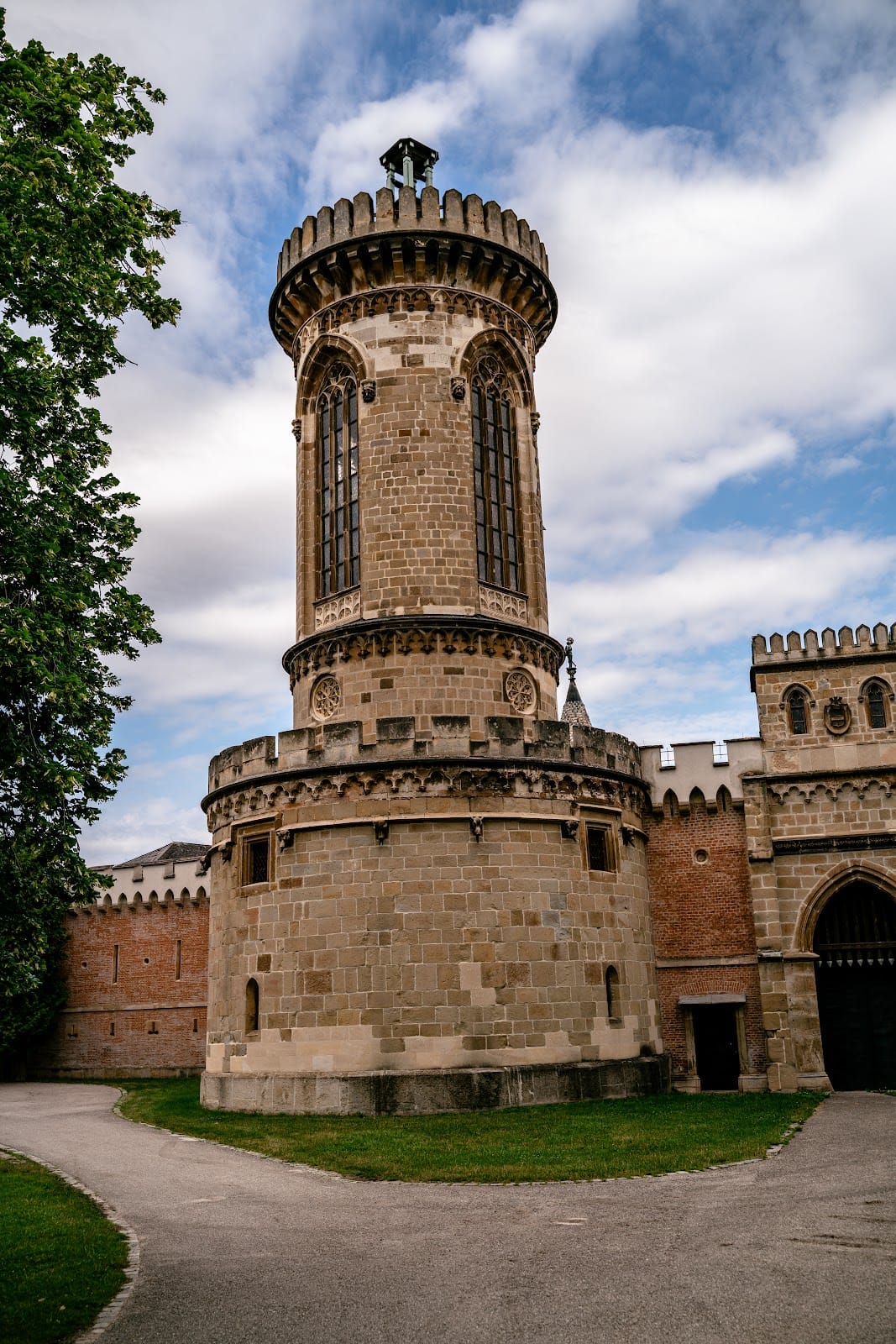
Franzensburg is a water castle built from stone and brick on an artificial island in the park pond. Several buildings of different heights are connected by passageways and galleries. Viewed from the west, the complex takes the form of a medieval fortress, with a high crenellated wall and defensive towers. A tall observation tower adjoins the eastern side, giving the group a varied outline around the island.
The complex incorporates substantial fragments from medieval buildings. Parts of the parish church at Heiligenkreuz, demolished during the Josephinist period of reforms associated with Emperor Joseph II, were reused at Franzensburg. Elements connected with the Capella Speciosa at Klosterneuburg were also incorporated, and the medieval chapel was reconstructed within the castle. The Capella Speciosa is associated with the early development of Gothic-influenced architecture in the Danube region.
Historic rooms and collections
Armoury Hall
Most rooms serve as exhibition spaces for the extensive Habsburg collection. In the Armoury Hall, a colourful ceiling carries heraldic shields representing 44 Austrian lands and provinces. The arrangement makes the ceiling itself part of the room’s historical display.
Habsburg Hall
The Habsburg Hall contains half of the imperial statues created by the sculptor Paul Strudel. The other half is preserved in the former Imperial Library in Vienna, connecting the room’s sculptural group with another major Habsburg collection.
Lorraine Hall
The Lorraine Hall presents portraits of the emperors who ruled after Franz II. They are arranged around a portrait of the castle’s founder by Leopold Kupelwieser. The room also contains works by Ferdinand Georg Waldmüller and Friedrich von Amerling.
Louise Room
The Louise Room has a painted ceiling and two finely decorated door panels. Its doors from Rappottenstein Castle date to around 1600, adding earlier architectural elements to the nineteenth-century complex.
Park features
The surrounding landscape forms part of the physical setting of Franzensburg. Woods, meadows, and several canals extend through the park, alongside a tournament ground and a group of built features. These include the Temple of Concordia, the Knights’ Column, a marble bust of the emperor, the Lusthaus, and other structures associated with the Laxenburg park.
Nearby sites