Mödling Castle Ruins (Burgruine Mödling): A Medieval Hilltop Castle in Austria
Site at a Glance
- Rating
- 4.7
- Popularity
- Low
- Country
- Austria
- Primary era
- Medieval
- Eras represented
- Medieval
- Civilizations
- Holy Roman Empire
- Site type
- Military
- Remains
- Castle
On this page10 sections
History
Mödling Castle Ruins, known locally as Burgruine Mödling, are the remains of a medieval hilltop castle in Austria. The castle’s origins are uncertain, but construction is documented from 1148 in the Romanesque period, when it was being developed as a possible widow’s residence for Theodora Komnene, the wife of Heinrich II and niece of the Byzantine emperor Manuel I.
Origins and the Babenberg residence
A castle in Mödling appears in a record from 1002, although that reference probably concerned another fortification near the present Church of St. Othmar. The hilltop castle may have originated as early as the beginning of the eleventh century. By 1177, it had become the seat of a collateral branch of the Babenbergs, the medieval dynasty that ruled Austria before the Habsburgs.
After Heinrich II died in 1177, his elder son Leopold V became Duke of Austria. His younger son, Heinrich the Elder of Mödling, received territory that included Mödling and moved into the developing castle. Heinrich used the title Duke of Mödling, although Mödling was never an independent duchy. During the twelfth century, the castle was reportedly among the largest in Austria.
A court associated with poetry
The castle’s lords were comparatively little involved in warfare and showed greater interest in the arts. Local tradition places the minnesinger Walther von der Vogelweide, a medieval German-speaking court poet and lyric performer, at Mödling in 1219, but this visit is undocumented. The passage concerning Heinrich the Elder in Walther’s Drei-Fürsten-Preis refers instead to Leopold VI’s court in Vienna. Neidhart von Reuental, however, explicitly mentioned staying at Mödling after losing his Bavarian fief, a territorial holding granted in return for service, and moving to Austria around 1230.
Habsburg administration and destruction
Under later Habsburg ownership, castellans or burgraves, officials responsible for administering a castle, were repeatedly appointed to manage the stronghold. Hungarian rulers temporarily seized it in 1477, under Matthias Corvinus, and again in 1483.
Several fires damaged the castle. It was affected during the First Ottoman Siege of Vienna in 1529, the Ottoman campaign against the Habsburg capital. After rebuilding, a lightning-caused fire destroyed it in 1556, and the site fell into ruin. Hungarian soldiers damaged the ruins again in 1608. Bartholomeus Khevenhüller expelled them and received the castle as a fief in 1613.
The Ottoman invasion of 1683 left the castle definitively ruinous. Local residents then used the remains as a source of stone, and blocks were dismantled and sold during the eighteenth century. After Franz Christian II Khevenhüller died, the lordship passed by sale to Johann von Wassenberg. Wassenberg’s grandson sold it to Baron Josef von Penkler in 1777, and Penkler sold it to Prince Stanislaus Poniatowski in 1799.
Nineteenth-century reconstruction and archaeological work
In 1808, Prince Johann I of Liechtenstein acquired the ruins and erected an ahistorical castle reconstruction as part of the Liechtenstein landscape park. Revolutionary unrest in 1848 destroyed this artificial castle, after which Liechtenstein transferred the site to the city of Mödling.
Between 1965 and 1970, the Mödling Museum Association excavated and secured surviving parts of the original Romanesque castle from the twelfth and thirteenth centuries. The city later renovated the ruins and established an interpretive route with explanatory panels. The site is recognized as a cultural-heritage monument.
Remains
Setting and defensive outlook
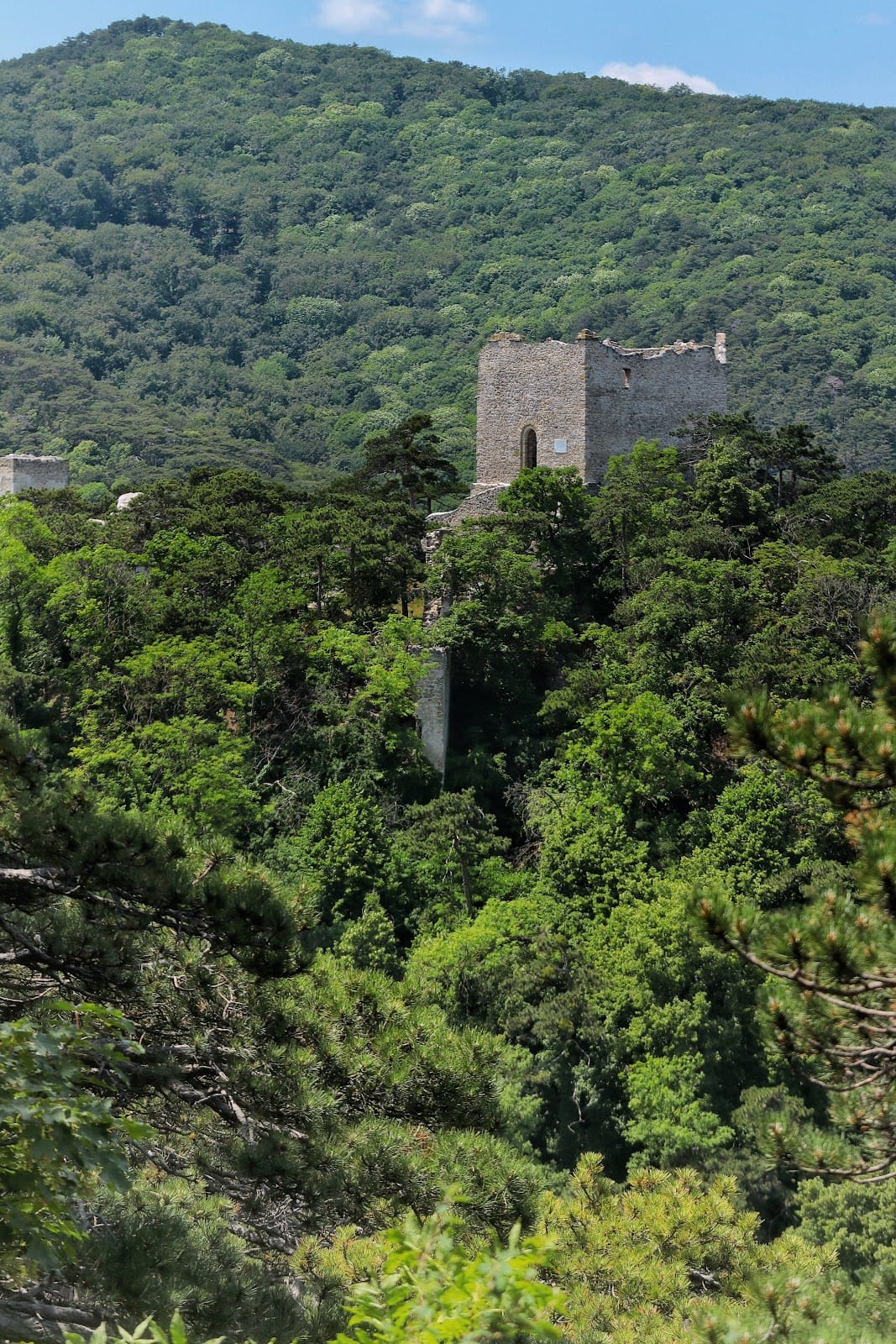
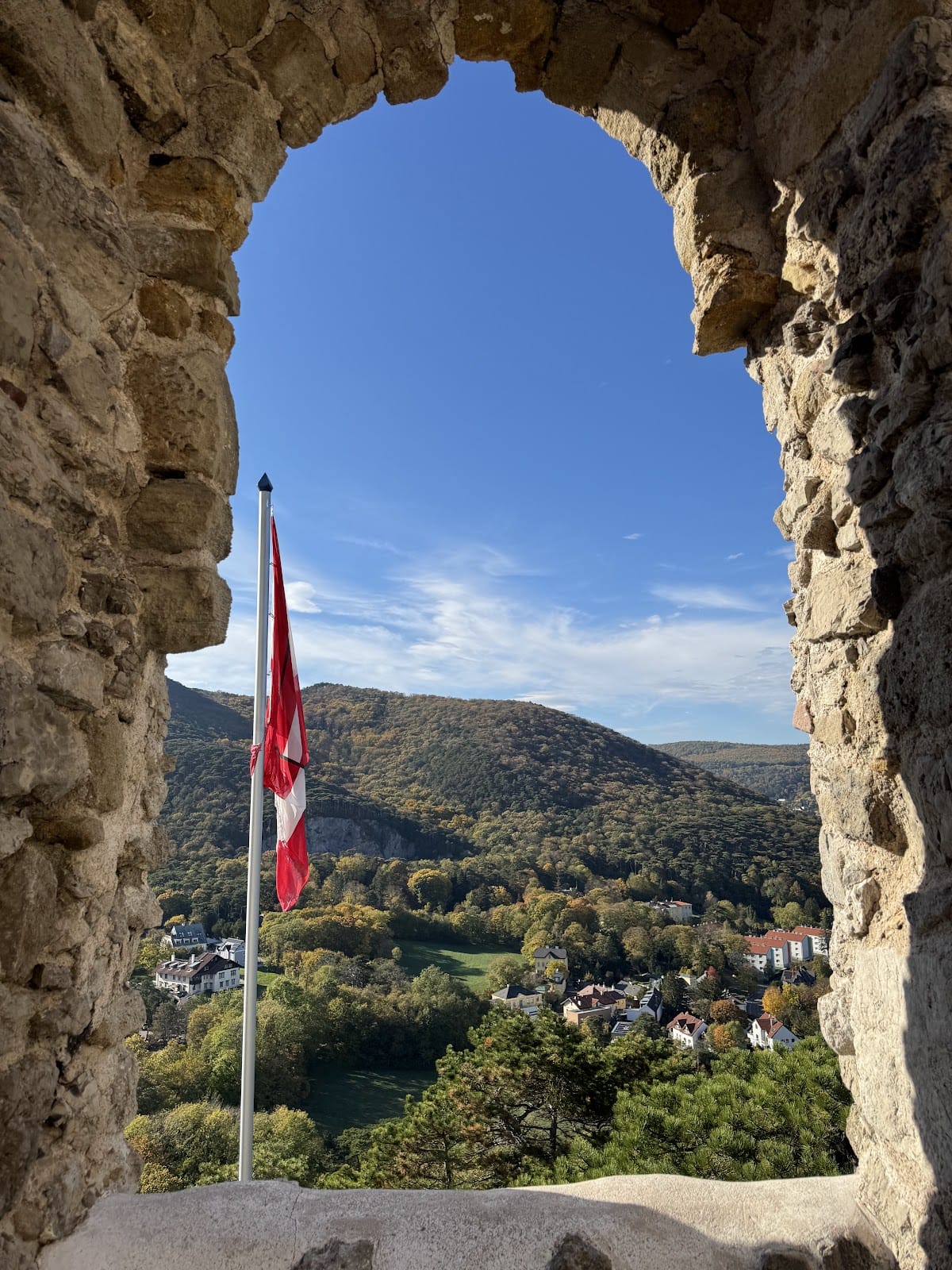
The ruins occupy rocky heights above the Mödlingbach valley, about one kilometre from the eastern edge of the Vienna Woods and within Föhrenberge Nature Park. The rocky part of the valley below is called Klausen, while the Mödlingbach runs approximately 100 metres north of the castle. Mödling’s Vorderbrühl district extends farther west toward the Vienna Woods. The castle and its forward observation posts looked east toward Mödling and approaching dangers, and west across the valley toward nearby hills, including the Kleiner Anninger and the site of the present Husarentempel.
Surviving medieval fabric
Romanesque castle remains
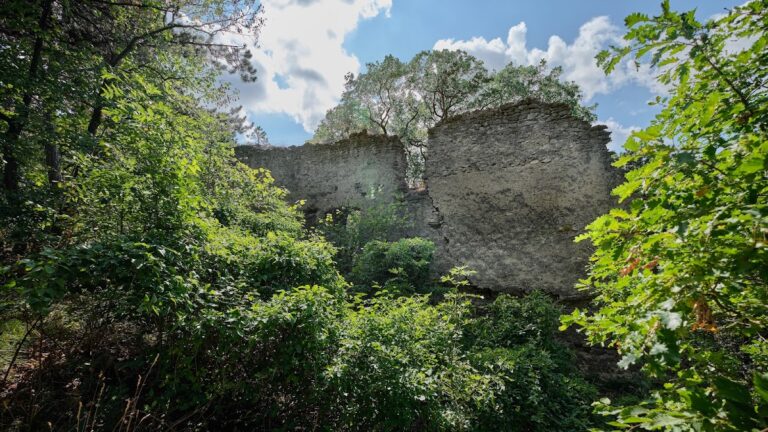
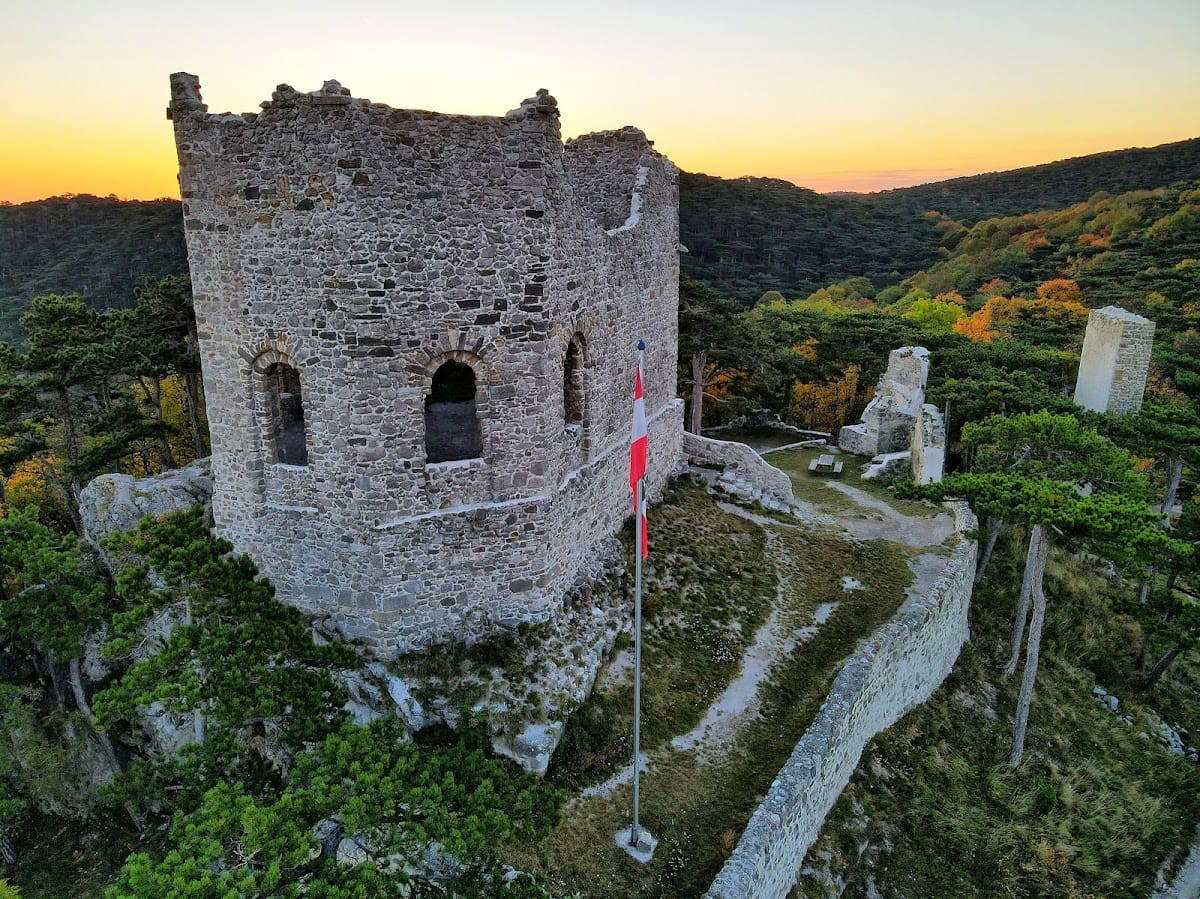
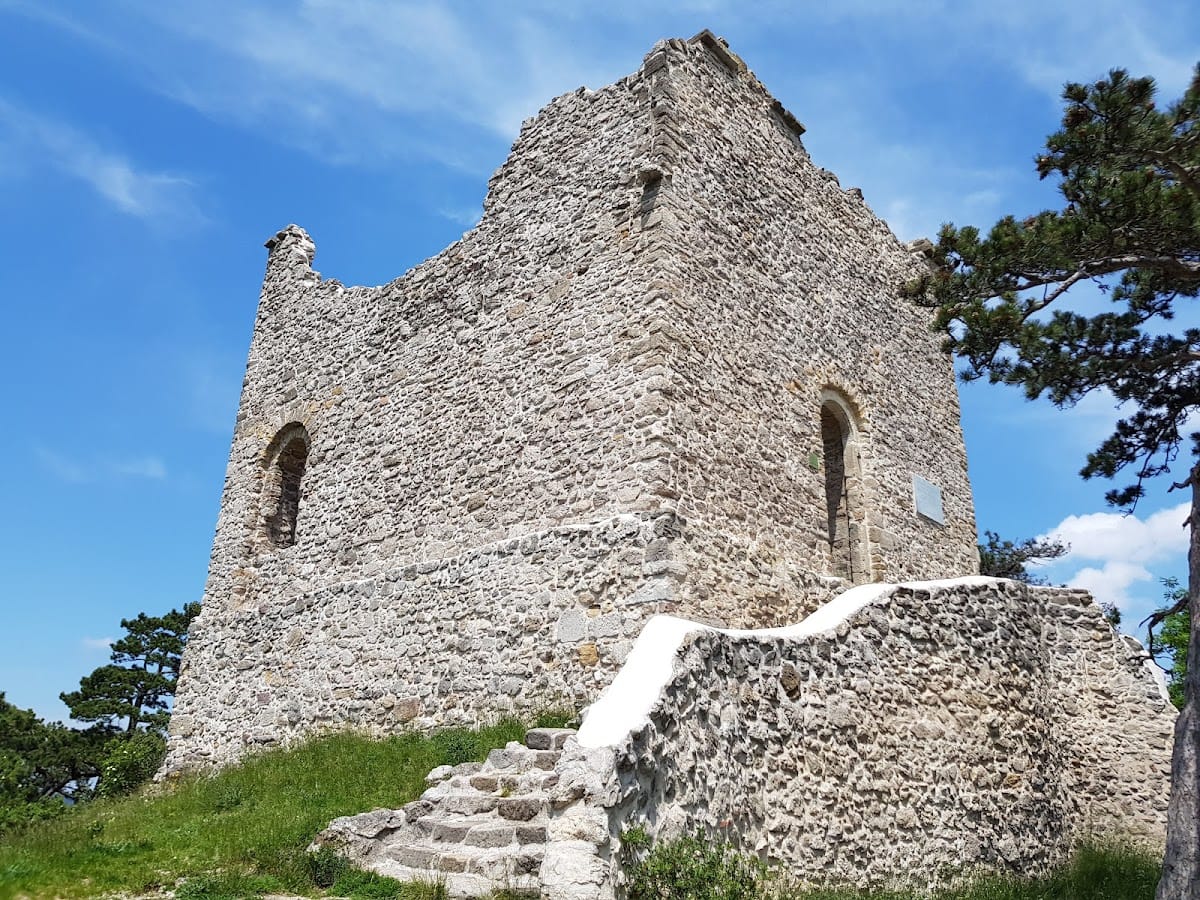
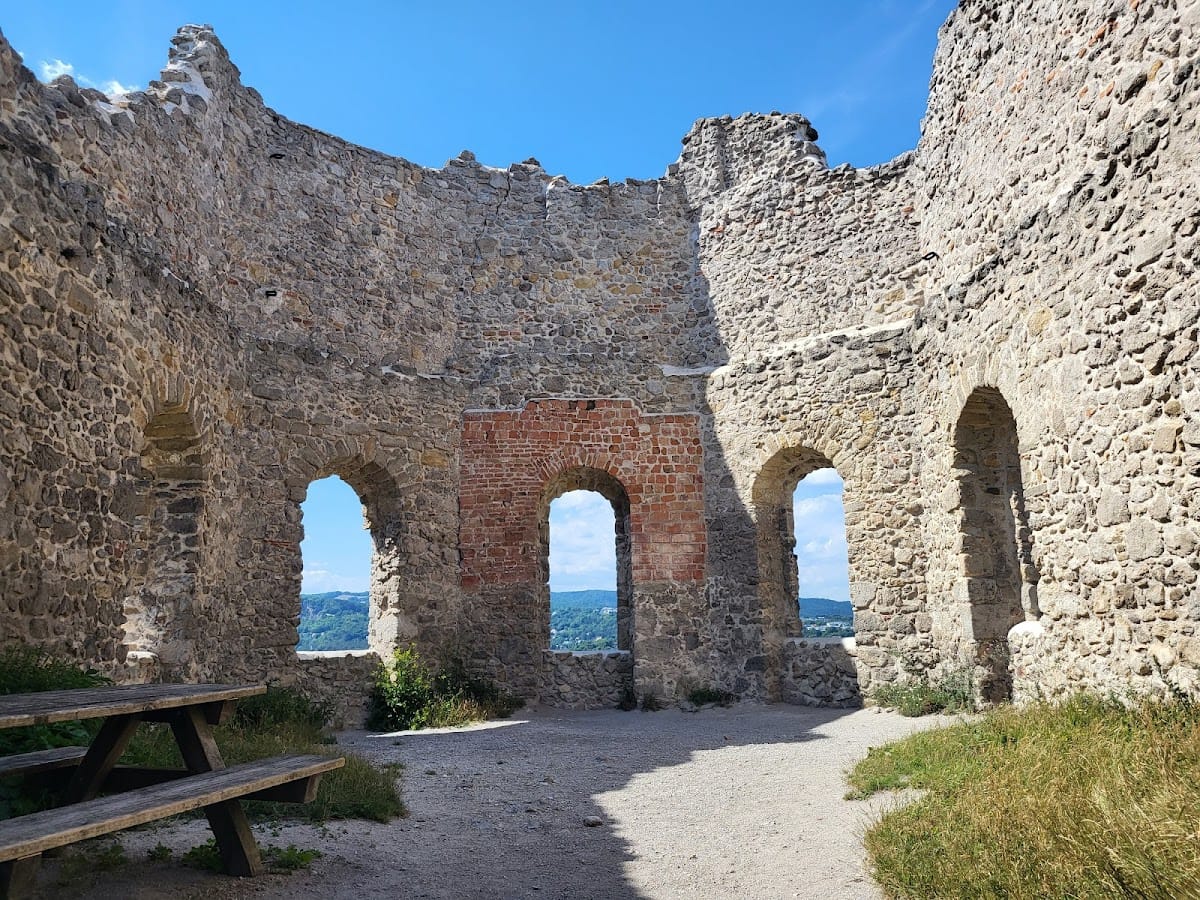
The visible remains consist of excavated and consolidated Romanesque building fabric from the twelfth and thirteenth centuries. The surviving structures belong to the original medieval castle, while the later artificial reconstruction erected in 1808 was destroyed in 1848. Interpretive panels around the ruins provide explanatory texts and include a reconstructed representation of the castle as it appeared when intact.
Chapel of Saint Pancratius
The castle included a chapel dedicated to Saint Pancratius. Its dedication forms part of the surviving site’s religious history, alongside the excavated and secured remains of the medieval complex.