Burgruine Berneck: A Medieval Hilltop Fortress in Germany

Visitor Information
Google Rating: 4.2
Popularity: Low
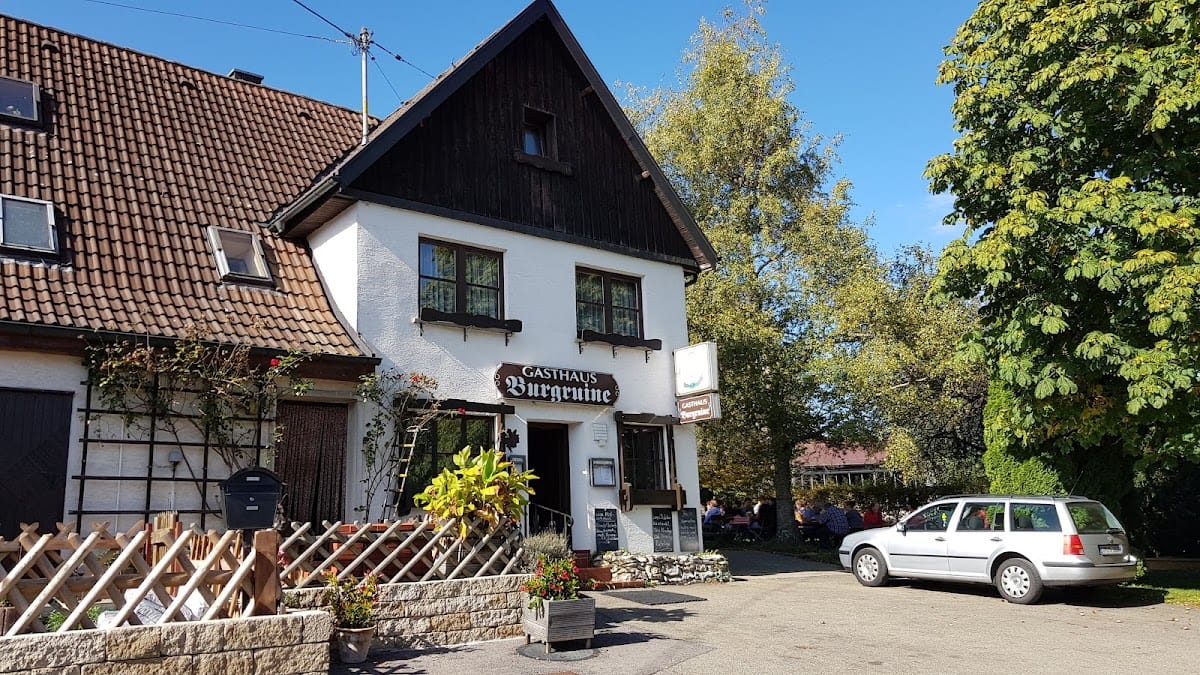
Official Website: www.gasthaus-burgruine.de
Country: Germany
Civilization: Medieval European, Modern
Site type: Military
Remains: Castle
History
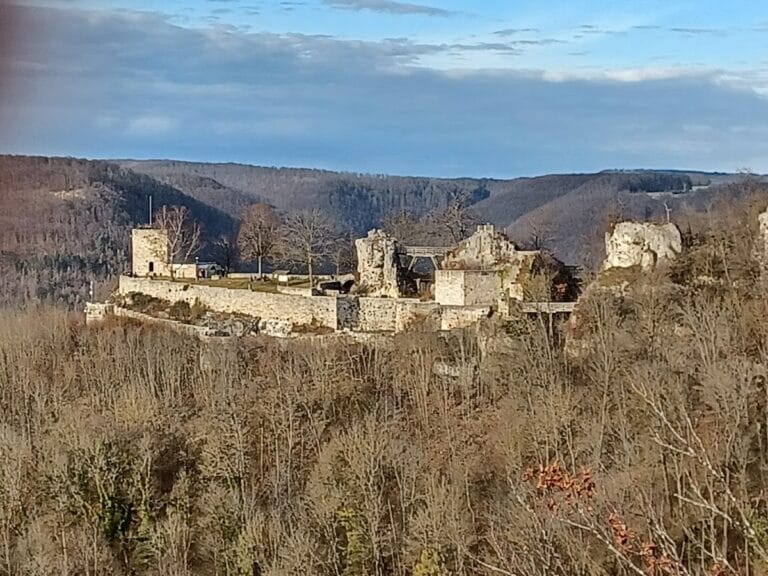
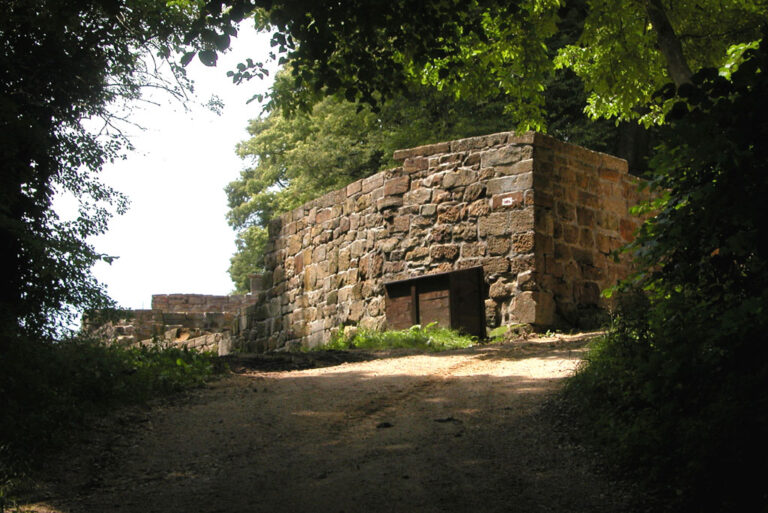
Burgruine Berneck is a former hilltop fortress situated near the village of Berneck within the municipality of Deggingen, Germany. This stronghold was established by the local medieval nobility during the mid-13th century, likely around 1250, reflecting the feudal landscape of the region.
The earliest known mention of the castle dates to 1288, where Count Konrad of Kirchberg from Berneck is recorded, confirming the site’s association with the Kirchberg family. By the mid-14th century, around 1350, the castle appears to have been deserted. This is further supported by a 1372 document citing Peter von Berneck in Deggingen and Hans von Berneck in Ditzenbach, which already describes the site as a “Burgstall,” a term used for a castle ruin or site no longer in active use.
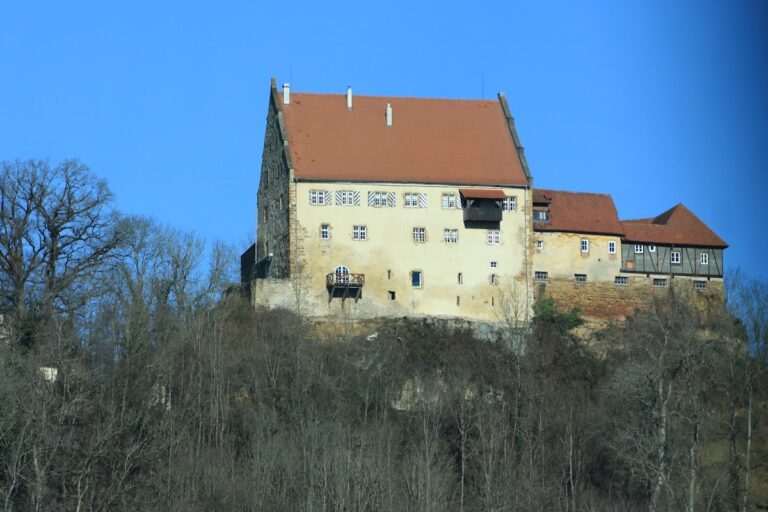
During the 15th century, specifically in 1435, the fortress came under the ownership of the Counts of Helfenstein. They also controlled the nearby Hiltenburg castle, indicating that Berneck had lost its former prominence and had been eclipsed by this neighboring fortress. The shifting control and eventual abandonment suggest changes in regional power structures and defensive needs throughout this period.
In the 19th century, the site acquired a new religious dimension when the Buschelkapelle chapel was built in 1847 within the boundaries of the old fortified area. Later, in 1860, ecclesiastical authorities from the bishopric of Rottenburg authorized the celebration of mass inside this chapel, linking the once-military site to a renewed spiritual purpose.
Remains
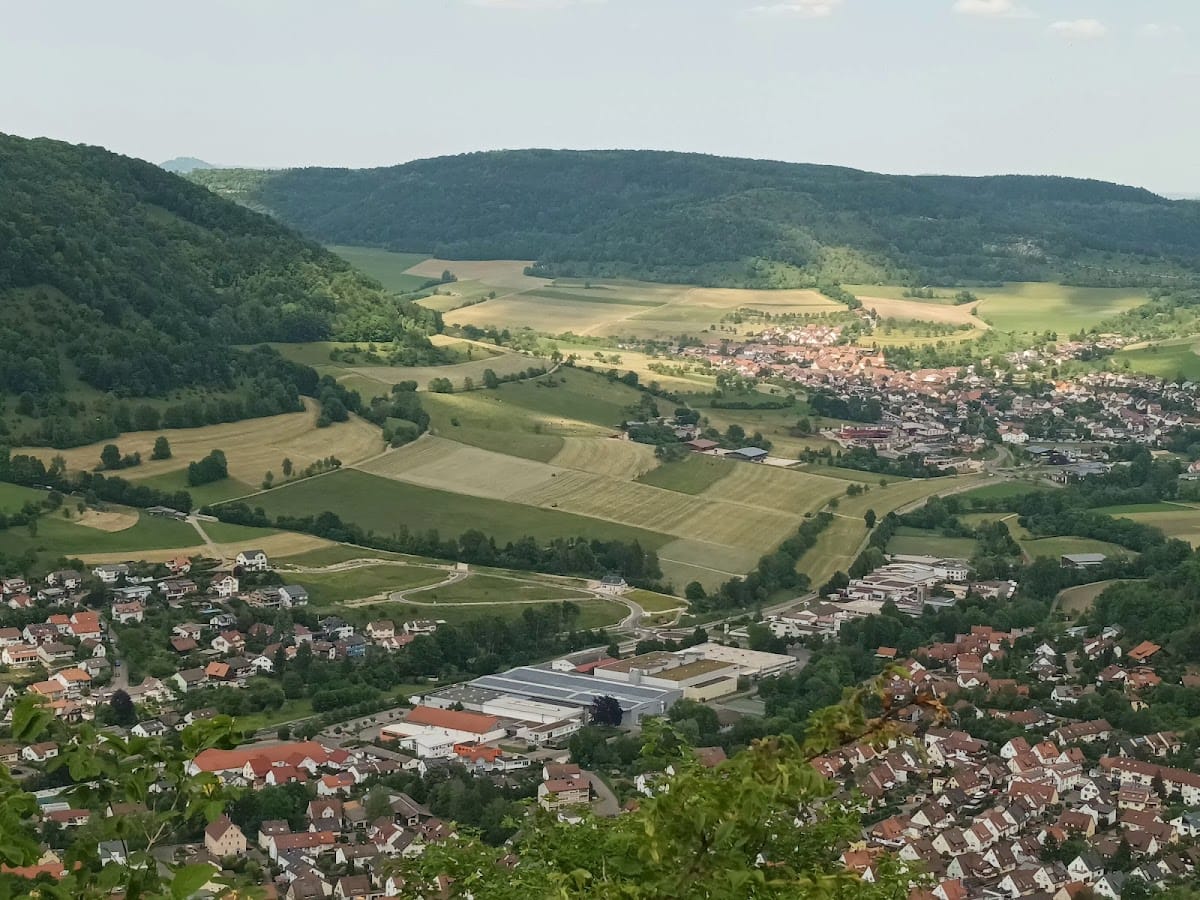
The former fortress of Berneck occupies a hilltop position at an elevation of 746 meters, situated on the steep Albtrauf escarpment above Deggingen. The castle’s remnants suggest a compact layout, with the core area covering approximately 50 by 40 meters and the entire grounds extending to about 70 by 70 meters. Today, the castle is accessible by a hiking path leading from the nearby village in under five minutes, though the main entrance and internal structures are no longer intact.
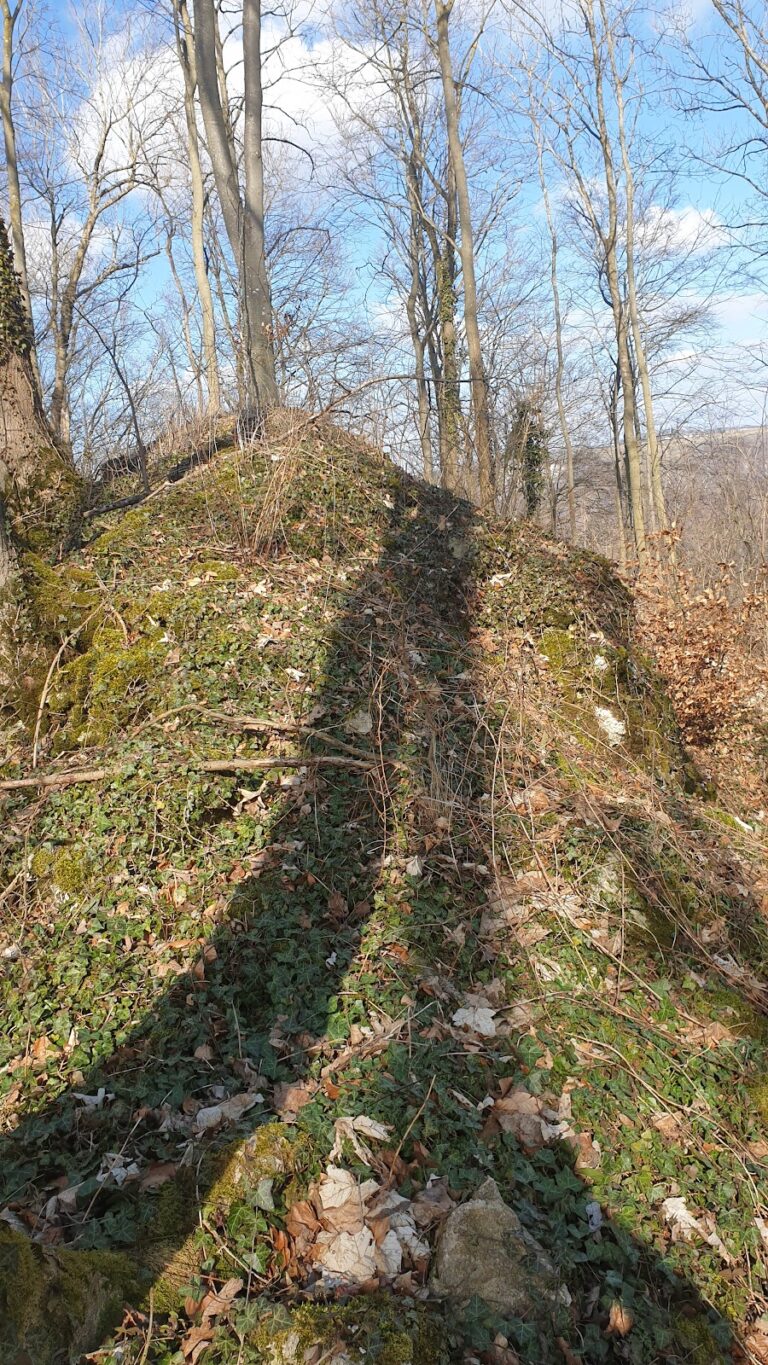
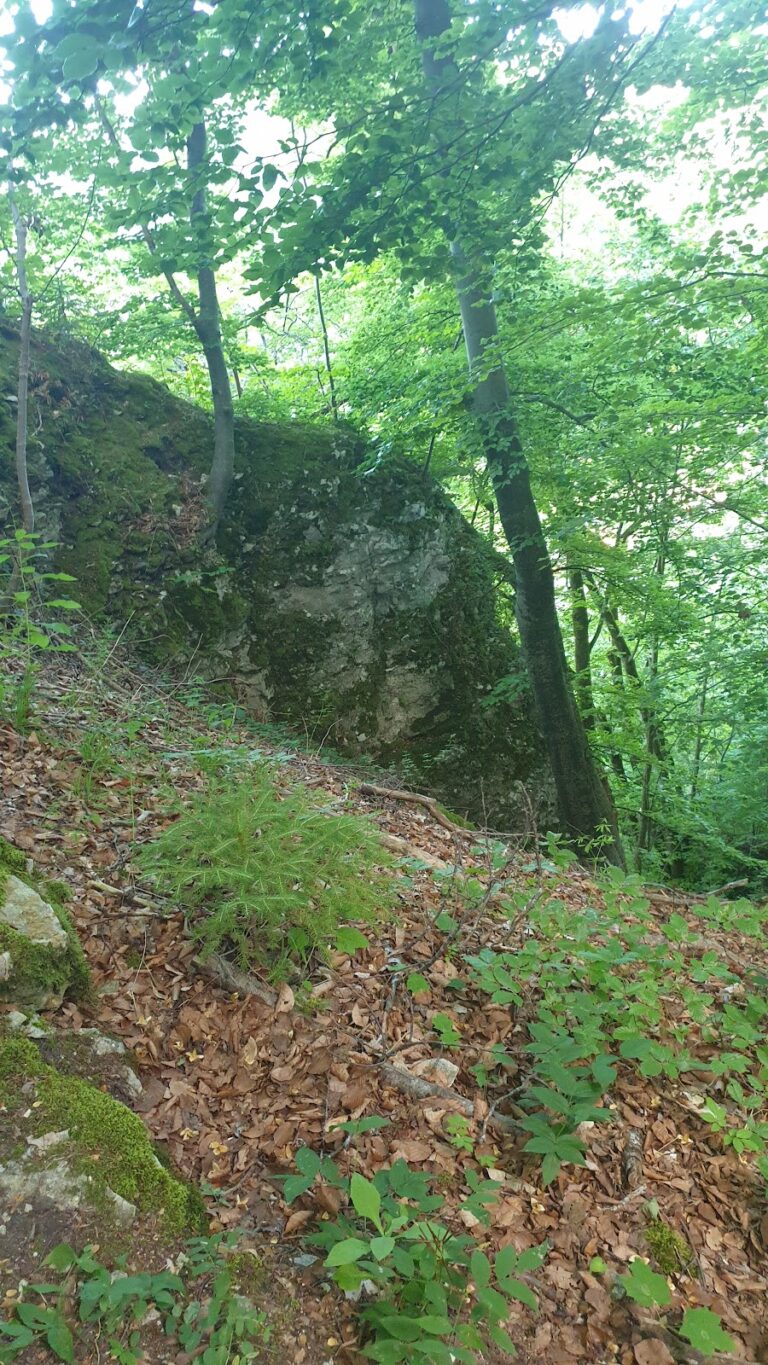
The site’s most prominent surviving features are two large concentric neck ditches, which are defensive moats cut into the rock to impede attackers. The outer moat is accompanied by an earthen embankment, creating a layered defense system typical of medieval hill castles. Closer to the core, the inner moat further enclosed the central castle area, emphasizing the strategic use of landscape to reinforce protection.
Within the enclosed castle precinct lies a fenced-off well, positioned slightly to the left in front of the 19th-century chapel. The well shaft still remains visible, a testament to its essential role in providing water to the castle’s occupants during its period of use.
The Buschelkapelle stands directly atop the former castle precinct, built in 1847 in the area once occupied by the fortress’s inner enclosure. Inside the chapel is a life-sized Madonna statue dating from around 1730, which adds a significant religious artifact to the site’s later usage. This chapel represents the historic layering of Berneck, preserving both the memory of the medieval stronghold and the spiritual life that followed centuries after its military abandonment.
Nearby sites