Burg Wildberg: A Historic Castle in Kirchschlag bei Linz, Austria
Visitor Information
Google Rating: 4.2
Popularity: Low
Official Website: www.schloss-wildberg.net
Country: Austria
Civilization: Early Modern, Medieval European
Site type: Military
Remains: Castle
History
Burg Wildberg, located in the municipality of Kirchschlag bei Linz in Austria, was established by the medieval noble Haunsperger family. The castle, first recorded in 1145, stands as the oldest fortress complex in the Mühlviertel region. Its origins link it to the Haunspergers who played a significant role in the area, including ownership of Linz. In 1198, the castle came into the possession of Gundaker II of Steyr, the forebear of the Starhemberg family, who have maintained ownership from the High Middle Ages to the present day.
Throughout the Middle Ages, Burg Wildberg served a strategic purpose because of its position overseeing the Haselgraben valley. This valley formed part of the Linzer Steig, a trade corridor connecting the regions of Bohemia and Upper Austria. An episode that highlights the castle’s role in political affairs took place in 1394, when the Bohemian King Wenceslaus IV was confined here as a prisoner within one of its tower rooms for a brief period.
In the 16th century, the castle underwent architectural expansion reflecting Renaissance styles. A new building featuring an arcade was added to the space between the medieval tower and Gothic sections of the castle. Following a destructive fire in 1654, restoration works were undertaken. Shortly after, in the years 1664 and 1665, a new palace was erected on the grounds of the former outer bailey, marking a significant development phase for the estate.
By around 1750, the lordship of Wildberg had grown to encompass 703 subjects living across the nearby settlements of Wildberg, Auerberg, and Lobenstein. The Starhemberg line associated with Wildberg ended in 1857, transferring ownership to a related branch known as the Schaunberg-Eferdinger family. In the early 20th century, the northern section of the castle suffered decay after the roof of the old palas, or main building, collapsed during the 1920s.
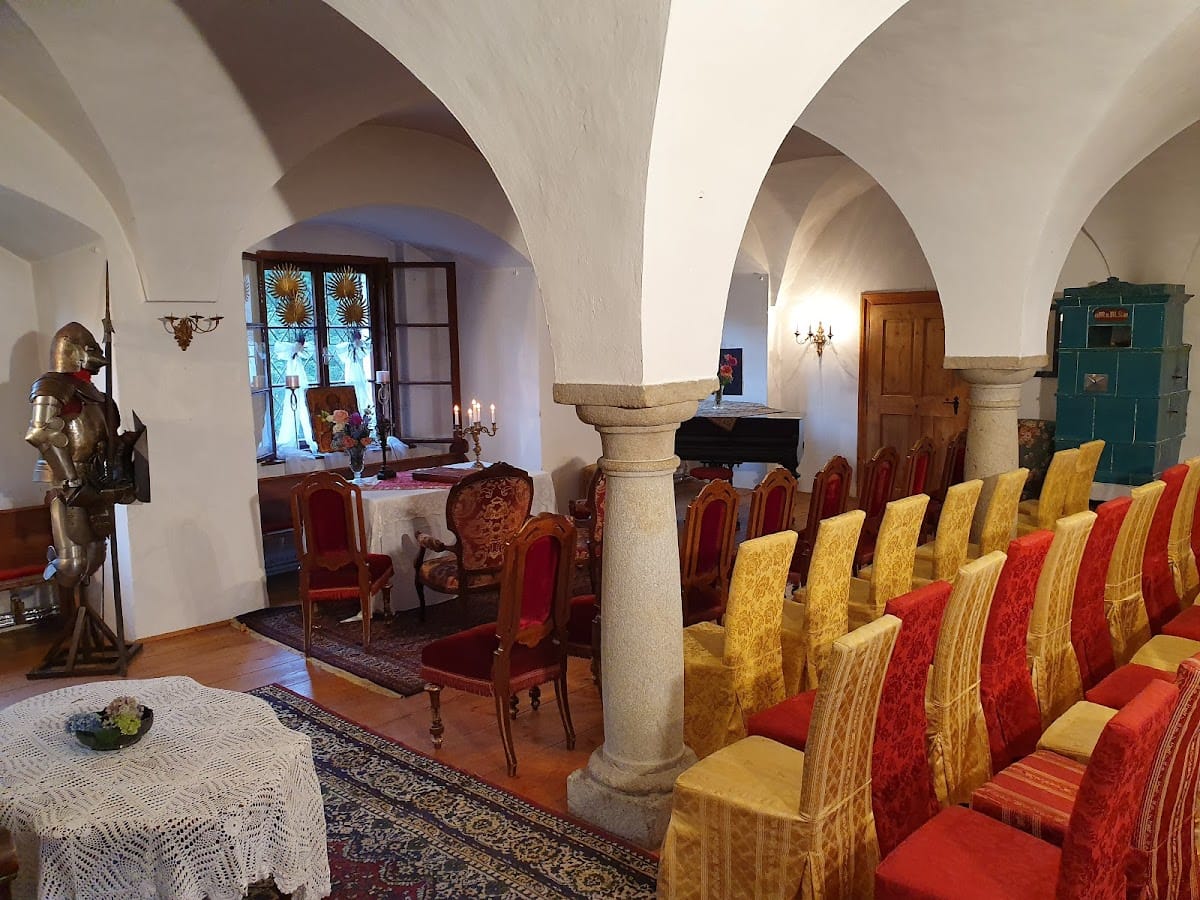
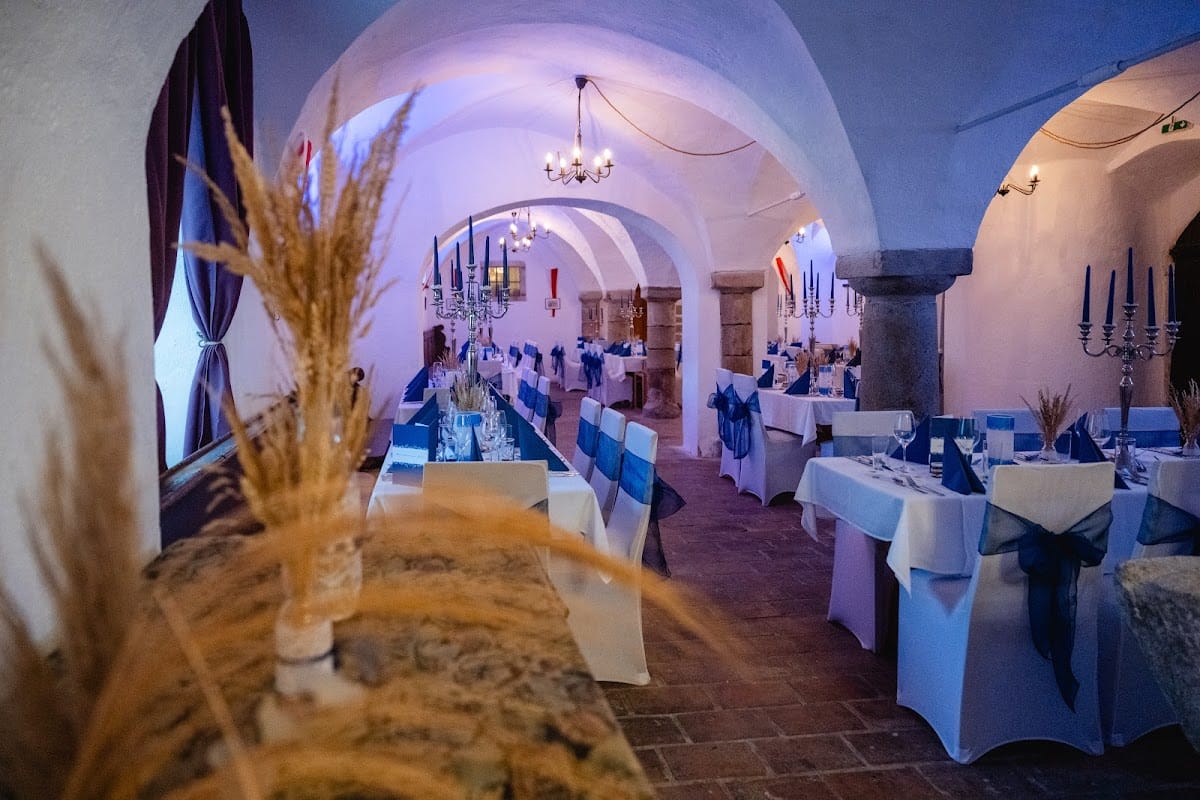
Starting from the 1970s, efforts by local heritage and cultural groups promoted preservation and restoration of the castle complex. From 1984 onward, the site has been adapted for use in cultural programming. While the Starhemberg family retains private ownership, since 2019 the castle’s event spaces have been leased to private operators. Burg Wildberg remains accessible to the public during specific occasions and sits along the route of the Adalbert Stifter hiking trail.
Remains
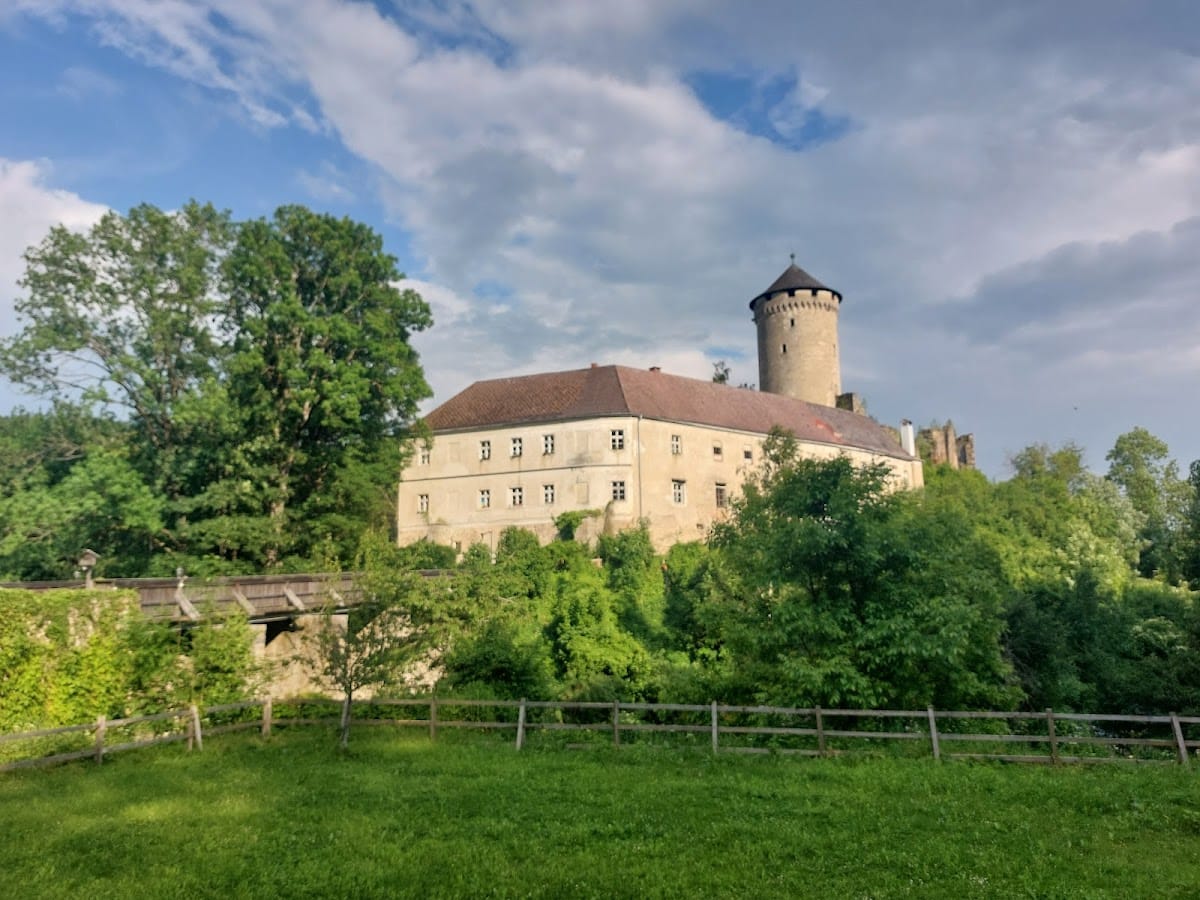
Burg Wildberg is positioned prominently on a hilltop approximately 598 meters above sea level, overlooking the Haselgraben valley. The layout encompasses an enclosed area of about 4,430 square meters, with the main castle occupying roughly half that space. The complex reflects architectural developments spanning from the medieval period through the Renaissance and into later centuries.
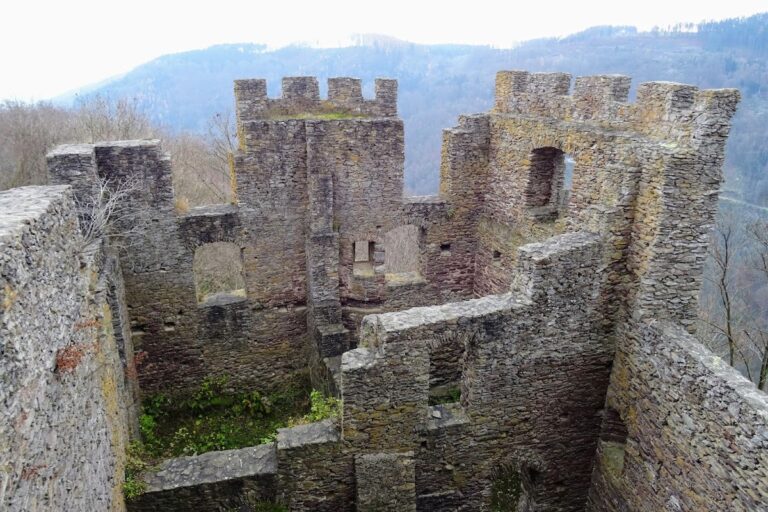
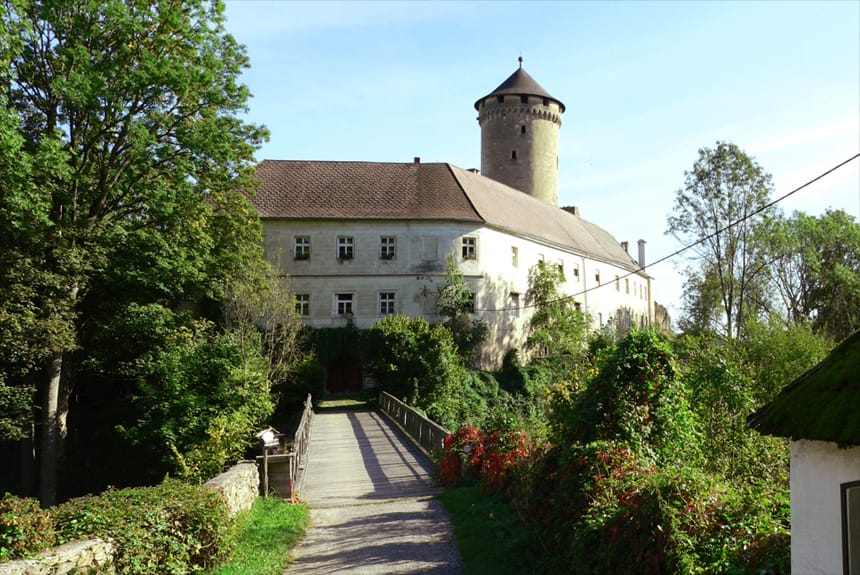
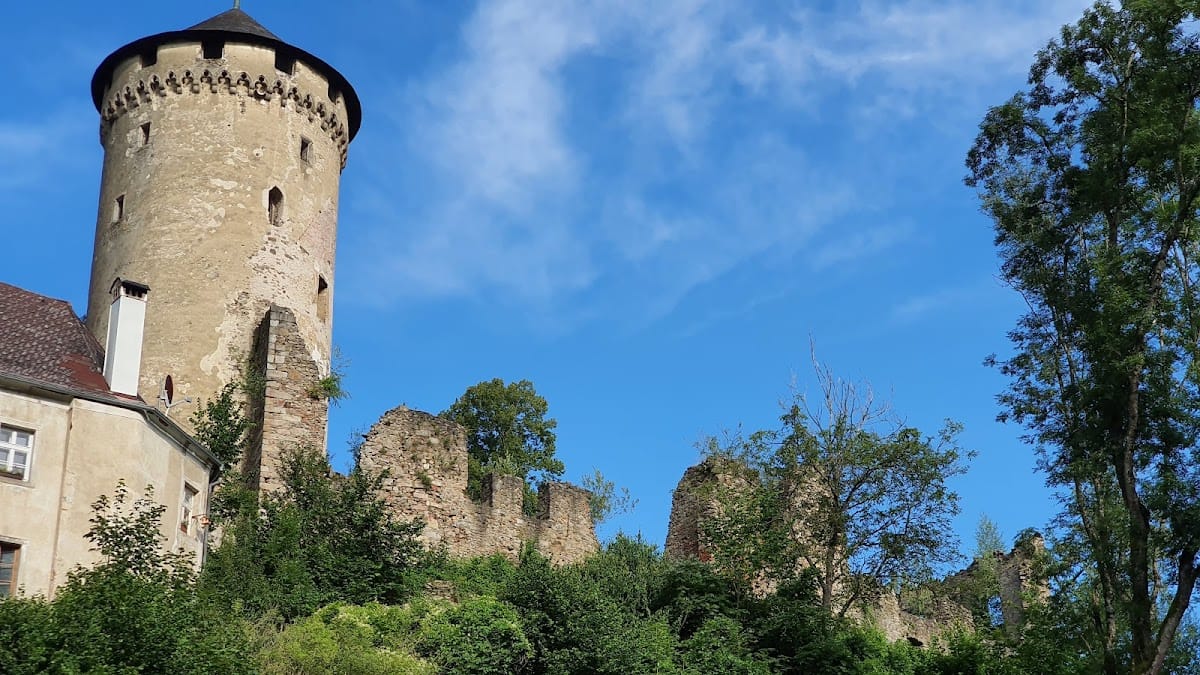
On the southern, higher part of the site lies the medieval upper castle, which is partially in ruins. Remains here include sections of the outer walls of the palas, the central residential building of the era, and fragments of the surrounding ring wall that once provided defense. A prominent feature dating from the 14th century is the bergfried, or main tower, notable for its round shape capped by a conical roof. Standing 27 meters tall, the bergfried has thick base walls measuring 3.45 meters, constructed for strength and defense. This tower remains well preserved and may be accessed by visitors.
The northern area of the castle, which is still inhabited, consists of a three-winged structure dating back to the 15th century. This part incorporates elements of the earlier medieval buildings and forms a trapezoidal courtyard enclosed on the northern side by a large gate in the Gothic style. Extending from this gate is a bridge that crosses a deep neck ditch, a defensive trench that separated the castle from the surrounding landscape.
In the 16th century, an additional Renaissance building with an arcade was inserted between the medieval tower and the Gothic castle, integrating new stylistic features into the older fabric. After suffering fire damage in the 17th century, restoration and rebuilding efforts altered parts of the structure, including construction of a new palace on the former outer bailey by 1665.
The overall condition of the historic complex is described as poor and in need of extensive repair. Despite this, many key elements, such as the bergfried tower and the Gothic gate with its accompanying bridge, remain visible and demonstrate the castle’s evolution through different historical phases.
Nearby sites