Güssing Castle: A Historic Fortress in Burgenland, Austria
Visitor Information
Google Rating: 4.6
Popularity: Low
Official Website: www.burgguessing.at
Country: Austria
Civilization: Early Modern, Medieval European
Site type: Military
Remains: Castle
History
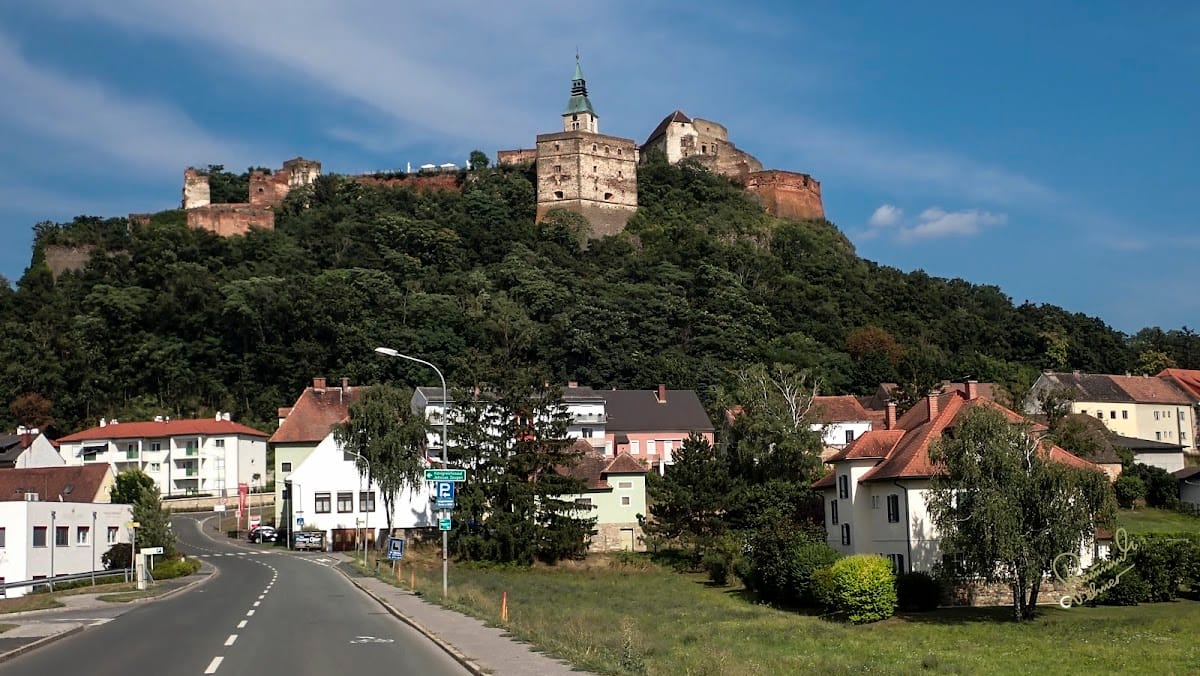
Güssing Castle stands in southern Burgenland, Austria, on a hill overlooking the town of Güssing. It was founded around 1180 by Béla III, King of Hungary, who transformed a Benedictine monastery established in 1157 by the German knight Wolfer into a stone fortress. This location was chosen for its strategic importance near the border with Austria during ongoing conflicts between Hungary and the Holy Roman Empire in the late 12th century.
The castle first appears in written records in 1198 under the names “Novum Castrum” in Latin and “Újvár” in Hungarian, both meaning “New Castle.” These names distinguished it from the nearby older fortress called Pinkaóvár, or “Old Castle.” Throughout the 13th and 14th centuries, Güssing Castle changed ownership multiple times. It was held by notable Hungarian nobles such as Demetrius Csák and Maurice Pok, as well as the powerful Kőszegi family. Several Hungarian kings, including Andrew II, Béla IV, Ladislaus IV, and Charles I, also controlled the castle during this period.
The fortress endured significant military challenges, surviving the Mongol invasion of 1241–1242 and resisting a siege by Ottokar II of Bohemia in 1273. In 1289, Albert I, Duke of Austria, captured the castle, but it was returned to Hungary following the Peace of Hainburg in 1291. These events reflect the castle’s role as a contested border stronghold during medieval conflicts.
In 1524, Francis I Batthyány acquired Güssing Castle and its surrounding lands, establishing it as the ancestral seat of the Batthyány family. This family maintained ownership through centuries, formalizing preservation efforts in 1870 when Prince Philipp Batthyány-Strattmann created a foundation to protect the castle and its former monastery. By the 18th century, the castle’s military significance declined. In 1777, its weapons were removed, and parts of the fortifications were demolished due to high maintenance costs and a roof tax imposed by Empress Maria Theresa.
Restoration of the castle began in 1957 and intensified between 1982 and 2000, supported by the Batthyány family foundation and local authorities. Historically, the castle was also a cultural center in the 16th century, associated with the botanist Carolus Clusius and the printer Johannes Manlius. Today, it serves as a museum and cultural venue, continuing its long history as a site of regional importance.
Remains
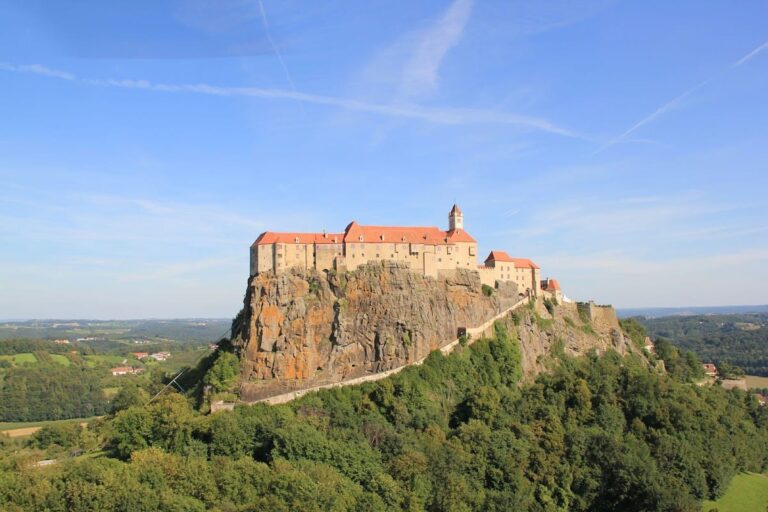
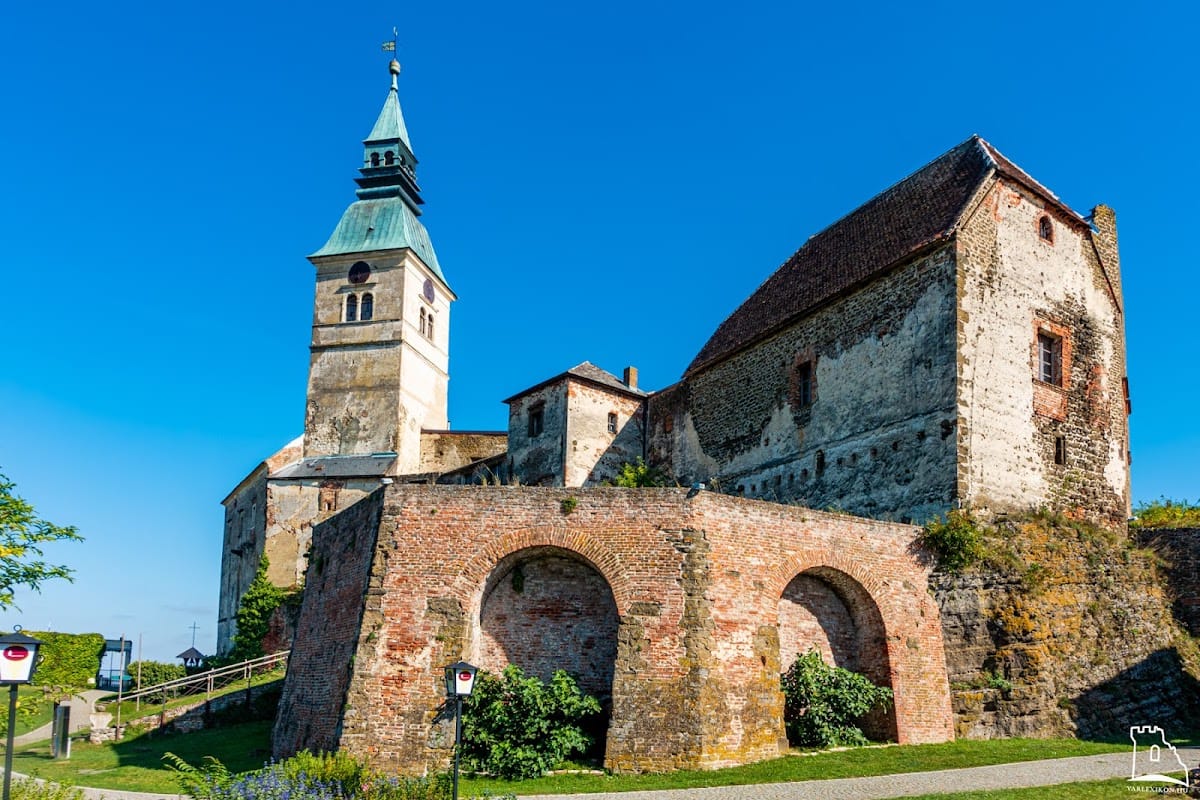
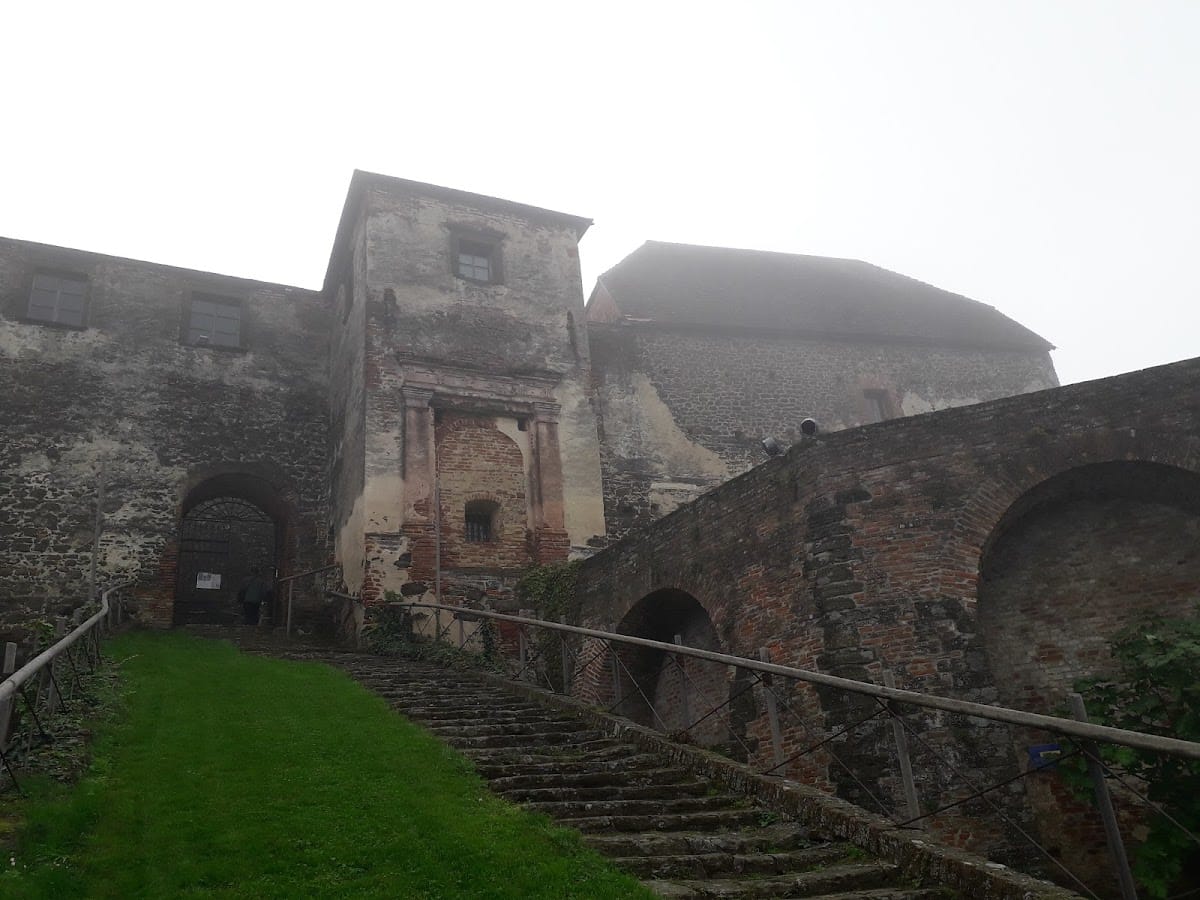
Güssing Castle is built atop a steep porphyry hill rising 293 meters above sea level, dominating the surrounding landscape. The complex includes a fortified northern gate that leads into the outer bailey, an enclosed courtyard once surrounded by fortress walls. These walls survive in parts, marking the boundary of the original defensive enclosure.
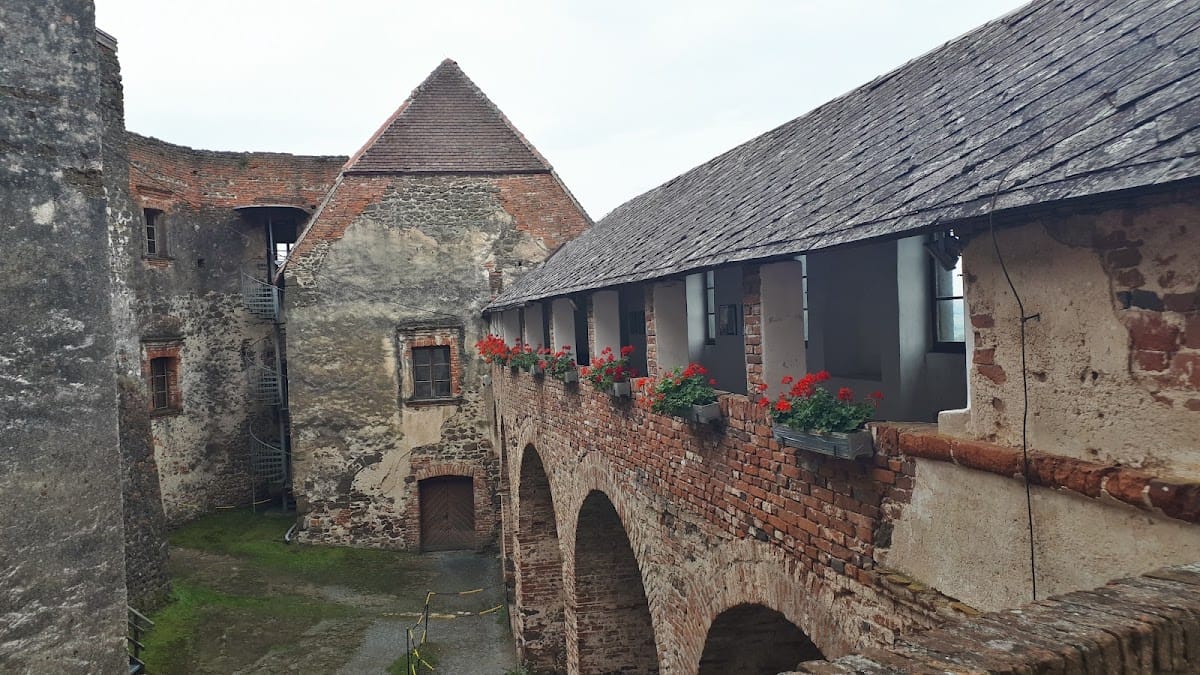
Access to the inner bailey is gained by a broad external staircase, which leads to a courtyard surrounded by buildings mostly three stories high. Some lower levels are carved directly from the rock beneath the castle, integrating natural features into the construction. A key architectural element is the massive bergfried, or keep, which partly dates back to Romanesque times. This tower stands between the residential wing and a chapel built in the 15th century.
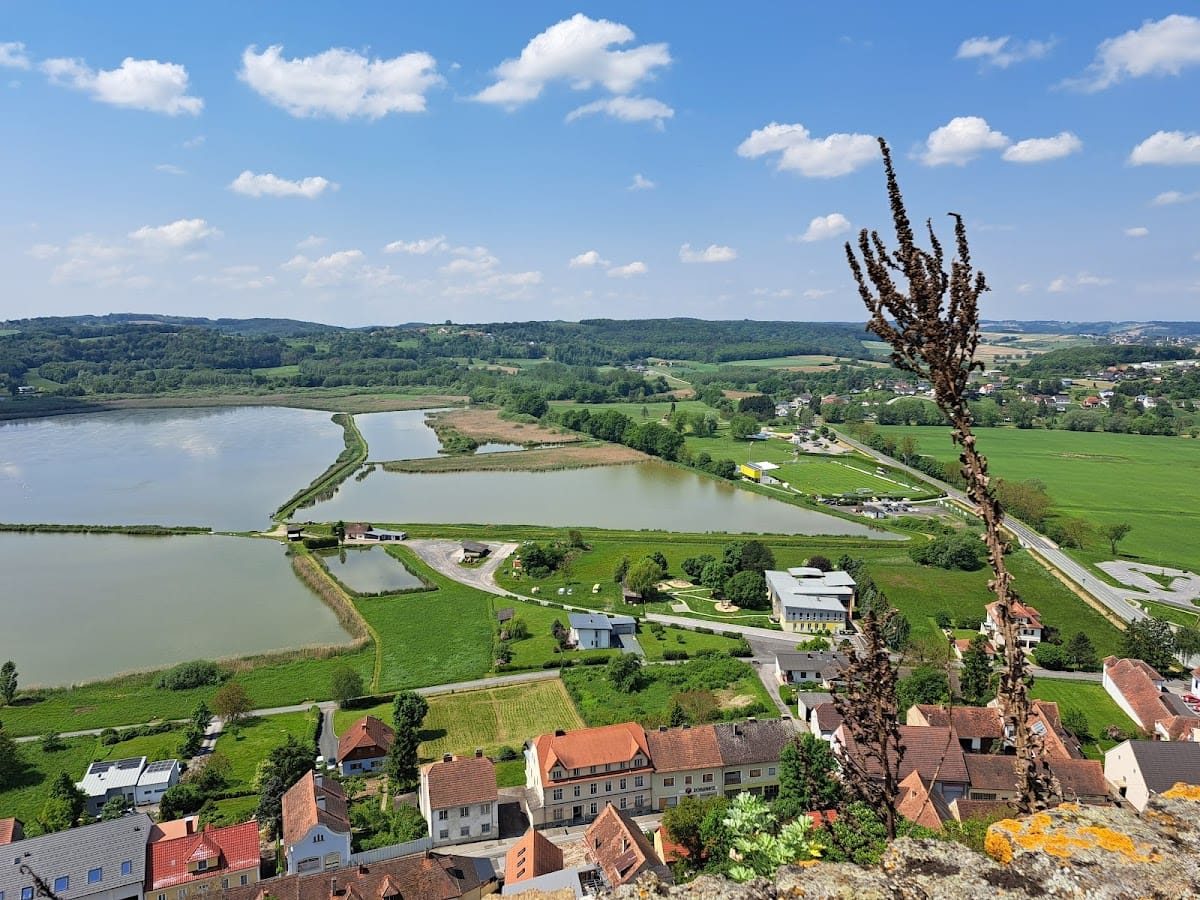
Inside the upper castle, about 20 rooms now serve as a museum. The collection includes roughly 5,000 exhibits, featuring the Batthyány family museum, an ancestral portrait gallery, old weapons, sculptures, decorative arts, and Renaissance and Baroque paintings. Among these are two portraits by the notable artist Lucas Cranach the Elder. Visitors can also climb the bell tower, which offers panoramic views over the Pannonian Plain.
The castle grounds host theatrical performances, concerts, readings, and private ceremonies such as weddings in the chapel. After extensive restoration and rebuilding in the late 20th century, the castle’s condition is stable and resembles its appearance from about two hundred years ago. The Batthyány family foundation continues to oversee the site’s preservation and use.
Nearby sites