Burg Greifenstein: A Medieval Danube Fortress in Austria
Site at a Glance
- Rating
- 3.9
- Popularity
- Low
- Country
- Austria
- Primary era
- Medieval
- External website
- Open
- Eras represented
- Medieval, Early Modern, Modern
- Civilizations
- Habsburg, Holy Roman Empire
- Site type
- Military
- Remains
- Castle
On this page14 sections
History
Burg Greifenstein is a hilltop castle in Austria above Greifenstein, now part of St. Andrä-Wördern in Lower Austria. The Passau bishopric probably established it around 1000–1050, and its high-medieval complex developed during the twelfth century. Built into the defensive system along the Danube, the castle helped monitor the river bend and the Korneuburg Gate west of the Vienna Gate.
Foundation and medieval expansion
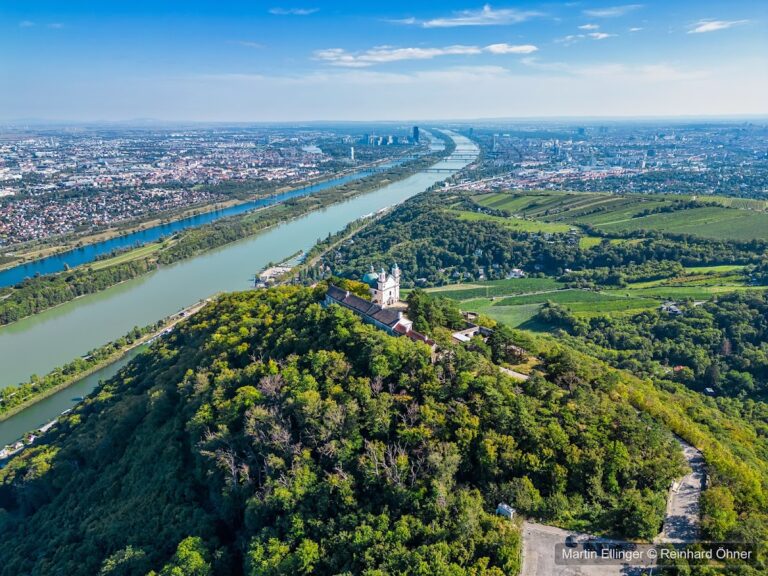
The prominent rock may have carried a Roman-period observation tower before the medieval castle was founded. Greifenstein’s signal-fire station communicated with Kreuzenstein and Leopoldsberg, while the castle and approximately opposite Burg Kreuzenstein watched the Danube route. The site was first recorded in 1135, when Dietrich of Greifenstein was probably a ministerialis, a dependent official serving the Passau bishops.
Bishop Rüdiger of Bergheim substantially enlarged the complex in 1247. Citizens of Klosterneuburg besieged Greifenstein in 1365, although the reason for the attack is unknown. The castle later entered the Hungarian sphere of power from 1485 to 1490.
War, imprisonment, and decline
Ottoman forces captured Greifenstein in 1529. The castle was practically undefended, and the attackers destroyed its valuable archive. It was renewed afterward, but the rebuilding did not restore its earlier military role.
From about 1600, Greifenstein mainly served as a prison of the ecclesiastical court. Clergy and laypeople served sentences in the tower dungeon. The castle remained inhabited until about 1770, after which abandonment led to prolonged decay. The Passau bishops retained ownership until 1803, when the castle was offered at public auction during the secularization associated with Josephinism, the reforming policies of Emperor Joseph II that increased state control over church institutions and transferred ecclesiastical property.
Liechtenstein restoration and later ownership
Johann I of Liechtenstein bought the old castle in 1807 and restored it internally and externally by 1818. The work retained older fabric while reshaping the complex in the Romantic style. This redesign presented Greifenstein as a nineteenth-century “knight’s castle,” deliberately evoking medieval forms rather than simply conserving the earlier structure.
Prince Alois II of Liechtenstein transferred artworks and weapons from other Liechtenstein castles, including Seebenstein, to Greifenstein. The castle declined again toward the end of the nineteenth century, and the Liechtenstein family sold it to the industrialist Hugo Kostenitz in 1918. Maximilian Mautner, a banker and cavalry captain who also owned Tulbing, Plankenberg, and Feistritz am Wechsel, purchased Greifenstein in 1931 and gave it to his second wife in 1933.
Restoration, fire, and closure
Restaurateur and hotelier Johannes Hübner acquired Greifenstein in 1960, restored it, and created a restaurant with display rooms for historical, military, and applied-art exhibits. On 16 September 2006, a cable fire destroyed the restaurant and the ceiling of the Knights’ Hall. Access to the castle has remained closed since then.
Greifenstein was offered for sale for 3.5 million euros in May 2010. In June 2017, the logistics entrepreneur Ernst Strobl bought the castle for 2.5 million euros.
Remains
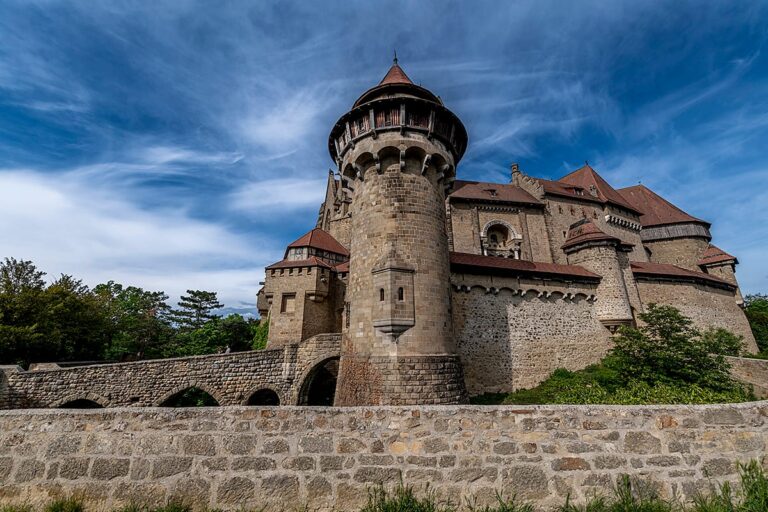
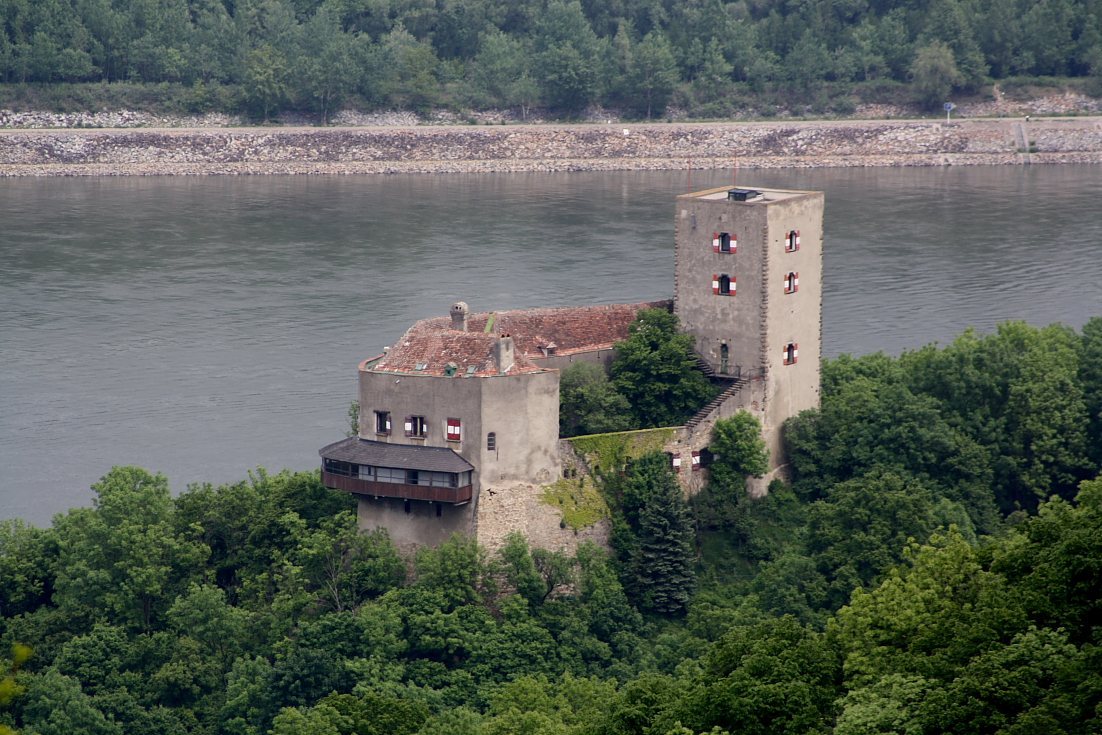
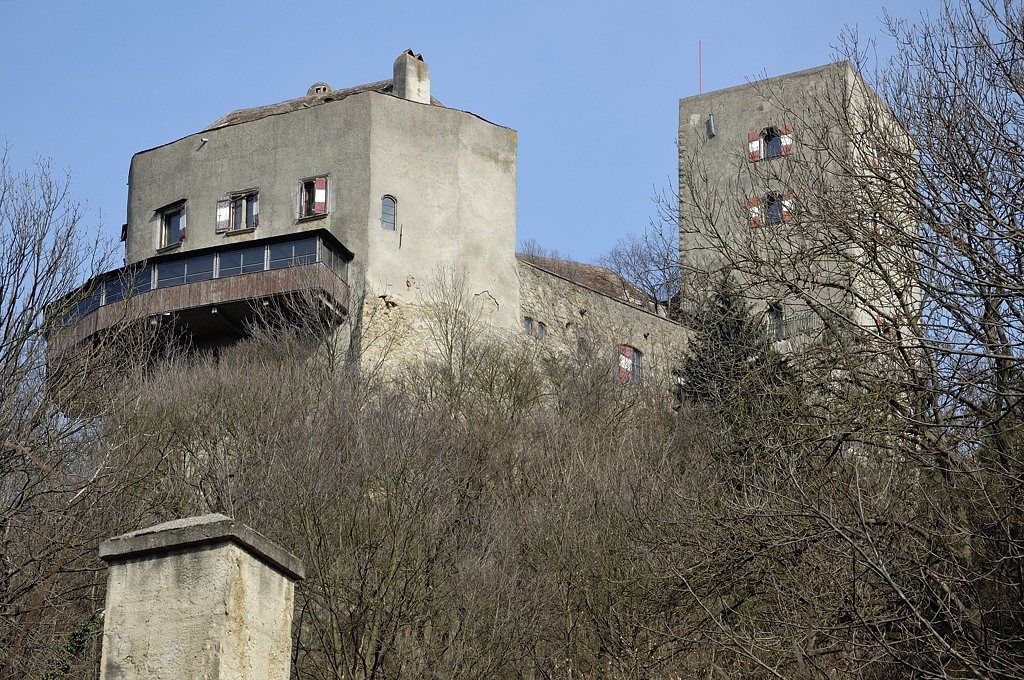
Burg Greifenstein stands on a rock above the southern steep bank of the Danube in the Vienna Woods. The hilltop position overlooks the Greifenstein district and the surrounding landscape, including the river, the Greifenstein power station, and the wooded hills. Substantial parts of the medieval core survive within a complex whose present appearance was largely shaped by the early nineteenth-century Romantic renovation.
Medieval architectural core
Keep and residential building
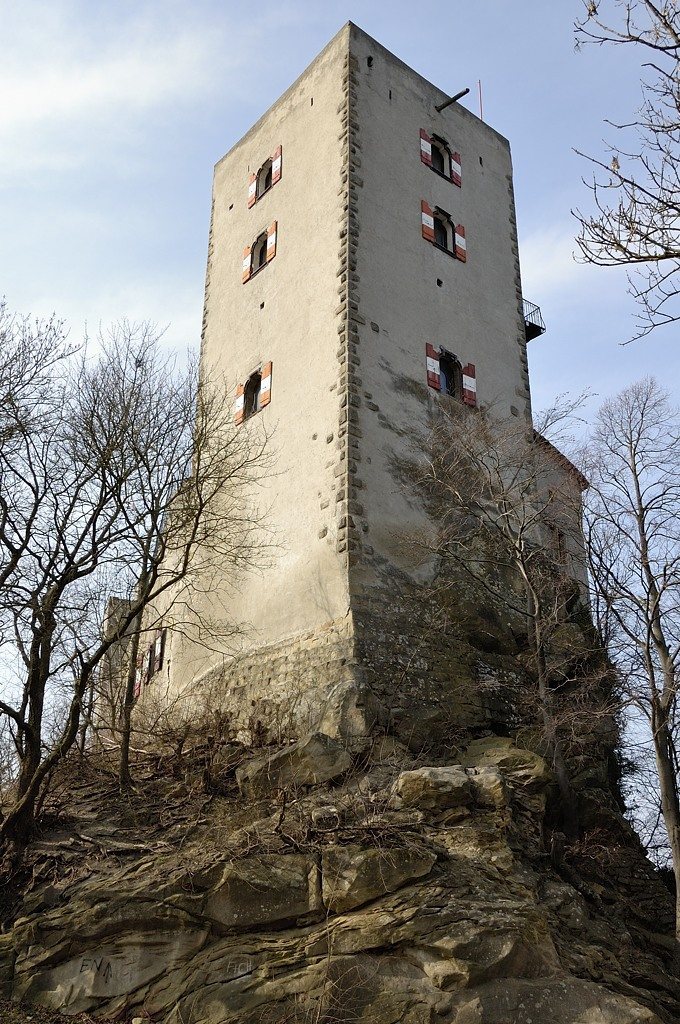
The massive square keep and the central part of the palas, the main residential and representative building, belong to the high-medieval complex of the twelfth century. Together they form the principal surviving core of the castle, retaining the scale and character of its medieval construction within the later Romanticized exterior.
Castle chapel
The castle chapel is known from the fourteenth century and forms part of the surviving architectural group. Its presence reflects the religious and residential functions that accompanied Greifenstein’s defensive role.
Renaissance outer defense
The medieval castle was enlarged during the Renaissance. The work included a Vorwerk, or outer defensive work, placed halfway up the slope below the main fortification. This forward position extended the defensive organization of the hilltop complex.
Romantic-period additions
Gatehouse and viewing structures
Johann I of Liechtenstein’s renovation introduced a gatehouse with a machicolation, an opening used to defend the entrance from above, together with a gallery and a viewing terrace. These additions helped give the castle its deliberately medieval-looking Romantic appearance while incorporating the older structure.
Gothic-inspired interiors
Around 1850, the interiors received a Gothic-inspired treatment. The rooms incorporated many of the artworks and weapons transferred from Seebenstein, reinforcing the castle’s nineteenth-century presentation as a historic knightly residence.
Historically imitative windows
During Maximilian Mautner’s extensive renovation in 1931, two historically imitative windows were inserted into an exterior wall. One is a bipartite window in the Gothic style, and the other is a tripartite window evoking Romanesque architecture. They belong to the later interpretation of the castle rather than to its original medieval construction.