Burg Botzlar: A Historic Castle in Selm, Germany
Visitor Information
Google Rating: 4
Popularity: Very Low
Country: Germany
Civilization: Modern
Site type: Military
Remains: Castle
History
Burg Botzlar is a historic castle located in the town of Selm, Germany. It was originally established by local nobility in the High Middle Ages and served as a defensive and administrative center over several centuries.
The earliest known association with the castle began before 1282, when the lords of Meinhövel, a noble family, took on the name “von Botzlar” around the year 1250. This indicates their strong connection to the site. The first clear written record of the castle appears in 1282, at which time ownership passed to the Bishop of Münster. Under the bishop’s oversight, Burg Botzlar was expanded to serve as a border fortress guarding against the Counts of the Mark, a neighboring noble family with whom conflicts arose.
Violent disputes shaped much of the castle’s early history. In 1305, during a feud involving Wulf zu Wulfsberg and the Count of the Mark, Burg Botzlar was destroyed. The castle was subsequently rebuilt but again faced military action and was captured and demolished by the Counts of the Mark in 1369. These events highlight the castle’s strategic importance and turbulent early existence.
Ownership shifted in the 14th and 15th centuries as well. By 1315, it was pledged to the Münster-Meinhövel family, who maintained control over the castle and its lands for nearly three centuries. In 1597, the estate passed by inheritance to the Ascheberg family, indicating the continuing prominence of noble ownership. Around the middle of the 18th century, the castle changed hands once more, coming under the possession of the Counts of Landsberg-Velen zu Gemmen.
Beyond its role in noble disputes, the castle functioned as a local center of justice. It maintained its own manorial court, which during the 15th century merged with the episcopal court located in Werne. This illustrates the castle’s involvement in regional governance and legal affairs.
In the 20th century, Burg Botzlar took on a different role during the Nazi period, serving as the site for a district school affiliated with the National Socialist Women’s League in Westphalia-North. More recently, in October 2013, a citizens’ foundation acquired the castle from the city of Selm, highlighting a continued interest in preserving its heritage. Notably, prior to a local municipal merger in 1975, there was consideration to name the newly formed municipality after the castle, but the name Selm was ultimately chosen instead.
Remains
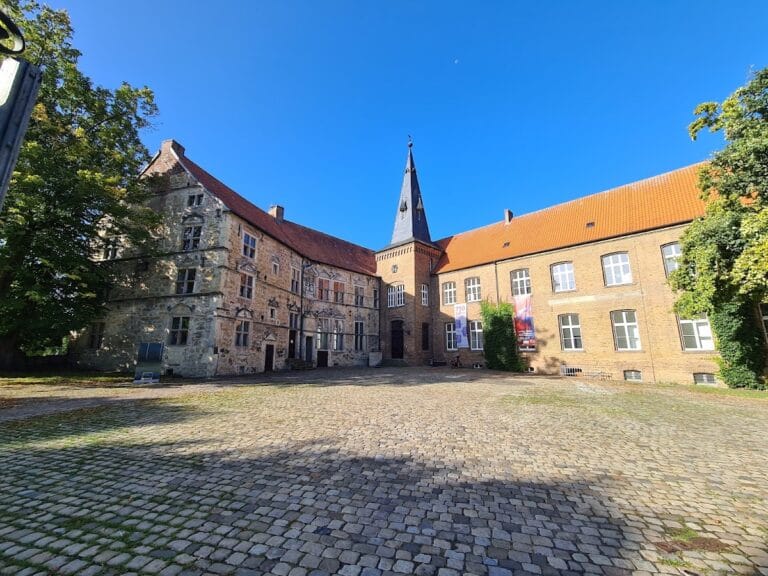
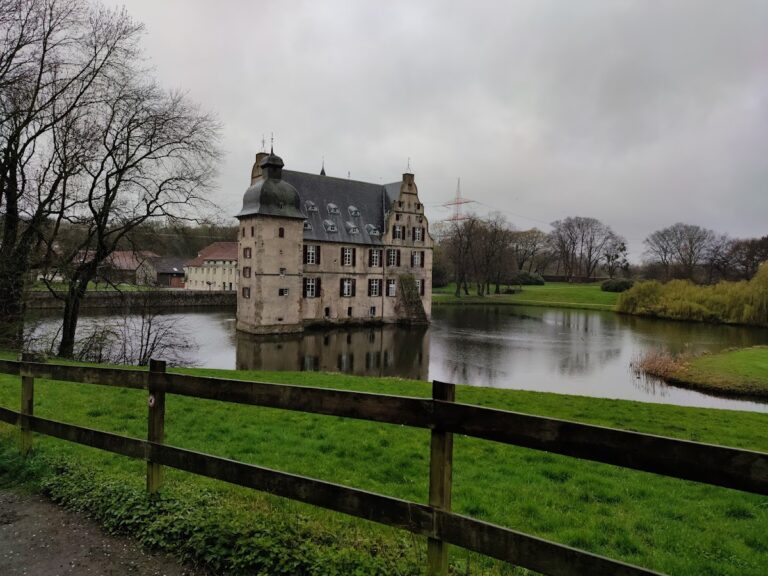
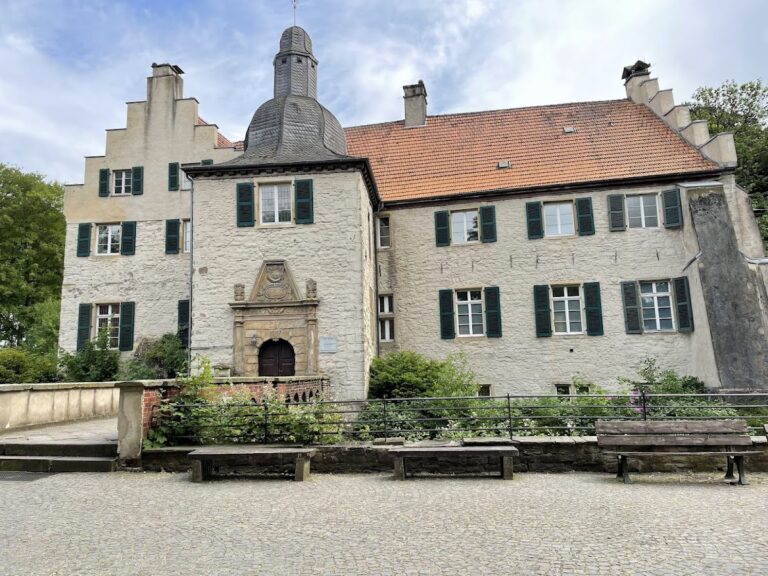
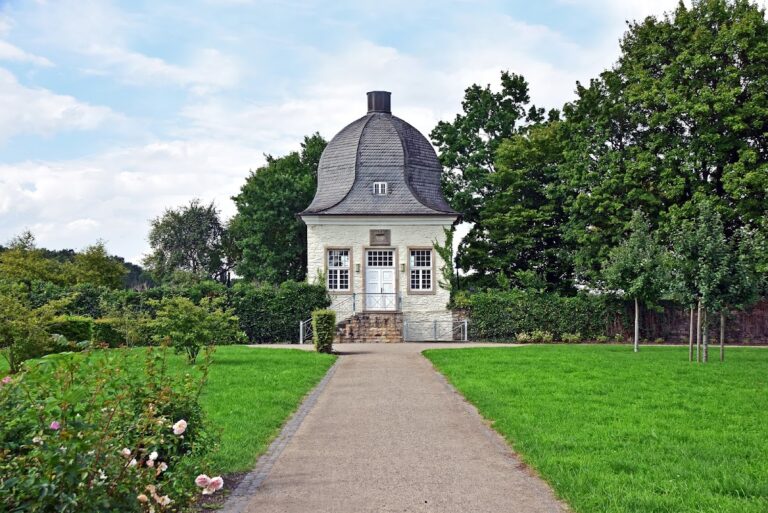
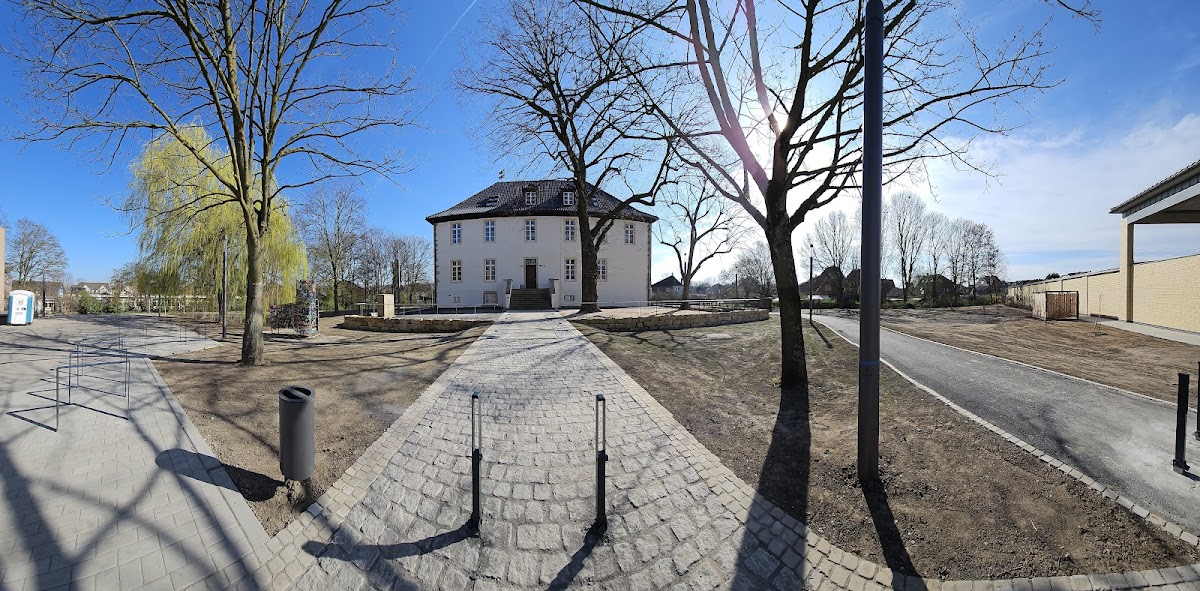
The present-day structure of Burg Botzlar is a two-story building featuring six window axes, constructed primarily of rough stone blocks known as rubble stone, with corner stones called quoins emphasizing its edges. This building dates from the early 19th century, having incorporated parts of earlier medieval construction. Among these older elements, remains of a bergfried—a type of tall, fortified tower commonly used as a last defensive strongpoint in medieval castles—are thought to have been integrated into the southwest corner of the current building. The bergfried’s location was clearly marked on an 1834 cadastral map, confirming its historical presence.
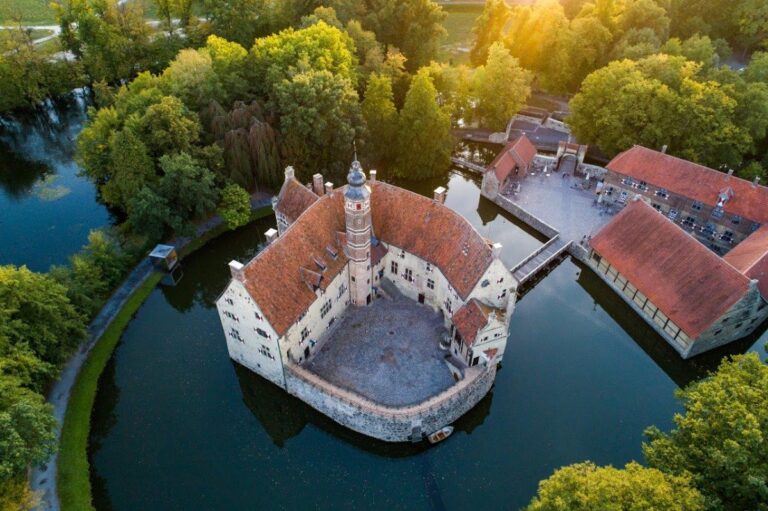
The castle’s layout included a main island surrounded by water, a common defensive feature in medieval fortifications. West of the main island lies a forecastle island, which formerly held two rows of buildings. Around the entire area, a broad earthwork hedge formed the outermost enclosure, providing an additional layer of protection.
Although precise details of the original medieval structures remain limited, a document from 1587, outlining inheritance arrangements, mentions several castle components. These included a stone house, an adjoining house containing a hall and parlor with cellar spaces beneath, a construction or workshop building, a summer house possibly used for leisure, as well as bridges, moats, and gates. This list suggests a sizable and well-organized residential and defensive complex during the late 16th century.
Two notable stone houses on the grounds are particularly documented. The first, built in 1469, is attributed to Lubbert von Morrien, indicating its function as a residence for a castle official or vassal. The second, referred to as the “lapideum,” was granted by the Bishop of Münster in 1300 to the Burgmann family von Krampe. A Burgmann was a knight or noble charged with castle defense and governance. The “lapideum” likely formed the core of the main castle island, serving both residential and military purposes.
Water defenses were a significant feature of Burg Botzlar’s design, with multiple moats encircling the castle. The innermost moat was only filled in during the 1960s, demonstrating the persistence of these medieval features into modern times. These moats, coupled with surrounding earthworks, underlined the castle’s role as a fortified stronghold in a contested border region.
Nearby sites