Carra Castle: A Medieval Tower House in the United Kingdom

Site at a Glance
- Rating
- 4.1
- Popularity
- Very Low
- Country
- United Kingdom
- Primary era
- Early Modern
- External website
- Open
- Eras represented
- Early Modern
- Civilizations
- Unclassified
- Site type
- Military
- Remains
- Castle
On this page6 sections
History
Carra Castle, also known as Castle Carra, is a medieval castle near Ballymena in the United Kingdom, built around the early fourteenth century. During the medieval period, the site was also used as a children’s cemetery. The name Carra may derive from a corruption of “Carey,” and the castle may also have been known as Goban Saer’s Castle.
Gaelic leadership and conflict
In the sixteenth century, Carra Castle was occupied by Shane O’Neill, a Gaelic Irish leader who opposed English authority in Ireland. Sorley Boy McDonnell, a Gaelic lord of the McDonnell family, was held there as a prisoner in 1565.
Two years after Shane O’Neill defeated Sorley Boy, the McDonnells hosted O’Neill at Carra Castle for two days of hunting and feasting. On 2 June 1567, a quarrel ended with the McDonnells stabbing O’Neill to death in revenge for Sorley Boy’s earlier defeat. His head was sent to the English representatives of Queen Elizabeth I at Dublin Castle. Elizabeth ruled England from 1558 to 1603, while her representatives administered English interests in Ireland.
The siege of 1585
In 1585, English forces besieged Donnell Gorm MacDonnell at Carra Castle. MacDonnell was the son of Sorley Boy McDonnell. His father landed nearby and drove away the besieging forces.
Later occupation and decline
The Lynch family occupied the castle around 1730. It later fell into ruin and became overgrown with ivy, leaving the surviving tower house as the principal visible remains.
Remains
Tower house and earlier settlement
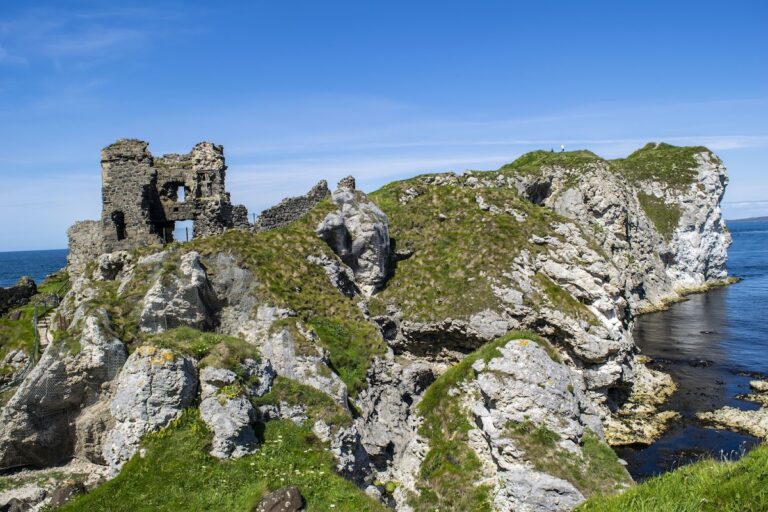
The surviving structure is a square tower house built of rough stone and generally dated to the sixteenth century. A tower house was a fortified residence arranged vertically, while the building’s internal organization has the characteristics of a hall house, a residence centered on a principal hall. Its external dimensions, however, are those of a tower house.
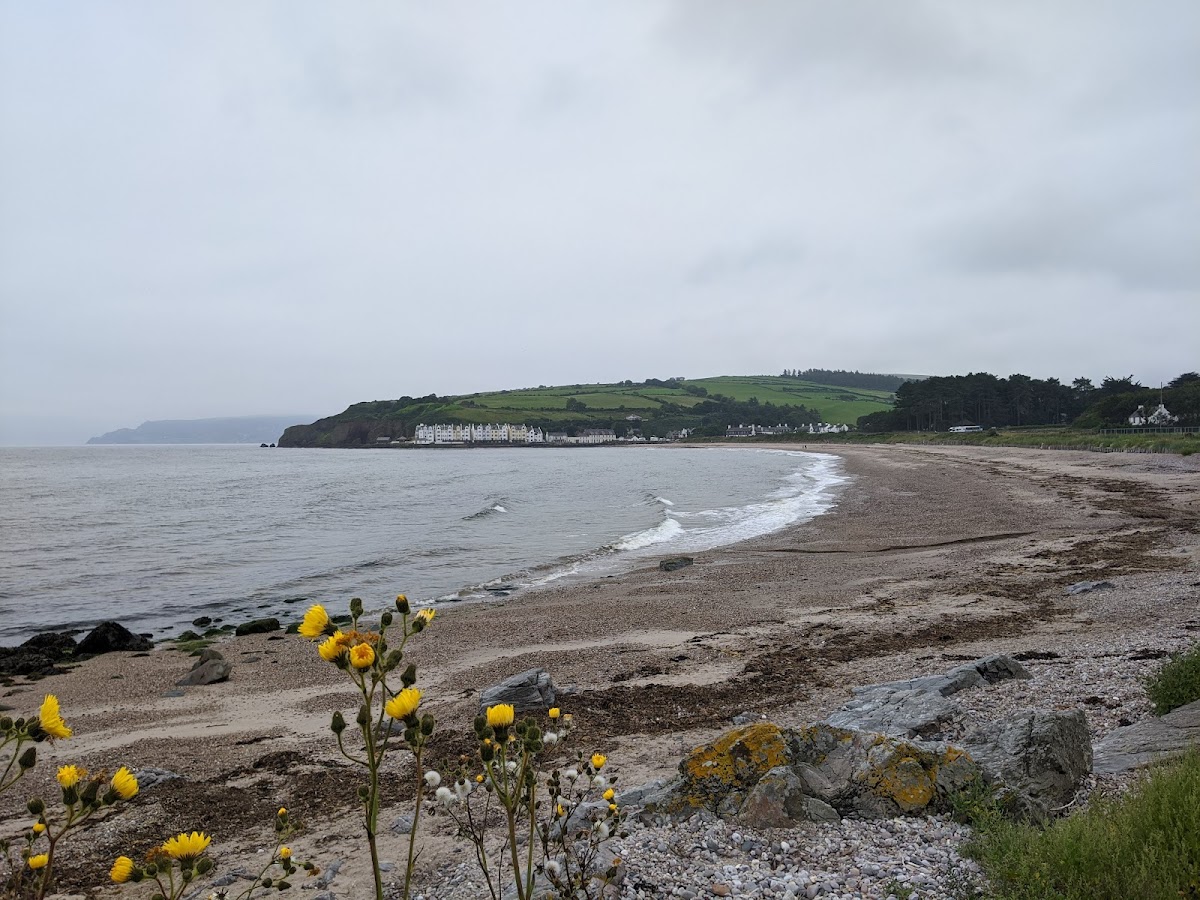
The ruins stand in a field near the coast and Cushendun Harbour, with the site also described as being near Murlough Bay. The sixteenth-century building was constructed over a Mesolithic flint-working site. Mesolithic refers to the Middle Stone Age, a period associated with hunter-gatherer communities and the production of flint tools.