Borsippa: An Ancient Mesopotamian City and Sacred Centre of Nabu
Site at a Glance
- Rating
- 4.4
- Popularity
- Low
- Country
- Iraq
- Primary era
- Iron Age
- Eras represented
- Bronze Age, Iron Age, Classical
- Civilizations
- Babylonian, Parthian, Sumerian
- Site type
- City
On this page8 sections
History
Borsippa was an ancient Mesopotamian city in present-day Iraq, about 17.7 kilometres southwest of Babylon on the eastern bank of the Euphrates. It occupied both sides of a lake and stood near the ancient city of Dilbat. The city developed within the Babylonian world as an important centre dependent on Babylon rather than as the seat of an independent regional power. It lay south of the tribal territories of Chaldea from the ninth century BC, and its history is preserved in texts ranging from the Ur III period to the Seleucid age and early Islamic writings.
Early foundations and the Ur III period
The foundation date of Borsippa remains uncertain. The city was already associated with Tutu, its tutelary deity or principal divine protector, in the late third millennium BC. Another proposed dating places its foundation in the second millennium BC. During a revolt against Naram-Sin of the Akkadian Empire, one rebellious city called BAR.KI may have been Borsippa, although this identification is disputed. If so, Ilum-dan served as its governor and Dannum as its captain.
Under Ibbi-Sin of Ur, who ruled around 2028 to 2004 BC, Puzur-Tutu was governor of Borsippa and nearby Babylon. An alternative reading identifies him as governor of Bad-Ziabba, which may or may not have been Borsippa. Puzur-Tutu later supported Išbi-Erra of Isin during the collapse of the Ur III state, the late third-millennium dynasty centred on the southern Mesopotamian city of Ur.
Babylonian rule and religious change
Borsippa appears in the year names of the Babylonian rulers Sumu-la-El and Apil-Sin. These records refer respectively to Sumu-la-El’s entry into the city and Apil-Sin’s construction of its wall. During the Old Babylonian period, the early second-millennium era in which Babylon became a major political power, Borsippa remained associated with Tutu. The cult of Tutu was later absorbed into that of Marduk, Babylon’s chief god, while the Ezida temple became associated with Nabu, the god of writing, scholarship, and scribal knowledge, who was regarded as Marduk’s son. Marat-E-zida and Mar-biti were also worshiped at Borsippa.
Hammurabi, king of Babylon, dedicated Ezida to Marduk. The Kassite ruler Marduk-apla-iddina I rebuilt the temple during the twelfth century BC, and Marduk-shapik-zeri restored it during the eleventh century BC. The Kassites ruled Babylonia after the Old Babylonian period. By the first millennium BC, Borsippa had a substantial community of scribes, whose legal, administrative, and astronomical writings circulated beyond the city.
Destruction, later traditions, and archaeology
The temple of Nabu was destroyed in 484 BC when Xerxes I suppressed a revolt against Achaemenid rule. The Achaemenid Empire was the Persian imperial state that governed Babylonia in the sixth and fifth centuries BC. Borsippa was later plundered by Alexander the Great, the Macedonian conqueror whose campaigns ended Achaemenid rule, and the city did not fully recover.
Borsippa is mentioned in the Babylonian Talmud and other rabbinic writings. Josephus connected the city with the war between Cyrus the Great and Nabonidus. Later Arabic tradition identified the ziggurat with the Tower of Babel. This association was encouraged by Nebuchadnezzar II’s description of the monument as the “Tower of Borsippa” or “Tongue Tower,” although its archaeological interpretation identifies it as a religious structure dedicated to Nabu.
Investigations began with Henry Creswicke Rawlinson in 1854, followed by Hormuzd Rassam’s work for the British Museum from 1879 to 1881 and Robert Koldewey’s investigation in 1902. Austrian research continued through sixteen seasons between 1980 and 2003 under Helga Piesl-Trenkwalder and Wilfred Allinger-Csollich of the University of Innsbruck. Looters removed about 2,000 cuneiform tablets, mostly from Ezida, during the 1890s. A large group was sold to the British Museum between 1894 and 1900, and publication of the identified archives began in the 1980s.
A ground-penetrating-radar survey in 2022 examined an area measuring 130 by 90 metres. Austrian investigations resumed in 2023 after an interruption of roughly twenty years, under Sandra Heinsch and Walter Kuntner. The work focused on the ziggurat, Ezida, temple architecture from several periods, and the wider urban area. Research has also developed through the project “Comparative Studies of Borsippa–Babylon.” Tell Ibrahim al-Khalil, an adjacent area, is identified as the city’s residential quarter.
Remains
The ziggurat
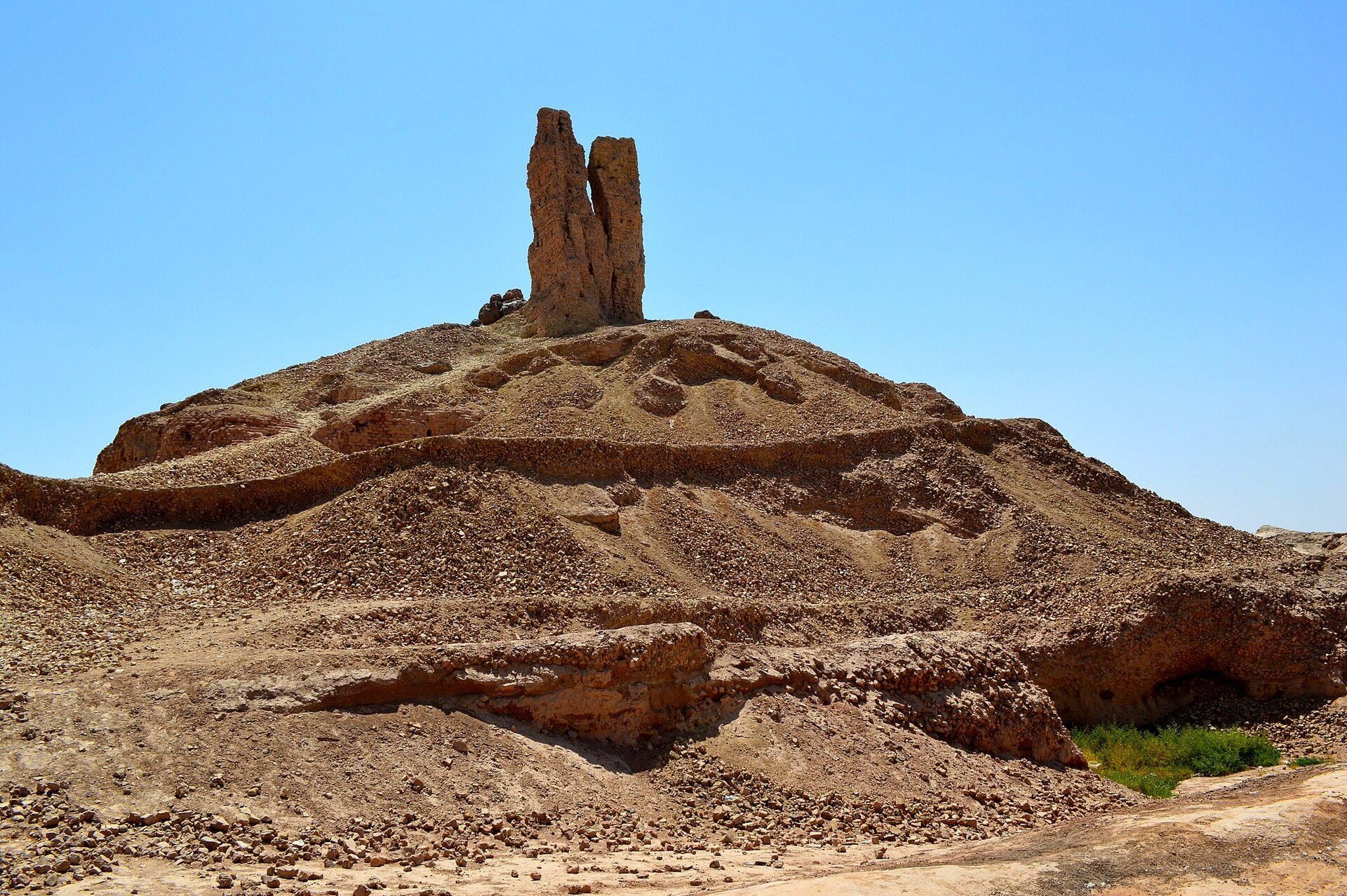
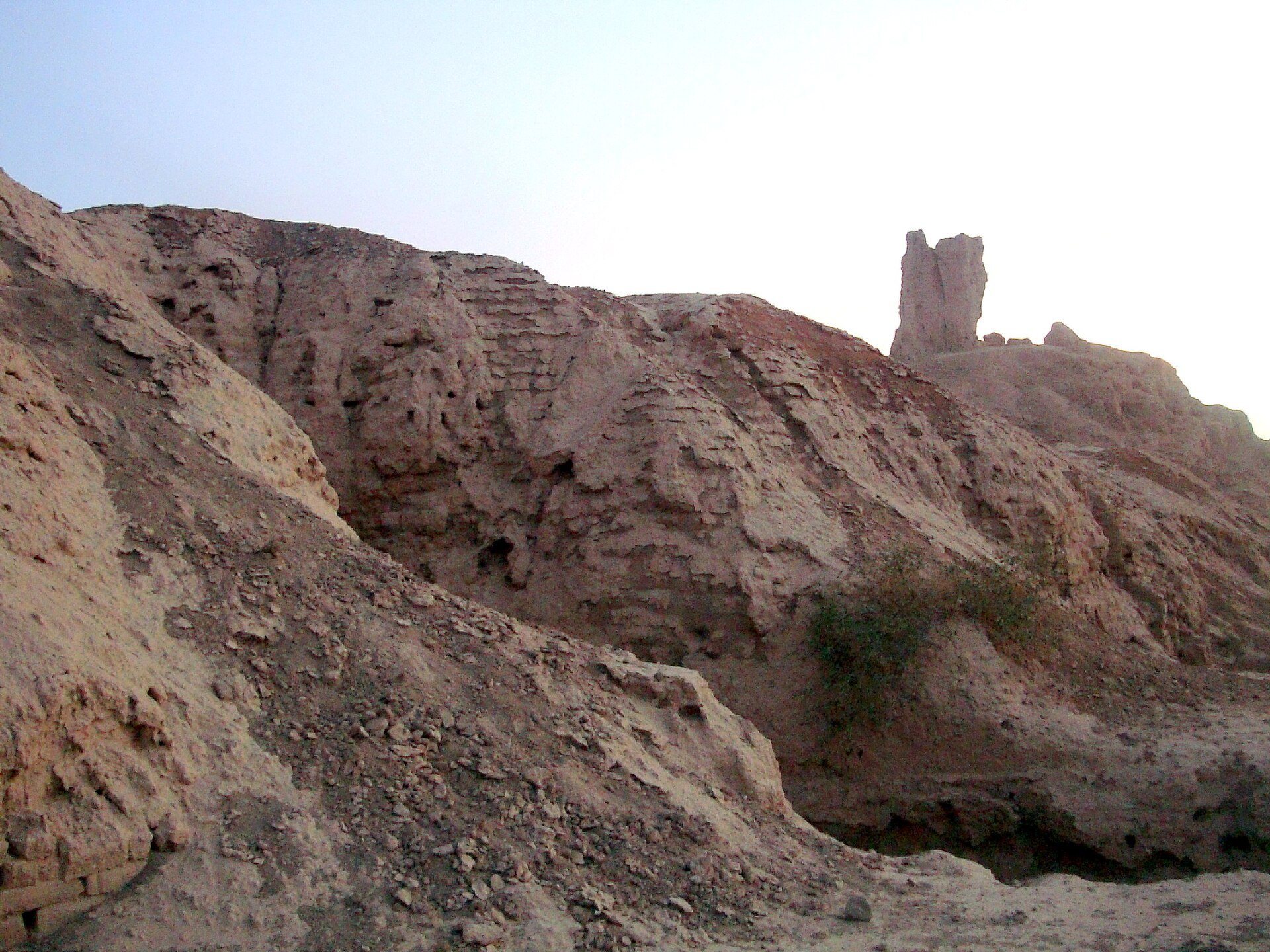
The principal surviving monument is E-ur-imin-an-ki, a ziggurat dedicated to Nabu. A ziggurat was a stepped monumental platform or temple tower whose terraces supported a sacred architectural complex rather than an ordinary inhabited tower. E-ur-imin-an-ki had seven terraces and reached approximately 70 metres when complete. Its ruined mass still rises about 52 metres above the surrounding flat plain.
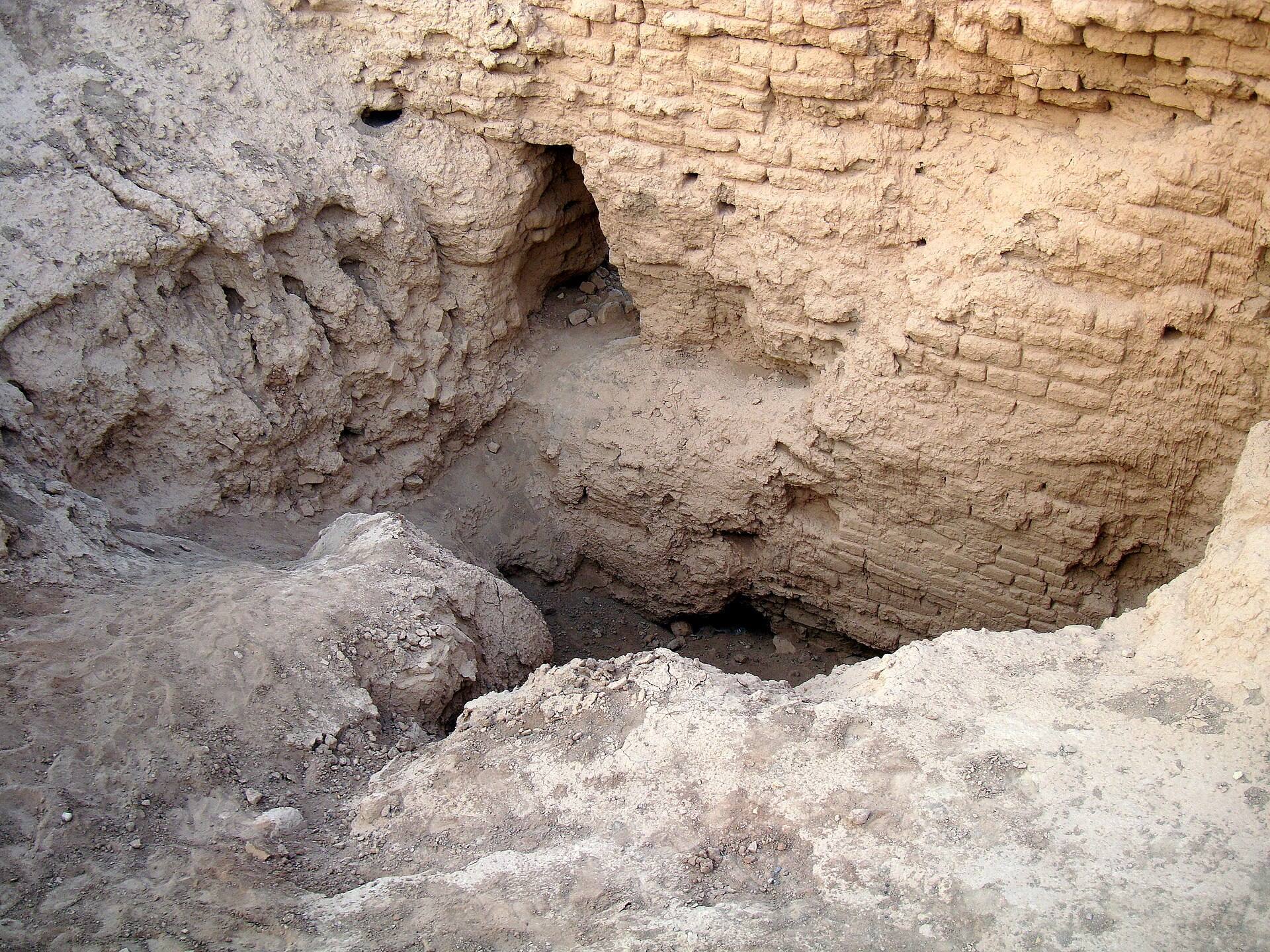
The structure enclosed the remains of a smaller tower dating from the second millennium BC. Its inner core measured about 60 by 60 metres and was built of unbaked bricks. A baked-brick outer mantle enlarged the monument to approximately 78 by 78 metres. Bitumen bonded the outer brickwork, while reeds, ropes, and wooden beams helped bind the construction layers. During the Parthian period, parts of the structure were hollowed out.
An inscribed foundation stone states that Nebuchadnezzar II planned the Borsippa ziggurat according to the same design as the ziggurat at Babylon, whose foundation alone survives. Another inscription declares that Nabu’s tower would reach the sky. The Borsippa Inscription also describes Nebuchadnezzar II’s restoration of Nabu’s temple, calling it the “Temple of the Seven Spheres” and referring to bricks of noble lapis lazuli. The wording indicates that the temple was covered with a rich blue glazed surface.
Ezida and associated temples
Ezida was the principal temple of Nabu at Borsippa and formed a major focus of excavations by Rassam, Koldewey, and the Austrian teams. The complex is associated with tablets from the Neo-Babylonian period, including legal, administrative, and astronomical cuneiform texts. Cuneiform was the wedge-shaped writing system used on clay tablets in ancient Mesopotamia.
Within the court of Ezida stood E-DIM-AN-NA, the “Temple of the Bond of Heaven.” Nebuchadnezzar II built this temple for the god Sin, and it was excavated during the early investigations at Borsippa. The temple architecture examined by later research includes remains from several periods, linking the religious complex with the city’s long development.
Urban area and later reconstruction
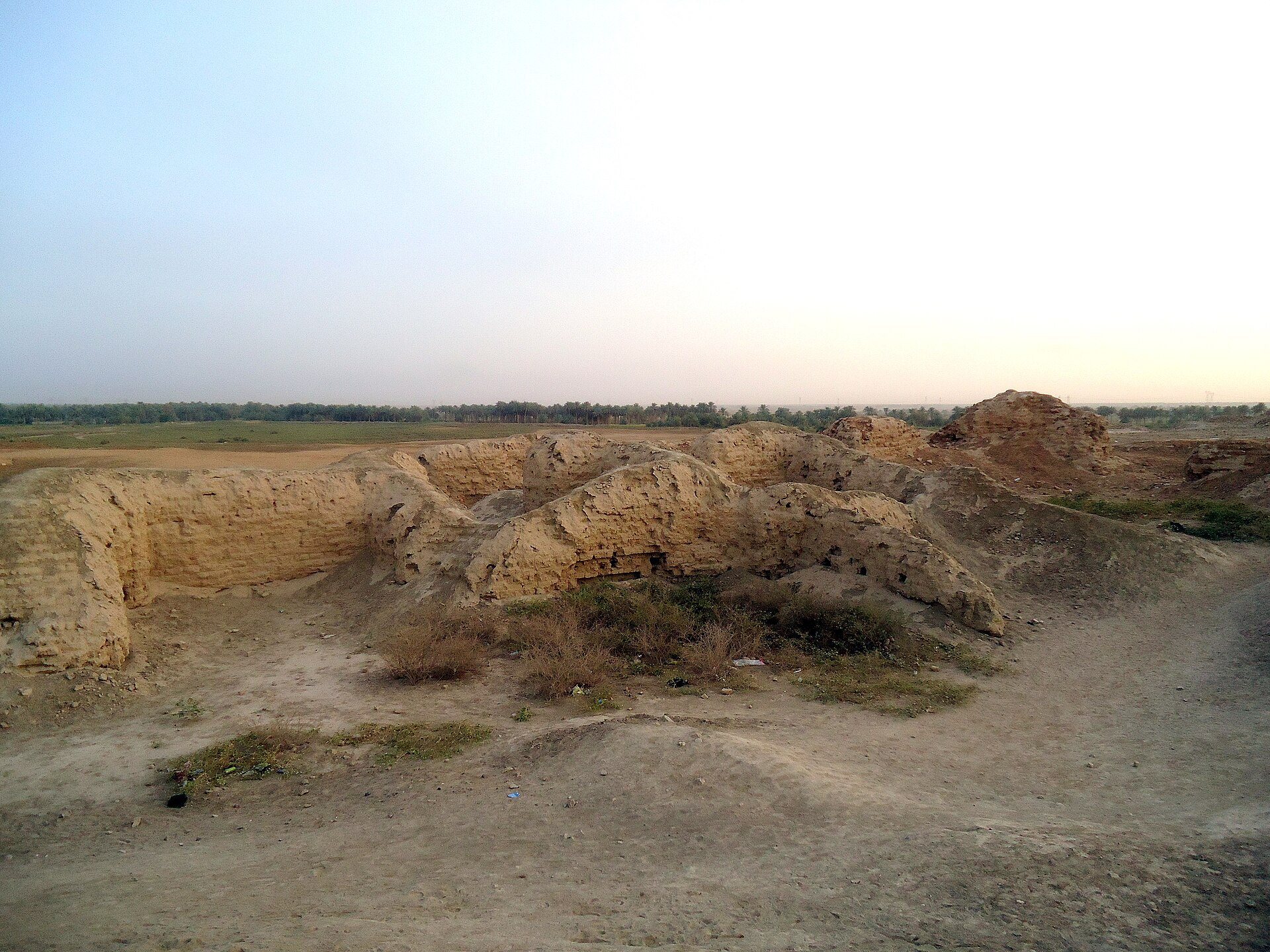
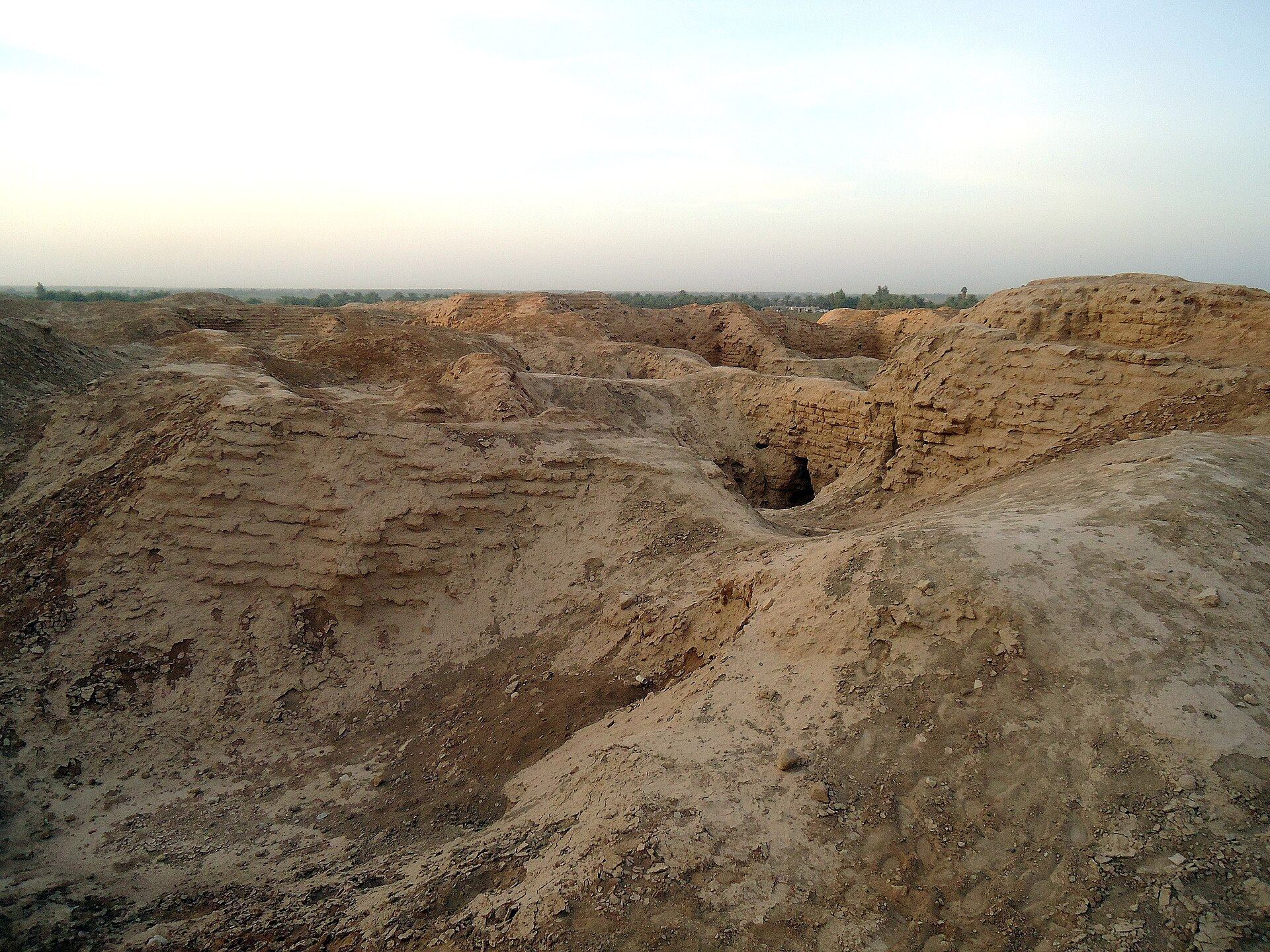
The wider archaeological area extends beyond the principal religious monuments. The adjacent site of Tell Ibrahim al-Khalil is identified as Borsippa’s residential quarter, while modern investigations have examined the broader urban area alongside the ziggurat and Ezida.
The reconstruction of the ziggurat under the patronage of Bel-Marduk is summarized in the Akkadian cylinder of Antiochus I. Bel-Marduk is a title of Marduk that emphasizes his authority as Babylon’s chief deity. The cylinder reflects the continuation of Mesopotamian cultural traditions under Seleucid rule, after Alexander’s conquest of the Near East.