Babylon: An Ancient Babylonian City in Iraq
Site at a Glance
- Rating
- 4.2
- Popularity
- Very Low
- Country
- Iraq
- Primary era
- Iron Age
- Eras represented
- Bronze Age, Iron Age
- Civilizations
- Babylonian
- Site type
- City
On this page12 sections
History
Babylon is an ancient Babylonian city and archaeological site in Hillah, Babylon Governorate, Iraq. Its history includes the Old Babylonian period, associated broadly with Babylon’s Amorite dynasty, and the Neo-Babylonian period, principally the empire founded by Nabopolassar in 626 BC and ruled at its height by Nebuchadnezzar II.
Babylonian religious and royal traditions
Marduk, Babylon’s patron deity and eventually the chief god of the Babylonian pantheon, was central to the city’s religious life. His main sanctuary was Esagila, with the ziggurat Etemenanki forming the monumental tower associated with the sacred complex. Babylon’s principal New Year festival, the akītu, connected the renewal of the year with Marduk, the king, processions, temple ceremonies, and the renewal of royal legitimacy.
Later political phases
Under Seleucid rule, Babylon acquired a Greek-style civic community, or polis, alongside its continuing native Babylonian institutions. The city later suffered extensive damage during the actions of the Parthian general Himeros.
Shamash-shum-ukin is traditionally said to have died when his palace burned during the siege. Contemporary evidence describes only a violent death associated with fire, leaving the precise circumstances less certain.
Modern military use
In the modern period, Camp Alpha occupied part of the Babylon site. Its facilities included a helicopter landing field, linking the ancient archaeological landscape to a later military use.
Remains
The surviving remains comprise elements of Babylon’s sacred architecture and defensive construction, together with features associated with later use of the archaeological site.
Sacred complex
Esagila
Esagila was the principal sanctuary of Marduk. It formed the religious center associated with Babylon’s patron deity and belonged to the sacred complex that also included Etemenanki.
Etemenanki
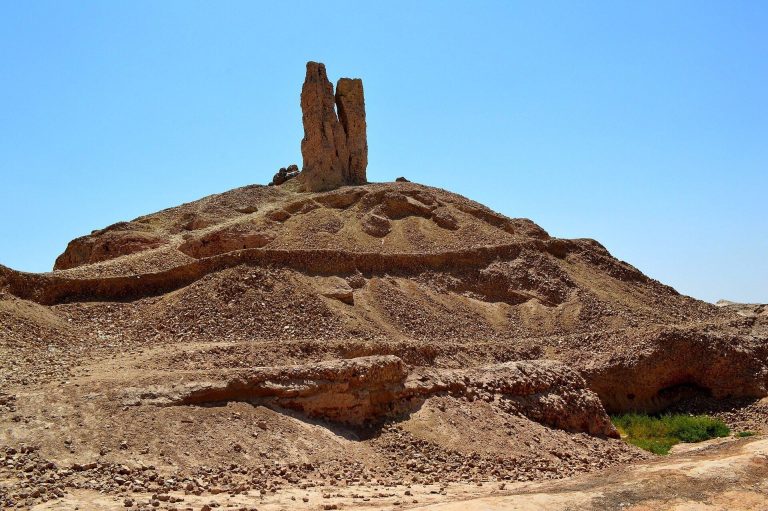
Etemenanki was a ziggurat, a stepped Mesopotamian temple platform made from superimposed terraces. It served as the monumental tower associated with Esagila and Marduk’s cult.
Defensive walls
Imgur-Enlil
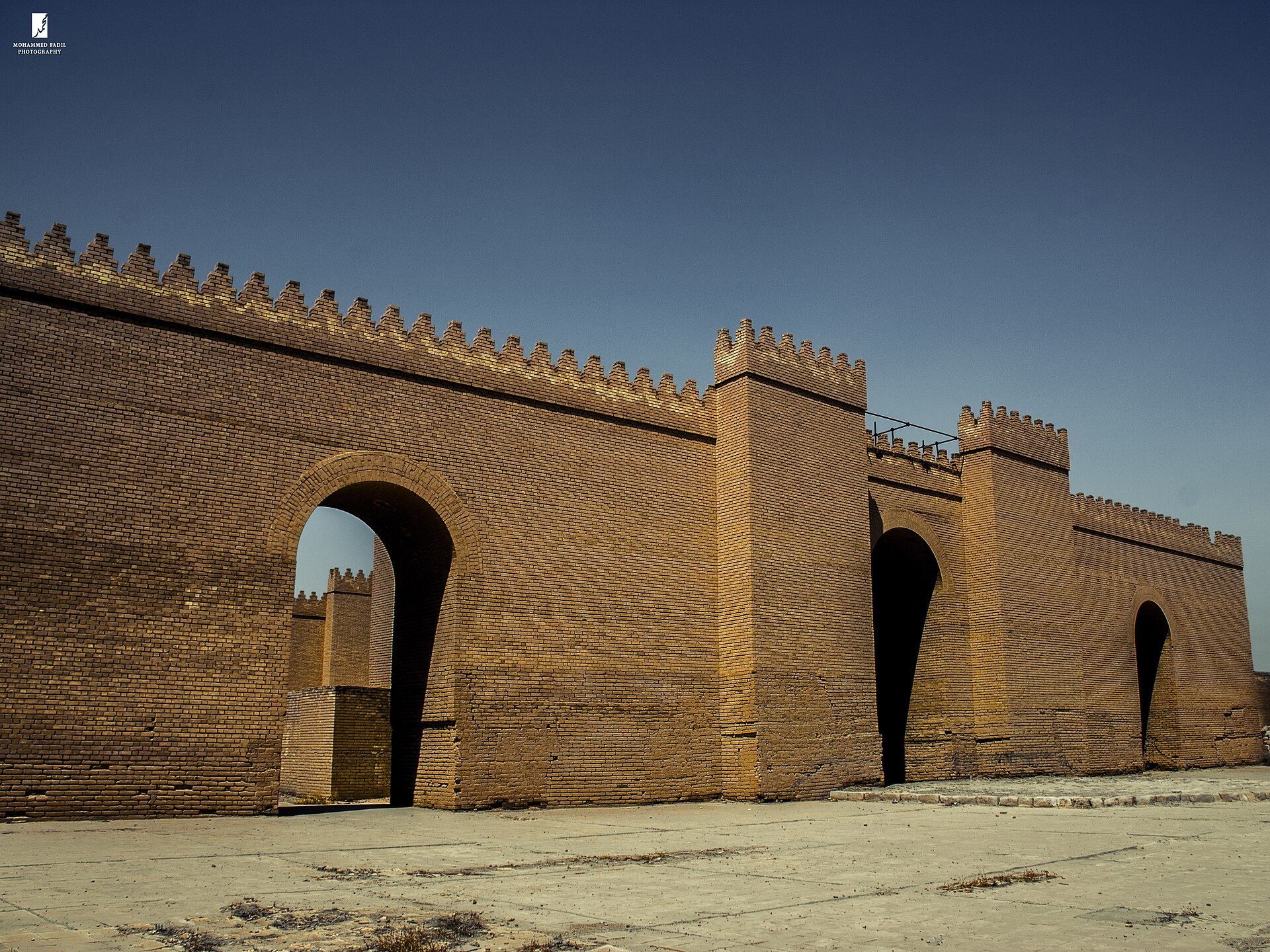
Imgur-Enlil was a major defensive wall of Babylon. Under Nebuchadnezzar II, it was about 6.5 metres thick, demonstrating the substantial scale of the city’s fortifications.
Later site features
Camp Alpha
Camp Alpha formed a modern military installation within the archaeological landscape. Its recorded facilities included a helicopter landing field.