Battenberg Castle: A Historic Medieval Fortress in Germany


Visitor Information
Google Rating: 4.4
Popularity: Low
Official Website: www.hofgutbattenberg.de
Country: Germany
Civilization: Early Modern, Medieval European
Site type: Military
Remains: Castle
History
Battenberg Castle is located in the municipality of Battenberg in present-day Germany. It was constructed by the medieval Leiningen family, a notable noble dynasty that governed the surrounding territory known as Leiningerland.
The castle’s origins trace back to the 13th century when Count Frederick III of Leiningen built it atop the remnants of an earlier structure associated with the Salian dynasty. Together with Neuleiningen Castle situated to the north, Battenberg Castle served as a strategic fortification controlling access to the Eckbach valley. The ancestral seat of the Leiningen family, Altleiningen Castle, lies a few kilometers southwest along the same river valley.
In the late 17th century, the castle suffered significant damage during the War of the Palatine Succession. French troops destroyed much of the fortification in 1689, yet parts of it were restored enough to continue serving as a residence for the Leiningen until 1747. A notable event recorded in local tradition occurred in May 1693, when Marshal Tallard and General Mélac are said to have dined at Battenberg Castle as they observed the city of Heidelberg burning, a devastating fire attributed to their forces.
The site’s military importance persisted into the late 18th century. During the First Coalition War in September 1794, forces under the future Prince Blücher expelled the French revolutionary army from the castle. This action involved further combat led by Generals Friedrich Wilhelm von Müffling and Joseph von Cloßmann as they mounted an assault to reclaim the position.
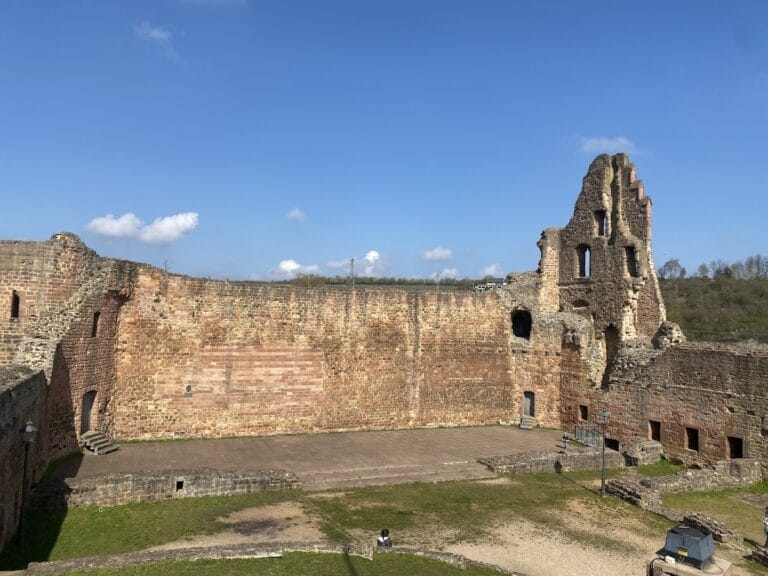
Today, Battenberg Castle exists in ruins but remains recognized for its historical significance and ties to the Leiningen lineage.
Remains
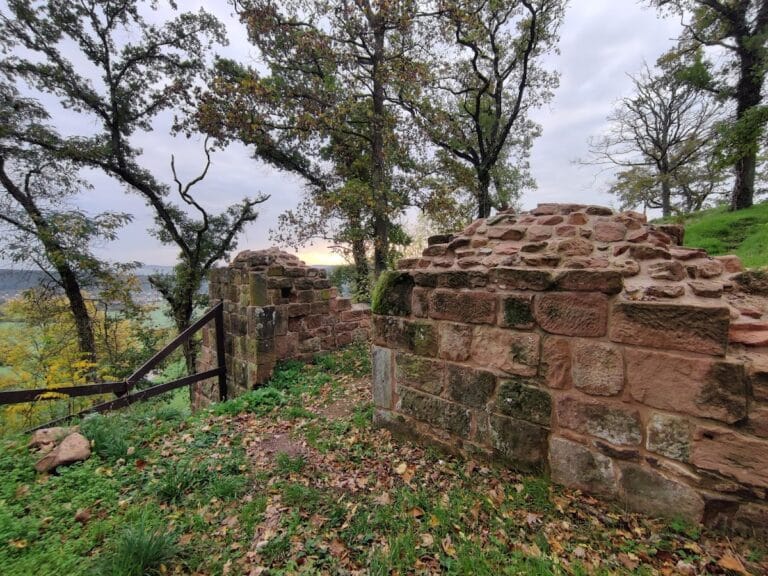
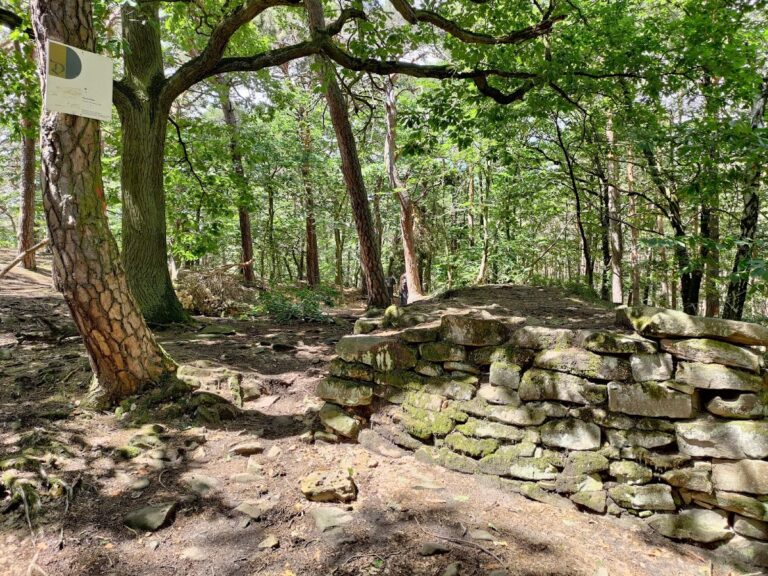
Battenberg Castle stands on a steep hill spur called the Leiningen spur, elevated at 284 meters above sea level. The location takes advantage of natural defensive features, with sharp drops on three sides and originally fortified on the western side by a moat, which has since been completely filled in. The castle was constructed largely of local stone, forming an enclosing curtain wall that defined its perimeter.
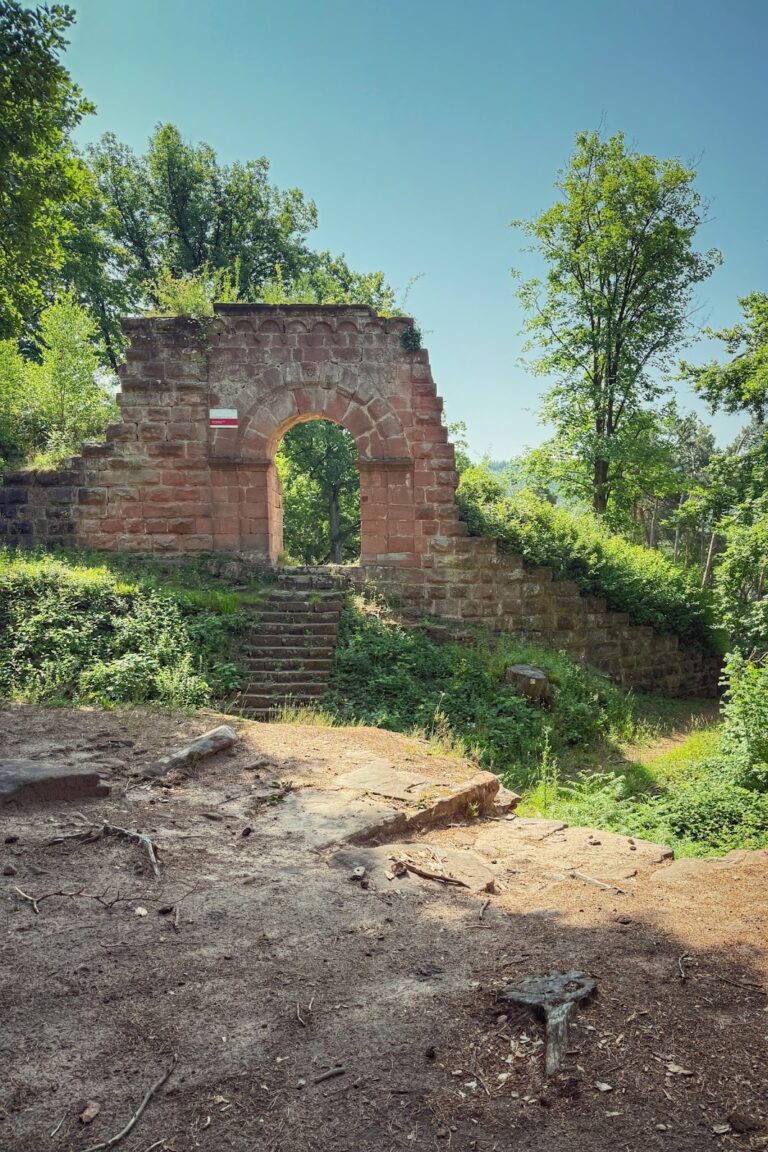
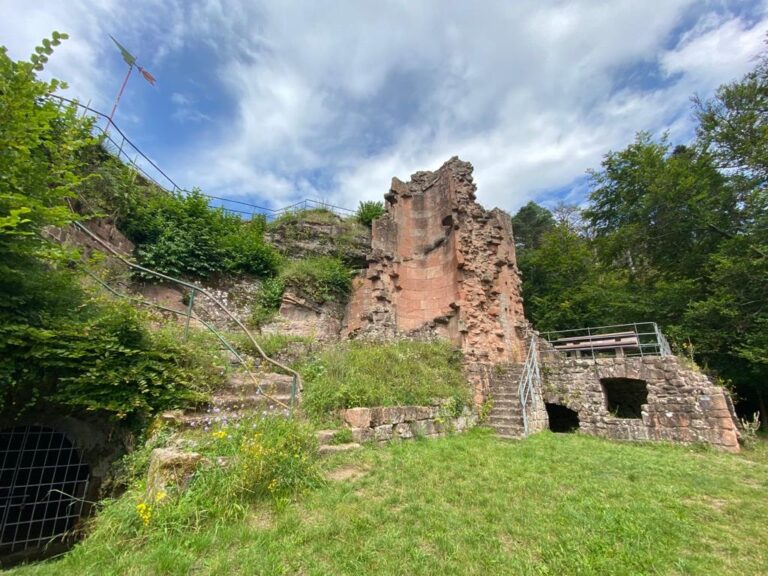
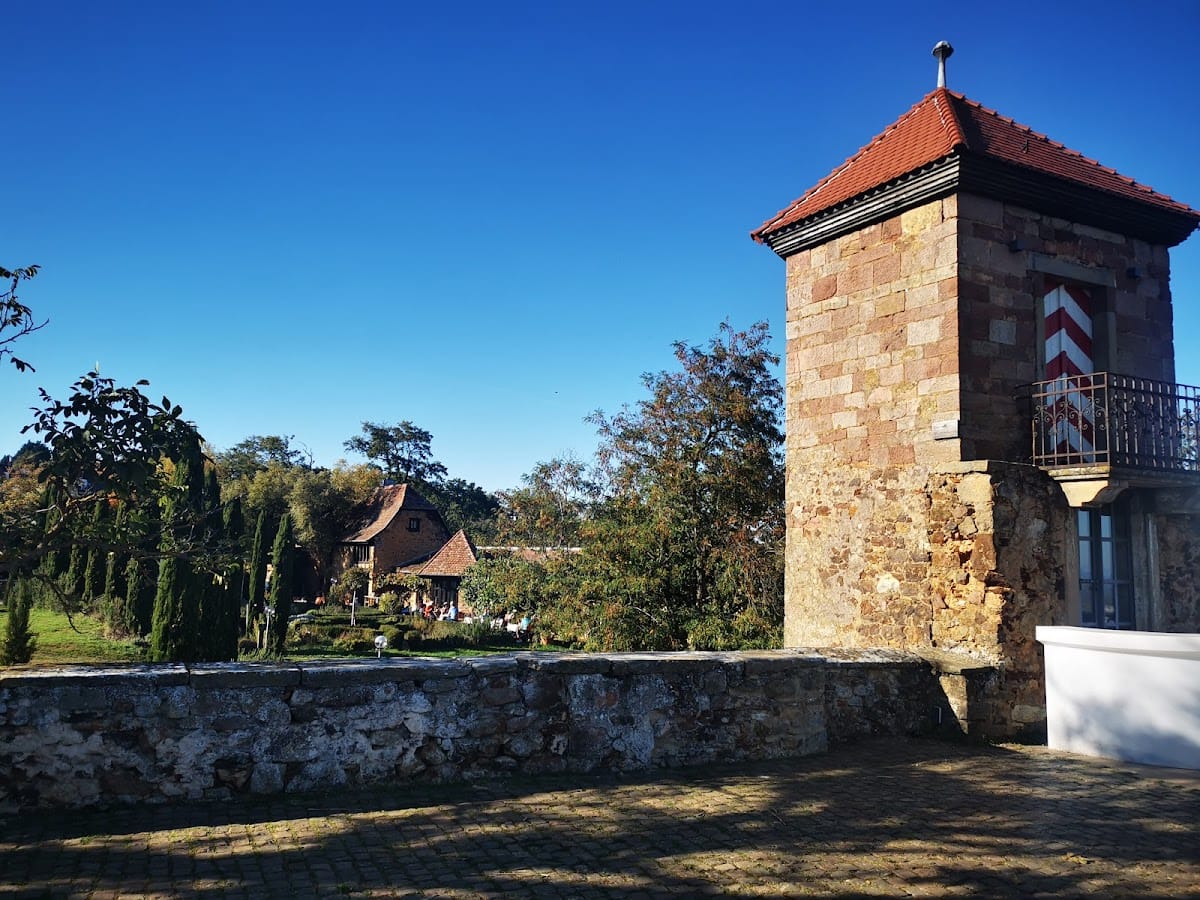
One of the surviving elements of the fortifications is the gatehouse positioned near the northwest corner of the western curtain wall. This gateway marks the main access point to the castle’s interior. On the southern side, centrally placed within the curtain wall, stands a battery tower designed to mount artillery. This tower features a distinctive opening in its wall shaped like a “mouth hole,” an embrasure intended for defensive firing.
Within the eastern part of the site, the vaulted cellar and foundational remains of a former residential building can be seen. Attached to this structure is a staircase tower dating from the 16th century. This tower originally extended as a two-story feature but was later modified at its upper level to serve as a pavilion facing east. An external iron staircase, a later addition, connects this pavilion’s upper floor to a terrace that occupies what was once the second-floor area of the residential section. A covered walkway along the castle’s inner walls links the terrace to the battery tower behind the curtain wall.
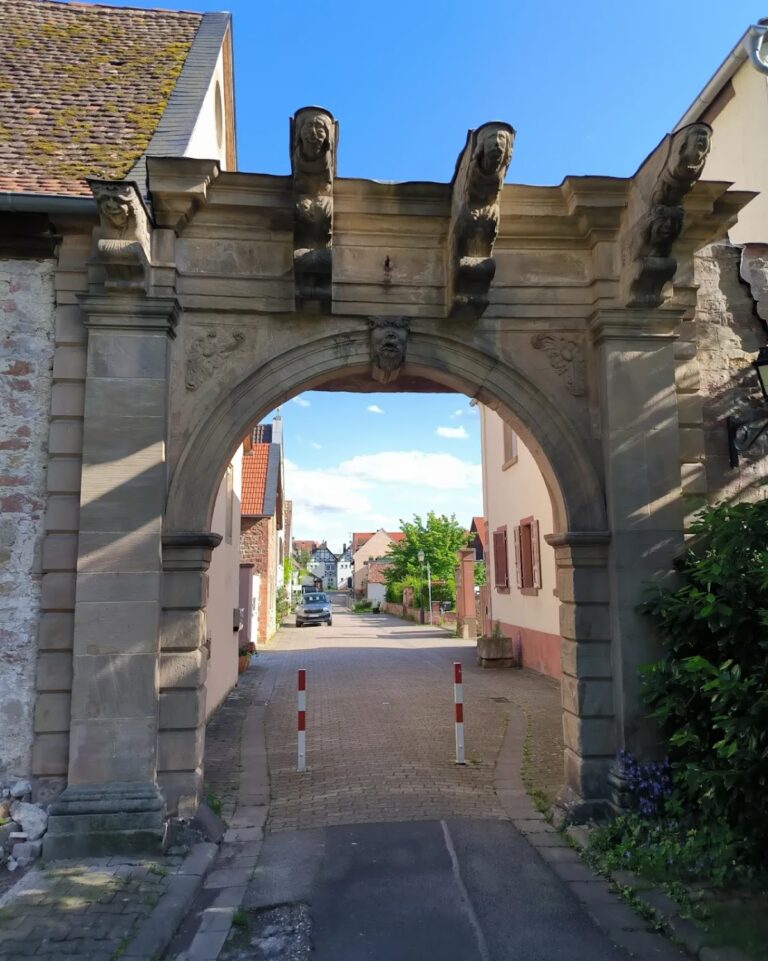
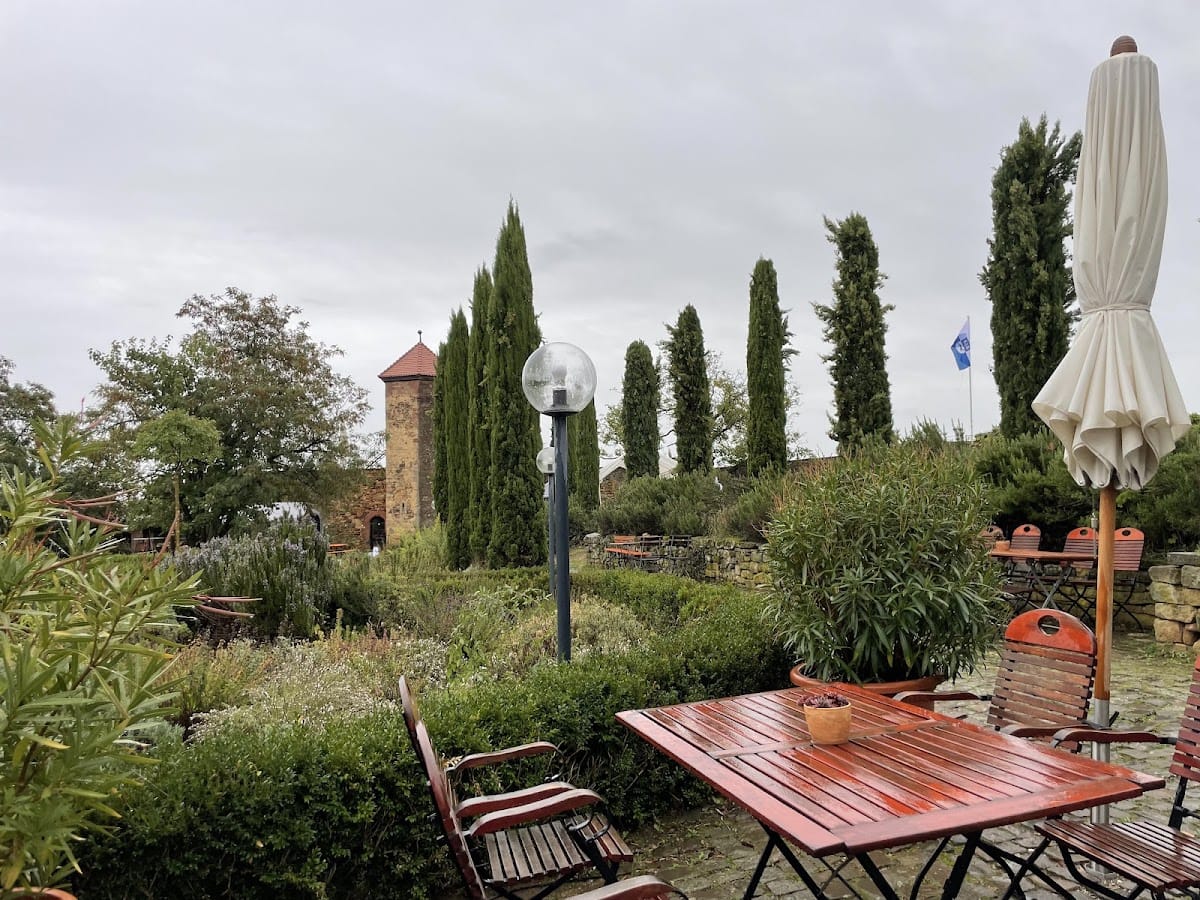
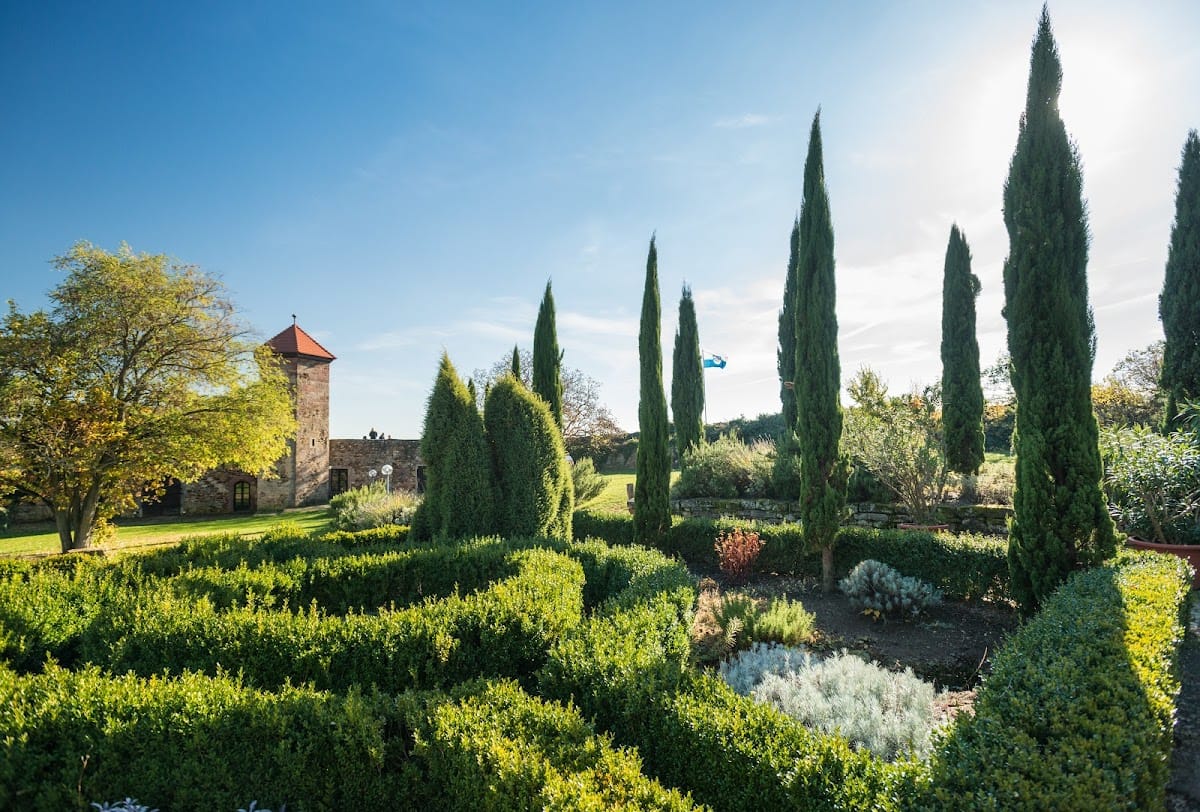
Near the gatehouse to the north are two outbuildings built in the 18th century. These structures have been adapted for modern use but retain their historical fabric. Adjacent to these buildings lies a landscaped courtyard area that contributes to the overall setting of the ruined complex.
From the castle’s elevated position, extensive views extend over the Rhine Plain and the nearby Bergstraße and Odenwald regions. Below the southern slope of the castle, distinctive natural formations known as “Blitzröhren” or lightning pipes are visible. These ochre-colored sandstone columns formed through mineral-rich water sintering and erosion are designated as a protected natural monument, adding geological interest to the historic site.
Nearby sites