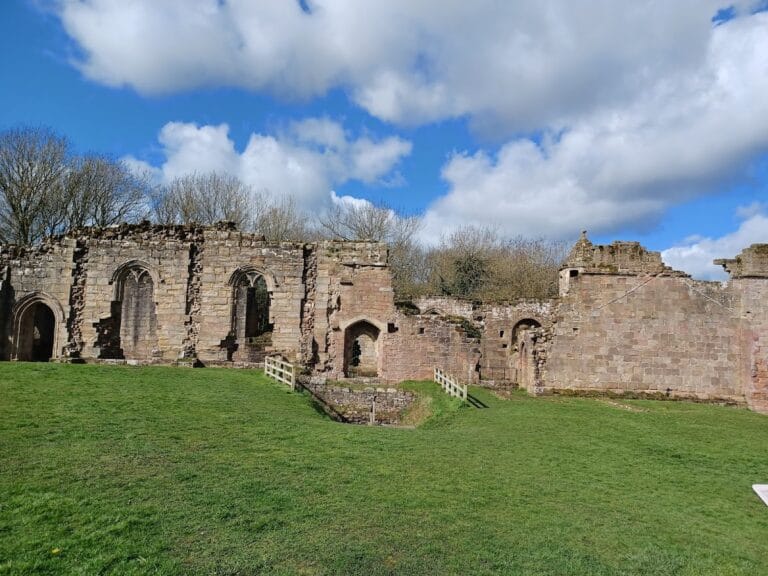
Baile Hill: A Norman Motte-and-Bailey Castle in York, England
Visitor Information
Google Rating: 4.6
Popularity: Low
Official Website: www.yorkwalls.org.uk
Country: United Kingdom
Civilization: Medieval European, Modern
Site type: Military
Remains: Castle
History
Baile Hill is a man-made mound located in the city of York, England, originally constructed by the Normans shortly after their conquest. Its history begins in 1068 when William the Conqueror, having seized control of York, established a castle in the Bishophill area on the south side of the city near the River Ouse. This early fortification, known as Old Baile, was one of two castles built to secure the city, with the companion castle erected the following year on the opposite riverbank.
In 1069, the Danes attacked York and succeeded in destroying both castles. However, William quickly responded by rebuilding them, reaffirming Norman control. Old Baile took the form of a motte castle, featuring a large earth mound topped by a defensive structure. Despite its strategic design, it seems that Old Baile was not heavily occupied or used for long, continuous periods.
By the 13th century, ownership of the castle had passed to the Archbishop of York. In 1322, the Archbishop committed to defending the castle in times of war, indicating its continued significance. During the mid-14th century, specifically around 1340, parts of York’s city walls were constructed in such a way that they incorporated the existing defenses of Old Baile, including its ramparts and ditch. Although these walls were integrated with the older fortifications, they appear to have seldom been involved in active defense.
Centuries later, in 1644, the site gained renewed military importance during the English Civil War. Baile Hill served as an artillery position for Royalist forces during the siege laid upon York. Outside its military roles, the area was largely used for agricultural grazing and recreational activities such as archery throughout the medieval period.
By the late 19th century, much of the Old Baile site was transformed by housing developments. The once prominent defensive mound became largely obscured beneath residential buildings, marking the end of its active historical use.
Remains
Old Baile was constructed as a motte-and-bailey castle, featuring a substantial artificial mound surrounded by defensive earthworks. The motte itself rose approximately 12 meters high and spanned around 66 meters in diameter. This central mound was encircled by a substantial ditch, forming a barrier against attackers.
Atop the motte stood a wooden tower, accessed by a staircase, which was protected by a wooden palisade—a fence made of sharpened timber stakes. This simple but effective design was typical of Norman castles from the period. Adjacent to the motte was the bailey, or courtyard area, which lay to the northwest of the mound. It was enclosed by an earthen rampart and an outer surrounding ditch, creating a fortified space for buildings and activity within the castle perimeter.
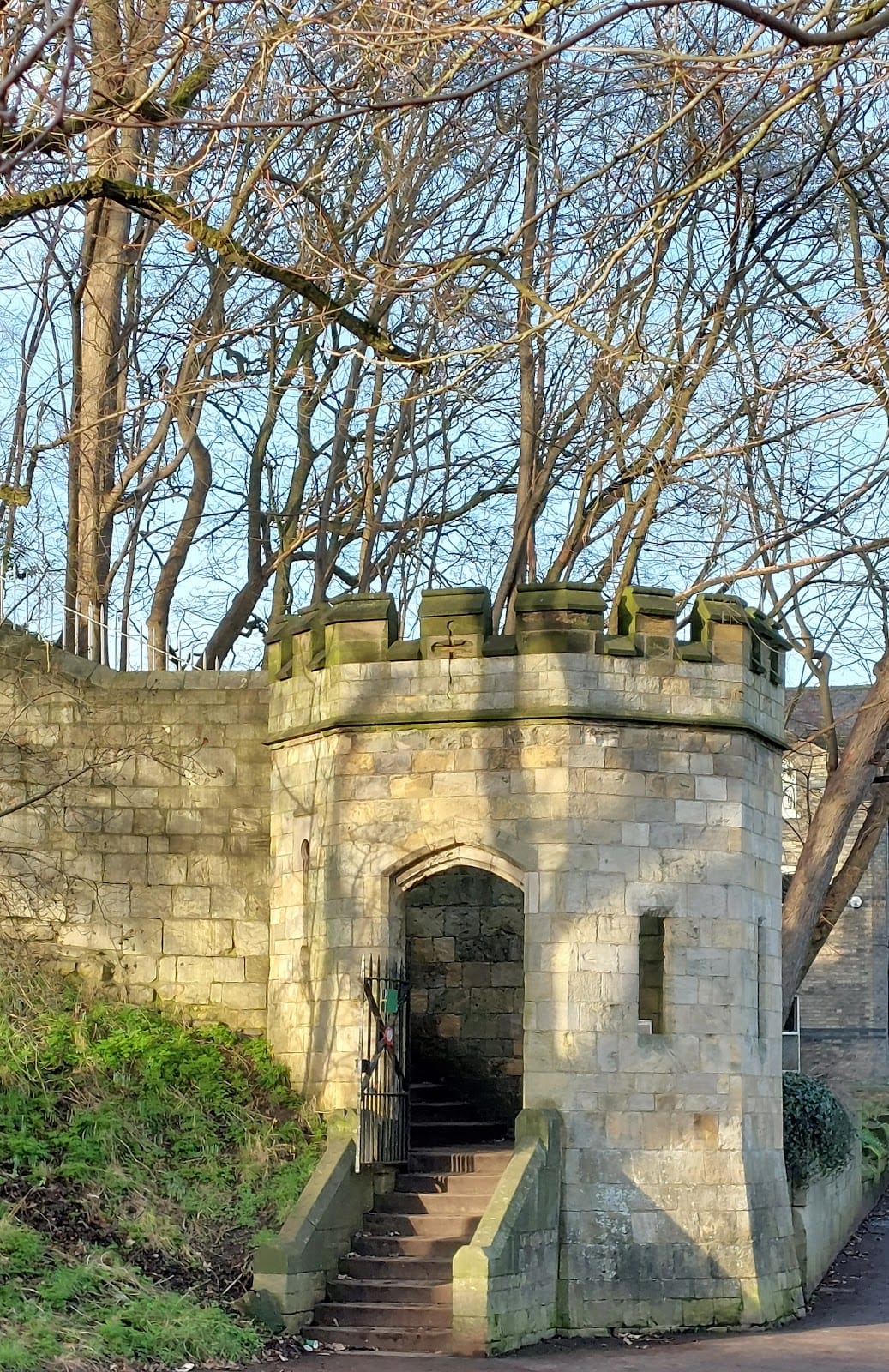
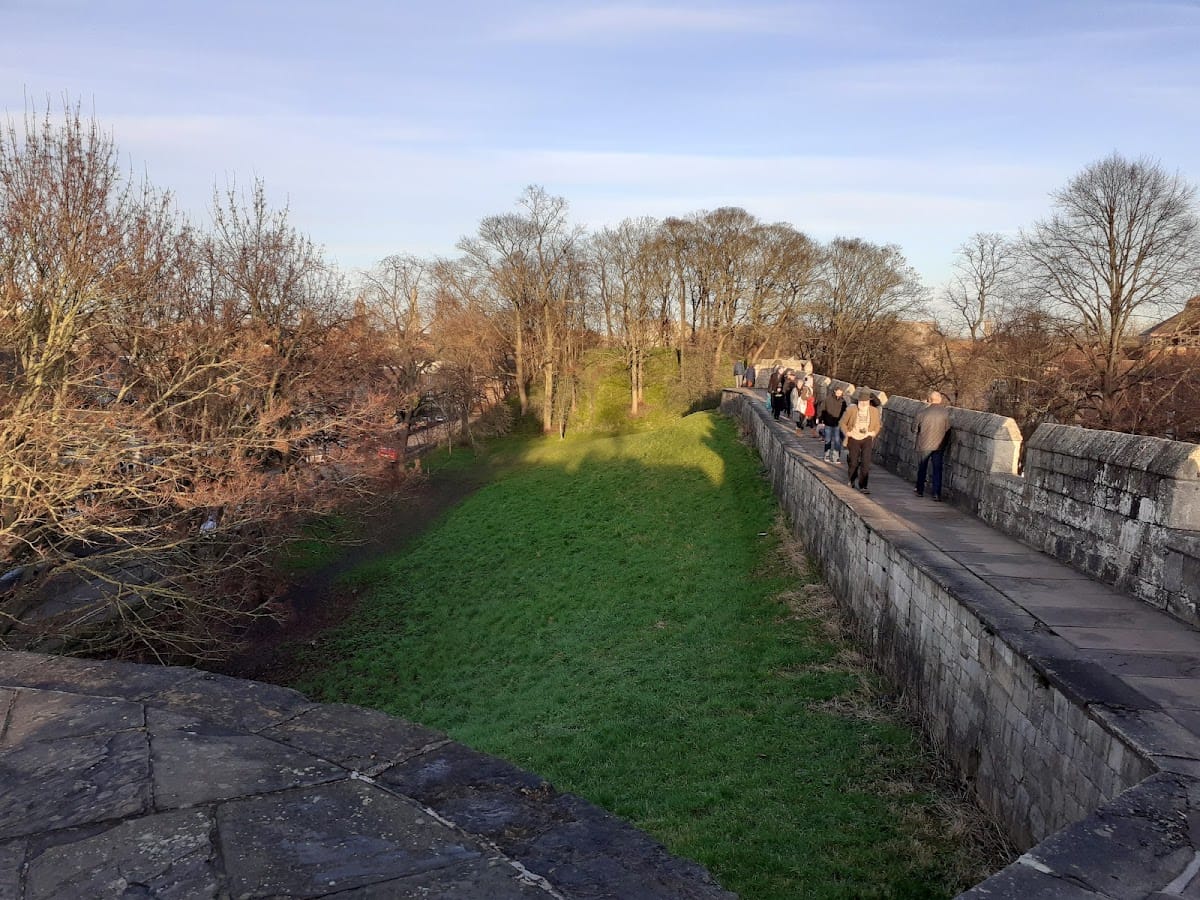
In the 14th century, the construction of York’s city walls incorporated parts of Old Baile’s existing defenses. The southeast and southwest sections of the castle’s earthworks were integrated with the new stone walls, linking medieval fortification systems. Remnants of these defensive features are still visible today as two shallow depressions in the city walls near Baile Hill and Victoria Bar, indicating the former position of the defensive ditch.
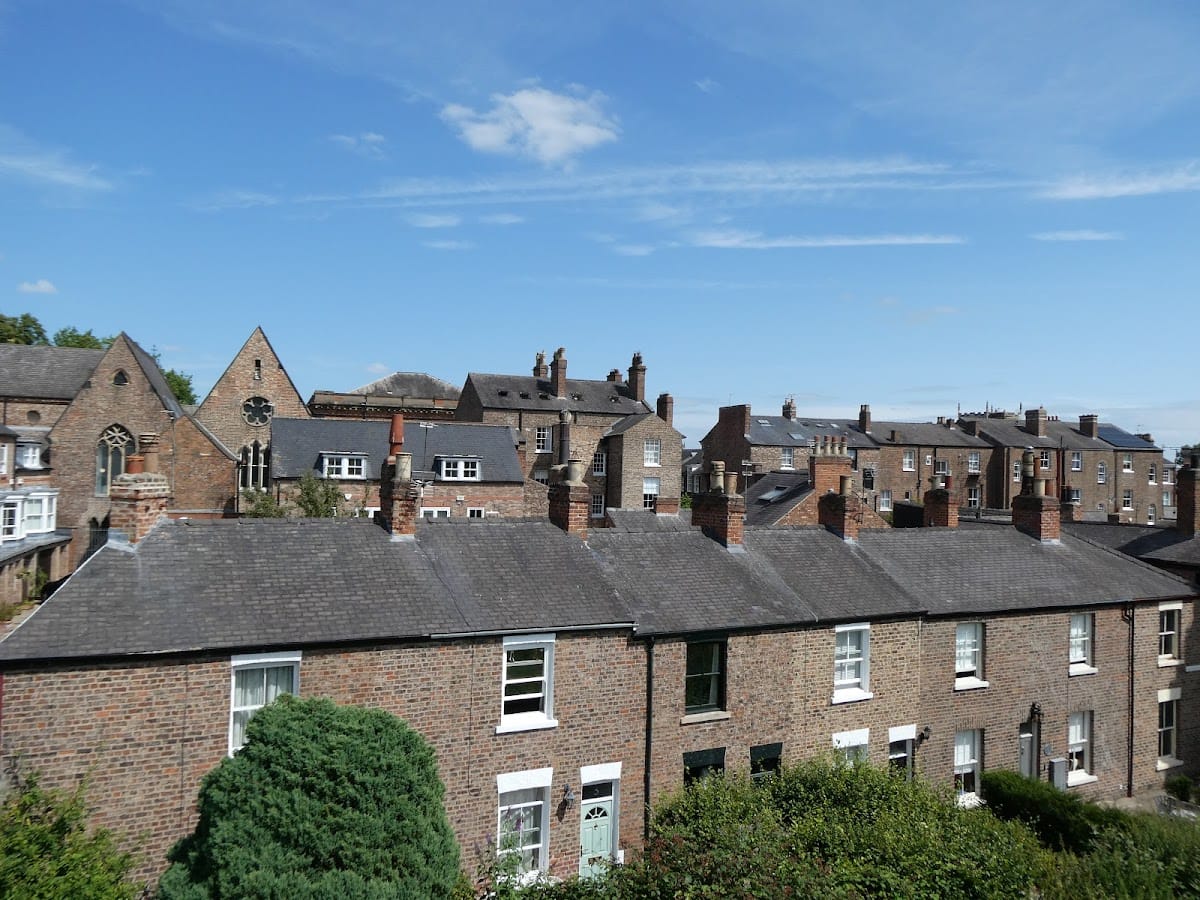
The wider Old Baile area has been largely built over since the 1880s, with residential housing covering much of the original castle footprint. Despite this, subtle earthworks and ground depressions preserve traces of the castle’s form within the modern urban environment. These surviving features mark Baile Hill as a significant relic of York’s Norman and medieval past.
Nearby sites