Yorkshire Museum: A Museum of Yorkshire’s Geological and Archaeological Collections

Site at a Glance
- Rating
- 4.5
- Popularity
- Medium
- Country
- United Kingdom
- Primary era
- Medieval
- External website
- Open
- Eras represented
- Stone Age, Iron Age, Classical, Medieval, Modern
- Civilizations
- Anglo-Saxon, Norse, Roman
- Site type
- Museum
On this page13 sections
History
The Yorkshire Museum in York, United Kingdom, was founded by the Yorkshire Philosophical Society to house geological and archaeological collections and opened in February 1830. Designed in the Greek Revival style, the museum became one of the longest-established museums in England and developed within grounds created on land formerly belonging to St Mary’s Abbey.
Foundation and the Museum Gardens
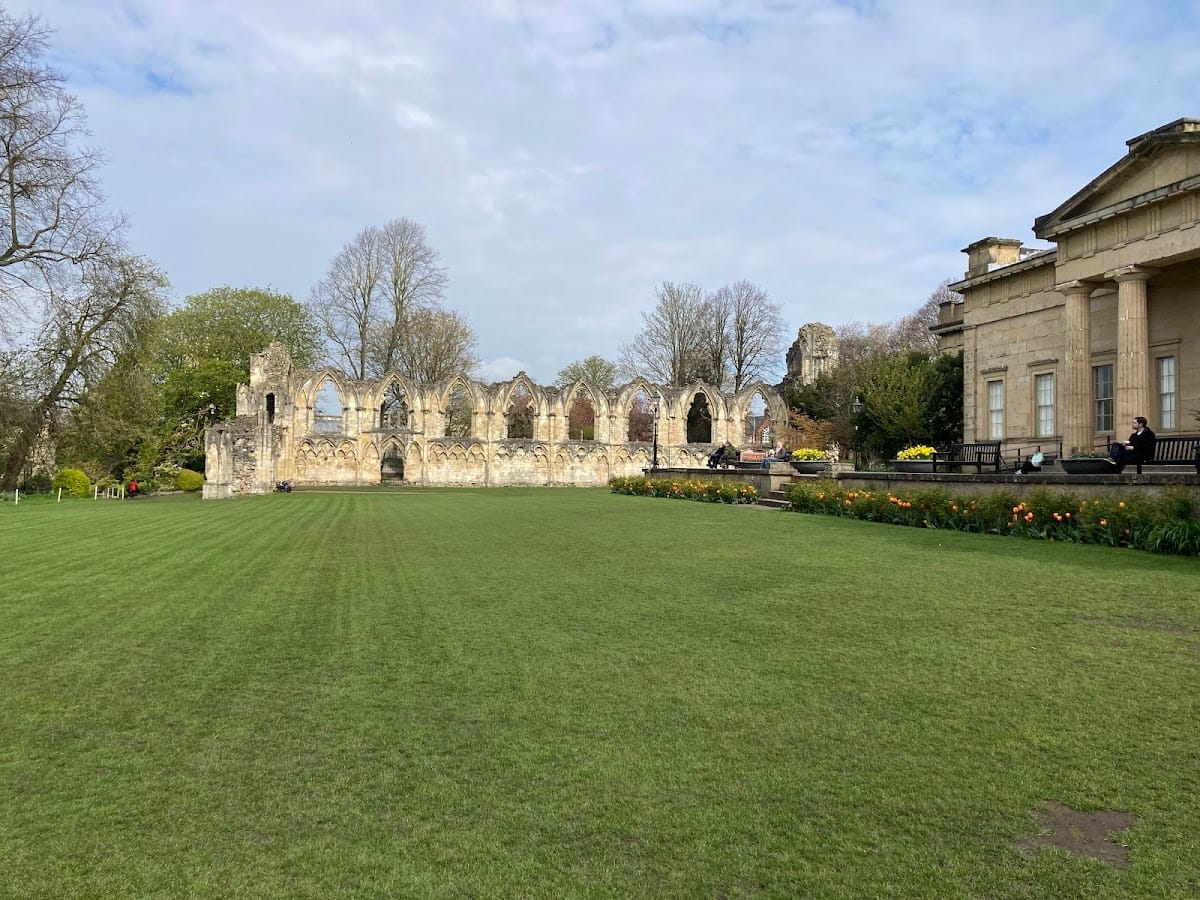
The Yorkshire Philosophical Society, a learned scientific organization, was established on 7 December 1822. Its early collections were kept at premises in Ousegate, but these soon became too small. In 1828, the society received a royal grant of 10 acres, approximately 4 hectares, of former abbey land for a new museum. The grant required the surrounding grounds to become a botanic garden. The gardens were laid out between 1827 and 1843, with work attributed in part to Sir John Naysmith, and are now known as the Museum Gardens.
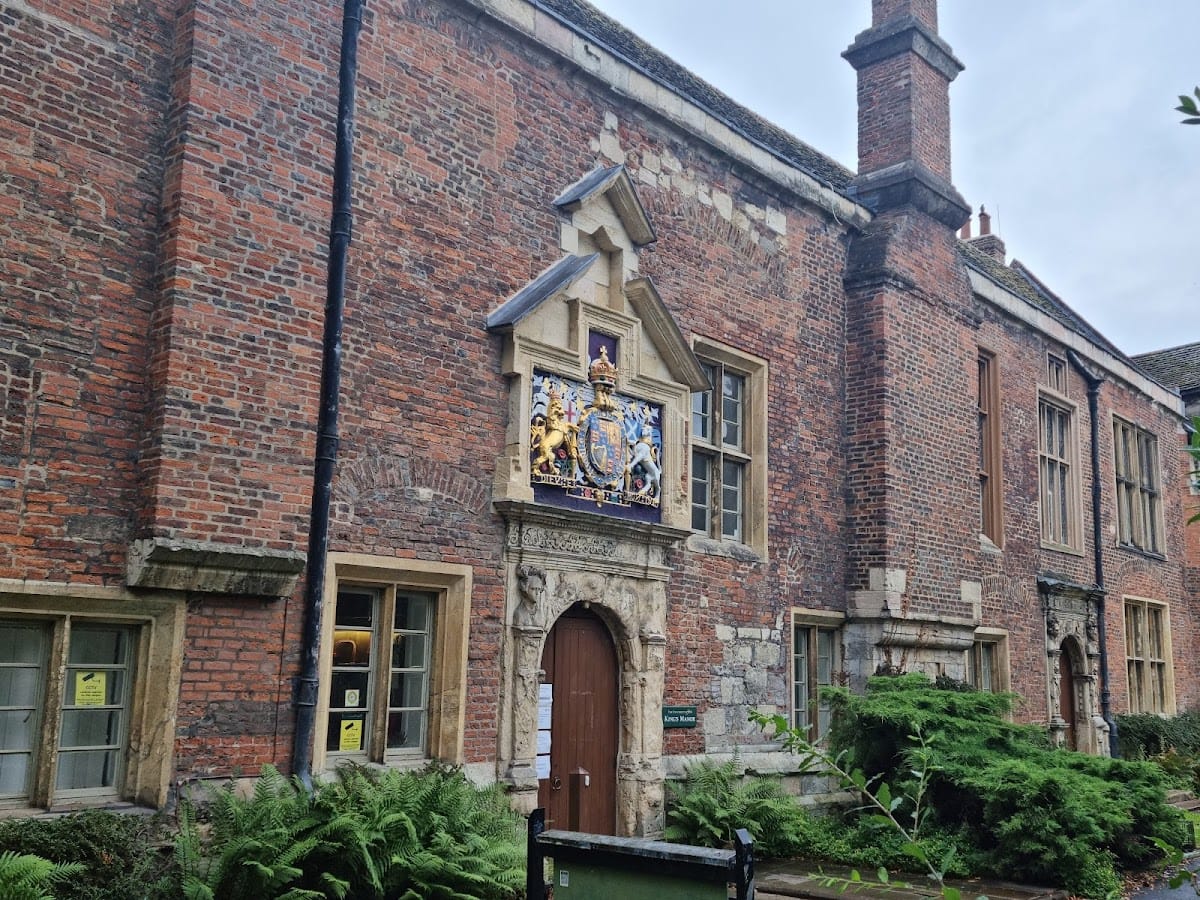
William Wilkins designed the principal museum building, which is a Grade I listed building. Grade I is England’s highest category of statutory protection for historic buildings and is reserved for structures of exceptional interest. The museum’s setting therefore brought together a nineteenth-century scientific institution, botanic-garden grounds, and surviving medieval architectural monuments associated with the former abbey.
Scientific and archaeological development
The society’s collections began in the 1820s with bones and fossils excavated from Kirkdale Cave in North Yorkshire. They later expanded into biology, geology, archaeology, numismatics, and astronomy. The archaeology collection extends from approximately 500,000 BC to the twentieth century, while the archaeological holdings contain nearly one million objects. Most of the Roman, Anglo-Scandinavian, and medieval material came from York and Yorkshire. John Phillips was the museum’s first keeper.
The museum also became a meeting place for learned societies. The inaugural meeting of the British Association for the Advancement of Science took place there on 26 September 1831. From 7 to 17 July 1934, the Royal Archaeological Institute held its summer meeting and archaeological congress at the museum.
War damage and public ownership
During the Baedeker Blitz, a German bombing campaign against British cultural and historic cities, the museum narrowly avoided a bomb on 29 April 1942. The explosion damaged the roof and windows. Reginald Wagstaffe, the curator who lived in the adjacent Manor Cottage, supervised the removal of debris, including broken glass and geological specimens.
Financial difficulties affected the Yorkshire Philosophical Society from 1956 onward. On 2 January 1961, the society transferred the Yorkshire Museum and Museum Gardens to the citizens of York. York Corporation operated them until 1974, when municipal boundary changes transferred responsibility to North Yorkshire County Council. The museum and gardens returned to the City of York Council in 1996.
Modern management and interpretation
In 2002, the City of York Council established the York Museums Trust to manage the Yorkshire Museum, Museum Gardens, York Castle Museum, and York Art Gallery. The museum closed from November 2009 until 1 August 2010 for a major refurbishment costing approximately £2 million. The work reorganized the interior into sections devoted to Roman York, Anglo-Saxon, Viking, and medieval York, as well as extinct life and fossils.
The museum closed on 23 March 2020 during the COVID-19 pandemic. A 2021 Culture Recovery Fund grant supported repairs to the façade and roof. The museum reopened on 9 July 2021, later closing for the winter period on 31 October, and reopened on 8 April 2023 with an exhibition focused on the Ryedale Hoard. Four permanent collections hold English designated collection status, recognizing collections of pre-eminent national and international importance.
The Yorkshire Museum and Museum Gardens first hosted the Eboracum Roman Festival in 2016, after which it became an annual event. Finds Days allow objects brought by members of the public to be recorded and identified through the British Portable Antiquities Scheme, a national programme for documenting archaeological discoveries. In March 2012, two Stone Age hand axes were stolen from a public handling display and returned in June after a private dealer contacted the police.
Remains
Building, gardens, and observatory
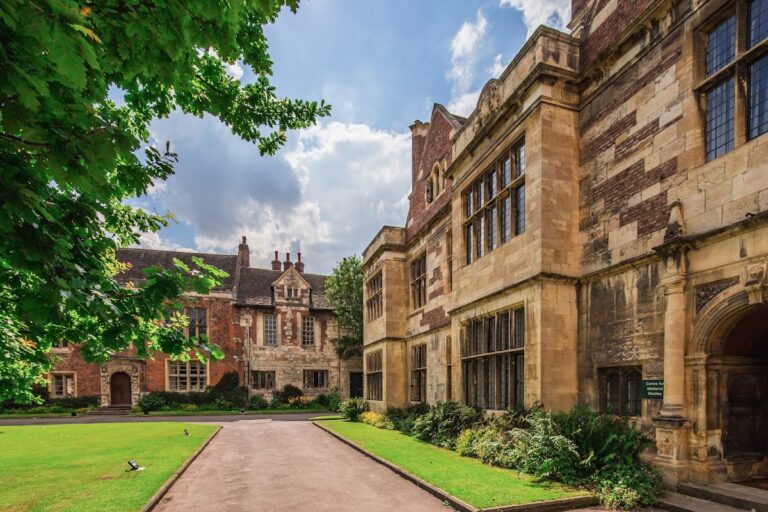
The principal museum building stands within the Museum Gardens and follows the Greek Revival style, a nineteenth-century approach based on the forms and proportions of ancient Greek buildings. Tempest Anderson Hall, an annex built in 1912, is an early reinforced-concrete structure that functions as a conference venue and lecture theatre. The surrounding gardens contain the botanic-garden grounds and architectural monuments dating from the medieval period.
The astronomy collection is kept mainly in an observatory in the Museum Gardens. The observatory is staffed by volunteers, while some telescopes are kept at York Castle Museum. Together, the building, gardens, annex, and observatory form the principal physical setting for the museum’s scientific and historical collections.
Roman York displays
The first gallery created by the 2010 refurbishment presented objects from Eboracum, the Roman name for York, which developed into an important Roman military and administrative centre. Its displays included a prominent statue of Mars, the Roman god of war, and an interactive presentation about people whose remains were found in York. A stone inscription recorded the rebuilding of part of the Roman fortress.
The inscription commemorates the rebuilding in stone of the south-eastern wall of Eboracum’s legionary fortress by the Ninth Legion, a unit of the Roman army. It dates to the twelfth year of the reign of Emperor Trajan, between 10 December 107 and 9 December 108, and is regarded as an outstanding example of a Romano-British inscription.
Biology and geological collections
The biology collection contains about 200,000 fauna and flora specimens, most of them insects. It includes two specimens of the extinct great auk, an almost complete moa skeleton, passenger pigeons, and Quaternary remains from Yorkshire. The Kirkdale Cave material includes elephants, cave bears, and hyenas dating to approximately 125,000 years ago. Dodo bones discovered by Harry Higginson were distributed to three museums, including the Yorkshire Museum, in 1866 and 1867.
The geology collection contains more than 112,500 rocks, minerals, and fossils. More than 100,000 of these are fossils, including examples from the Carboniferous, Mesozoic, and Tertiary geological periods. The Tertiary is an older term for much of the interval now divided mainly between the Paleogene and Neogene.
Prehistoric archaeology
The archaeological collection includes material dating from approximately 500,000 BC to the twentieth century. Among its prehistoric holdings is the Star Carr Pendant, described as the oldest Mesolithic art in Britain. The Mesolithic, or Middle Stone Age, was the period between the Palaeolithic and Neolithic, when hunter-gatherer communities lived in Britain. The collection also includes Mesolithic red-deer frontlets from Star Carr and the York Hoard, a group of Neolithic flint tools deliberately deposited together.
Other prehistoric holdings include the Towton torcs, a pair of Iron Age gold neck rings, and the Melsonby Hoard of Iron Age objects. The collections also contain forged prehistoric tools associated with Flint Jack, the nickname of a nineteenth-century archaeological forger who fabricated prehistoric implements.
Roman and later archaeological holdings
The Roman and later archaeological collections contain objects connected with York and Yorkshire as well as finds from elsewhere in the region. They include the Wold Newton Hoard of 1,857 coins from the early fourth century AD, a fragment of a marble statue of Constantine the Great, and a fourth-century sculpture of Mars. The Heslington Hoard contains 2,800 mid-fourth-century coins, while the Overton Hoard consists of early third-century silver denarii. The Knaresborough Hoard contains fourth-century copper-alloy vessels, and the Ryedale Hoard consists of second-century Roman copper artefacts.
Material associated with the later Roman period includes the fourth-century skeleton known as the Ivory Bangle Lady. The archaeological displays have also included a Roman hair bun dating from the late third or early fourth century, providing a physical example of personal appearance from Roman York.
Anglo-Saxon and Viking-period objects
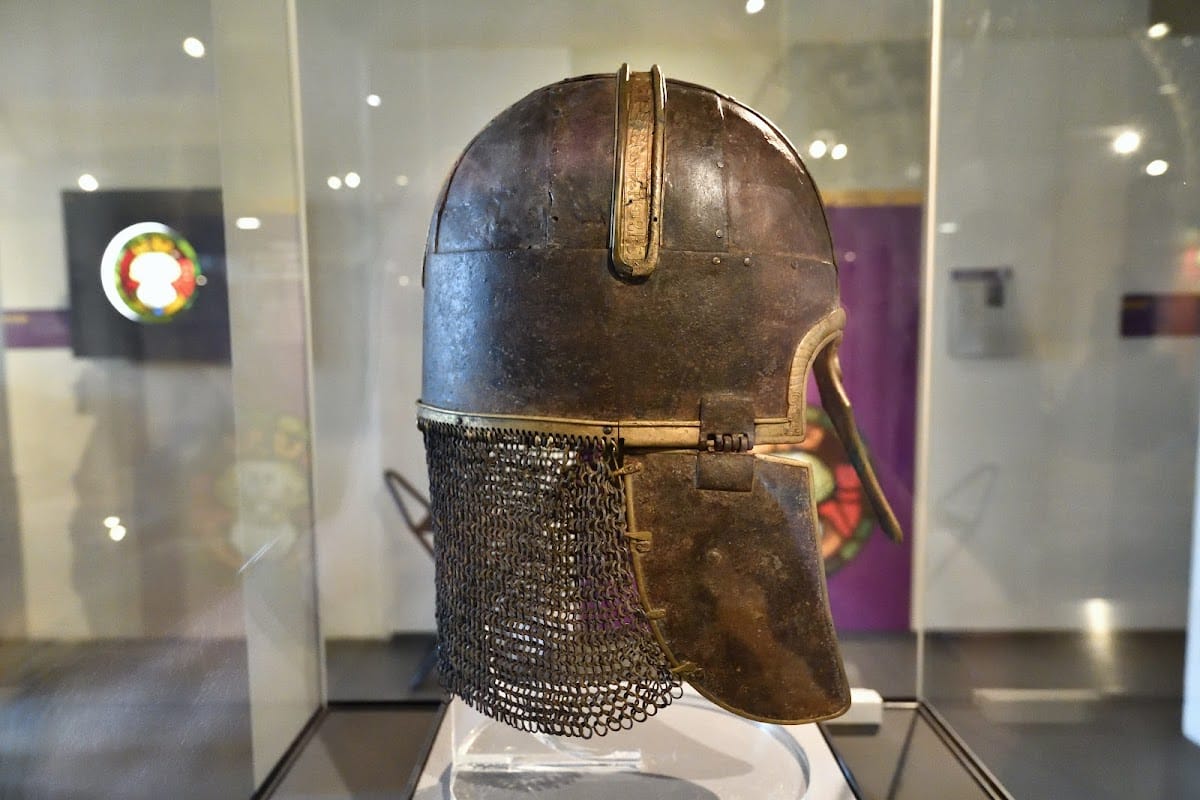
The Anglo-Saxon and Viking-period holdings include the eighth-century Coppergate Helmet, found in York, and the Ormside Bowl, a silver-gilt bowl from Cumbria. Part of the ninth-century St Leonard’s Place Hoard consists of Northumbrian pennies. The Bedale Hoard contains Viking silver jewellery and an Anglo-Saxon sword, while the Escrick Ring is an Anglo-Saxon gold and sapphire finger ring.
The collection also includes the late Anglo-Saxon Gilling Sword, which was found in a river and has a silver-decorated handle. The tenth-century Vale of York Hoard consists of a niello silver-gilt vessel containing coins and jewellery. Niello is a dark decorative material set into engraved metal, creating contrasting patterns on the surface.
Medieval objects and St Mary’s Abbey material
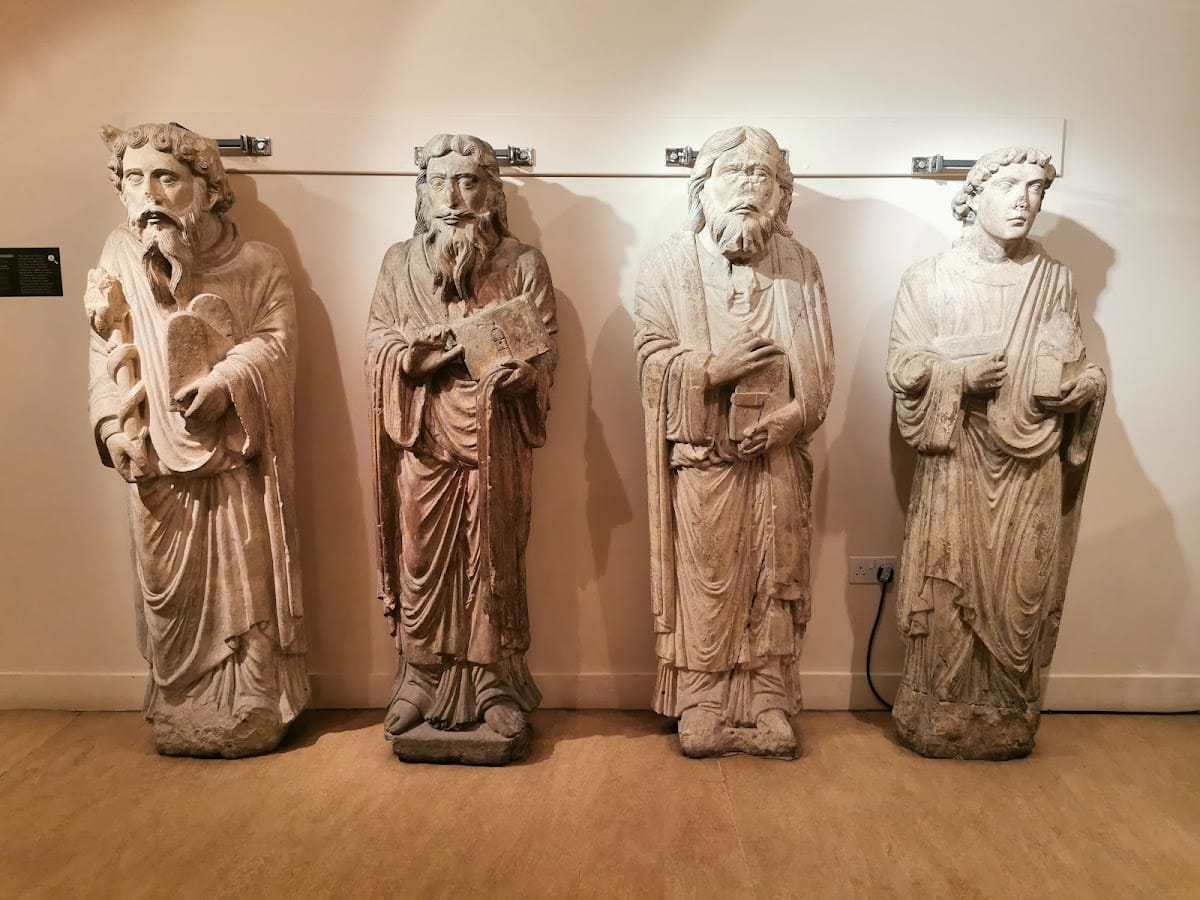
Medieval holdings include the Middleham Jewel, a gold diamond-shaped pendant set with a sapphire and engraved with Christian imagery. The Cawood Sword is a Viking sword dating to approximately 1100. The museum also holds the Ryther and Bootham hoards and medieval shrines associated with Saint William of York, a medieval archbishop of York later venerated as a saint. A carved medieval boss from St Mary’s Abbey has also featured in the archaeological displays.
A gilt-copper-alloy figurine of Christ made with Limoges enamel was found at St Mary’s Abbey in 1826. Limoges enamel is a coloured enamel technique historically associated with the French city of Limoges and commonly applied to copper objects. The figurine was subsequently lost, acquired by the museum in 2019, and placed on public display on 20 September of that year.
Nearby sites