Břecštejn: A Medieval Rock Castle Ruin in Czechia
Visitor Information
Google Rating: 4.5
Popularity: Low
Official Website: turistickamapa.cz
Country: Czechia
Civilization: Medieval European
Site type: Military
Remains: Castle
History
Břecštejn is a rock castle ruin located in the municipality of Vlčice, Czechia, originally constructed by medieval Bohemian nobility. Its origins trace back to the 14th century as a successor to an earlier fortress known as Stein, reflecting the region’s medieval defensive architectures.
The predecessor castle, Stein, was owned by Otto von Stein in the early 14th century. In 1336, Otto donated land to the Knights of the Holy Sepulchre, who established a monastery in nearby Trautenau (modern-day Trutnov). The castle Stein seems to have fallen into disrepair later in the century. By the 15th century, the site was rebuilt in the 1420s under Johann I. Silber (also called Jan I. Zilvár), whose family supported the Hussite movement. During Jan Žižka’s occupation of Trautenau around 1421, Břecštejn served as a Hussite stronghold, reflecting the military and religious upheavals of the time.
Throughout the 15th century, the Silber family expanded their estates across the foothills of the Riesengebirge mountains, reaching their height around the year 1500. A significant change occurred in 1522 when King Ludwig II freed Adam I. Silber’s properties, including Břecštejn, from traditional feudal obligations. In 1532, Adam I. Silber renamed the castle Silberstein. However, after several generations, Christoph Silber von Silberstein, who died in 1575, chose to abandon Břecštejn due to its limited size. He relocated his residence to the more modern Renaissance fortress of Vlčice. This marked the beginning of the castle’s decline.
By the 17th century, Břecštejn was deserted. Following the Battle of White Mountain in 1622, the estate was confiscated and transferred the next year to Albrecht von Waldstein. It changed hands to Daniel Hebron in 1627. During the Thirty Years’ War in the 1630s, Swedish troops thoroughly destroyed the castle, leaving it in ruins. Later, in the late 18th century, Johann Franz Theer acquired the property in 1790. He undertook efforts to clear and secure the site, constructing a large wooden octagonal pavilion in 1794 on the former palace location and laying a sandstone-paved path with a new entrance. The Theer family adopted the name Theer von Silberstein to reflect their connection to the estate. The pavilion survived until its demolition in 1969. Although there was a proposal in 2005 to protect the ruins officially, the site was not recognized as a national cultural monument and remains exposed to natural decay.
Remains
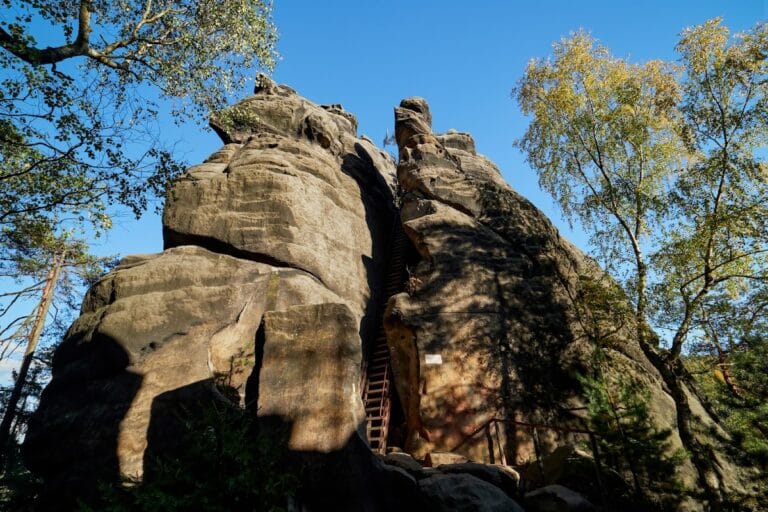
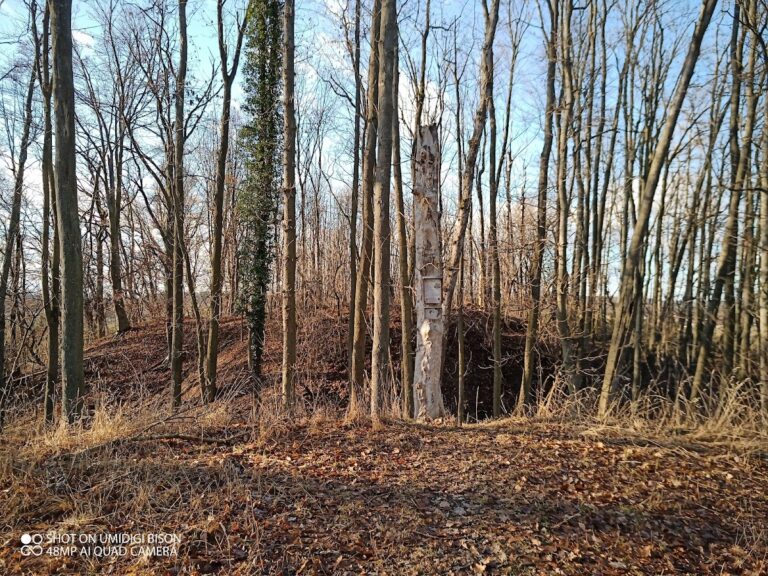
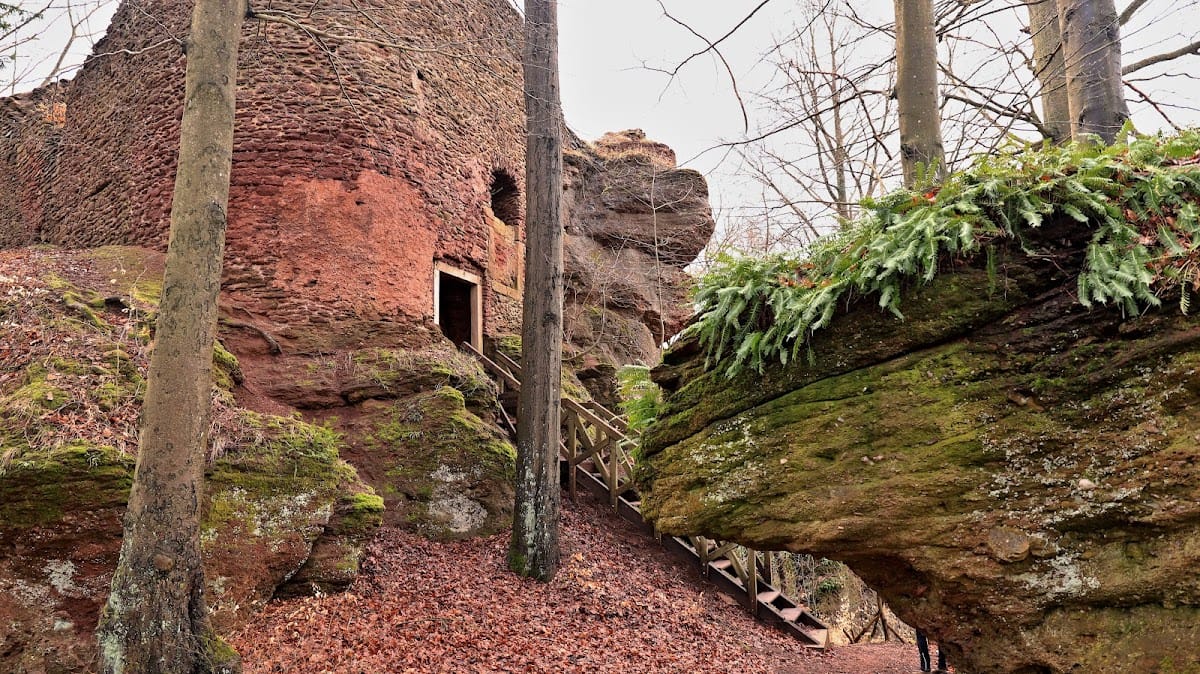
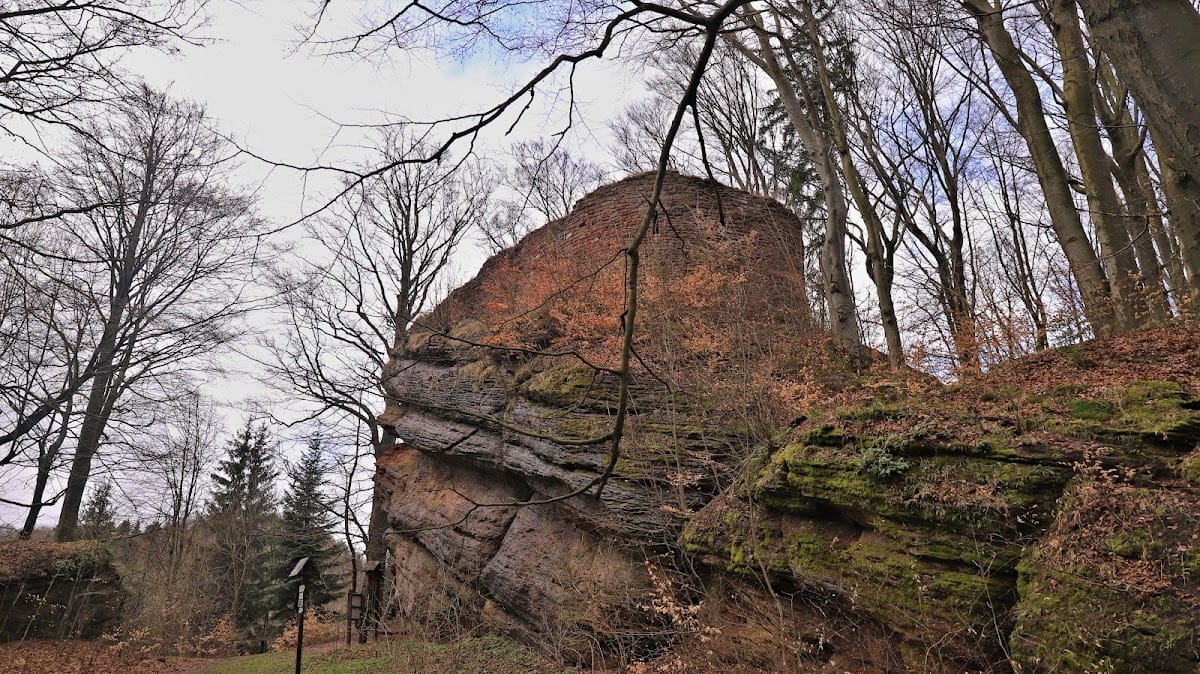
Břecštejn is classified as a small Silesian-type residential castle, built on a steep rocky hilltop surrounded by woodland. Its location on a sharply vertical cliff on the northwest side provided natural defense, while man-made defenses protected the eastern and southeastern approaches. These included a double earthwork consisting of ramparts and ditches, which together created a formidable barrier against attackers.
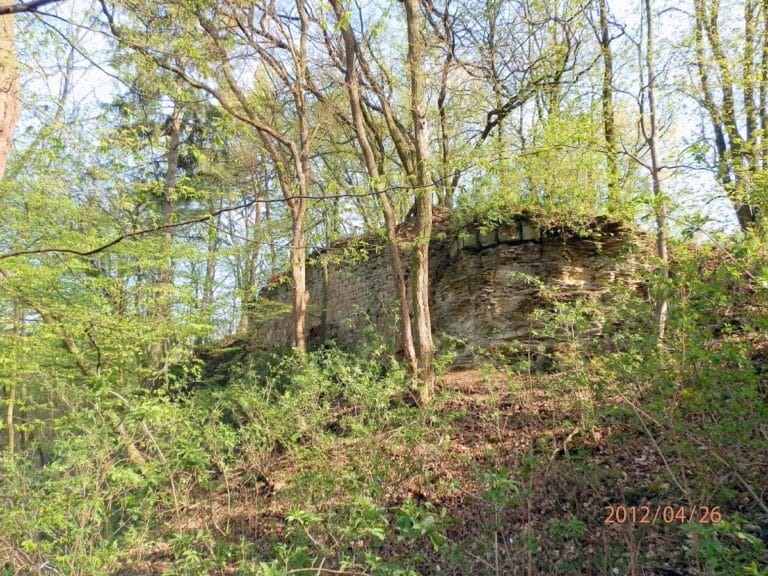
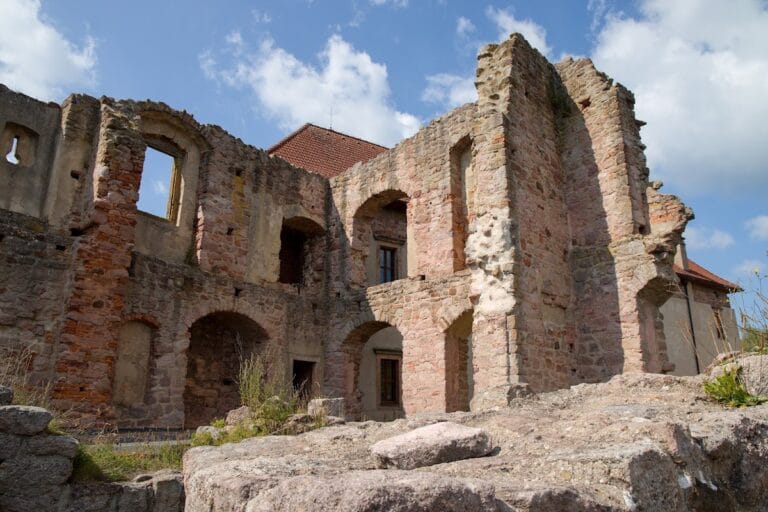
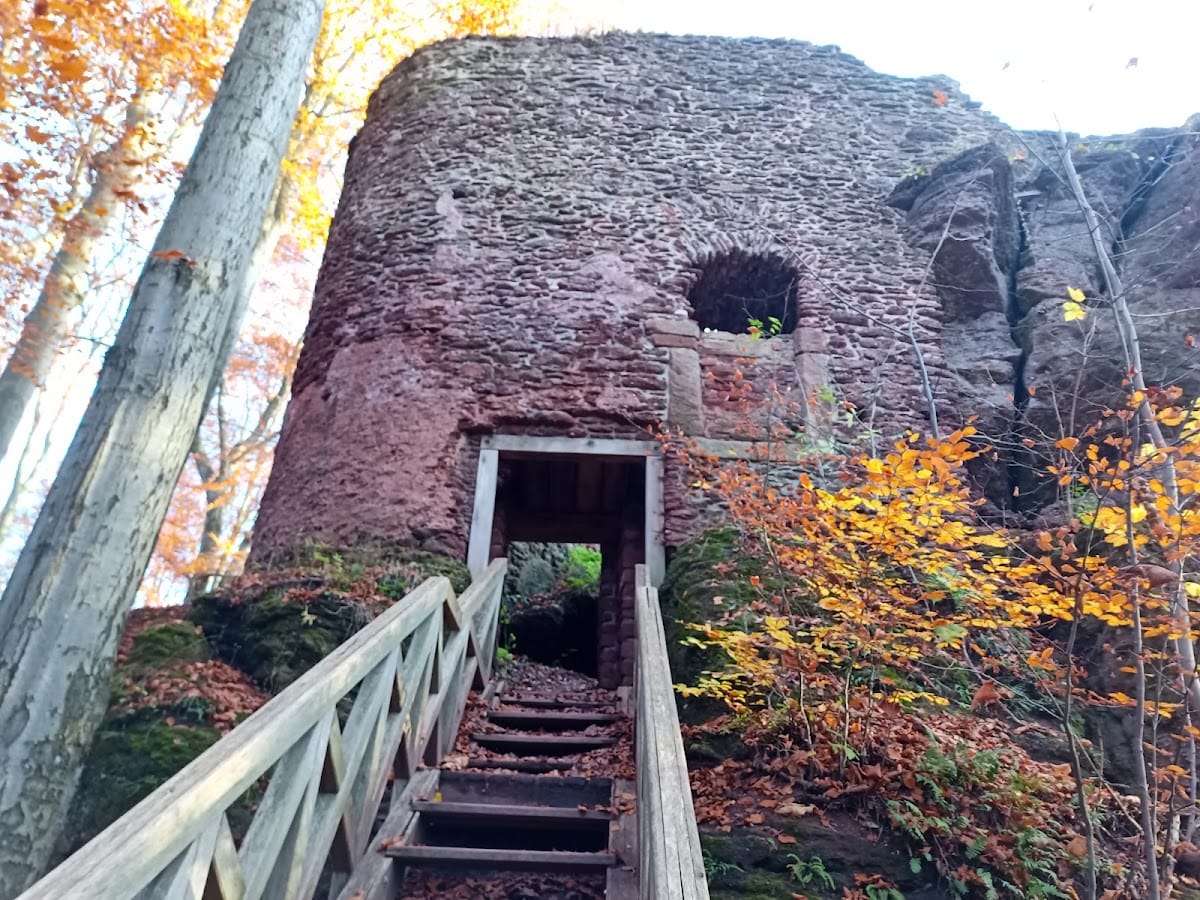
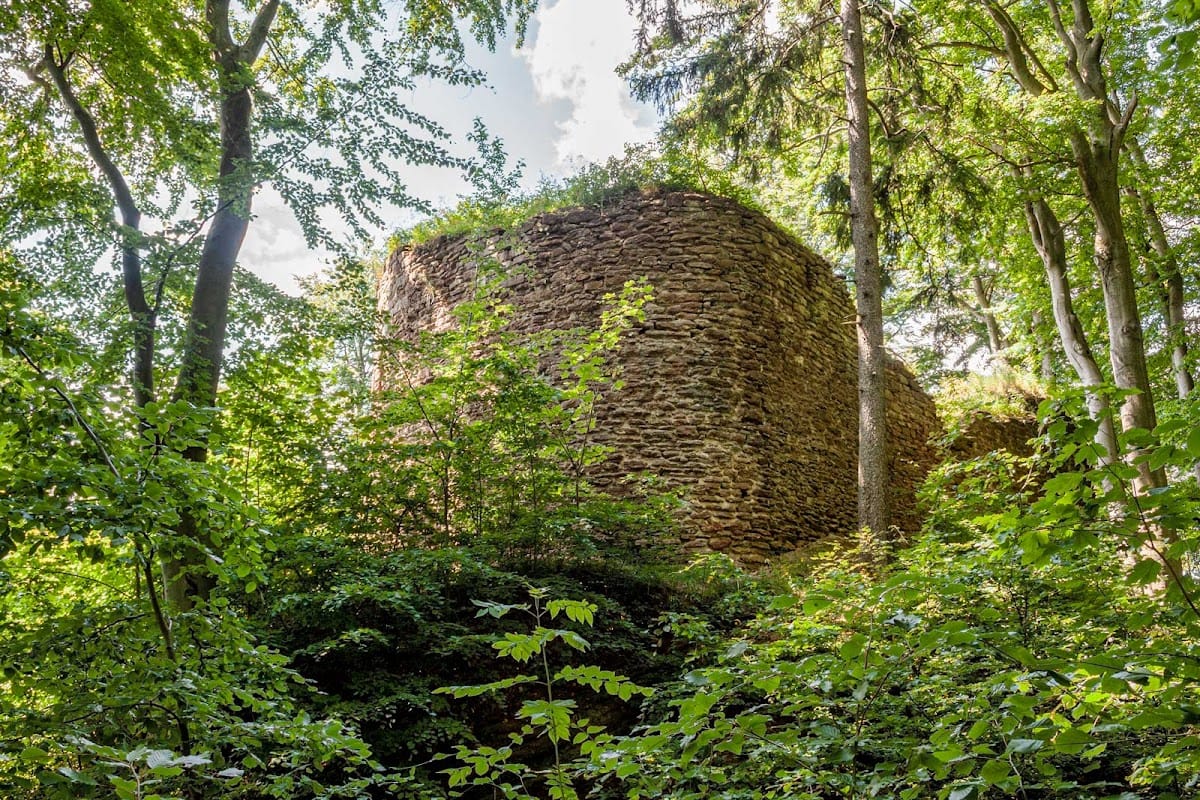
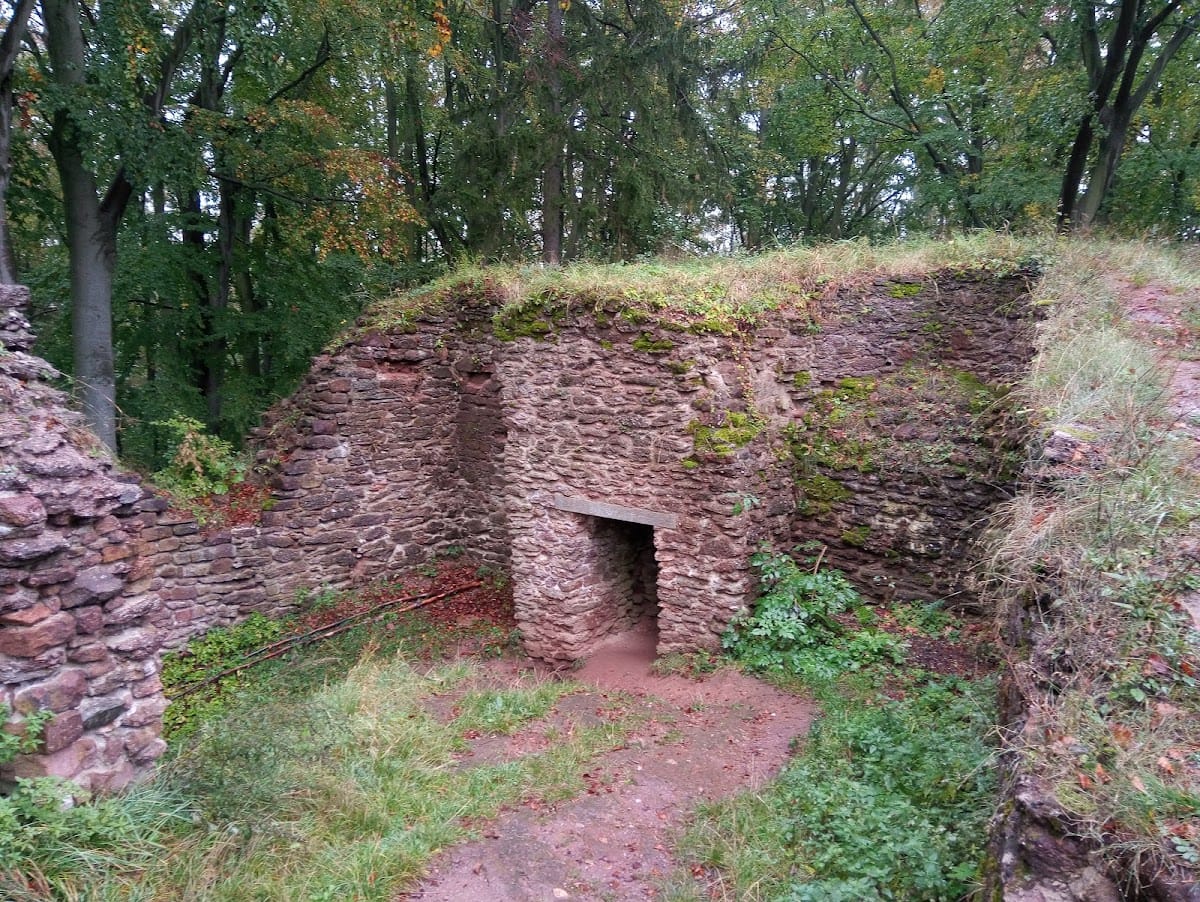
The surviving remnants reveal a castle enclosed by a thick curtain wall approximately 80 centimeters wide. This enclosing wall, known in Czech as a plášťová zeď, surrounded the entire core of the castle and housed its main buildings. Among these were the palace, or palas, featuring a vaulted ground floor and carved out of the rock on which the castle rested. Nearby stands a cylindrical bergfried, a tower serving as the castle’s main keep and defensive strongpoint.
The entrance area included a smaller adjacent building beside the gatehouse. Though the original gateway to the castle core no longer exists, archaeological investigations have sought to clarify the layout. Excavations in 1992 attempted to uncover the access route to the outer bailey, but this aspect remains unclear. The upper structures of the castle were largely constructed from wood, contrasting with the sturdy masonry of the walls and tower.
Additional modifications took place in the late 18th century when Johann Franz Theer established a sandstone-paved path leading to a newly created entrance. On the site of the palace ruins, he erected a wooden octagonal pavilion that later became a notable feature of the landscape until its removal in 1969. Today, the castle stands in a fragile condition, requiring significant conservation to preserve what remains.
The castle dominates a rocky hill overlooking the Silbersteiner Bach valley, situated near the Höllenteiche ponds and the Pilníkovský potok stream, placing it strategically within the Riesengebirge mountain foothills. This setting underscores the medieval importance of controlling natural terrain features for defensive purposes.
Nearby sites