Arena Po Castle: A Medieval River Fortification in Italy
Site at a Glance
- Popularity
- Low
- Country
- Italy
- Primary era
- Medieval
- Eras represented
- Medieval
- Civilizations
- Holy Roman Empire
- Site type
- Military
- Remains
- Castle
On this page4 sections
History
Arena Po Castle is a medieval fortification in Arena Po, Italy, dated to the 13th century. It formed part of a fortified settlement guarding an important point on the Po used for river trade. The castle’s existence is first recorded in 1145.
Medieval control and conflict
In 1145, amid conflict between imperial authority and self-governing urban communities known as free communes, Arena’s men surrendered the castle to Piacenza and pledged allegiance to the city. In 1164, Holy Roman Emperor Frederick I, also known as Frederick Barbarossa, assigned the castle and adjoining settlement to Pavia’s commune.
Milanese and Piacentine forces besieged Arena in 1216 but failed to capture it. During the attack, ships from Pavia came by river to aid the town. Ottone Visconti, bishop of Milan, occupied Arena in 1263. Control passed in 1290 to Manfredino Beccaria, a member of a Ghibelline family from Pavia. The Ghibellines were a political faction generally aligned with imperial authority. In 1304, the castle came under Alberto Scoto, lord of Piacenza. As Milanese rule strengthened, Arena Po later became part of the territory ruled by the Visconti family. Visconti forces besieged Arena in 1356 but did not take it.
Early modern destruction and restoration
A map drawn by Bolzoni in 1587 described the Po between Arena Castle and a castle at the mouth of the Adda, and showed Piacenza’s territory and boundaries beyond the river. In 1656, Cardinal Trivulzio, governor of Milan, destroyed a large part of the castle because he feared it might fall into enemy hands.
After a long period of abandonment, the castle passed to the Roveda family in 1999, and the family restored it. It remains privately owned.
Remains
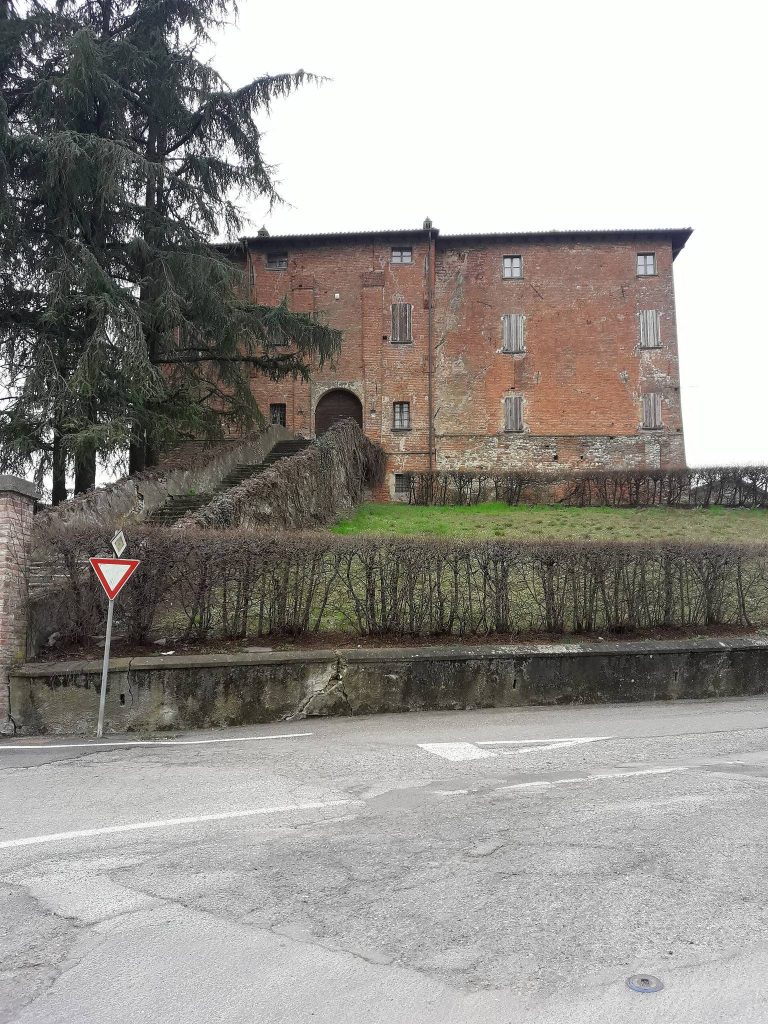
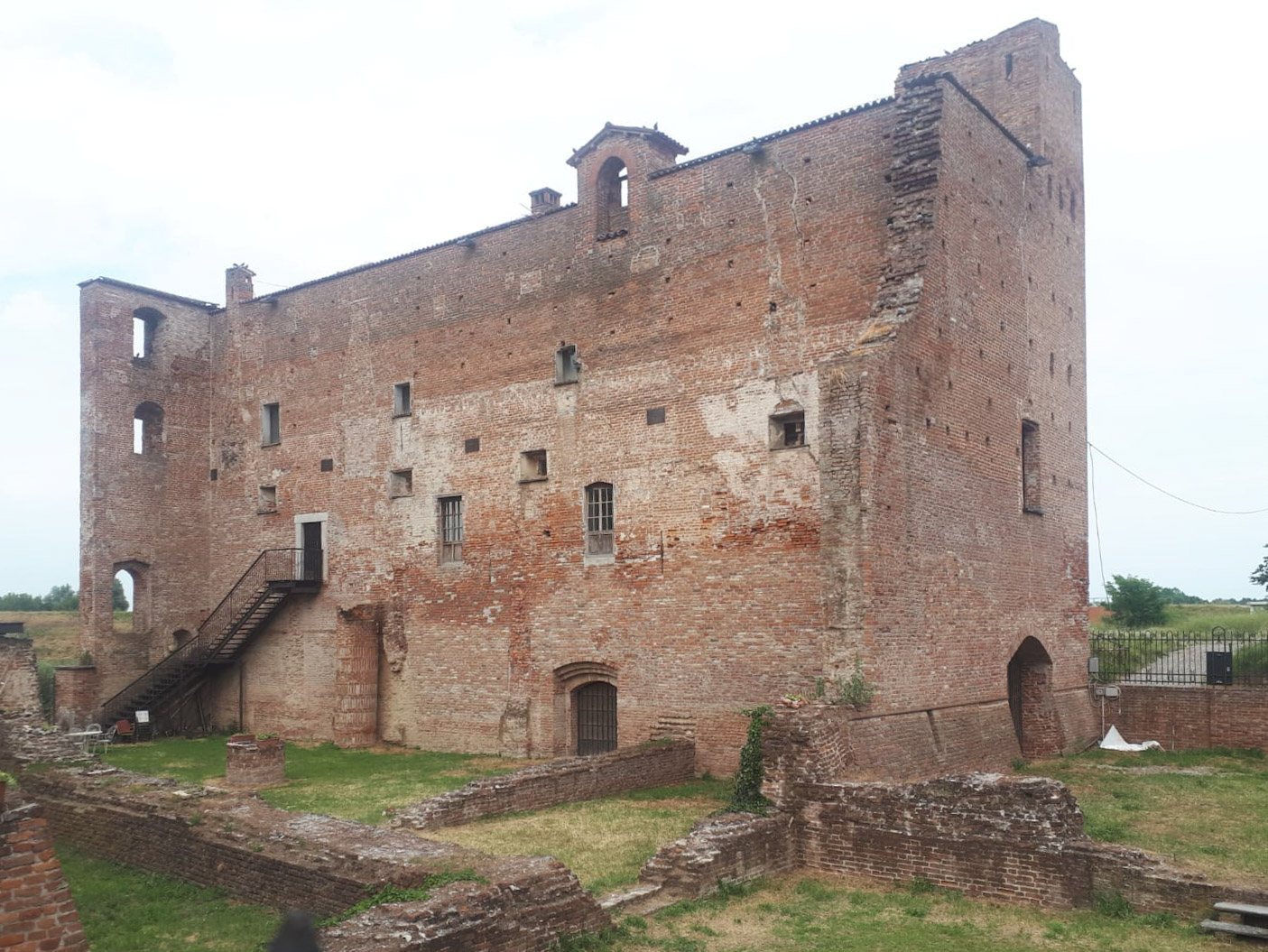
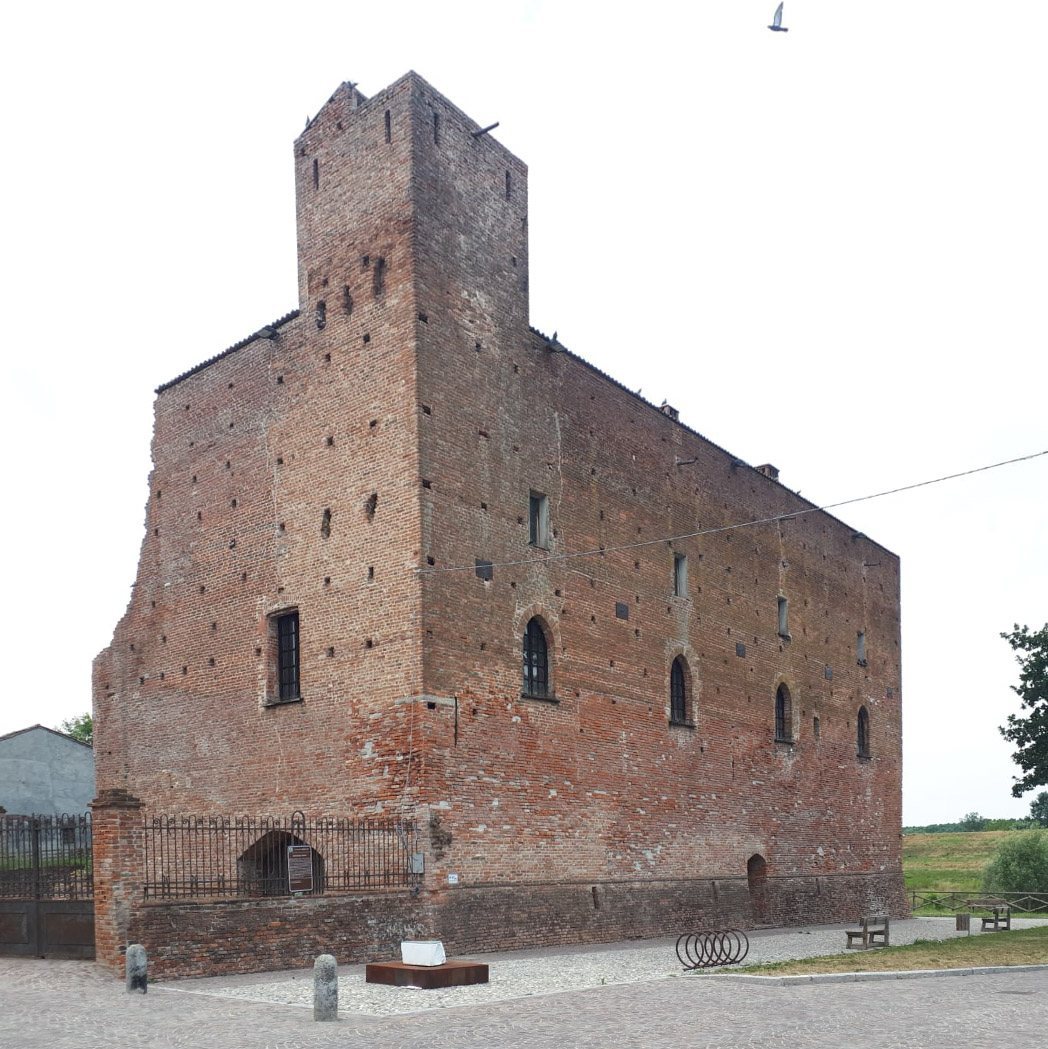
The castle stands at the northern edge of Arena Po’s built-up area, 61 metres above sea level and near the former course of the Po, which once ran alongside the town. Its original arrangement included a moat linked directly to the river, allowing boats to enter the castle. The principal surviving part is a large brick building that formed the east wing of the original fortification. Its walls are between 1.20 and 1.30 metres thick. Much of the castle survives only as foundations, and a truncated tower projects from one corner. Despite the extensive destruction, the surviving structure is in good condition.